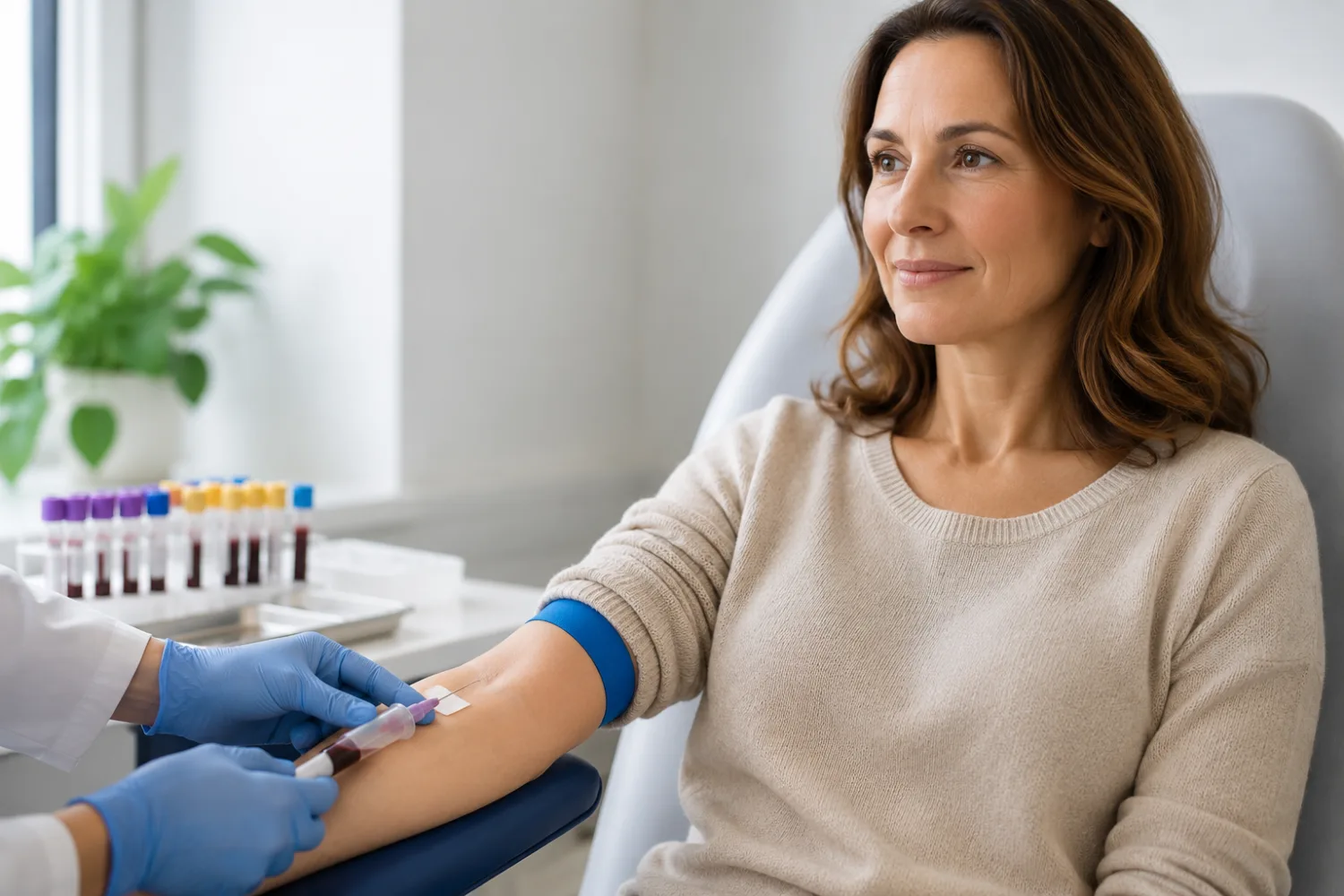
There is no universal blood-test schedule that every woman should follow when she reaches 30, 40 or 50. Age can influence health risks, but it is only one part of deciding which tests are worthwhile.
A woman with heavy periods, persistent fatigue and a vegan diet may benefit from a full blood count, ferritin and vitamin B12 testing in her 30s. Another woman of the same age with no symptoms, no significant family history and reassuring previous results may not need a comprehensive annual panel.
By the 40s and 50s, cardiovascular and metabolic health generally deserve greater attention. Cholesterol, blood sugar, blood pressure, kidney function and liver health may become increasingly relevant. At the same time, menstrual changes and menopause symptoms can prompt questions about thyroid function, iron, female hormones and bone health.
More testing is not automatically better testing. Large panels can uncover borderline results that do not explain symptoms and may lead to unnecessary worry or repeated investigations. The most useful test is one that answers a sensible question and leads to a clear next step.
This guide explains which blood tests women may consider in their 30s, 40s and 50s, when testing should be driven by symptoms or risk factors, and why menopause, fertility and hormone panels need particularly careful interpretation.
Important: Blood tests cannot replace cervical screening, breast screening, blood-pressure measurement, examination or assessment of new symptoms. Seek medical advice for a breast lump, postmenopausal bleeding, severe pelvic pain, unexplained weight loss, blood in your stool or urine, or another concerning change.
Start with your risks, symptoms and life stage
Decade-based health advice can be a useful starting point, but women of the same age can have very different needs.
Before choosing a blood test, consider:
- Whether you currently have symptoms
- Your menstrual pattern
- Whether periods are heavy, prolonged or irregular
- Pregnancy possibility or pregnancy plans
- Contraception or hormone replacement therapy
- Your blood pressure
- Your weight and waist measurement
- Your family history
- Your ethnicity
- Your diet
- Your smoking and alcohol use
- Medicines and supplements
- Existing health conditions
- Previous abnormal results
A strong family history can justify earlier assessment. This is especially relevant when a parent or sibling developed heart disease, stroke, type 2 diabetes, osteoporosis or certain cancers at a relatively young age.
Ethnicity can also influence risk. Women of South Asian heritage may develop type 2 diabetes and cardiovascular disease at a lower body mass index than white European women. Some inherited blood conditions and nutritional risks also vary between populations.
The question you want the test to answer matters more than the marketing name of the panel. Examples include:
- Could iron deficiency explain my fatigue or hair shedding?
- Am I at increased risk of type 2 diabetes?
- Could a thyroid condition explain changes in my periods or weight?
- Are my symptoms likely to be perimenopause?
- Am I ovulating?
- Could PCOS explain my irregular periods and acne?
- Has treatment corrected a previous deficiency?
Our guide to choosing a private blood test explains how to select between targeted testing and a broader health panel.
Core blood tests that may be useful at any adult age
Some blood tests can be relevant throughout adult life when symptoms, medicines or risk factors provide a reason to use them.
Cholesterol profile
A standard lipid profile commonly includes:
- Total cholesterol
- HDL cholesterol
- Non-HDL cholesterol
- LDL cholesterol
- Triglycerides
Cholesterol is only one part of cardiovascular risk. Blood pressure, smoking, diabetes, age, kidney health, family history and other factors must also be considered.
A moderately raised cholesterol result may lead to different advice in a young, non-smoking woman with normal blood pressure than in a woman with diabetes, high blood pressure and a strong family history of early heart disease.
Most routine cholesterol testing does not require fasting. A fasting sample may sometimes be requested when triglycerides are particularly high or a specialist lipid condition is being investigated.
Our guide to cholesterol blood-test results explains total cholesterol, LDL, HDL, non-HDL and triglycerides.
HbA1c
HbA1c reflects average blood glucose over approximately the previous two to three months. It is commonly used to screen for and monitor type 2 diabetes.
Testing may be especially relevant if you:
- Are overweight or carry more weight around your waist
- Have high blood pressure
- Have a parent or sibling with type 2 diabetes
- Previously had gestational diabetes
- Have polycystic ovary syndrome
- Are of South Asian, Black African or African-Caribbean heritage
- Take medicines that can increase diabetes risk
- Have thirst, frequent urination or unexplained weight loss
HbA1c usually does not require fasting. It may be less reliable in some blood disorders, pregnancy, recent major blood loss and certain other clinical circumstances.
Read our guide to HbA1c and blood sugar results for UK diagnostic ranges and common follow-up.
Kidney function
Common kidney-related blood markers include:
- Creatinine
- Estimated glomerular filtration rate, or eGFR
- Urea
- Sodium
- Potassium
Kidney testing may be important for women with:
- High blood pressure
- Diabetes
- Cardiovascular disease
- A family history of kidney disease
- Autoimmune disease
- Long-term use of medicines that can affect the kidneys
- Previous pregnancy-related high blood pressure
A blood test does not show every aspect of kidney health. A urine albumin-to-creatinine ratio can detect kidney damage that may not yet have caused a major change in eGFR.
Our guide to kidney blood-test results explains creatinine, eGFR, urea and related markers.
Liver function
A liver panel may include:
- ALT
- ALP
- Bilirubin
- Albumin
- GGT
- Sometimes AST
Liver testing may be appropriate if you:
- Drink alcohol regularly or heavily
- Are overweight or have metabolic risk factors
- Have diabetes or raised triglycerides
- Take medicines requiring monitoring
- Have symptoms of liver disease
- Previously had an abnormal liver result
Fatty liver disease can occur without clear symptoms, particularly alongside obesity, type 2 diabetes or raised triglycerides. Normal liver enzymes do not completely exclude it, while an abnormal result does not identify the cause by itself.
Our guides to liver function test results and ALT, AST, ALP and GGT explain common patterns.
Blood tests for women in their 30s
Most healthy women in their 30s do not need an extensive annual blood panel. Testing is usually most valuable when it investigates symptoms, pregnancy-related concerns, menstrual problems or established risk factors.
Full blood count and ferritin
Iron deficiency is particularly relevant during the reproductive years because menstrual blood loss, pregnancy and childbirth can reduce iron stores.
A full blood count measures haemoglobin, red blood cells, white blood cells and platelets. Ferritin provides information about stored iron.
Testing may be appropriate when you have:
- Heavy or prolonged periods
- Persistent fatigue
- Breathlessness
- Headaches
- Dizziness
- Restless legs
- Reduced exercise tolerance
- Hair shedding
- A restrictive diet
- Recent pregnancy or childbirth
Ferritin can become low before haemoglobin falls below the laboratory range. This means it is possible to have iron deficiency without established anaemia.
Our guides to full blood count results and low ferritin with normal haemoglobin explain these patterns.
Iron supplements should not be taken indefinitely without establishing whether deficiency is present and why it developed. Heavy periods are common, but diet, pregnancy, coeliac disease and gastrointestinal blood loss may also be relevant.
Vitamin B12 and folate
Vitamin B12 and folate testing may be useful when there is:
- A vegan or highly restrictive diet
- Persistent fatigue
- Pins and needles
- Balance or concentration problems
- A sore tongue or recurrent mouth ulcers
- Metformin use
- Long-term use of acid-suppressing medicines
- Coeliac disease or another absorption problem
- Previous stomach or bowel surgery
Neurological symptoms of vitamin B12 deficiency can occur even without obvious anaemia.
Read our guide to vitamin B12 and folate results.
Thyroid function
Routine thyroid testing is not necessary for every symptom-free woman in her 30s, but it may be appropriate with:
- Persistent fatigue
- Unexplained weight change
- Irregular or heavy periods
- Difficulty becoming pregnant
- Palpitations
- Feeling unusually cold or hot
- Constipation
- Hair thinning
- A family history of thyroid disease
- Another autoimmune condition
The initial tests usually include TSH and free T4. Our thyroid blood-test results guide explains common patterns.
Irregular periods and PCOS testing
Women with irregular periods, acne, excess facial or body hair, scalp thinning or fertility difficulties may need investigation for polycystic ovary syndrome or another hormone-related condition.
Possible tests include:
- Pregnancy testing
- TSH
- Prolactin
- Testosterone
- SHBG
- Sometimes DHEAS
- FSH and LH
- HbA1c
No single blood test diagnoses PCOS. The assessment considers menstrual patterns, evidence of androgen excess and sometimes ovarian ultrasound while excluding other explanations.
Our guide to blood tests for irregular periods explains how pregnancy, PCOS, thyroid function, prolactin and ovarian hormones are assessed.
Fertility-related testing
Fertility testing should be selected around a clear question rather than ordered as a general score of reproductive health.
Possible tests include:
- Progesterone to assess whether ovulation occurred
- FSH, LH and oestradiol in selected circumstances
- AMH as a measure related to ovarian reserve
- Prolactin
- Thyroid function
Progesterone needs to be timed relative to ovulation. A so-called day-21 test is suitable only for a cycle of approximately 28 days.
AMH does not measure egg quality, prove natural fertility or predict exactly when menopause will occur.
Our guide to fertility blood tests explains these limitations.
Blood tests for women in their 40s
During the 40s, cardiovascular and metabolic risk becomes increasingly important. Menstrual and menopause-related changes may also begin, but not every symptom requires a reproductive hormone panel.
In England, eligible adults aged 40 to 74 may be invited for an NHS Health Check. This assesses the risk of conditions including heart disease, stroke, kidney disease and type 2 diabetes.
The check commonly considers:
- Blood pressure
- Cholesterol
- Height and weight
- Lifestyle factors
- Overall cardiovascular risk
- Blood sugar where appropriate
Cholesterol and cardiovascular risk
Knowing your cholesterol and blood pressure becomes increasingly useful during the 40s, particularly when there is:
- A family history of early heart disease or stroke
- Smoking
- High blood pressure
- Diabetes risk
- Kidney disease
- Obesity
- A previous pregnancy affected by high blood pressure or gestational diabetes
Pregnancy history can provide useful information about future cardiovascular risk. Conditions such as gestational diabetes and pre-eclampsia should remain part of your long-term health history even after pregnancy has ended.
HbA1c
The risk of type 2 diabetes rises with age, particularly when combined with weight gain, reduced activity, family history, PCOS or previous gestational diabetes.
HbA1c may be included in a broader health check or ordered separately when risk is increased.
Ferritin and full blood count
Heavy or changing periods are common in the 40s and can gradually reduce iron stores.
Consider testing when menstrual changes are accompanied by:
- Fatigue
- Breathlessness
- Palpitations
- Headaches
- Hair shedding
- Restless legs
Do not assume that every change in bleeding is simply perimenopause. Heavy bleeding, bleeding between periods or bleeding after sex may require examination or imaging as well as blood tests.
Thyroid function
Thyroid disease and perimenopause can share symptoms, including:
- Menstrual changes
- Fatigue
- Weight change
- Mood changes
- Palpitations
- Sleep disturbance
- Feeling unusually hot or cold
Thyroid testing may be helpful when symptoms are atypical, pronounced or accompanied by a relevant history.
Should FSH be tested in the 40s?
FSH testing may sometimes help when menopause symptoms occur between 40 and 45, or when menopause is suspected before 40.
However, FSH fluctuates considerably during perimenopause. A normal result does not exclude perimenopause, and a temporarily high result does not necessarily settle the diagnosis.
Hormonal contraception can also make reproductive hormone results difficult to interpret.
Our guide to menopause blood tests explains when FSH testing may add useful information.
Blood tests for women in their 50s
During the 50s, cardiovascular, metabolic and bone health become increasingly important. Many women will be approaching, experiencing or living beyond menopause.
Cholesterol, HbA1c and kidney function
A proportionate general health panel may include:
- A cholesterol profile
- HbA1c
- Creatinine and eGFR
- Electrolytes
- Liver function tests
These measurements are most useful when combined with:
- Blood pressure
- Smoking status
- Body weight and waist measurement
- Family history
- Physical activity
- Diet
- Menopause and pregnancy history
A normal blood panel does not remove the cardiovascular risks associated with smoking, untreated high blood pressure or long-term inactivity.
Do you need a menopause hormone test?
In otherwise healthy women aged 45 or over with typical symptoms, perimenopause and menopause are generally identified from symptoms and menstrual history rather than blood tests.
Typical features include:
- Changes in cycle length or flow
- Hot flushes
- Night sweats
- Sleep disturbance
- Mood changes
- Vaginal dryness
- Reduced libido
FSH, oestradiol and AMH should not be used as routine confirmation tests in this situation. Hormone concentrations fluctuate, and the result often does not change treatment.
Testing may still be appropriate where:
- Symptoms are atypical
- A different medical condition is suspected
- Hormonal contraception obscures the cycle pattern
- There is uncertainty about the diagnosis
Full blood count and ferritin
After periods have stopped, ongoing iron loss through menstruation also stops. A new iron deficiency in a postmenopausal woman should not simply be attributed to previous periods.
Possible explanations include:
- Dietary deficiency
- Coeliac disease
- Poor absorption
- Gastrointestinal bleeding
- Regular blood donation
Confirmed iron deficiency after menopause generally deserves investigation of the cause.
Vitamin B12 and vitamin D
Testing remains symptom- and risk-led.
Vitamin B12 may be relevant with neurological symptoms, metformin use, a vegan diet or malabsorption. Vitamin D testing may be useful when there are bone or muscle symptoms, malabsorption or a condition affecting bone health.
Routine vitamin testing should not distract from larger health priorities such as blood pressure, physical activity, smoking, alcohol intake and participation in appropriate screening programmes.
Bone health
A standard blood test cannot diagnose osteoporosis. Bone density is measured using a DEXA scan.
Blood tests may still help investigate factors affecting bone health, including:
- Vitamin D
- Calcium
- Phosphate
- ALP
- Kidney function
- Thyroid function
- Parathyroid hormone in selected cases
Bone-risk assessment is particularly relevant with:
- Early menopause
- A previous low-trauma fracture
- Long-term steroid use
- Low body weight
- Coeliac disease or malabsorption
- A family history of hip fracture
- Smoking
- Higher alcohol intake
Our guide to calcium and bone-profile blood tests explains what these markers can and cannot show.
Which tests should be driven by symptoms rather than age?
Many tests become useful only when a symptom, medicine or health risk creates a specific clinical question.
Full blood count
Consider when investigating:
- Fatigue
- Breathlessness
- Heavy bleeding
- Frequent infections
- Bruising
- Unexplained fever
- Weight loss
Ferritin and iron studies
Consider with:
- Heavy periods
- Pregnancy or recent childbirth
- Hair shedding
- Restless legs
- A restrictive diet
- Blood donation
- Possible gastrointestinal blood loss
Thyroid function
Consider with compatible symptoms, irregular periods, fertility problems, palpitations, unexplained cholesterol changes, autoimmune disease or a family history of thyroid disease.
Female hormone tests
Consider when investigating:
- Irregular or absent periods
- Possible PCOS
- Fertility difficulties
- Menopause symptoms at an unusually young age
- Possible premature ovarian insufficiency
- Raised prolactin symptoms
A general female hormone panel is not necessarily useful for non-specific fatigue, weight gain or low mood without a clearer hormonal pattern.
CRP and ESR
Inflammation markers may support investigation of infection, autoimmune disease or inflammatory illness, but they are non-specific and should not be used as vague annual health screens.
Coeliac disease antibodies
Consider with:
- Unexplained iron deficiency
- Persistent bloating or diarrhoea
- Weight loss
- Recurrent mouth ulcers
- Autoimmune thyroid disease
- A family history of coeliac disease
CA125
CA125 may be used when symptoms raise concern about ovarian cancer, such as persistent bloating, pelvic or abdominal pain, feeling full quickly or urinary changes.
It is not a reliable general screening test for symptom-free women. CA125 can rise because of benign conditions, while ovarian cancer can occasionally occur without a raised result.
Our guide to CA125 blood-test results explains these limitations.
Tests that are commonly overused or misunderstood
Large annual wellness panels
Testing dozens of markers each year may feel reassuring, but it also increases the chance that at least one result will fall slightly outside the reference range through normal biological variation.
This may lead to:
- Unnecessary worry
- Repeated testing
- Additional appointments
- Further investigations of incidental findings
- Supplements or treatments that are not needed
A broad panel can be useful when there is a genuine reason for a general assessment. It should not be treated as proof that every disease has been excluded.
Annual female hormone panels
FSH, LH, oestradiol and progesterone vary with:
- Cycle timing
- Age
- Pregnancy
- Breastfeeding
- Contraception
- Perimenopause
- Illness
A result taken on an arbitrary cycle day may be difficult to interpret and may not explain general symptoms.
AMH as a fertility score
AMH provides information related to ovarian reserve and can help predict response to fertility treatment.
It does not:
- Measure egg quality
- Prove whether you can conceive naturally
- Confirm that ovulation is occurring
- Predict the exact age of menopause
- Explain most irregular periods by itself
Tumour-marker panels
Commercial panels may include CA125, CEA, CA19-9, AFP or other tumour markers. These are not reliable general cancer-screening tests for healthy women.
Tumour markers can rise for non-cancerous reasons, and some cancers do not raise them. Appropriate screening programmes, examination and symptom-led investigation are more useful.
Random cortisol testing
Cortisol changes through the day and responds to sleep, stress, illness and medicines.
A random result cannot provide a meaningful general measure of stress or diagnose “adrenal fatigue”, which is not a recognised medical condition.
Food intolerance IgG panels
Food-specific IgG usually reflects exposure to a food rather than proving intolerance. Removing multiple foods on the basis of such testing can unnecessarily restrict the diet and may worsen nutritional intake.
Biological-age tests
Some biomarkers included in longevity panels—such as cholesterol, HbA1c and blood pressure—are clinically valuable. A calculated biological-age score may be considerably less established.
Judge the individual markers and whether they lead to useful action rather than relying on a marketing score.
How often should women have blood tests?
There is no rule that all women need comprehensive blood testing every year.
The right interval depends on:
- Age
- Symptoms
- Pregnancy and menstrual history
- Menopause status
- Previous results
- Medicines
- Existing conditions
- Cardiovascular and diabetes risk
A healthy woman with normal blood pressure, no symptoms and reassuring previous results may not benefit from repeating a large panel annually.
More frequent testing may be needed when:
- A previous result was abnormal
- A deficiency is being treated
- A medicine requires monitoring
- You have diabetes, kidney disease or another long-term condition
- You are pregnant
- You develop new symptoms
- A treatment decision depends on the result
Eligible adults aged 40 to 74 in England are generally offered an NHS Health Check every five years, although eligibility and local delivery can vary. The check combines cholesterol and other risk information with blood pressure, weight and lifestyle assessment.
Blood tests are only one part of preventive care. Depending on age and eligibility, women should also engage with:
- Cervical screening
- Breast screening
- Bowel screening
- Vaccination programmes
- Blood-pressure checks
- Contraception and reproductive healthcare
A private panel should complement these services rather than replace them.
How to choose and prepare for a private women’s health test
Private women’s health panels vary widely. Some focus on iron, thyroid function and vitamins. Others include reproductive hormones, cholesterol, glucose, liver function and kidney markers.
Before ordering, ask:
- What question am I trying to answer?
- Does the panel include the markers I need?
- Are hormone tests being taken on the correct cycle day?
- Will contraception affect interpretation?
- Is fasting required?
- Is the sample finger-prick or venous?
- Who reviews the results?
- What happens if a result is significantly abnormal?
- Is venous collection included in the price?
Record your cycle information
If reproductive hormones are being measured, record:
- The first day of your last period
- Your usual cycle length
- Whether cycles are regular
- Pregnancy possibility
- Contraception
- Menopause symptoms
FSH, LH, oestradiol and progesterone can be difficult to interpret without this context.
Check whether fasting is needed
Most common women’s health markers do not routinely require fasting. Full blood count, ferritin, HbA1c, thyroid function, vitamin B12, vitamin D and many reproductive hormones can commonly be taken after eating.
A combined panel may still include fasting glucose, insulin or specialist lipid measurements with different instructions.
Read our guide to fasting before blood tests before avoiding food unnecessarily.
Disclose medicines and supplements
Tell the provider about:
- Hormonal contraception
- HRT
- Fertility medicines
- Thyroid medication
- Iron
- Vitamin B12
- Vitamin D
- Biotin
- DHEA or hormone products
High-dose biotin can interfere with some laboratory tests, including certain thyroid and hormone assays.
Do not interpret each result in isolation
Results should be considered alongside:
- Symptoms
- Age
- Menstrual and pregnancy history
- Cycle timing
- Medicines
- Previous results
- Related blood markers
A mildly abnormal result may be temporary or unrelated to the concern that prompted testing. A result within range may still deserve attention when symptoms or trends suggest a problem.
Frequently asked questions
What blood tests should every woman have?
No blood test is essential for every woman regardless of age and health. Cholesterol and HbA1c are useful for assessing cardiovascular and diabetes risk, particularly from the 40s onwards or earlier when risk factors are present. Other tests should be guided by symptoms, periods, pregnancy history, diet, medicines and previous results.
Should women have annual blood tests?
Not necessarily. Annual testing may be appropriate when monitoring a condition, medicine, pregnancy, deficiency or previous abnormality. Healthy women with reassuring results may not need a comprehensive panel each year.
What blood tests should women have in their 30s?
Testing is generally symptom- and risk-led. Full blood count and ferritin may be useful with heavy periods or fatigue. Thyroid, vitamin B12, hormone, fertility and PCOS testing should be used when symptoms or reproductive concerns justify them.
What blood tests should women have in their 40s?
Cholesterol, blood sugar and cardiovascular-risk assessment become increasingly important. Full blood count and ferritin may be useful with heavy or changing periods. Thyroid testing or selected hormone tests may help when symptoms are atypical or menopause is suspected unusually early.
What blood tests should women have in their 50s?
Cholesterol, HbA1c, kidney and liver markers may be appropriate depending on personal risk. Routine menopause hormone testing is usually unnecessary after 45 when symptoms are typical. Bone-health investigations may be relevant when risk factors are present.
Should women have iron and ferritin tested?
Testing is particularly useful with heavy periods, fatigue, breathlessness, restless legs, hair shedding, pregnancy, recent childbirth or a restrictive diet. Ferritin may become low before anaemia develops.
Do I need hormone tests for perimenopause?
Usually not when you are aged 45 or over and have typical symptoms. Perimenopause is generally identified from symptoms and menstrual changes because hormone levels fluctuate considerably. Testing may help when symptoms occur between 40 and 45 or premature ovarian insufficiency is suspected.
Can thyroid disease resemble menopause?
Yes. Thyroid disease can cause menstrual changes, fatigue, mood symptoms, palpitations, sleep disturbance and weight change. Testing may be useful when symptoms are atypical or another thyroid feature is present.
Should women have testosterone tested?
Not routinely. Testosterone and SHBG may be useful when irregular periods occur with acne, excess facial or body hair, scalp thinning or possible PCOS. They may also be considered in selected specialist assessments.
Is AMH a general fertility test?
No. AMH provides information related to ovarian reserve but does not measure egg quality or prove whether natural conception is possible. It should be interpreted in an appropriate fertility context.
Do women need vitamin D testing?
Not automatically. Testing is more useful when there are bone or muscle symptoms, malabsorption, early menopause, osteoporosis risk or another clinical reason to know the level.
Does a normal blood test rule out cancer?
No. There is no general blood panel that reliably excludes all cancers. Screening programmes, symptom assessment, imaging, examination and biopsy remain important.
Should CA125 be included in a routine women’s health panel?
Usually not. CA125 is mainly used when symptoms raise concern about ovarian cancer. It can be raised by non-cancerous conditions and may be normal in some people with ovarian cancer.
Can blood tests check bone health?
They can identify factors that affect bone health, such as vitamin D, calcium, kidney or thyroid abnormalities. They cannot diagnose osteoporosis. A DEXA scan is used to measure bone density.
Do women’s health blood tests require fasting?
Many do not. Fasting depends on the markers included rather than the fact that the panel is marketed for women. Follow the instructions supplied with the exact test.
Where can I order a private women’s health blood test?
Private providers offer targeted iron, thyroid, vitamin, fertility, menopause and PCOS tests as well as broader women’s health panels. Compare the individual markers, collection method, cycle-timing requirements and clinical support rather than choosing solely by the number of reported results.
A range of home and clinic-based blood tests can be viewed through Medichecks via All Health and Care. Use the code ALLHEALTH10 at checkout for an additional discount.
This is an affiliate link, which means All Health and Care may receive a commission if you make a purchase, at no additional cost to you. Private testing can provide useful convenience and access, but a broad panel is not automatically better. Iron, reproductive hormones, menopause markers and tumour markers should all be selected and interpreted in the correct clinical context.