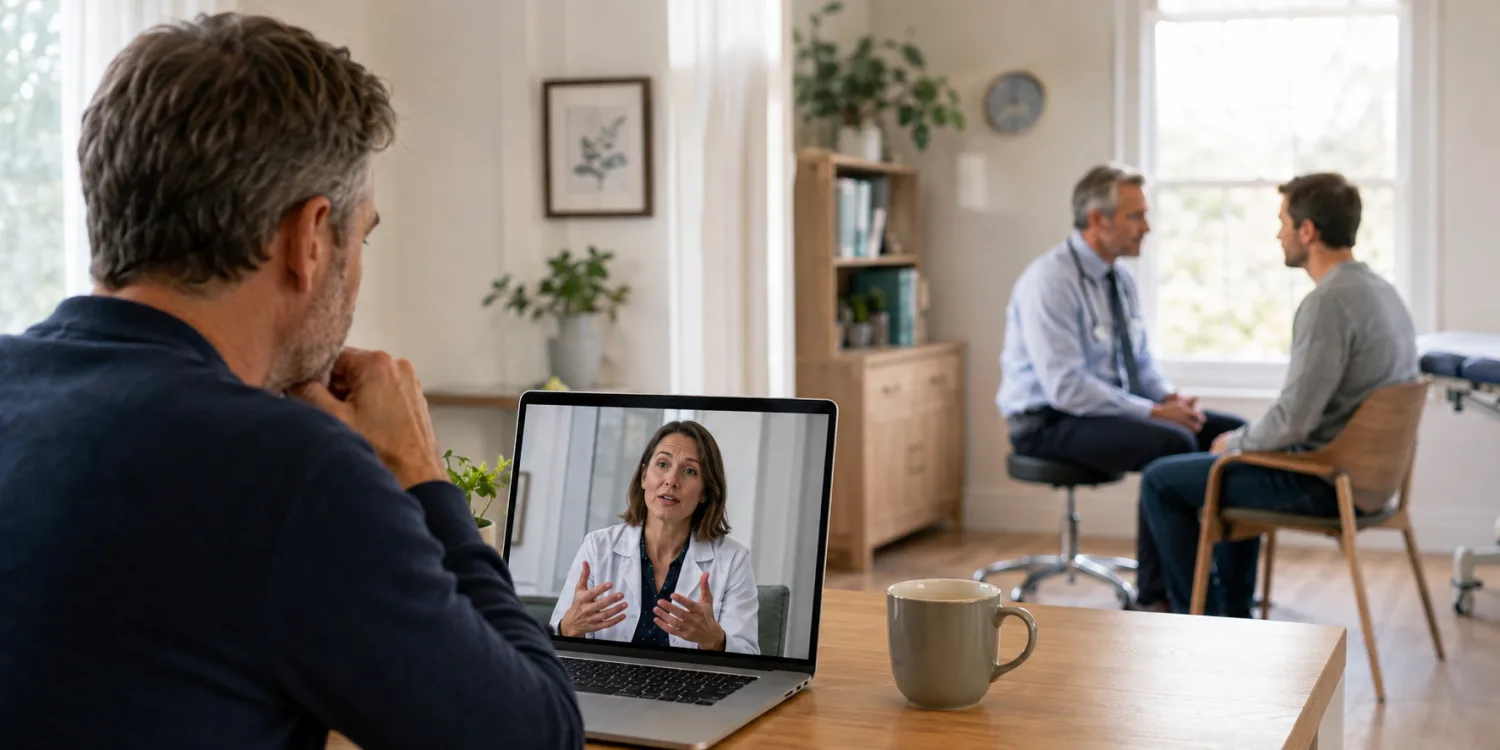
A same-day private GP appointment commonly costs around £70 to £150 in person or £40 to £100 online in the UK. Prices can be higher in central London, during evenings and weekends, or when you book a longer consultation.
The cheapest advertised fee is not always the full cost. Blood tests, swabs, scans, medicines, medical letters and follow-up appointments may all be charged separately. An online consultation can also become poor value if the doctor cannot safely assess the problem remotely and advises you to arrange an in-person examination.
For a straightforward concern that can be assessed through discussion or video, an online GP can be convenient and less expensive. When the doctor needs to listen to your chest, examine your abdomen, look inside an ear, check vital signs or perform a test, an in-person appointment is generally the better starting point.
This guide provides general information about UK private GP fees. Prices and inclusions vary, so confirm the total cost and cancellation terms before booking.
How much is a same-day private GP appointment?
A short private GP consultation of around 10 to 15 minutes may cost approximately £50 to £100. A standard appointment lasting 20 to 30 minutes commonly costs £90 to £150, while a longer or premium central London consultation can reach £200 to £250.
Online appointments are often cheaper because the provider does not need a physical consulting room in the same way. A video or telephone GP consultation commonly costs approximately £40 to £100.
Representative same-day prices may look like this:
| Appointment type | Typical UK self-pay price |
|---|---|
| Online GP, 10–15 minutes | £40–£70 |
| Online GP, 20–30 minutes | £70–£110 |
| In-person GP, 10–15 minutes | £60–£100 |
| In-person GP, 20–30 minutes | £90–£150 |
| Long or central London appointment | £150–£250+ |
| Evening, weekend or bank-holiday appointment | May include a surcharge |
As a current example, Bupa lists a 15-minute private GP appointment at £59 remotely or £79 face to face. Its 30-minute appointments are £99 remotely and £140 in person. HCA UK advertises appointments from £99, while other same-day providers start at around £65 to £75.
These examples illustrate the market rather than guaranteeing availability or a particular standard of service. Check the appointment length and what is included before comparing prices.
Why does appointment length matter?
A ten-minute appointment can be enough for one uncomplicated concern. It may be suitable for discussing a simple new symptom, reviewing a result or seeking advice about a minor condition.
It is less suitable when symptoms are complex, several problems need attention or the doctor must review a long history. Trying to fit three concerns into a short booking can result in an incomplete assessment or the need for another paid appointment.
A 20- or 30-minute appointment may offer better value when you have:
- several symptoms that could be related;
- a complicated medical history;
- multiple medications;
- an ongoing problem that has not responded to treatment;
- mental health concerns requiring a careful discussion;
- forms, reports or a possible referral to discuss.
Some providers automatically charge for additional time in fixed blocks. Others end the consultation and ask you to book again. Read the terms before choosing the shortest option.
Our broader guide to private GP services and costs in the UK explains how private primary care works beyond urgent same-day appointments.
When is an online GP appointment suitable?
An online consultation works best when the doctor can make a safe decision from your history, visible symptoms and information you can provide at home.
Video may be useful for reviewing certain rashes, discussing mild respiratory symptoms, medication side effects, digestive concerns, period problems, contraception, mental health or an existing condition. It can also be convenient for explaining test results or deciding which service should assess you next.
A remote GP may be able to issue a private prescription, arrange a test, provide a fit note or write a referral letter when clinically appropriate. None of these is guaranteed simply because you have paid for the appointment.
Online care is particularly convenient when:
- you cannot easily travel to a clinic;
- you are away from home within the UK;
- you need advice rather than a physical procedure;
- you have useful home readings, photographs or previous results;
- the concern is suitable for a visual or history-based assessment.
A good online doctor should recognise the limits of remote assessment. The General Medical Council says that if the consultation method does not allow a doctor to meet the required standard, the doctor should offer an alternative or direct the patient to an appropriate service.
When is an in-person GP better?
An in-person appointment is preferable when examination findings are likely to change the diagnosis or treatment.
For example, a doctor may need to listen to the heart or lungs, examine the abdomen, inspect the throat or ear canal, feel a lump, assess swelling, measure oxygen levels or perform a neurological examination.
Choose an in-person appointment when possible if you have:
- significant abdominal pain;
- breathlessness, wheezing or persistent chest symptoms;
- ear pain or reduced hearing that requires an otoscope;
- a lump, swelling or injury that needs examination;
- symptoms requiring blood pressure, temperature or oxygen checks;
- a possible urine, throat or wound test;
- a child who appears unwell and may need a full examination.
Some in-person clinics can collect blood or urine samples during the same visit. Others are consulting services only and send patients to a separate laboratory or hospital.
Ask about facilities when booking. “In person” does not necessarily mean the clinic can immediately perform every test or treatment.
What is included in the consultation price?
The basic fee normally covers the doctor’s time, history-taking, appropriate examination and clinical advice. It may also include a brief summary sent to you after the appointment.
Some providers include standard private prescriptions, referral letters and fit notes. Others charge separately for each document or for administration after the consultation.
The consultation fee does not usually include:
- the medicine supplied by a pharmacy;
- blood, urine or swab tests;
- X-rays, ultrasound, MRI or CT scans;
- vaccinations or injected medicines;
- treatment by a nurse or another clinician;
- a specialist appointment;
- an extended medical report;
- a further consultation to review results.
Before agreeing to a test, ask for the complete price, where it will be performed and how the result will be communicated. A £70 consultation followed by £300 of tests and another £70 results appointment is a different purchase from a £70 consultation alone.
How much do prescriptions, tests and letters add?
A private prescription may be included in the appointment fee or attract an administration charge of around £10 to £30. You then pay the pharmacy’s private price for the medicine.
There is no standard NHS charge for a medicine on a private prescription. The amount depends on the drug, quantity, pharmacy and any dispensing fee. Ask the pharmacy for the price before it is prepared if cost is a concern.
Common additional private GP charges may include:
| Additional service | Possible private price |
|---|---|
| Prescription administration | Free to approximately £30, plus medicine |
| Fit note or simple letter | Free to approximately £50 |
| Detailed medical report | Approximately £75–£250+ |
| Basic blood test | Approximately £40–£100+ |
| Broader blood panel | Approximately £100–£300+ |
| Urine, throat or other laboratory test | Approximately £20–£100+ |
| Results follow-up | May require another paid appointment |
These are broad estimates rather than tariffs. Specialist infection testing, hormone panels and imaging can cost considerably more.
See our guide to private blood test costs in the UK before agreeing to a large panel.
Can an online GP prescribe antibiotics?
An online GP can prescribe antibiotics when the doctor has enough information to make a safe diagnosis and treatment is clinically appropriate. Paying for a consultation does not create an entitlement to antibiotics.
Some infections can be assessed reasonably well from symptoms and video. Others require an examination or test. A suspected ear infection may need an otoscope, while urinary symptoms may require a urine sample. Severe throat symptoms can have causes that are difficult to distinguish remotely.
A responsible doctor may decline to prescribe and advise an in-person examination. This is a safeguard, not a failure of the service.
The GMC states that a doctor must only prescribe when they have sufficient information and the consultation method is suitable. Online doctors are held to the same professional standards as doctors working face to face.
Remote prescribing is also more restricted for some controlled medicines, sedatives and treatments requiring physical monitoring. Be cautious of a service that promises a particular prescription before a doctor has assessed you.
Can a private GP refer you to the NHS or a private specialist?
A private GP can write a referral to a private consultant. The referral letter may be included in the consultation fee or charged separately.
If you have private health insurance, check whether the insurer requires a referral from your registered NHS GP or will accept one from a private GP. Obtain authorisation before booking the specialist when possible.
A private doctor can also recommend NHS assessment, but the route varies. The letter may be sent to your NHS GP, who will review the clinical information and decide how to proceed through the local pathway.
Private assessment does not guarantee immediate entry into an NHS specialist service or allow someone to bypass clinical prioritisation. NHS clinicians remain responsible for decisions about NHS referrals, tests and prescribing.
Our guide to how hospital referrals work in the UK explains the difference between routine, urgent and private pathways.
Will your NHS GP continue private prescriptions or tests?
Do not assume that an NHS GP will automatically convert a private prescription into an NHS one. The GP must be satisfied that the medicine is appropriate, that they have enough information and that taking over prescribing falls within NHS and local arrangements.
A private doctor may recommend a medicine that is not normally initiated in primary care or is not funded locally. In that situation, you may need to continue paying privately or wait for an NHS specialist assessment.
The same principle applies to tests. An NHS GP is not obliged to order blood tests or imaging simply because a private service has recommended them. The GP will make an independent clinical decision.
If treatment must begin immediately, ask the private doctor to provide the first prescription and a clear plan. Waiting for correspondence to reach and be reviewed by your NHS practice can take time.
With your consent, the private provider should send relevant information to your usual GP. Fragmented records can lead to duplicated tests, missed interactions and unsafe prescribing.
Does private health insurance cover a same-day GP?
Some private medical insurance policies include remote GP access as a benefit. This may be delivered through the insurer’s own app or a contracted service and might not require you to pay at the point of use.
Other policies exclude routine GP appointments or offer them only as an optional extra. An excess may apply, although some digital GP benefits sit outside the main claims system.
If you already have insurance, check the app, member portal or policy documents before paying independently. Using a provider outside the insurer’s service may not be reimbursed.
Blood tests, scans and specialist referrals following the GP appointment may require separate authorisation. A covered video consultation does not automatically make every recommended investigation covered.
A subscription service is another option for frequent users, but check limits on appointment numbers, locations and booking availability. Our comparison of a private GP subscription and health insurance explains what each type of plan is designed to cover.
How to choose a safe private GP service
Check that the doctor is registered with the General Medical Council and has a licence to practise. The service should clearly identify who will assess you rather than hiding behind a generic “medical team” description.
In England, independent and online primary care providers carrying out regulated activities are normally overseen by the Care Quality Commission. You can check the service through the CQC care-service search. Scotland, Wales and Northern Ireland have their own regulators.
A reputable provider should explain:
- the appointment length and total fee;
- the doctor’s identity and registration;
- what happens if remote assessment is unsuitable;
- how prescriptions and test results are handled;
- whether information can be shared with your NHS GP;
- the cancellation and refund policy;
- how to raise a complaint.
Be cautious of services that sell medication after a questionnaire with little meaningful clinical assessment, guarantee prescriptions or make it difficult to identify the provider responsible for your care.
When should you not book a private same-day GP?
A private GP is not an emergency service. Do not spend time comparing appointment prices when symptoms suggest a heart attack, stroke, severe breathing problem or another life-threatening condition.
Call 999 for severe chest pain, signs of stroke, major breathing difficulty, collapse, a severe allergic reaction, uncontrolled bleeding or sudden serious confusion.
NHS 111 can advise about urgent problems when you are unsure which service is appropriate. Depending on the symptoms, you may be directed to an urgent treatment centre, out-of-hours GP or emergency department.
A same-day private clinic may also be unsuitable for serious injuries, severe abdominal pain, pregnancy emergencies, acute mental health crises and illnesses requiring immediate hospital tests.
Online care should not delay physical examination when symptoms are worsening. A responsible remote doctor may direct you to urgent care without issuing treatment, and you may still be charged for the consultation.
Is an online or in-person private GP better value?
An online appointment offers the best value when the concern can genuinely be assessed remotely. It saves travel time, usually costs less and can provide quick advice, a prescription or an appropriate referral.
An in-person appointment is better value when examination or testing is likely. Paying an additional £20 to £60 at the outset may prevent a second consultation and reduce diagnostic uncertainty.
Choose based on the problem rather than price alone:
| Online may be suitable for | In person is generally better for |
|---|---|
| Discussing straightforward symptoms | Chest or breathing examination |
| Reviewing results | Significant abdominal pain |
| Some visible skin concerns | Ear or throat examination |
| Medication advice | Lumps, swelling or injuries |
| Mental health discussion | Vital signs or diagnostic samples |
| Referral or signposting | An unwell child requiring examination |
Continuity also has value. Your usual NHS GP holds your long-term record and can follow changes over time. Private same-day care is useful for speed, but repeatedly seeing unrelated doctors can fragment treatment.
For a wider comparison, see our guide to NHS versus private healthcare.
Frequently asked questions
How much is a private GP appointment in the UK?
A same-day in-person appointment commonly costs around £70 to £150. Online consultations often cost £40 to £100. Longer appointments and premium London clinics may charge £150 to £250 or more.
Is an online GP cheaper than seeing a doctor in person?
Usually. The difference may be around £20 to £60 for a comparable appointment length. Online care can become more expensive overall if you subsequently need a separate physical examination.
Can I see a private GP on the same day?
Many private providers offer same-day online or clinic appointments, subject to availability. Evening, weekend and bank-holiday appointments may cost more.
Do I have to leave my NHS GP to see a private doctor?
No. You can remain registered with your NHS practice and pay for an occasional private consultation. Ask the private doctor to share relevant information with your NHS GP.
Are private prescriptions included in the appointment?
The prescription document may be included or charged separately. The medicine itself is normally paid for at the pharmacy at its private price.
Can a private GP issue an NHS prescription?
Not during a private consultation. The doctor can issue a private prescription. Your NHS GP may later choose to prescribe through the NHS but is not obliged to do so.
Can an online doctor issue a fit note?
They may issue a fit note when the assessment provides enough information and it is clinically appropriate. Check whether this is included in the consultation fee.
Can an online GP refer me to a specialist?
Yes, when a referral is appropriate. Confirm whether the letter is included, whether it is for a private or NHS pathway and whether your insurer will accept it.
Can a private GP access my NHS records?
Not automatically. Access depends on the provider’s systems and your consent. Supplying an accurate medication list, allergies and relevant history is therefore important.
Will I get a refund if the online doctor says I need an examination?
Not necessarily. You are usually paying for the doctor’s assessment and advice, even when the safe outcome is a recommendation for in-person care. Check whether the provider offers a credit or conversion policy.
Are online private GPs safe?
They can be safe when doctors are properly registered, the provider is appropriately regulated and remote consultation suits the problem. Avoid services that guarantee medication or do not provide meaningful access to a qualified clinician.