A private hearing test in the UK can cost anywhere from nothing to around £150 or more, depending on where you go and how detailed the assessment is.
Many large opticians, pharmacies and hearing-aid retailers offer adult hearing tests free of charge. Specsavers, for example, currently advertises free hearing tests for adults.
Independent audiology clinics may charge for a more detailed diagnostic assessment, particularly when the appointment includes additional tests such as tympanometry, speech testing or a written clinical report.
The important question is therefore not simply:
“How much does a hearing test cost?”
It is:
“What kind of hearing test am I actually getting?”
A short screening test designed to identify whether you might benefit from hearing aids is different from a full diagnostic audiology assessment investigating unexplained or uneven hearing loss.
This guide explains typical private hearing-test costs in the UK, what a proper hearing assessment includes, when you can get testing free and when hearing changes should be assessed by ENT rather than treated as a routine hearing-aid issue.
How Much Does a Private Hearing Test Cost in the UK?
A useful general guide is:
| Hearing service | Typical UK cost |
|---|---|
| Basic online hearing screen | Usually free |
| High-street adult hearing test | Often free |
| Independent audiologist hearing assessment | About £50–£100 |
| More detailed diagnostic audiology assessment | About £80–£150+ |
| Hearing test plus tympanometry | Often £80–£150+ |
| Private ENT consultation with hearing tests | Often £250–£450+ in total |
These are broad self-pay estimates rather than fixed national prices.
Some independent audiologists charge separately for each test, while others include everything in one appointment.
High-street hearing providers can afford to offer free testing because hearing-aid assessment and sales form part of their service.
That does not make the hearing test inaccurate, but it is worth understanding the business model.
What Is Included in a Proper Hearing Test?
A full adult hearing assessment is more than listening to a few beeps.
NHS audiology services describe a typical assessment as including:
- a discussion of your hearing problems;
- relevant medical and ear history;
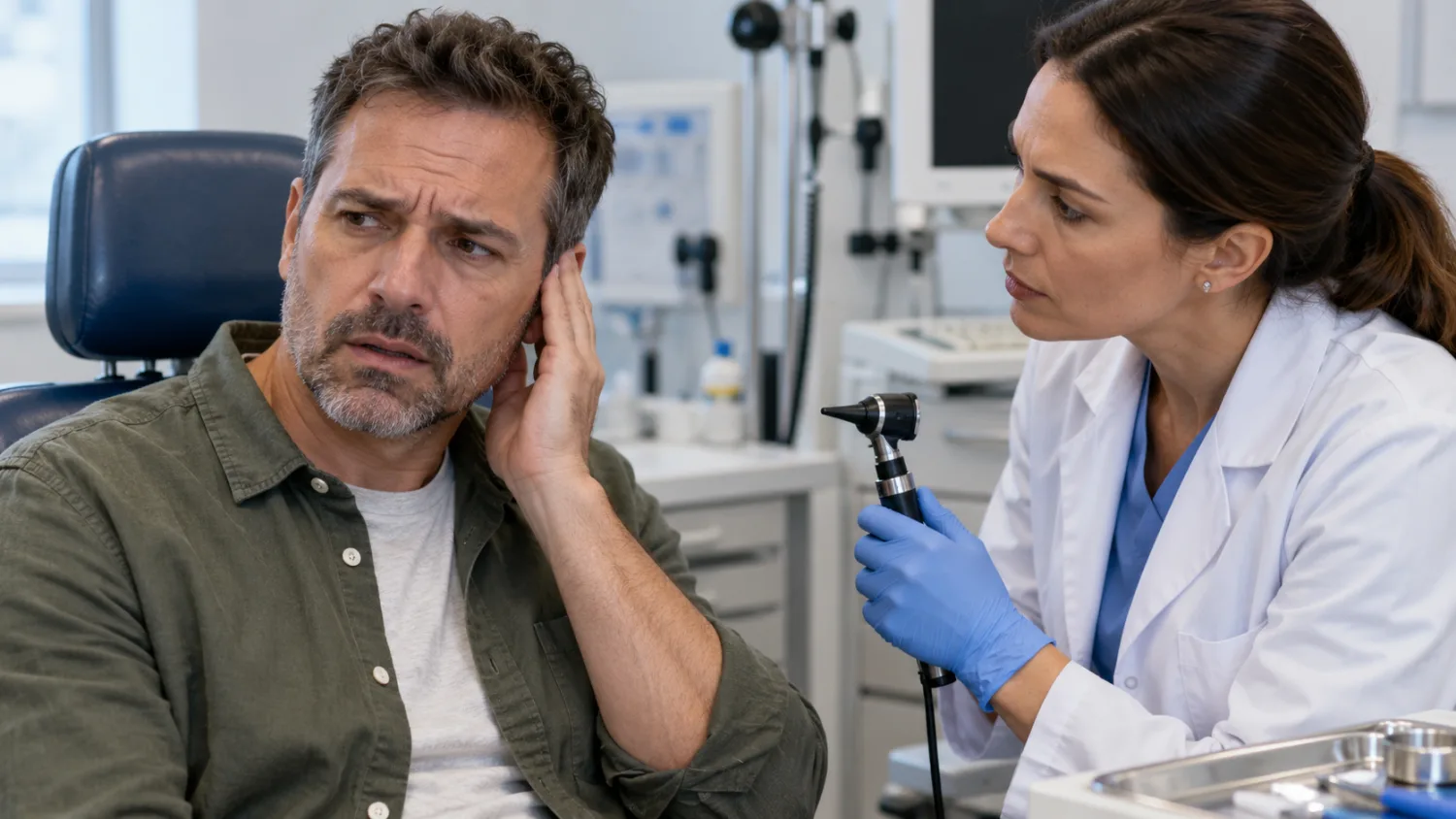
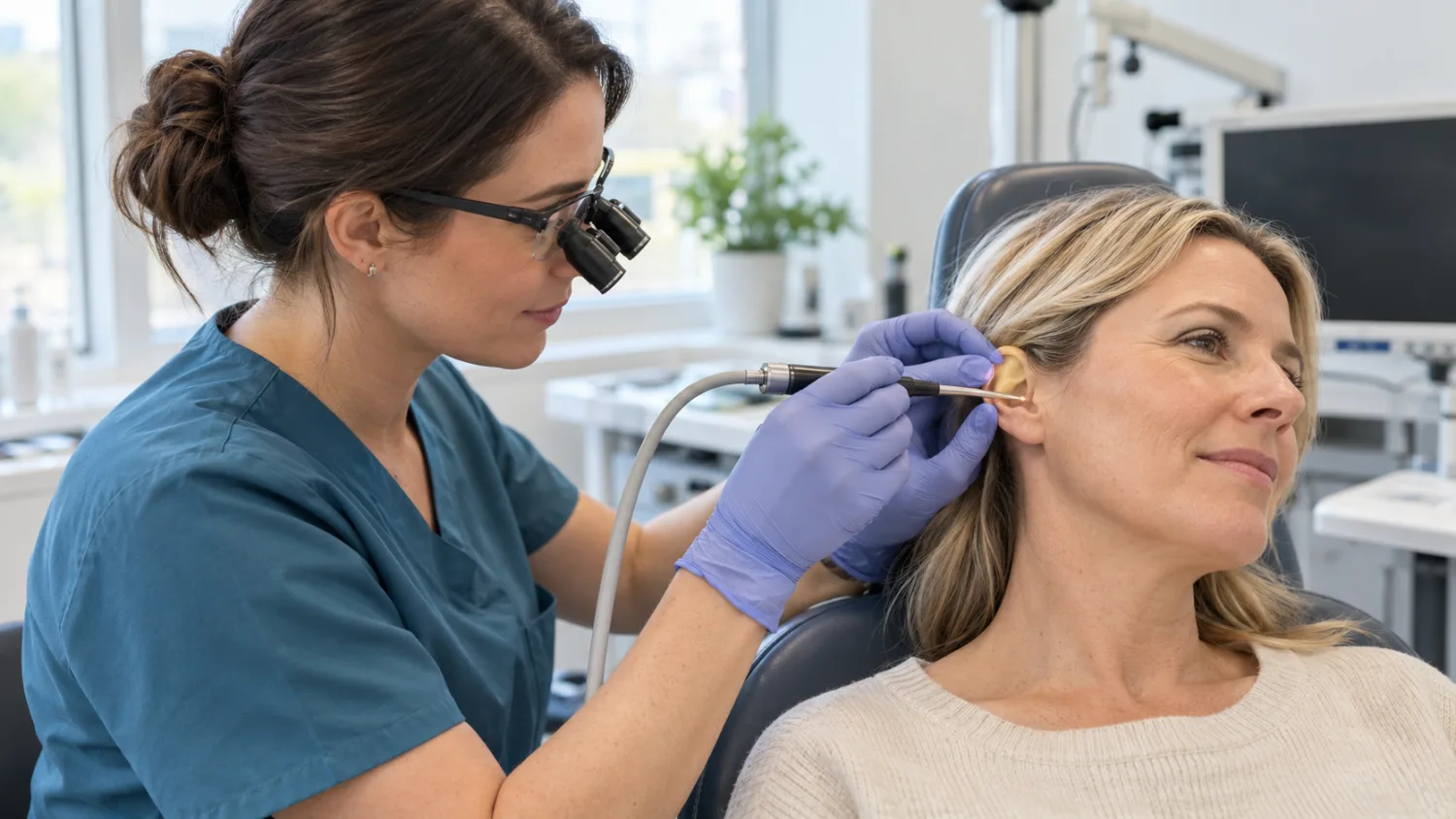
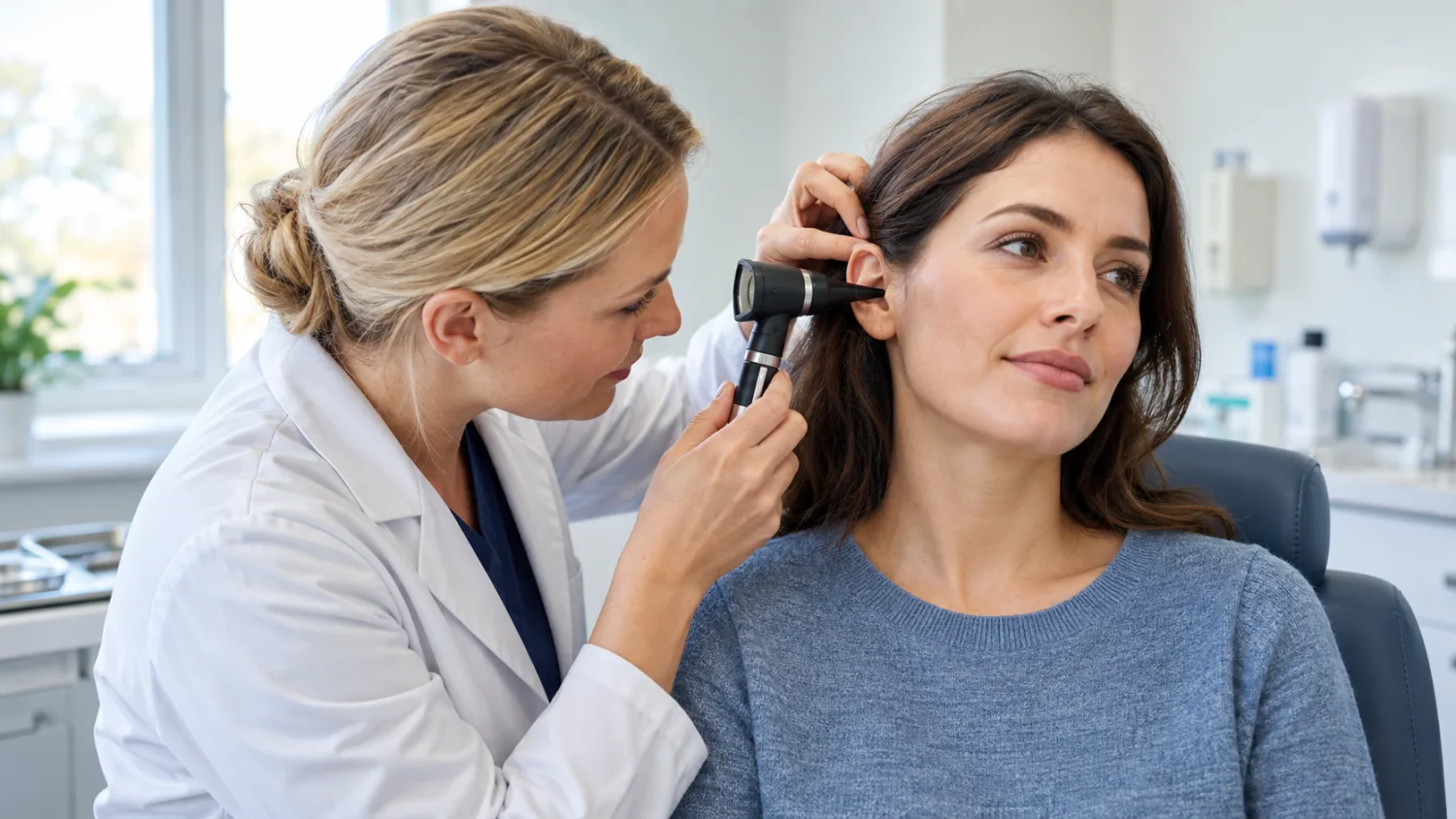
- examination of the ear canal;
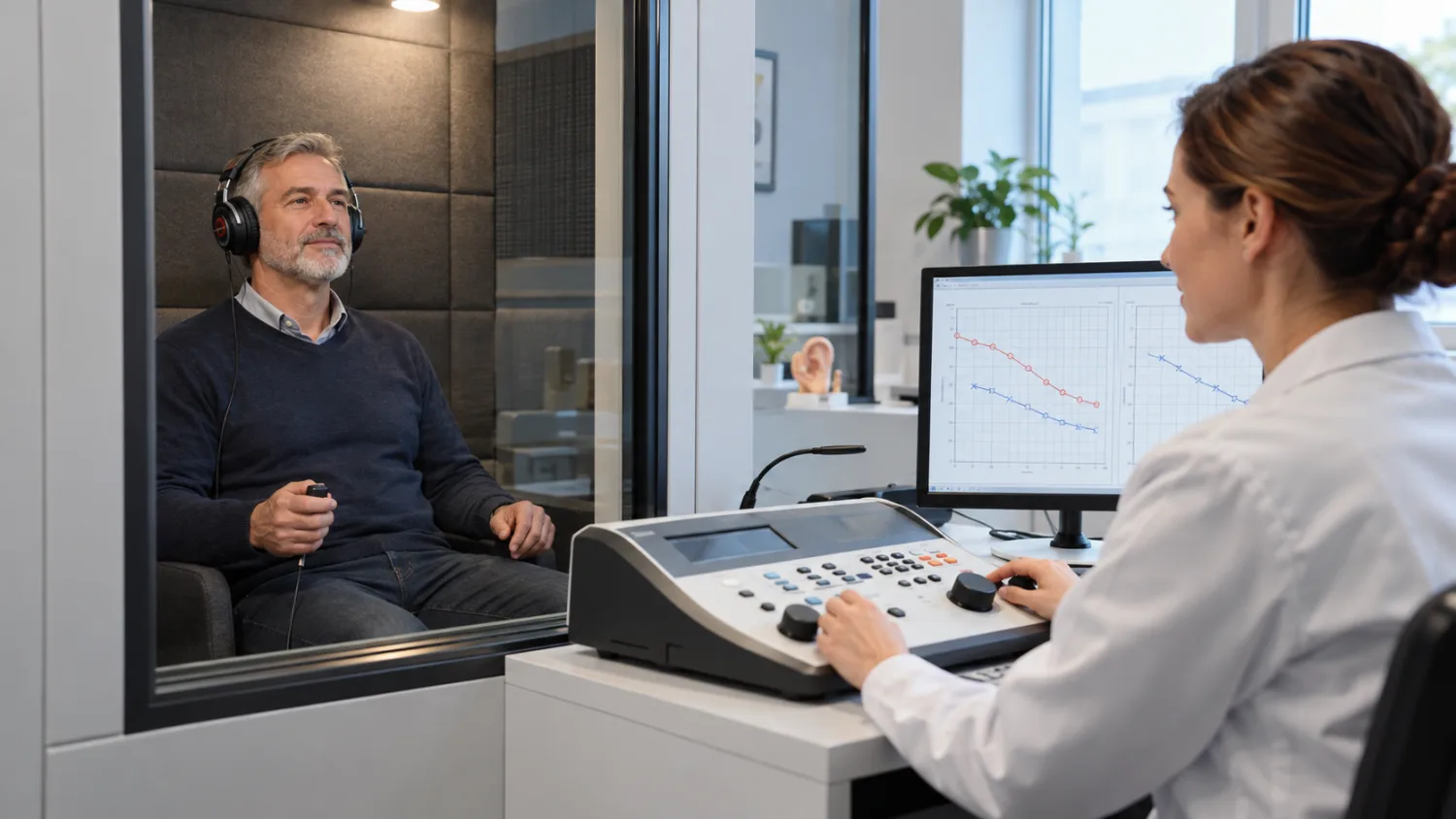
- pure-tone audiometry;
- sometimes tympanometry;
- sometimes speech testing;
- discussion of the results and next steps.
A hospital audiology appointment often lasts around 30 to 60 minutes, depending on which tests are needed.
If the hearing loss looks straightforward, the next step may simply be discussing hearing aids.
If the pattern is unusual, the audiologist may recommend assessment by an ear, nose and throat specialist.
What Is Pure-Tone Audiometry?
This is the test most people think of when they imagine a hearing assessment.
You wear headphones or ear inserts and listen to a series of tones at different pitches and volumes.
You press a button or signal whenever you hear a tone.
The audiologist gradually reduces the volume until they find the quietest sound you can reliably hear at each frequency.
The results are plotted on an audiogram.
This allows the audiologist to see:
- whether hearing is normal;
- which frequencies are affected;
- how severe the hearing loss is;
- whether one ear is worse than the other.
Testing may be performed through headphones and through a small bone-conduction vibrator placed behind the ear.
Bone-conduction testing helps distinguish between problems involving the outer or middle ear and problems arising from the inner ear or hearing nerve.
What Is Tympanometry?
Tympanometry checks how well the eardrum and middle ear are functioning.
A small soft probe is placed in the ear canal and changes the air pressure slightly.
The test is quick and should not be painful.
It can help identify problems such as:
- fluid behind the eardrum;
- Eustachian tube dysfunction;
- some types of middle-ear blockage;
- abnormal eardrum movement.
The NHS lists tympanometry as one of the common adult hearing tests.
If your ears feel blocked or pressurised rather than simply “quiet”, see our guide to Eustachian tube dysfunction.
What Is Speech Audiometry?
Pure tones tell the audiologist how quiet a sound you can detect.
But real-life hearing depends on understanding speech.
Speech audiometry tests how well you recognise spoken words at different volumes.
It can sometimes reveal difficulties that are not obvious from the pure-tone audiogram alone.
This may be particularly useful when:
- you struggle to understand speech despite relatively mild hearing loss;
- there is a difference between the two ears;
- hearing aids are being assessed;
- the audiologist wants more detailed diagnostic information.
Not every routine hearing test includes speech audiometry, so ask if it is important to you.
Can You Get a Hearing Test Free?
Yes.
Adults can often access free hearing testing through several routes.
NHS hearing tests
An NHS hearing test is free.
A GP can refer you to an audiology service if you have gradual hearing loss or ongoing hearing concerns.
NHS audiology can also provide hearing aids and ongoing support where appropriate.
High-street hearing providers
Many opticians, pharmacies and hearing-aid companies provide free adult hearing tests.
For example, Specsavers currently states that its hearing assessments are free for adults.
Other large hearing-aid chains frequently operate similar models.
This can be a perfectly reasonable first step if you suspect gradual age-related hearing loss.
Online hearing tests
Online tests can provide a rough indication that your hearing may need checking.
The NHS links to the RNID online hearing test as one option.
But an online test cannot inspect your ear, identify wax or middle-ear disease, or replace diagnostic audiometry.
Why Would You Pay for a Hearing Test If Free Tests Exist?
There are several reasons.
You may want an independent assessment from an audiologist who is not primarily evaluating you for hearing-aid sales.
You may also want:
- a longer consultation;
- tympanometry;
- speech testing;
- bone-conduction testing;
- a detailed written report;
- a second opinion;
- faster access than your local NHS service.
A paid private appointment may also be useful if you already own hearing aids but want an independent assessment of whether your hearing has changed.
The value depends on what is actually included.
Paying £80 for a detailed one-hour audiology assessment may be reasonable.
Paying £80 for a five-minute screening test that another provider offers free may not be.
What If Ear Wax Is Blocking the Ear?
Wax can affect hearing-test results.
If the ear canal is substantially blocked, the audiologist may not be able to test your hearing accurately.
NHS audiology services specifically advise that excessive wax may need to be removed before assessment.
Some private clinics offer hearing tests and wax removal in the same location.
Others may ask you to arrange removal first and return later for testing.
Private ear-wax removal usually costs around £50–£80, depending on the provider and technique.
Our guide to ear wax removal costs, microsuction and irrigation explains the options.
Wax is only one cause of a blocked-ear sensation.
Our guide to blocked ears, pressure and other causes covers some of the common alternatives.
When Do You Need ENT Rather Than a Routine Hearing Test?
Not every hearing problem should lead directly to hearing aids.
Certain symptoms require medical assessment.
An audiologist may recommend ENT referral if there is:
- significant difference in hearing between the ears;
- unexplained one-sided hearing loss;
- persistent ear pain;
- ear discharge;
- recurrent infections;
- certain unusual patterns on the audiogram;
- other concerning ear symptoms.
NHS audiology pathways similarly refer more complex or medically suspicious hearing problems to ENT or audiovestibular specialists.
If you are considering private assessment, see our guide to private ENT consultant costs in the UK.
Sudden Hearing Loss Is Different
This is particularly important.
If your hearing suddenly drops in one or both ears, do not simply book a routine hearing-aid appointment and wait several weeks.
The NHS advises urgent medical assessment for sudden hearing loss or hearing that has deteriorated rapidly over days or weeks.
Sudden sensorineural hearing loss may require urgent treatment, often involving steroids, and earlier treatment may offer a better chance of recovery.
People sometimes mistake sudden inner-ear hearing loss for:
- wax;
- sinus congestion;
- a blocked ear;
- pressure after a cold.
If you wake up with a suddenly “dead” or dramatically quieter ear, seek urgent assessment rather than assuming it is wax.
Our guide to sudden hearing loss and why it needs urgent assessment explains this in more detail.
What Happens If the Test Shows Hearing Loss?
The next step depends on the type and severity of loss.
If you have straightforward age-related sensorineural hearing loss, hearing aids may be appropriate.
The audiologist should explain:
- how severe the loss is;
- which frequencies are affected;
- whether both ears are similar;
- whether hearing aids are likely to help;
- whether further medical assessment is needed.
You do not have to buy hearing aids immediately.
Ask for a copy of your audiogram so you can compare options elsewhere if you wish.
If you are considering buying privately, see our guide to private hearing aid costs in the UK.
Private hearing aids can cost from several hundred pounds to several thousand pounds per pair, depending on technology and aftercare.
The NHS also provides digital hearing aids free to eligible patients.
What About Tinnitus?
Tinnitus is often associated with hearing loss, although it can occur even when standard hearing thresholds are relatively normal.
A hearing test is commonly part of tinnitus assessment.
If tinnitus occurs in both ears and has developed gradually, it is often linked to hearing changes.
Certain patterns require more investigation.
These include:
- tinnitus in only one ear;
- pulsatile tinnitus that beats with your pulse;
- tinnitus associated with sudden hearing loss;
- tinnitus with significant dizziness or neurological symptoms.
See our complete guide to tinnitus for more information.
How to Compare Private Hearing-Test Providers
If you are paying privately, ask what the quoted appointment includes.
Useful questions include:
- Will I be seen by a registered audiologist?
- How long is the appointment?
- Will my ears be examined first?
- Does the price include pure-tone audiometry?
- Is bone-conduction testing included?
- Is tympanometry included?
- Is speech testing available?
- Will I receive a copy of my audiogram?
- Will you refer me to ENT if the result is unusual?
- Is the assessment independent of purchasing hearing aids?
A more expensive assessment is not necessarily better.
But you should know whether you are paying for a comprehensive diagnostic test or a basic screening appointment.
Frequently Asked Questions
How much is a private hearing test in the UK?
A private independent hearing assessment typically costs around £50–£150 or more. Many high-street hearing providers offer adult hearing tests free.
Are Specsavers hearing tests free?
Yes. Specsavers currently states that its adult hearing tests are free.
Can I get a free hearing test on the NHS?
Yes. NHS hearing tests are free. Adults with gradual hearing problems can usually ask their GP about referral to audiology.
Do I need a GP referral for a private hearing test?
Usually not. Most private audiology clinics and high-street providers allow adults to book directly.
How long does a hearing test take?
A basic screening may take around 15–20 minutes. A fuller diagnostic audiology appointment often takes 30–60 minutes depending on the tests required.
What does a hearing test involve?
Audiologists normally discuss your symptoms, examine your ears and perform pure-tone audiometry. Tympanometry, bone-conduction testing or speech tests may also be performed.
Does a hearing test hurt?
No. Standard hearing tests are non-invasive and should not be painful.
Can ear wax affect a hearing test?
Yes. Significant wax can reduce hearing and interfere with accurate testing. It may need to be removed before the assessment.
Can a hearing test tell whether I need hearing aids?
Yes. An audiogram shows the type and severity of hearing loss and helps determine whether hearing aids are likely to provide benefit.
Should I get a copy of my audiogram?
Yes. It is useful to keep your results, particularly if you want a second opinion or want to compare hearing-aid providers.
What is a normal hearing result?
The audiologist interprets hearing thresholds across several frequencies rather than relying on one number. Results are usually categorised according to the degree and pattern of hearing loss.
What is the difference between a hearing screening and a full hearing assessment?
A screening is designed mainly to identify whether hearing loss may be present. A diagnostic assessment measures the pattern and severity in more detail and may include bone conduction, tympanometry and speech testing.
When should I see ENT instead of an audiologist?
ENT assessment may be needed for one-sided or unusual hearing loss, recurrent infections, persistent ear pain or discharge, certain abnormal audiograms, or other medical ear symptoms.
Is sudden hearing loss an emergency?
It requires urgent medical assessment. The NHS advises urgent help if hearing suddenly falls in one or both ears or deteriorates quickly over several days or weeks.
Is a private hearing test worth paying for?
It can be if you want rapid access, an independent assessment or more detailed diagnostic testing. If you simply want to know whether gradual age-related hearing loss is present, a free NHS or reputable high-street hearing test may be sufficient.
This guide provides general UK price estimates rather than guaranteed fees. Hearing-test prices and the tests included vary between clinics. Sudden or rapidly worsening hearing loss should be assessed urgently rather than treated as a routine private hearing-test appointment.