When a clinic or hospital talks about stem cells, one of the first distinctions you may hear is whether the cells are autologous or donor-derived.
The difference sounds simple:
Autologous stem cells come from your own body. Donor stem cells come from another person.
But that difference can completely change how a treatment works, how the immune system responds and what risks are involved.
In established medicine, these terms are particularly important in blood and bone marrow transplantation. Autologous stem cell transplants may be used after high-dose chemotherapy in conditions such as lymphoma or multiple myeloma, while donor — or allogeneic — transplants can replace a patient's blood-forming and immune system with cells from someone else.
In private regenerative medicine, however, the same terminology is also used for treatments involving bone marrow aspirate, fat-derived cells, umbilical cord tissue and other cell products. That can make the terminology sound more reassuring than the evidence actually is.
Understanding where the cells come from is therefore only the beginning. You also need to know what cells are being used, how they have been processed, what they are supposed to treat and whether there is good evidence that the treatment works.
What Does Autologous Mean?
Autologous simply means that the cells used in treatment come from the same person who receives them.
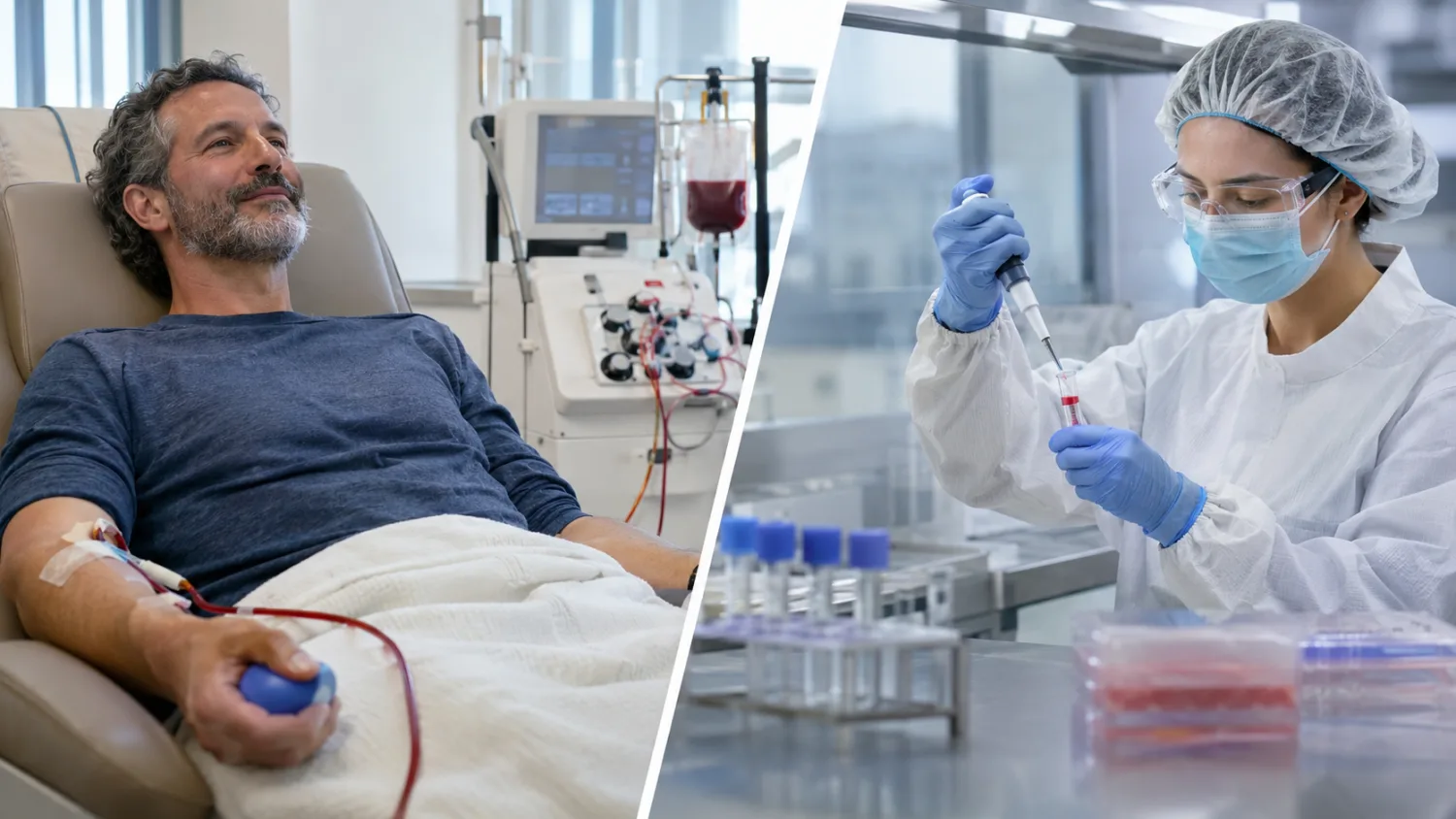
In a hospital stem cell transplant, doctors may collect blood-forming stem cells from a patient's bloodstream before intensive chemotherapy. The cells are stored and later returned to the patient so that the bone marrow can recover and begin producing healthy blood cells again.
The NHS describes this as an autologous transplant. If donor cells are needed instead, the procedure is described as allogeneic. You can read the NHS explanation of the transplant process at NHS: How a stem cell or bone marrow transplant is done.
Autologous cells are also used in some private procedures marketed as regenerative medicine.
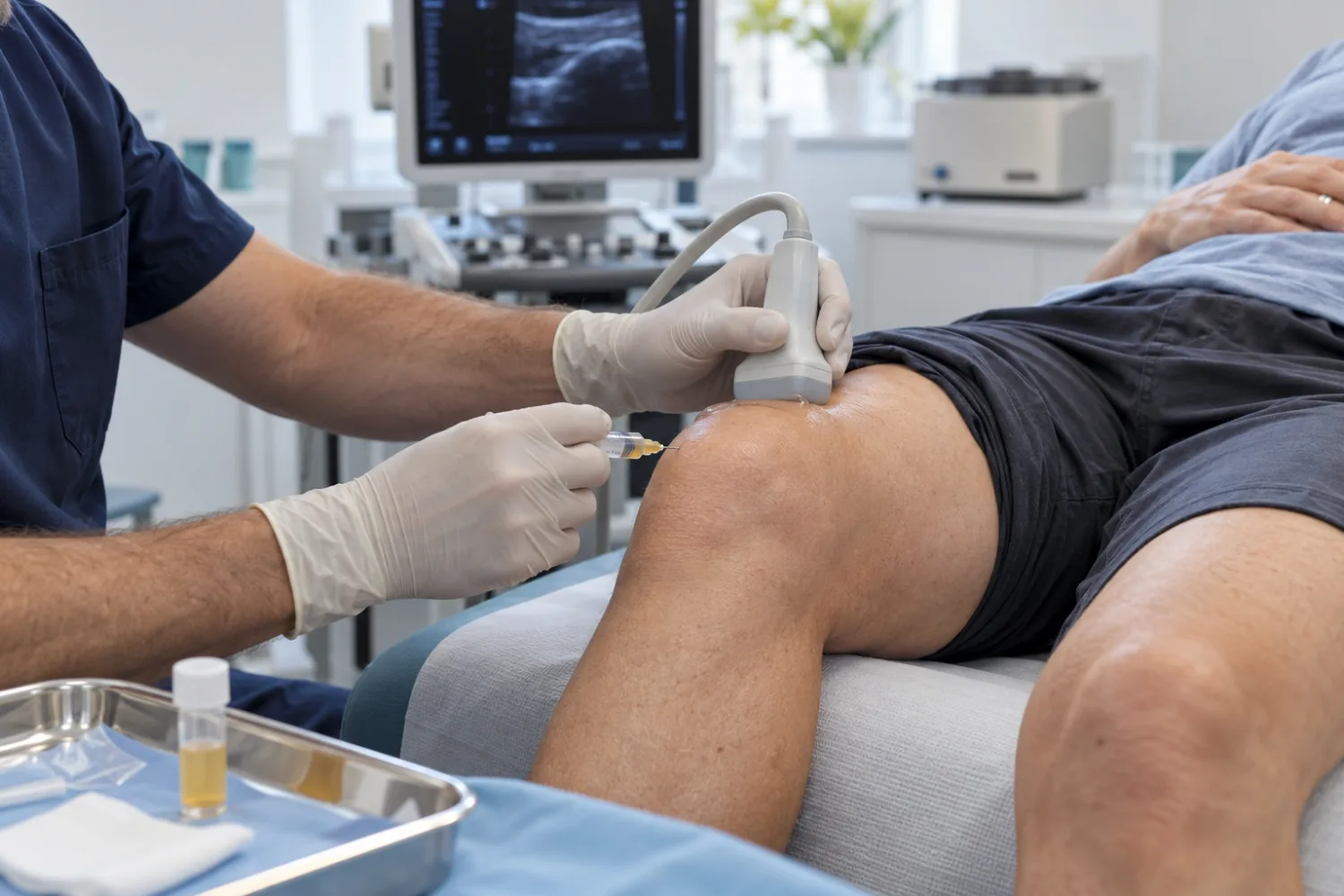
For example, a clinic treating knee pain may take bone marrow from the patient's pelvis, process it into bone marrow aspirate concentrate — often called BMAC — and inject that preparation into the knee.
Because the material originates from the patient, it is autologous.
That does not automatically mean the treatment is proven to regenerate cartilage or cure osteoarthritis. It only describes where the cells came from.
Our guide to stem cell knee treatment and BMAC costs in the UK looks more closely at these procedures and the evidence behind them.
What Are Donor or Allogeneic Stem Cells?
Allogeneic stem cells come from another person.
The donor may be a brother or sister, another relative, an unrelated volunteer or, in some circumstances, donated umbilical cord blood.
In established stem cell transplantation, matching the donor and recipient is extremely important because the immune systems of two people are genetically different.
Anthony Nolan explains that an allogeneic transplant uses cells from another person, while an autologous transplant returns the patient's own previously collected cells. Its patient information provides a useful overview at Anthony Nolan: Understanding stem cell transplants.
Donor cells are also increasingly mentioned by commercial regenerative-medicine clinics.
These may be described using terms such as:
- umbilical cord-derived cells;
- placental cells;
- Wharton's jelly-derived cells;
- donor mesenchymal stromal or stem cells.
The fact that the source is human tissue does not establish that an injected product has been proven to treat arthritis, neurological disease or another condition.
Donor origin actually introduces additional questions around screening, manufacturing, immune compatibility and regulation.
Why Doesn't Your Body Reject Autologous Cells?
The major theoretical advantage of using your own cells is immune compatibility.
Your immune system recognises your own cells as belonging to you, so an autologous treatment does not create the same donor-recipient immune mismatch that occurs when cells come from another person.
This is one reason autologous stem cell transplantation avoids graft-versus-host disease.
But using your own cells does not make a procedure risk-free.
The collection procedure itself can cause complications. Cells can also be contaminated during processing, and an injection can introduce infection or cause bleeding, inflammation or other procedure-specific problems.
Most importantly, autologous does not mean effective.
A patient's own cells can be safely collected and returned to them without necessarily providing the clinical benefit being advertised.
This distinction matters particularly when private clinics market treatments as “natural”, “your own healing cells” or “risk-free because they come from your body”.
Why Are Donor Cells More Complicated?
Introducing living cells from another person creates a different set of biological problems.
In bone marrow transplantation, doctors therefore look carefully at tissue compatibility. Donated blood-forming stem cells need to be matched as closely as possible to reduce complications.
One major complication is graft-versus-host disease, often shortened to GvHD.
This occurs when immune cells produced by the donor graft recognise parts of the recipient's body as foreign and attack them.
GvHD can affect the skin, digestive system, liver and other organs, and it can range from mild to life-threatening.
Anthony Nolan explains how donor stem cells rebuild a new blood and immune system and why GvHD is an important risk following allogeneic transplantation. See Anthony Nolan's explanation of donor stem-cell transplantation.
Commercial donor-cell products used in regenerative medicine are not necessarily biologically identical to blood-forming stem cell transplants, so the risks cannot simply be copied from one treatment to another.
But donor products still raise important questions about where the cells came from, how donors were screened, whether the cells remain alive, how they were expanded or processed and how the finished product is regulated.
Autologous vs Donor Stem Cell Transplants in Established Medicine
The difference between the two approaches becomes particularly clear in haematology.
With an autologous transplant, the patient's own stem cells are collected before high-dose treatment and then returned afterwards.
The purpose is largely to allow doctors to give intensive chemotherapy that would otherwise severely damage the bone marrow.
Cancer Research UK explains that autologous transplantation is used to replace blood cells destroyed by high-dose treatment. See Cancer Research UK: Autologous stem cell transplants.
An allogeneic transplant does something more ambitious.
It replaces the patient's blood-forming system with cells from another person. The donor immune system can sometimes recognise and attack remaining cancer cells — an effect often described as a graft-versus-tumour or graft-versus-leukaemia effect.
That potential benefit comes at the price of greater immune complexity, including GvHD and the need for careful donor matching and immunosuppressive treatment.
Cancer Research UK provides a parallel explanation at Cancer Research UK: Allogeneic stem cell transplant.
Neither approach is inherently “better”.
The correct choice depends on the disease, previous treatment, age, general health, donor availability and what the transplant is intended to achieve.
What Does This Mean for Regenerative Medicine Clinics?
Outside established blood and bone marrow transplantation, the terminology becomes much less straightforward.
A private clinic may advertise “stem cell therapy” using cells obtained from the patient's bone marrow, fat tissue or blood. Another clinic may offer cells derived from donor umbilical cord or placental tissue.
Both may use sophisticated biological terminology.
But the central question should still be:
Has this particular cell product been shown to safely and effectively treat this particular condition?
The answer cannot be established simply by knowing whether the cells are autologous or donor-derived.
This is particularly important in conditions such as knee osteoarthritis, spinal problems, neurological diseases or chronic pain, where some clinics make claims far beyond the strength of current clinical evidence.
Our guide to spotting exaggerated stem-cell clinic claims explains the warning signs to look for before paying.
For a wider overview of what is genuinely established and what remains experimental, see stem cell therapy in the UK: approved uses vs private claims.
Does Donor Umbilical Cord Tissue Mean the Treatment Is Better?
No.
Terms such as “umbilical cord stem cells”, “Wharton's jelly stem cells” or “birth tissue” can sound advanced and biologically powerful, but the source of a product tells you very little about whether it works for the condition being treated.
Donated tissues and cells intended for human use require appropriate screening and quality controls.
The Human Tissue Authority explains that donors of tissues and cells are subject to mandatory screening and testing requirements. It also advises patients considering unlicensed overseas stem-cell treatments to discuss them with a trusted medical professional and to be cautious about clinics that rely heavily on testimonials or promises of cures. See HTA guidance on cord blood and stem-cell treatments.
A clinic should be able to tell you precisely what product is being administered rather than relying on vague descriptions such as “millions of regenerative cells”.
Useful questions include where the tissue came from, how it was processed, whether cells are actually viable, how they were characterised and under which UK regulatory route the product is being supplied.
How Are Stem Cell Products Regulated in the UK?
Regulation depends on what is being collected, how much it is manipulated and how it is intended to be used.
The UK system can involve several regulators.
The Human Tissue Authority regulates areas including the procurement, testing, processing, storage and distribution of human tissues and cells intended for human application.
The Medicines and Healthcare products Regulatory Agency, or MHRA, regulates cell therapies when they meet the definition of a medicinal product or advanced therapy medicinal product.
The HTA explains this division of responsibility in its guidance on human tissues and cells. ([hta.gov.uk](https://www.hta.gov.uk/guidance-professionals/codes-practice-standards-and-legislation/codes-practice/code-e-research-4))
An advanced therapy may be authorised as a medicine, used within a clinical trial or, in some circumstances, supplied through specific routes for unlicensed products.
The MHRA emphasises that an unlicensed medicine does not have a UK marketing authorisation and may not have undergone the same assessment of safety, quality and effectiveness as an authorised medicine. Its current guidance can be found at MHRA: Advanced therapy medicinal products — regulation and licensing.
That does not mean every unlicensed therapy is automatically unsafe or inappropriate. It does mean patients should understand exactly what regulatory status a product has before treating “available privately” as equivalent to “proven treatment”.
Our guide to gene therapy and ATMPs in the UK explains this regulatory system in more detail.
Which Type Is Safer: Your Own Cells or Donor Cells?
There is no meaningful answer without specifying the treatment.
Autologous cells avoid donor-recipient immune incompatibility, which is a genuine advantage in many settings.
But safety also depends on how cells are collected, manipulated, stored and administered.
A poorly controlled autologous procedure can still cause serious complications.
Donor-derived treatments introduce additional considerations around donor screening, immune response, manufacturing consistency and infectious-disease transmission. Properly regulated donor cell therapies can nevertheless be lifesaving and are used routinely in specialist transplant medicine.
The safest question is therefore not “Are autologous cells safer than donor cells?”
It is:
What evidence and regulatory safeguards exist for this exact product, in this exact condition, delivered in this exact way?
What Should Patients Ask Before Paying for Stem Cell Treatment?
If you are considering a private cell-based treatment, ask the clinic to describe the product in plain language.
You should be able to establish whether the cells are your own or donor-derived, where they are collected from and what happens to them before they are administered.
Then ask what evidence supports the treatment for your particular diagnosis.
A study showing that a certain type of cell can become cartilage in a laboratory is not equivalent to a randomised clinical trial showing that injecting those cells into a human knee improves osteoarthritis.
Similarly, publishing research about stem cells in general does not prove that the specific product being sold by a clinic works.
Be particularly cautious if the same cell preparation is claimed to treat a long list of unrelated diseases.
Our guide to regenerative medicine abroad and stem-cell tourism explains the additional risks when travelling internationally for experimental treatment.
Frequently Asked Questions
What is the simplest difference between autologous and donor stem cells?
Autologous cells come from your own body. Donor, or allogeneic, cells come from another person.
Are autologous stem cells always safer?
No. They avoid donor-recipient immune incompatibility, but the procedure can still carry risks related to collection, processing, contamination and administration.
Can your body reject your own stem cells?
Your immune system does not normally reject your own cells in the way it can recognise donor cells as foreign. However, this does not guarantee that an autologous treatment is safe or effective.
Can the body reject donor stem cells?
Yes. In allogeneic transplantation, immune compatibility is an important concern. Donor immune cells can also attack recipient tissues, producing graft-versus-host disease.
Why would doctors use donor cells if they are riskier?
In some blood cancers and serious blood disorders, donor stem cells can replace a diseased blood-forming system and provide a new immune system capable of attacking remaining abnormal cells. The potential benefit can justify the additional risk.
Are umbilical cord stem cells donor cells?
If the cord blood or cord tissue came from another person, yes. In transplant medicine, donated cord blood can provide blood-forming stem cells. Commercial products derived from cord tissue are different and need to be assessed individually.
Is BMAC autologous?
Yes. Bone marrow aspirate concentrate used in procedures such as some private knee injections is generally made from bone marrow taken from the same patient.
Does autologous mean approved?
No. “Autologous” describes the source of the cells, not whether a treatment has regulatory approval or strong clinical evidence.
Does donor-derived mean more powerful?
No. Donor origin does not establish greater effectiveness. The biology, dose, processing, indication and clinical evidence are much more important.
Are private stem-cell treatments legal in the UK?
Some are provided legally under various regulatory routes, but legality and proven effectiveness are not the same thing. Cell therapies may fall under HTA or MHRA regulation depending on how the cells are processed and used.
Are all stem cell therapies experimental?
No. Haematopoietic stem cell transplantation is established treatment for several blood cancers, immune disorders and blood conditions. Many commercial regenerative treatments for joint, neurological and other conditions have much weaker evidence.
Are stem cells the same as exosomes?
No. Stem cells are living cells. Exosomes are tiny membrane-bound particles released by cells. Our guide to stem cells vs exosomes explains the distinction.
What is the most important thing to check before paying?
Ask what exact product is being used and what high-quality human clinical evidence shows that it improves your particular condition. The words “stem cells”, “autologous” or “donor-derived” by themselves do not answer that question.