Hearing loss is common, often gradual, and easy to ignore at first.
Many people do not realise how much it is affecting them until conversations become tiring, the television volume keeps creeping up, or they start avoiding busy places because hearing feels like hard work.
But hearing loss is not just an inconvenience. It can affect confidence, work, relationships, safety and mental wellbeing. It can also have many different causes, from wax build-up and ear infections to age-related changes, noise damage, problems with the hearing nerve, or less common medical conditions.
This guide explains what hearing loss is, why it happens, what to do next, what to avoid, how hearing is tested in the UK, and which treatments may help. It is designed for adults, older people, parents, and anyone wondering whether they should see a pharmacist, GP, audiologist or ENT specialist.
If you are browsing this as part of a wider ear, nose and throat search, you may also want to explore our ENT resources section, our guide to when to see a pharmacist instead of a GP, and our overview of NHS vs private healthcare in the UK.
What hearing loss is
Hearing loss means sounds are harder to hear, less clear, or both.
Some people notice that voices seem muffled. Others can hear sound but struggle to understand words, especially in restaurants, meetings or family gatherings.
Hearing loss may affect one ear or both ears. It may come on suddenly, worsen over days or weeks, or develop slowly over years. It may be temporary, treatable, long term, or permanent depending on the cause.
The main types of hearing loss
In simple terms, hearing problems usually fall into one of three groups:
- Conductive hearing loss – sound is blocked from reaching the inner ear properly. Common causes include earwax, fluid behind the eardrum, glue ear, ear infections, or eardrum problems.
- Sensorineural hearing loss – the inner ear or hearing nerve is not working properly. This is often linked with ageing, loud noise exposure, some illnesses, or certain medicines.
- Mixed hearing loss – a combination of both.
A useful way to think about it is this: conductive hearing loss is often like trying to hear through a blockage, while sensorineural hearing loss is more like the sound system itself is damaged.
What hearing loss feels like in real life
People rarely describe hearing loss in medical language. They describe the problems it causes.
Real-life examples
“I can hear my partner speaking, but I keep missing words.”
This often happens in early age-related or noise-related hearing loss, where clarity drops before volume seems dramatically reduced.
“My left ear feels blocked after a cold and everything sounds dull.”
This may be wax, congestion, fluid, or Eustachian tube problems rather than permanent hearing damage.
“I suddenly woke up and one ear was much worse.”
This is not something to sit on. Sudden hearing loss can be a medical emergency.
“I’m exhausted after social events.”
Many people with hearing loss work extremely hard to fill in missing sounds. The result is listening fatigue, not just poor hearing.
“The TV is on 35 and everyone else says it is too loud.”
That is one of the classic signs that hearing should be checked.
Common signs of hearing loss
Hearing loss can be obvious, but it can also show up gradually through small changes in everyday life.
Common signs include:
- needing people to repeat themselves
- thinking others are mumbling
- difficulty hearing in background noise
- turning the TV, radio or phone volume up more than before
- struggling with group conversations
- missing doorbells, alarms or phone calls
- feeling one ear is worse than the other
- hearing speech but not understanding it clearly
- tinnitus, such as ringing, buzzing or hissing
- feeling tired, frustrated or withdrawn after conversations
When hearing loss is urgent
Most hearing loss is not a 999 emergency, but some situations do need urgent medical help.
Seek urgent advice from a GP, NHS 111 or urgent care if:
- your hearing drops suddenly in one or both ears
- your hearing becomes much worse over a few days or weeks
- you have hearing loss with ear pain, discharge, fever or severe dizziness
- hearing loss follows a loud blast, head injury or trauma
- you have one-sided hearing loss with facial weakness, numbness or new neurological symptoms
Do not assume sudden hearing loss is “just wax” without being assessed. In some cases, quick treatment makes a real difference.
What causes hearing loss?
There is no single cause. The right explanation depends on your age, symptoms, ear history, noise exposure, medicines and how quickly the problem appeared.
Age-related hearing loss
This is one of the most common causes in adults. Hearing often declines gradually with age, especially for higher-pitched sounds.
A person may hear speech but miss consonants, making words sound blurred together.
Typical pattern: both ears affected, gradual onset, worse in noisy places, no major pain or discharge.
Earwax build-up
Wax can cause a blocked sensation, muffled hearing, discomfort and sometimes tinnitus.
It can affect one ear more than the other and can seem to come on suddenly after using cotton buds or earplugs.
Typical pattern: blocked feeling, variable hearing, sometimes after showering or pushing wax deeper.
Ear infections and fluid behind the eardrum
Infections of the outer or middle ear can temporarily reduce hearing.
Children often develop hearing loss from middle ear fluid, but adults can too.
Fluid behind the eardrum can happen after a cold, sinus problem or pressure change. Sounds may feel dull and the ear may pop, crackle or feel full.
Noise damage
Years of loud music, machinery, tools, concerts, clubs or headphones at high volume can damage the inner ear.
One very loud event can also cause sudden problems.
Typical pattern: gradual decline, tinnitus, difficulty with speech clarity, sometimes worse after years of exposure.
Tinnitus with hearing loss
Many people with tinnitus also have some hearing loss, even if they have not realised it yet.
If this affects you, keep an eye on our tinnitus content once published. For external support and practical advice, RNID’s hearing loss information hub is a useful UK resource.
Inner-ear, eardrum, medicine and inherited causes
Some inner-ear conditions cause hearing loss with vertigo, tinnitus and pressure in the ear. These need proper assessment rather than guesswork.
A burst or perforated eardrum may follow infection, trauma, a slap to the ear, sudden pressure change or inserting objects into the ear.
Some medicines can affect hearing or balance. This is more likely with certain high-risk drugs, high doses, or underlying ear vulnerability. Never stop prescribed treatment on your own, but do mention new hearing symptoms promptly.
Some people are born with hearing loss or have an inherited tendency that becomes clearer later in life.
One-sided hearing loss, asymmetrical hearing, hearing loss with facial symptoms, or persistent unexplained changes may need more specialist investigation.
One ear, both ears and hearing loss in children
One ear vs both ears
If both ears are gradually becoming worse, age-related change, noise exposure, or general hearing decline become more likely.
If one ear is suddenly or noticeably worse, doctors think more carefully about wax, infection, fluid, Ménière’s disease, sudden sensorineural hearing loss, and other one-sided causes.
One-sided symptoms are not always serious, but they should not be brushed off.
Hearing loss in children
In children, hearing problems may show up as speech delay, asking “what?” a lot, inattentiveness, TV volume issues, school difficulties, or frequent ear infections.
Glue ear is one of the commonest reasons for reduced hearing in children.
Parents often assume a child is ignoring them when the real issue is that they are not hearing clearly enough, especially in noisy rooms.
What to do if you think you have hearing loss
- Do not ignore it. The longer people wait, the harder it can be to adapt and get support.
- Notice the pattern. Is it one ear or both? Sudden or gradual? With pain, wax, tinnitus, dizziness or recent illness?
- Check for obvious temporary factors. Colds, pressure changes, recent flights, water exposure and wax can all play a role.
- Get assessed. This may be by a pharmacist, GP, audiology service or ENT pathway depending on your symptoms.
- Act quickly if it is sudden. Sudden hearing loss is different from slow change.
Who should you see in the UK?
A pharmacist
A pharmacist may help if the problem seems linked to minor ear symptoms, over-the-counter wax-softening drops, or simple advice about what to do next. They are not a substitute for urgent assessment if hearing loss is sudden, painful, or rapidly worsening.
A GP
A GP is a good starting point if you are unsure what is causing the problem, especially if symptoms are new, one-sided, painful, associated with infection, or affecting daily life.
An audiologist or hearing service
Audiology services assess hearing in detail and can advise on hearing aids, communication strategies and further referral if needed.
An ENT specialist
ENT is more likely to be involved when there are red flags, sudden changes, structural ear disease, recurrent infections, one-sided symptoms, dizziness, persistent conductive problems or possible need for procedures or surgery.
How hearing is tested
Hearing tests are usually simple, painless and much less intimidating than people expect.
Common hearing tests
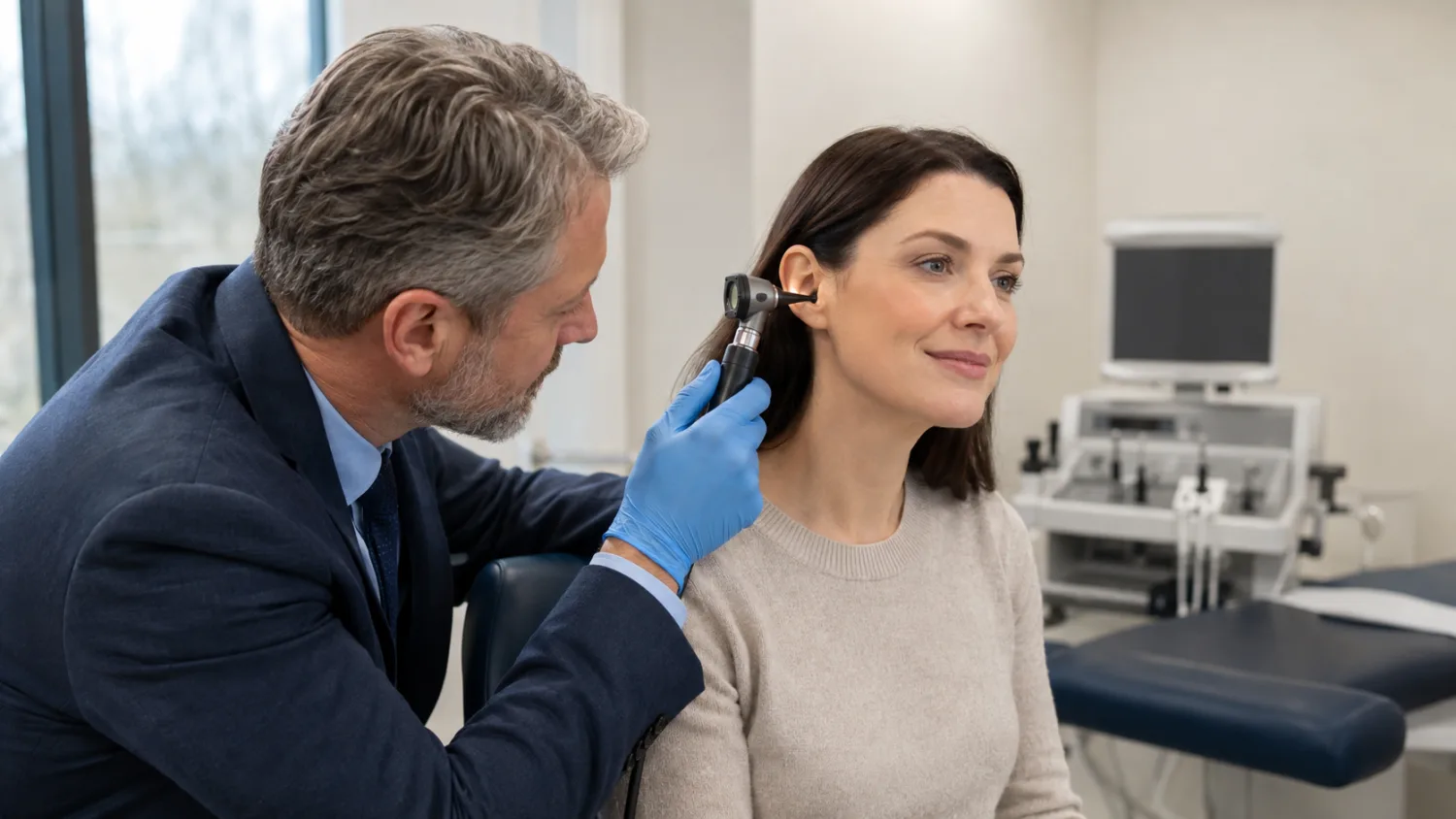
- Otoscopy – looking into the ear for wax, inflammation or eardrum problems
- Tuning fork tests – simple bedside clues about the type of hearing loss
- Pure tone audiometry – listening for beeps at different pitches and volumes
- Speech testing – checking how well you hear and understand spoken words
- Tympanometry – checking how the eardrum and middle ear are working
If you want to know more about the process, the NHS also explains how hearing tests work and when to seek help.
What happens after diagnosis?
Treatment depends on the cause.
Some people need wax removal. Some need infection treatment or monitoring. Others benefit most from hearing aids and communication support.
A smaller group need ENT investigations, imaging or more specialist management.
Treatment options for hearing loss
Earwax treatment
If wax is contributing, softening drops may help. Some people then need irrigation or microsuction, depending on the situation and local service.
Do not keep trying random home methods for weeks if your hearing stays blocked.
Infection treatment and middle-ear pressure
If hearing loss is linked to infection, treatment depends on the type and severity. Not every ear infection needs antibiotics, but some do.
After colds or sinus problems, hearing may improve as inflammation settles. Sometimes symptoms last longer and need review.
Hearing aids
Hearing aids can make a huge difference, especially when fitted properly and used consistently.
They do not “cure” hearing loss, but they often improve communication, confidence and quality of life far more than people expect.
Many people delay hearing aids because they imagine large, obvious devices that whistle and do not work well. Modern hearing aids are much more advanced, more discreet and more adaptable than many people realise.
Assistive listening technology
Some people benefit from phone amplifiers, TV listening devices, remote microphones, captions and other accessories in addition to hearing aids.
Communication strategies
Sometimes the most life-changing improvements are practical:
- facing the person who is speaking
- reducing background noise
- choosing better lighting so lip patterns and facial cues are visible
- asking people to speak clearly rather than simply louder
- sitting where you can hear best in meetings and restaurants
Specialist treatment for sudden sensorineural hearing loss
This is different from routine, gradual hearing decline. It needs urgent medical assessment.
In some adult cases, steroids may be considered under specialist care.
What not to do
People often make hearing problems worse by trying too many quick fixes at home.
- Do not use cotton buds inside the ear. They commonly push wax deeper and can irritate or injure the ear canal.
- Do not put random objects in the ear. Hairpins, keys, matchsticks and “ear cleaning tools” are bad ideas.
- Do not ignore sudden hearing loss. Waiting a few days “to see if it settles” can be risky.
- Do not assume every blocked ear is wax. Infection, fluid and inner-ear causes can feel similar.
- Do not keep turning the volume up without getting checked. The earlier you understand the cause, the better.
- Do not stop important prescribed medicines without medical advice. If you are worried a medicine is affecting your hearing, speak to your clinician.
Noise protection and living well with hearing loss
Noise-related damage is often gradual and permanent, which makes prevention especially important.
How to protect your hearing
- use ear protection when working with loud tools or machinery
- take breaks from loud music and venues
- keep headphone volume at safer levels
- move away from speakers at concerts and clubs
- take hearing symptoms after loud noise seriously, especially tinnitus or muffled hearing
Even younger adults can develop measurable hearing problems after repeated loud sound exposure.
Living well with hearing loss
Hearing loss affects more than hearing. It can affect identity, confidence and social life.
People often say they feel left out, embarrassed about asking others to repeat themselves, or exhausted by trying to keep up.
The good news is that there are solutions. The right combination may include hearing aids, communication strategies, wax treatment, medical care, assistive technology, and support for family members so they understand how to communicate better.
One of the most helpful mindset shifts is this: hearing loss is not a personal failure and it is not something to “just put up with”. It is a health issue, and support exists.
NHS and private hearing care
Many people do well through NHS routes, especially when they are happy to follow local pathways and waiting times.
Others choose private hearing care for faster assessment, wider device choice, more follow-up flexibility, or direct access to certain services.
The best route depends on urgency, budget, local availability and whether you mainly need diagnosis, hearing aids, ENT review, or all three.
Practical next steps if this sounds familiar
- Book a hearing check if your hearing is not what it used to be.
- Seek urgent help if the change is sudden or rapidly worsening.
- Think about whether one ear is worse, whether you have tinnitus, and whether noise exposure may be involved.
- Stop using cotton buds or putting objects in the ear.
- Protect your hearing from further loud-noise damage.
- Do not wait until hearing problems are affecting every part of life before asking for help.
FAQ: hearing loss
Can hearing loss be reversed?
Sometimes. Wax, infections, fluid and some temporary causes may improve with treatment. Age-related or noise-related sensorineural hearing loss is usually managed rather than reversed.
Can stress cause hearing loss?
Stress can make listening harder, increase awareness of tinnitus and worsen how symptoms feel, but hearing loss itself still needs proper assessment rather than being dismissed as stress.
Is hearing loss always permanent?
No. Some causes are temporary. But some are long term, which is why diagnosis matters.
Can hearing loss cause tinnitus?
Yes, hearing loss and tinnitus commonly occur together.
Should I get a hearing aid straight away?
Not everyone needs one immediately, but delaying assessment is rarely helpful. A proper hearing test gives you a clear starting point.
Is one-sided hearing loss more worrying?
One-sided loss is not automatically dangerous, but it deserves proper assessment, especially if it is new, sudden or clearly different from the other side.
Can earwax cause hearing loss?
Yes. Earwax can cause muffled hearing, a blocked sensation and sometimes tinnitus. If the problem does not settle, get proper advice rather than repeatedly poking or flushing the ear at home.
Can hearing loss make people withdrawn?
Yes. People with hearing loss may avoid social situations because listening becomes tiring or embarrassing. Good support can make a major difference.
Trusted UK resources
For official and charity-backed information, you can read the NHS guide to hearing loss, the NHS page on hearing tests, and RNID’s information on hearing loss and support options.
Final takeaway
Hearing loss is common, but it should never be brushed aside as “just one of those things” without understanding the cause.
Some cases are simple and treatable. Some need hearing support. Some need urgent review.
The sooner you know which type of problem you are dealing with, the sooner you can do something useful about it.
If your hearing has changed, get it checked. If it changed suddenly, act urgently. And if it has been slowly getting worse for months or years, do not wait for it to become severe before taking the next step.