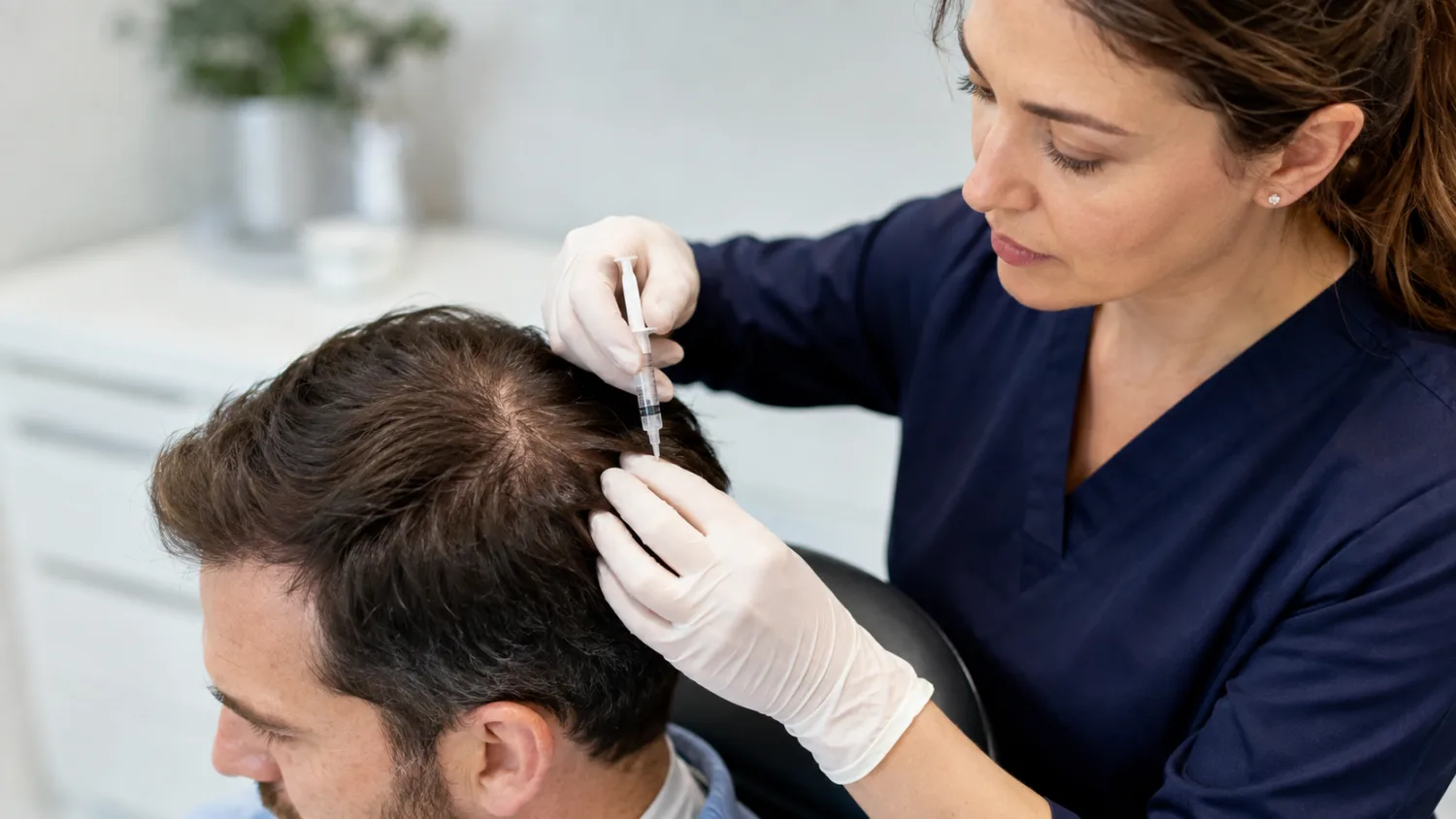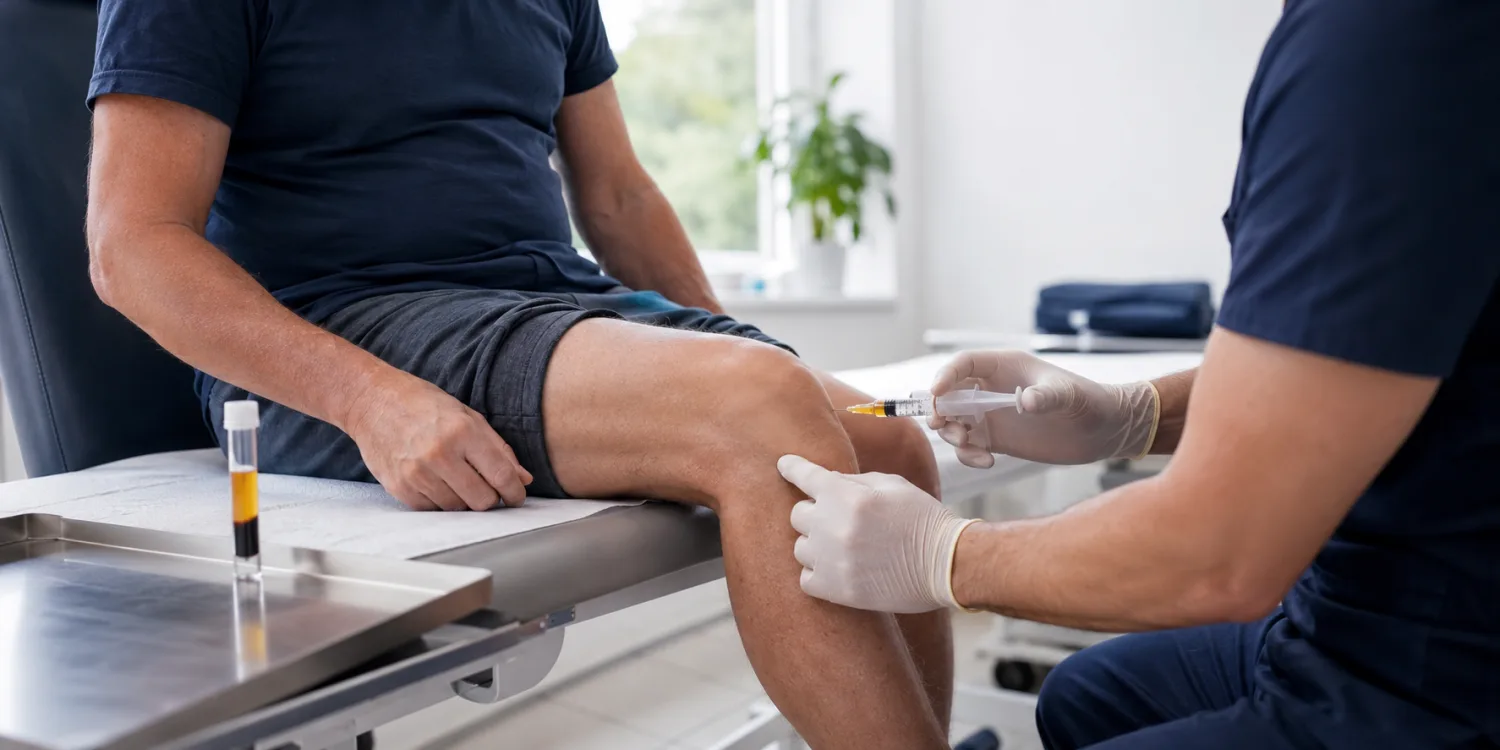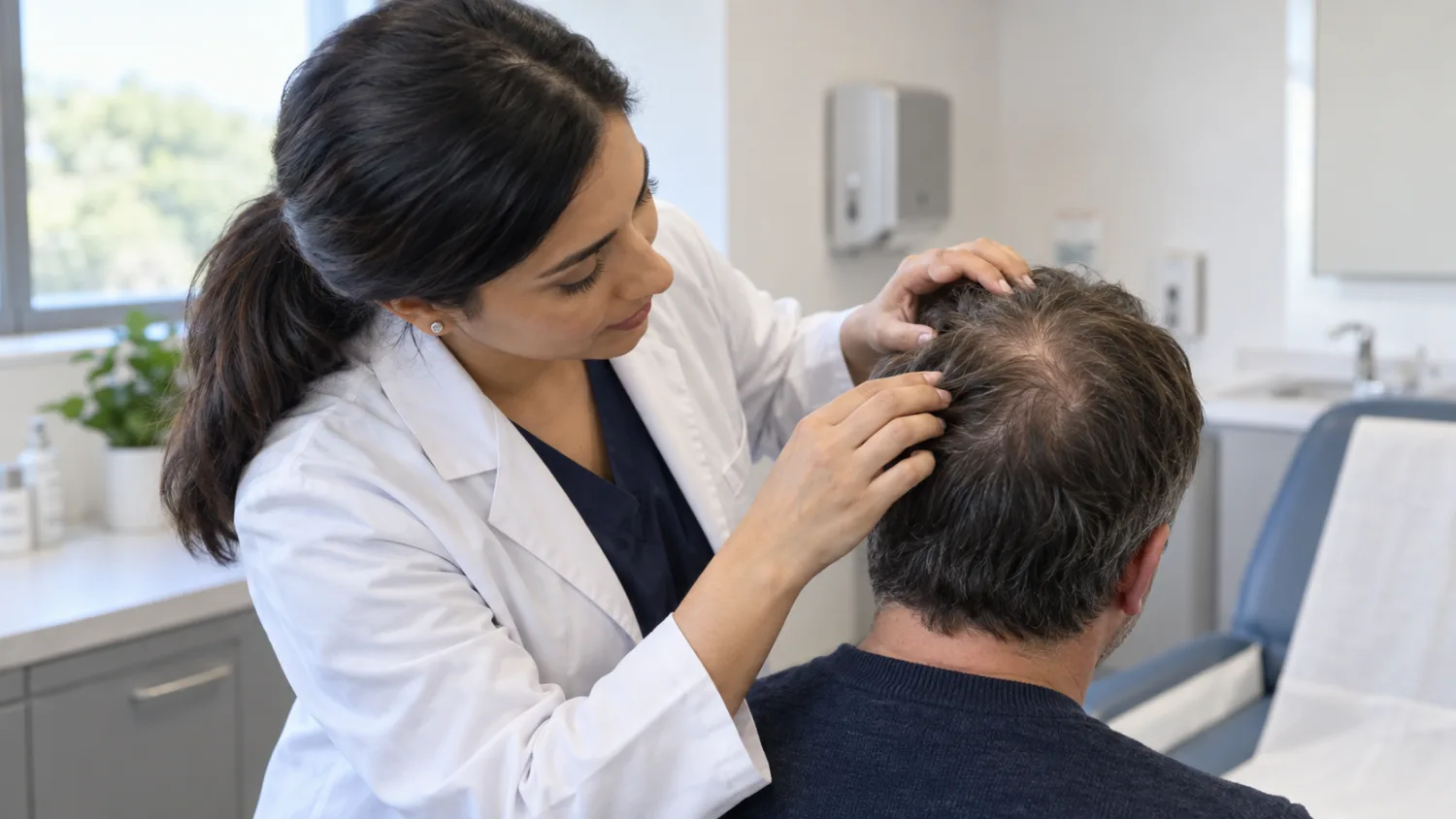
Platelet-rich plasma, commonly called PRP, is offered privately as a treatment for hair thinning. It involves preparing a concentrated plasma product from your own blood and injecting it into the scalp.
PRP may produce a modest improvement in hair density or shedding for some people with early-to-moderate androgenetic alopecia, better known as male-pattern or female-pattern hair loss. It is much less likely to help long-standing smooth bald areas, destroyed follicles or hair loss caused by an untreated medical condition.
| PRP may be more reasonable to consider when | PRP is less likely to provide good value when |
|---|---|
| Pattern hair loss has been diagnosed | The cause of the hair loss is unknown |
| Thinning is early or moderate | The scalp has been completely bald for years |
| Miniaturised hairs and active follicles remain | Follicles have been destroyed by scarring alopecia |
| Expectations are modest and realistic | Transplant-like density or a rebuilt hairline is expected |
| Progress will be measured objectively | The clinic relies on inconsistent photographs |
| Established treatments have also been discussed | PRP is sold as a universal replacement for diagnosis or medication |
The British Association of Dermatologists says research into PRP for pattern hair loss remains limited and that any benefit is unpredictable. Clinical studies and reviews are encouraging in places, but treatment protocols vary greatly and results cannot be guaranteed.
This guide is general information. Patchy hair loss, scalp inflammation, sudden heavy shedding or suspected scarring alopecia should be medically assessed before any cosmetic procedure.
How does PRP hair treatment work?
A small amount of blood is taken from a vein, usually in the arm. It is processed in a centrifuge to separate plasma and platelets from other blood components.
The practitioner then collects the platelet-rich portion and injects small quantities across the thinning areas of the scalp.
Platelets contain proteins and signalling molecules involved in:
- blood clotting;
- tissue repair;
- inflammation;
- blood-vessel formation;
- communication between cells.
The theory is that concentrating these components around active but miniaturising follicles may influence the local environment and support the hair-growth cycle.
PRP cannot create completely new hair follicles. It may support follicles that are still present, but it cannot reliably restore hair where follicles have disappeared or been permanently destroyed.
A typical appointment may involve:
- reviewing your medical history and current symptoms;
- taking blood from your arm;
- processing the blood in a centrifuge;
- cleaning and marking the scalp;
- using ice, vibration or local anaesthetic where appropriate;
- injecting PRP across the treatment area;
- providing written aftercare advice.
Our complete UK guide to PRP therapy explains how the wider procedure is performed and regulated.
What does the evidence show?
Clinical trials and systematic reviews have reported improvements in hair density, hair count or shedding among some people receiving PRP for androgenetic alopecia.
However, confidence in the exact size and reliability of the benefit is limited by differences between studies, including:
- small numbers of participants;
- different centrifuge systems;
- different platelet concentrations;
- single-spin and double-spin preparation;
- different blood and injection volumes;
- different treatment intervals;
- inconsistent use of activating agents;
- short follow-up periods;
- different methods of measuring hair growth;
- limited comparison with established treatments.
A 2025 systematic review and meta-analysis found evidence that PRP may improve hair density and reduce hair loss, but it also highlighted substantial variation between studies and incomplete reporting of preparation methods. It did not find a clear significant benefit for every hair-thickness measure.
This means PRP is neither an evidence-free treatment nor a predictable cure. A clinic should explain the uncertainty rather than quoting one impressive success percentage.
The British Association of Dermatologists describes the evidence for PRP in both male-pattern hair loss and female-pattern hair loss as limited and the possible benefit as unpredictable.
Who may benefit from PRP?
The strongest practical case is usually someone with a confirmed diagnosis of early or moderate pattern hair loss whose follicles remain present but are producing progressively finer hairs.
Potential candidates may include people with:
- early male-pattern hair loss;
- early female-pattern hair loss;
- gradual thinning across the crown or top of the scalp;
- a widening parting with preserved follicles;
- miniaturised hairs visible during scalp examination;
- realistic expectations of maintenance or modest improvement;
- no untreated cause of excessive shedding;
- the ability to afford an initial course and possible maintenance.
PRP may also be considered as an additional treatment when someone:
- already uses minoxidil or another appropriate treatment;
- cannot tolerate a particular medication;
- understands that PRP may not replace medical treatment;
- wants a non-surgical option and accepts repeated injections;
- will use standardised photography or hair measurements to review progress.
Younger age does not guarantee success, and older age does not automatically make treatment unsuitable. The stage and type of hair loss are generally more informative than age alone.
Who probably will not benefit?
PRP is unlikely to recreate a substantially lost hairline or cover a large, long-standing bald area. Smooth, shiny scalp commonly indicates that few responsive follicles remain.
It is less likely to be worthwhile when:
- the area has been completely bald for a long time;
- there are few or no miniaturised hairs in the treatment area;
- advanced baldness would require transplant-level coverage;
- the follicles have been destroyed by scarring alopecia;
- shedding is caused by an untreated illness or deficiency;
- the scalp has active infection or significant inflammation;
- the diagnosis has not been established;
- the person expects permanent results after one session;
- the clinic cannot explain how improvement will be measured.
PRP is also poor value when it is used to delay appropriate investigation. Hair loss is a symptom with several possible causes, not a single condition.
Be cautious if a clinic claims that PRP:
- creates entirely new follicles;
- works for every form of alopecia;
- guarantees regrowth;
- produces transplant-like density;
- permanently cures genetic hair loss;
- requires no diagnosis or medical history.
Does PRP help different types of hair loss?
Male-pattern hair loss
Male-pattern hair loss is the condition for which PRP is most commonly offered. It causes progressive miniaturisation, often affecting the temples, frontal scalp and crown.
PRP may thicken or support some miniaturising hairs, particularly during earlier stages. It is unlikely to reconstruct a deeply receded hairline or restore a smooth bald crown.
Female-pattern hair loss
Female-pattern hair loss commonly causes reduced density across the top of the scalp and widening of the parting. The frontal hairline may remain relatively preserved.
Some women may experience improvement with PRP, but iron deficiency, thyroid disease, hormonal factors and other causes of diffuse shedding should be considered first.
Telogen effluvium
Telogen effluvium is excessive shedding that may follow illness, surgery, childbirth, rapid weight loss, medication changes, severe stress or nutritional deficiency.
The hair commonly begins to recover after the trigger resolves. The British Association of Dermatologists notes that acute telogen effluvium usually gets better without specific hair-growth treatment.
PRP should not replace investigation and treatment of the underlying trigger. Evidence for routine PRP use in telogen effluvium is much less established than for pattern hair loss.
See the BAD guide to telogen effluvium.
Alopecia areata
Alopecia areata is an autoimmune condition that commonly produces smooth, clearly defined patches of hair loss. PRP has been studied, but evidence is less established and treatment is not standardised.
Alopecia areata can also regrow spontaneously, which makes uncontrolled before-and-after results difficult to interpret. Assessment by a GP or dermatologist is more appropriate than purchasing a general aesthetic PRP package.
Scarring alopecia
Scarring or cicatricial alopecia permanently damages hair follicles. Examples include lichen planopilaris and frontal fibrosing alopecia.
The priority is to diagnose and control inflammation before further permanent loss occurs. PRP should not delay medical treatment, and injections into actively inflamed scalp may be inappropriate.
Hair loss caused by chemotherapy
PRP is not an established general treatment for chemotherapy-related hair loss. Discuss unexpected or persistent regrowth problems with the oncology and dermatology teams.
Why is diagnosis essential before PRP?
Different forms of hair loss can look similar without a careful scalp examination. Treating every person with the same injection package risks wasting money and delaying necessary care.
An appropriate assessment may include:
- when the hair loss began;
- whether it is shedding, thinning or breaking;
- the pattern and speed of progression;
- scalp symptoms such as pain, burning, itching or scaling;
- medical conditions and recent illnesses;
- pregnancy, childbirth and menstrual history where relevant;
- medication and supplements;
- dietary changes or rapid weight loss;
- family history of hair loss;
- previous treatments and response.
Scalp examination may involve dermoscopy or trichoscopy, which magnifies the follicles and hair shafts. In selected cases, a dermatologist may recommend a scalp biopsy.
Blood tests should be chosen according to the history rather than sold as the same large panel to everyone. Possible tests include:
- full blood count;
- ferritin and iron studies;
- thyroid function;
- vitamin B12 or folate in selected cases;
- vitamin D where deficiency is plausible;
- hormonal tests when symptoms suggest an endocrine problem.
Our guide to blood tests for hair loss explains when these investigations may be useful. If iron stores are low, see our guide to low ferritin with normal haemoglobin.
Who may need to avoid or postpone PRP?
Suitability should be assessed individually. PRP may need to be postponed, modified or avoided when someone has:
- active infection on the scalp;
- significant uncontrolled scalp inflammation;
- a blood or platelet disorder;
- very low platelet levels;
- significant untreated anaemia;
- a bleeding disorder;
- serious uncontrolled medical illness;
- an allergy to local anaesthetic or another product being used;
- a history suggesting fainting or complications during blood collection;
- unrealistic expectations or uncertainty about the diagnosis.
Tell the clinician if you take:
- anticoagulants such as warfarin, apixaban or rivaroxaban;
- antiplatelet medicines such as clopidogrel;
- aspirin;
- anti-inflammatory medicines;
- immunosuppressive treatment;
- medication for cancer or a blood disorder.
Do not stop a prescribed anticoagulant, antiplatelet medicine or anti-inflammatory treatment because a cosmetic clinic tells you to. The clinician who prescribed it should assess whether any interruption is safe.
Pregnancy and breastfeeding do not automatically create the same risk in every circumstance, but PRP for cosmetic hair loss is elective and evidence in these groups is limited. Many practitioners recommend postponing it.
People receiving cancer treatment or being investigated for a serious illness should discuss elective PRP with the relevant medical team.
What results are realistic?
A reasonable goal is to reduce shedding, preserve existing coverage or produce a modest increase in density. Results vary considerably.
Possible outcomes include:
- less noticeable shedding;
- thicker-feeling existing hair;
- a small increase in measured hair density;
- improved coverage in areas containing miniaturised follicles;
- slower visible progression;
- little or no meaningful change.
Platelet-rich plasma, or PRP, is offered privately as a treatment for several types of hair loss. It involves processing a sample of your own blood and injecting the platelet-rich portion into areas of the scalp affected by thinning.
PRP may produce a modest improvement in hair density or shedding for some people with early-to-moderate androgenetic alopecia, commonly called male-pattern or female-pattern hair loss. It is less likely to help advanced baldness, destroyed follicles, untreated medical causes of shedding or hair loss that has not been properly diagnosed.
| PRP may be more reasonable to consider when | PRP is less likely to provide useful results when |
|---|---|
| Pattern hair loss has been properly diagnosed | The cause of hair loss is unknown |
| Thinning is early or moderate | The scalp has been smooth and bald for years |
| Miniaturised hairs remain in the affected area | Hair follicles have been permanently destroyed |
| Expectations are modest and realistic | Transplant-like density or a rebuilt hairline is expected |
| Progress will be measured objectively | The clinic relies on inconsistent photographs |
| Standard treatments have been discussed | PRP is marketed as a guaranteed or universal cure |
The evidence remains difficult to interpret because clinics use different preparation systems, platelet concentrations, injection methods and treatment schedules. The British Association of Dermatologists says there is limited research suggesting possible benefit for pattern hair loss, but results are unpredictable and more research is needed.
This guide provides general information. Hair loss should be diagnosed before treatment, particularly when it is sudden, patchy, painful, inflamed or associated with scalp scarring.
How does PRP hair treatment work?
PRP is an autologous treatment, meaning the injected material comes from your own blood.
A typical appointment involves:
- taking blood from a vein in your arm;
- placing the blood in a centrifuge;
- separating plasma and platelets from other blood components;
- collecting the platelet-rich portion;
- cleaning and marking the scalp;
- injecting small amounts across the treatment area.
Platelets contain proteins and signalling molecules involved in clotting, tissue repair and cell communication. The proposed theory is that placing a higher concentration of platelets around active but miniaturising follicles may influence the local environment and support the hair-growth cycle.
PRP cannot create entirely new hair follicles. Its most plausible role is supporting follicles that remain alive but are producing progressively finer hairs.
The treatment commonly takes 45 to 90 minutes. Several initial appointments are normally proposed, followed by a review and possible maintenance treatment.
For a broader explanation of the procedure, see our complete guide to PRP therapy in the UK.
Who is most likely to benefit from PRP?
The most promising candidate is someone with confirmed androgenetic alopecia who still has visible hair across the thinning area.
Potentially favourable characteristics include:
- early or moderate pattern hair loss;
- gradual thinning rather than sudden shedding;
- a widening part or reduced density over the crown;
- miniaturised hairs visible on dermoscopy or trichoscopy;
- a scalp without active infection or severe inflammation;
- realistic expectations about modest improvement;
- willingness to complete an initial course;
- ability to afford treatment without relying on a guaranteed outcome;
- objective baseline photographs or measurements;
- a plan addressing the underlying progression of pattern hair loss.
Younger age does not guarantee a response, but treatment may be more plausible before extensive follicle miniaturisation has progressed to long-standing baldness.
PRP may also be considered when someone cannot tolerate or does not want a standard medication. However, choosing not to use medication does not make PRP predictably effective.
Some people use PRP alongside minoxidil, finasteride or another medically appropriate treatment. This may address hair loss through different mechanisms, although it can make it difficult to identify which treatment caused any improvement.
Does PRP help male-pattern hair loss?
Male-pattern hair loss commonly causes recession at the temples, thinning over the crown and gradually reduced density across the top of the scalp.
PRP may help some men when:
- the thinning area still contains miniaturised hairs;
- loss is mild or moderate;
- the aim is to improve or preserve existing coverage;
- progression is being managed realistically;
- results are assessed over several months.
It is much less likely to recreate a deeply receded hairline or restore dense coverage over a long-standing smooth bald area. PRP does not redistribute permanent donor follicles in the way a hair transplant does.
The British Association of Dermatologists describes PRP as a private treatment with limited research suggesting some benefit, while emphasising that the response is unpredictable. See its patient information on male-pattern hair loss.
Men should still be offered a balanced discussion of established options. Our guide to finasteride versus minoxidil explains how these treatments differ.
Does PRP help female-pattern hair loss?
Female-pattern hair loss often produces gradual thinning over the top of the scalp with widening of the central part. The frontal hairline may remain relatively preserved.
PRP may be considered when female-pattern loss has been diagnosed and active follicles remain. Some studies report improvement in measured density, but the evidence is not strong enough to predict which individual will respond.
Women with diffuse thinning need a broader assessment because similar symptoms can result from:
- iron deficiency;
- thyroid disease;
- recent illness or surgery;
- rapid weight loss;
- pregnancy or childbirth;
- menopause-related changes;
- medication;
- polycystic ovary syndrome;
- chronic telogen effluvium;
- inflammatory or scarring alopecia.
Injecting PRP without investigating a plausible underlying cause may waste money and delay more appropriate care.
The British Association of Dermatologists notes that research on PRP for female-pattern hair loss remains too limited to establish reliably when and how it may work. See its guidance on female-pattern hair loss.
Which types of hair loss are less likely to benefit?
PRP should not be marketed as one treatment for every type of hair loss. Different conditions affect the follicle in fundamentally different ways.
Long-standing advanced baldness
When an area has been smooth and bald for years, there may be too few functioning follicles to stimulate. PRP cannot manufacture new follicles or move them from another part of the scalp.
Telogen effluvium
Telogen effluvium causes increased shedding after a trigger such as illness, childbirth, rapid weight loss, severe stress, iron deficiency or a medicine change.
It frequently improves once the trigger resolves. The British Association of Dermatologists explains that the shedding phase commonly lasts three to six months and that hair volume can take longer to recover.
PRP is not a substitute for identifying and managing the trigger. Read the BAD guide to telogen effluvium.
Alopecia areata
Alopecia areata is an autoimmune condition that often causes smooth, clearly defined bald patches. PRP has been studied, but evidence and treatment protocols are less established than for pattern hair loss.
A general cosmetic PRP clinic should not treat presumed alopecia areata without an appropriate medical diagnosis. Established treatments and the possibility of spontaneous regrowth must be discussed.
Scarring alopecia
Scarring alopecias destroy follicles through inflammation and replace them with scar tissue. Once a follicle has been destroyed, PRP cannot reliably restore it.
The priority is diagnosing and controlling the inflammatory disease before more permanent loss occurs. Possible warning signs include:
- scalp burning or pain;
- redness around follicles;
- heavy scaling;
- pustules or crusting;
- shiny scar-like skin;
- loss of visible follicle openings;
- recession with an inflamed edge.
These symptoms should be assessed by a dermatologist rather than treated as ordinary cosmetic thinning.
Hair loss from ongoing medical treatment
PRP should not be assumed to overcome active chemotherapy, uncontrolled endocrine disease, severe nutritional deficiency or another continuing cause of hair loss. The treating medical team should be involved.
What assessment should happen before PRP?
A responsible service should establish a likely diagnosis before taking payment for a treatment course.
The assessment may include:
- a detailed history of the hair loss;
- the pattern, speed and duration of thinning;
- family history;
- recent illness, childbirth, surgery or weight change;
- diet and possible deficiencies;
- medication and supplements;
- menstrual or hormonal symptoms where relevant;
- examination of the scalp and hair shafts;
- dermoscopy or digital trichoscopy;
- a gentle hair-pull test;
- standardised baseline photographs.
Blood tests should be selected according to the history and examination rather than sold as an automatic large panel. Possible investigations include:
- full blood count;
- ferritin and iron studies;
- thyroid function;
- vitamin B12 or folate in selected cases;
- vitamin D when deficiency is plausible;
- hormonal tests when symptoms suggest an endocrine condition;
- platelet count or clotting assessment when medically relevant.
A scalp biopsy may occasionally be needed when the diagnosis remains uncertain or scarring alopecia is suspected.
Our guide to blood tests for hair loss explains when common investigations may be useful. If iron stores are reduced, see our guide to low ferritin with normal haemoglobin.
Who may need to avoid or postpone PRP?
PRP uses your own blood, which reduces the risk of an allergic reaction to the injected material. It does not make the procedure suitable for everyone.
Treatment may need to be avoided, delayed or reviewed carefully if you have:
- an active infection of the scalp;
- significant inflammation or an undiagnosed scalp disorder;
- a low platelet count or platelet-function disorder;
- a significant bleeding disorder;
- severe anaemia;
- active systemic infection or fever;
- poorly controlled medical illness;
- a history of problematic reactions to local anaesthetic;
- unexplained sudden or scarring hair loss;
- unrealistic expectations about the likely result.
Tell the practitioner if you take anticoagulants, antiplatelet medicines or other medication that affects bleeding. Do not stop a prescribed medicine simply because a cosmetic clinic tells you to do so. Any change should be agreed with the clinician responsible for prescribing it.
Elective PRP is commonly postponed during pregnancy or breastfeeding because evidence is limited and hair changes during and after pregnancy can make diagnosis and results difficult to assess. Obtain individual medical advice.
People undergoing cancer treatment or with a recent cancer diagnosis should discuss elective procedures with their oncology team. This is particularly important when blood counts, immunity or clotting may be affected.
What results can you realistically expect?
A successful response is more likely to mean modest improvement than dramatic regrowth.
Possible benefits include:
- reduced shedding;
- thicker-feeling existing hair;
- a modest increase in measured density;
- improved coverage across areas containing miniaturised hairs;
- better preservation of existing hair when combined with other treatment.
Possible outcomes also include:
- no measurable improvement;
- a change visible in measurements but not everyday appearance;
- temporary benefit requiring maintenance;
- continued progression of the underlying hair loss;
- results that cannot be separated from another treatment started at the same time.
PRP is unlikely to:
- recreate a substantially lost hairline;
- produce transplant-like density;
- restore follicles destroyed by scarring;
- correct an untreated iron or thyroid problem;
- guarantee permanent regrowth;
- work equally well for every patient.
A 2025 systematic review and meta-analysis found evidence of improvement in hair density and reduced hair loss across PRP studies, but also reported substantial differences in study designs and treatment methods. These variations make it difficult to define the best preparation or predict individual outcomes.
Statements such as “90% success”, “guaranteed regrowth” or “permanent cure” should be treated cautiously unless the clinic explains exactly how success was defined and measured.
How long does PRP take to work?
Hair grows slowly, so the result cannot be judged immediately after treatment. Temporary redness or swelling may briefly make the scalp appear different, but this is not new hair growth.
| Time after starting | What may happen |
|---|---|
| First few days | Tenderness, redness, swelling or pinpoint bleeding |
| One to three months | Some people notice less shedding |
| Three to six months | Earliest useful period for comparing density and thickness |
| Six to twelve months | Clearer assessment of overall response and maintenance needs |
Many clinics recommend an initial course of approximately three sessions spaced four to six weeks apart. Others use four or more sessions. There is no universally accepted protocol.
Useful monitoring should include photographs taken with consistent:
- lighting;
- camera distance and angle;
- hair length;
- parting;
- wet or dry condition;
- styling products.
Trichoscopy or hair-count measurements may provide more reliable evidence than casual photographs. Different lighting and combing can create a misleading appearance of improvement.
Ask what result would justify continuing and when the clinic would recommend stopping. A longer course is not automatically better if objective improvement is absent.
How does PRP compare with other hair-loss treatments?
PRP is usually considered an additional option rather than a universal replacement for established treatment.
| Treatment | Main consideration |
|---|---|
| Topical minoxidil | Established option for pattern hair loss; requires regular ongoing use |
| Oral finasteride | Used mainly for male-pattern loss; requires discussion of sexual, mood and reproductive considerations |
| Other prescribed medication | Suitability depends on diagnosis, sex, age, pregnancy potential and medical history |
| PRP | Repeated injections, variable protocols, uncertain individual response and significant cost |
| Low-level light therapy | Requires repeated use; device quality and evidence vary |
| Hair transplant | Surgically relocates existing follicles; larger upfront cost and limited donor supply |
| Hair fibres, wigs and hair systems | Improve appearance without treating the biological cause |
Medication may be more suitable for slowing the underlying process of androgenetic alopecia. A transplant can provide more substantial coverage in selected candidates, but it does not prevent further loss of untreated native hair.
PRP may appeal to someone who prefers a non-surgical procedure using their own blood. “Natural” does not mean proven, risk-free or maintenance-free.
Starting several treatments together may improve the overall chance of benefit, but it becomes difficult to know which intervention worked. Discuss the sequence and purpose of each treatment.
What are the risks and disadvantages?
PRP is generally regarded as a relatively low-risk procedure when performed correctly, but it involves venepuncture, blood processing and multiple scalp injections.
Common short-term effects include:
- pain during injection;
- scalp tenderness;
- redness;
- small areas of swelling;
- bruising;
- pinpoint bleeding;
- headache;
- temporary itching or tightness.
Less common complications can include:
- infection;
- significant bleeding or haematoma;
- persistent inflammation;
- scarring;
- nerve irritation;
- fainting during the blood draw;
- a reaction to local anaesthetic or another product used;
- worsening of an unrecognised inflammatory scalp condition.
Another major disadvantage is financial. A course and continuing maintenance can cost thousands of pounds without producing a visible result.
Our guide to PRP hair-treatment costs in the UK explains session prices, course totals and additional charges.
Contact the clinic promptly for increasing pain, spreading redness, heat, pus, fever, substantial swelling or another worsening symptom after treatment.
How do you choose a safe PRP hair clinic?
PRP for hair loss is offered across dermatology, hair-restoration and aesthetic clinics. The quality of diagnosis, treatment preparation and clinical governance varies.
Check who will personally:
- diagnose the type of hair loss;
- take your blood;
- prepare the PRP;
- perform the injections;
- respond to complications;
- review and measure the outcome.
Doctors can be checked through the General Medical Council register. Nurses can be checked through the Nursing and Midwifery Council, and other regulated professionals through the appropriate statutory register.
Ask the clinic:
- What is my exact diagnosis?
- Why is PRP suitable for this type and stage of loss?
- What evidence supports treatment?
- What improvement is realistic?
- Which PRP preparation system do you use?
- Who prepares and injects the product?
- How is blood handled safely?
- How many sessions do you recommend, and why?
- How will progress be measured?
- When would you advise stopping?
- What does the total price include?
- Who manages an infection or other complication?
Warning signs include:
- no attempt to diagnose the hair loss;
- guaranteed regrowth;
- pressure to buy many sessions immediately;
- claims that PRP creates new follicles;
- unclear practitioner qualifications;
- refusal to discuss established medication;
- before-and-after images taken under different conditions;
- automatic bundling with exosomes or unproven “growth factors”;
- no written consent or complication plan.
A more expensive or biologically impressive-sounding preparation is not automatically more effective. Ask what every added product contains, its regulatory status and what evidence supports it.
Frequently asked questions
Who is the ideal candidate for PRP hair treatment?
The strongest candidate is generally someone with diagnosed early-to-moderate male-pattern or female-pattern hair loss who still has miniaturised hairs in the affected area and understands that improvement may be modest.
Who should not have PRP for hair loss?
People with active scalp infection, significant blood or platelet disorders, severe anaemia or undiagnosed inflammatory hair loss may need to avoid or postpone it. Individual medical assessment is essential.
Does PRP work on a completely bald scalp?
It is unlikely to restore useful density where the skin has been smooth and bald for a long time. PRP cannot create new follicles.
Can PRP regrow a receding hairline?
It may thicken miniaturised hairs where follicles remain, but it is unlikely to rebuild a substantially lost hairline or provide transplant-like coverage.
Does PRP work for female hair loss?
It may help some women with female-pattern hair loss. Iron deficiency, thyroid disease, hormonal conditions, telogen effluvium and scarring alopecia should be considered before treatment.
Does PRP work for alopecia areata?
PRP has been studied for alopecia areata, but evidence is less established and spontaneous regrowth can complicate interpretation. Treatment should be guided by a clinician experienced in autoimmune hair loss.
Can PRP treat telogen effluvium?
Evidence is limited, and telogen effluvium often improves after its trigger is addressed. Investigation of illness, medication, nutrition, iron status or other causes is usually more important.
Can PRP reverse scarring alopecia?
It cannot reliably restore follicles that have been permanently destroyed. Active scarring alopecia requires prompt dermatological diagnosis and control of inflammation.
How many PRP sessions are normally needed?
Many clinics begin with three sessions approximately four to six weeks apart. Some recommend more, but there is no universally accepted protocol. Progress should be reviewed objectively.
When should PRP results appear?
Reduced shedding may be noticed after a few months. Changes in density generally require at least three to six months to assess, with a clearer review at six to twelve months.
Are PRP results permanent?
Not necessarily. Pattern hair loss is progressive, and maintenance treatment may be recommended if the initial course appears beneficial.
Is PRP better than minoxidil or finasteride?
The treatments work differently. Minoxidil and finasteride have more established roles in pattern hair loss, while PRP may be considered as an additional or alternative option for selected patients.
Can PRP be combined with minoxidil?
Yes, they are sometimes used together. A clinician should explain the benefits, side effects and how progress will be attributed when several treatments begin at once.
Is PRP safe if I take blood thinners?
Anticoagulants and antiplatelet medicines can increase bruising and bleeding. Do not stop them without agreement from the prescribing clinician. The PRP practitioner must review your medication before treatment.
Does a higher platelet concentration guarantee better results?
No. PRP composition varies, and more platelets do not automatically produce a better clinical outcome. Preparation quality and treatment protocols remain incompletely standardised.
Is PRP for hair loss available on the NHS?
PRP for cosmetic pattern hair loss is not routinely provided by the NHS. Most treatment is self-funded through private clinics.
Is PRP worth trying?
It may be reasonable for diagnosed early pattern hair loss when expectations are modest, the cost is affordable and results will be measured properly. It is poor value when sold without a diagnosis, for long-standing baldness or with promises of guaranteed regrowth.