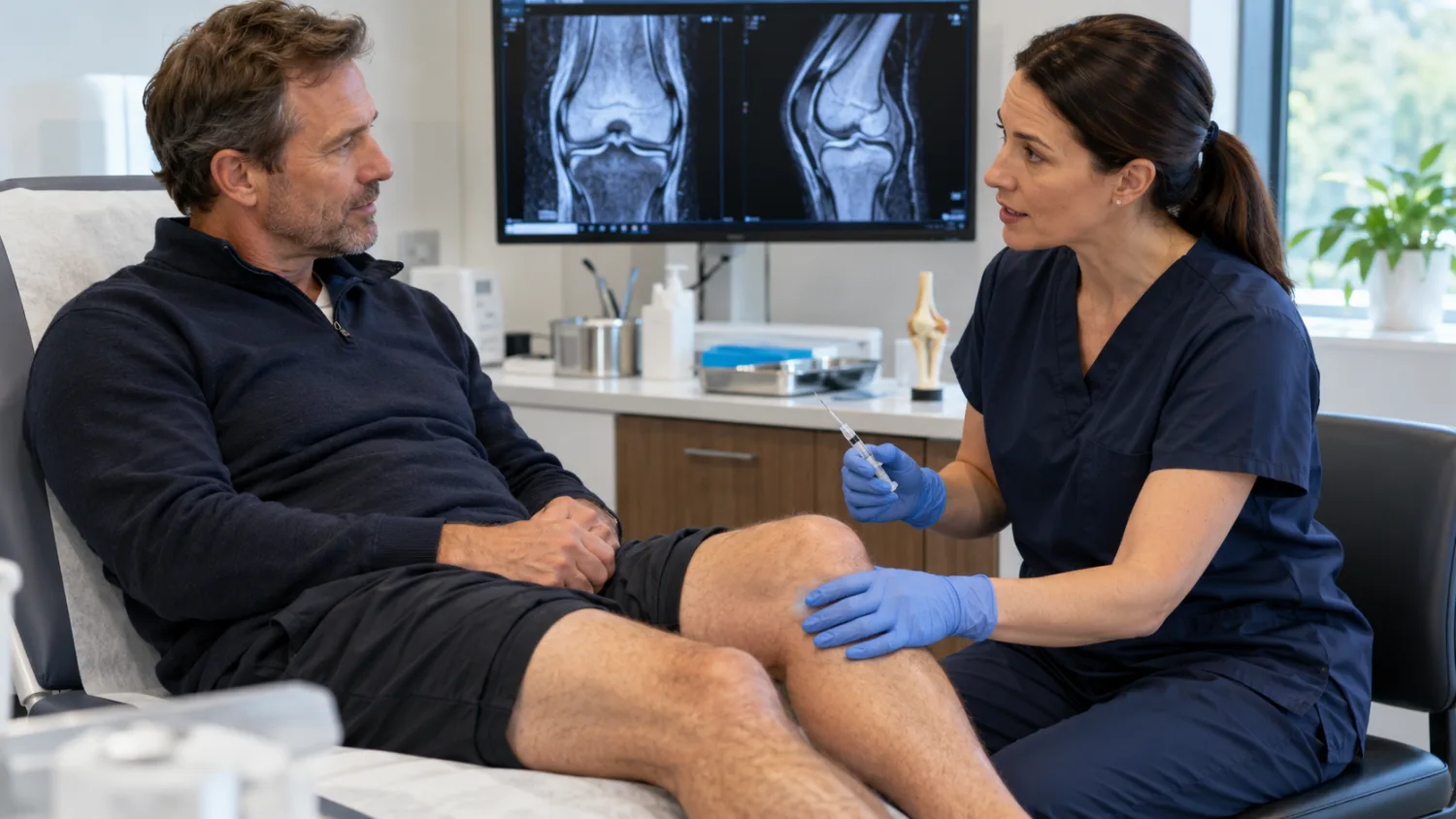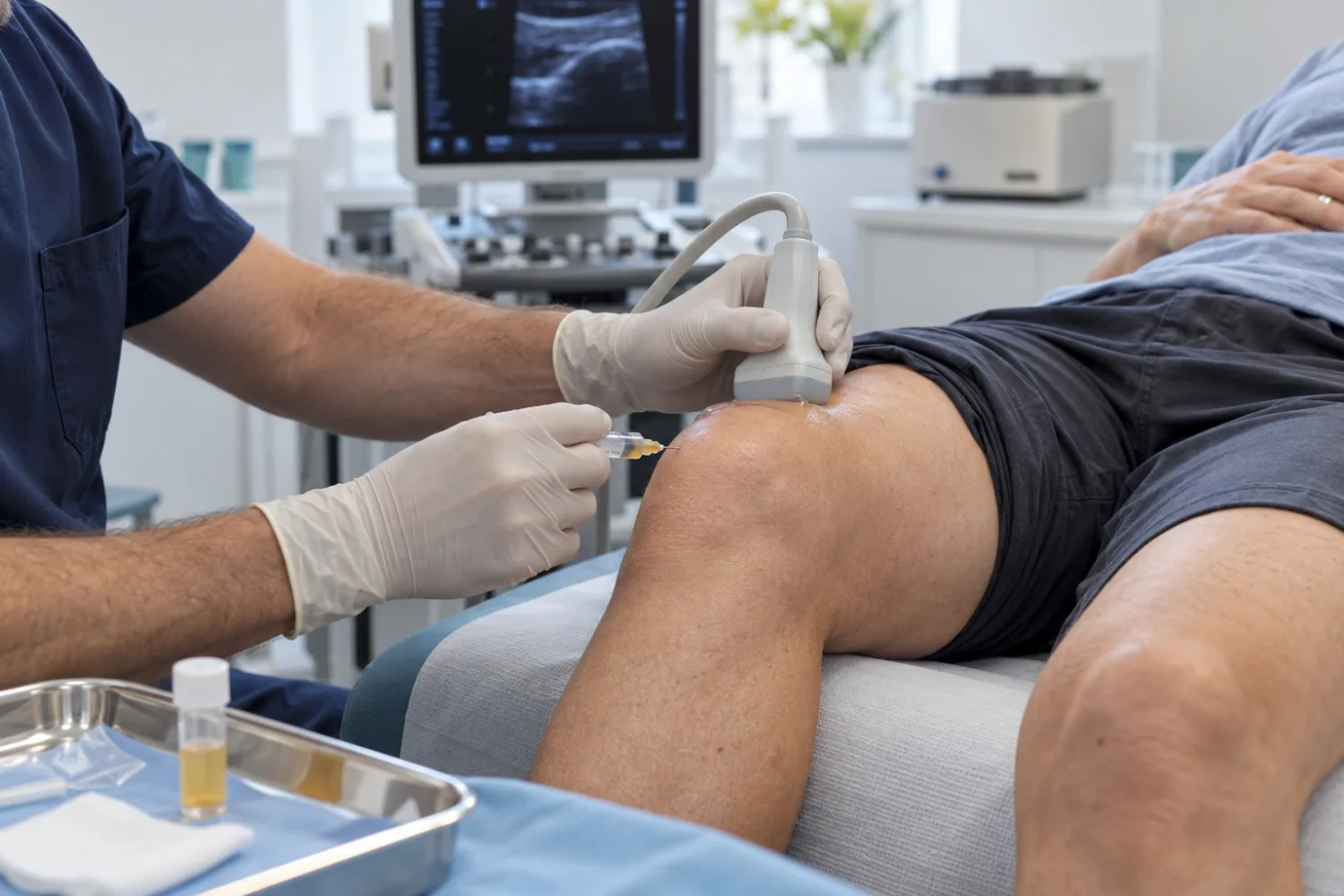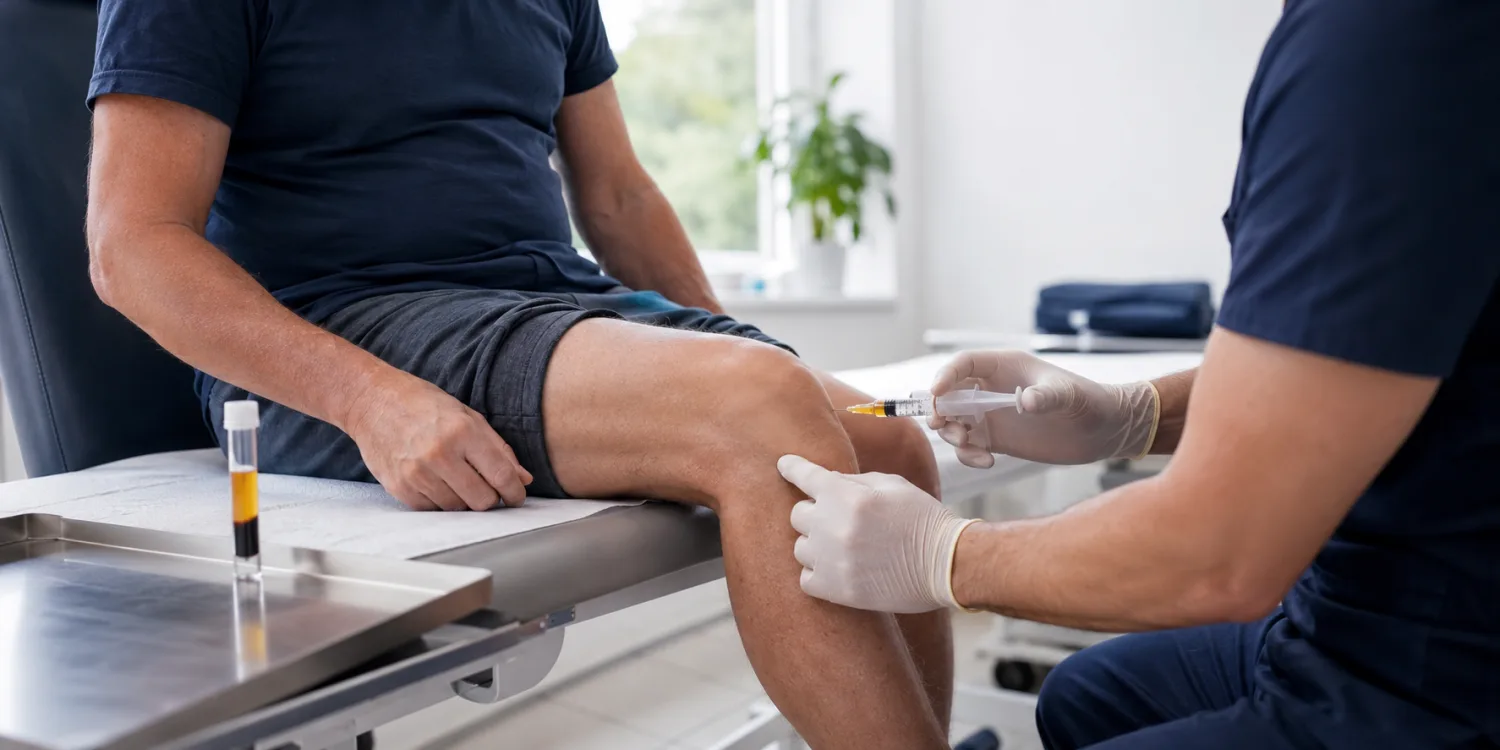
Platelet-rich plasma injections are increasingly offered to people with knee osteoarthritis who want to reduce pain, remain active or delay surgery. The treatment is often described as “regenerative”, and some clinics suggest that it can repair cartilage or reverse arthritis.
The research tells a more measured story. There is evidence that PRP can improve pain and function for some people, particularly over the following six to twelve months. However, results vary between studies, not everyone responds, and there is currently no convincing evidence that PRP regrows substantial amounts of lost cartilage or cures knee osteoarthritis.
That does not make PRP worthless. It means the treatment should be considered as a possible form of symptom management rather than a way to restore an arthritic knee to its original condition.
This article provides general information and is not a substitute for an individual assessment by a doctor, physiotherapist or other appropriately qualified healthcare professional.
What is PRP treatment for knee osteoarthritis?
Platelet-rich plasma, usually shortened to PRP, is prepared from a sample of the patient’s own blood. The blood is placed in a centrifuge, which separates and concentrates components including platelets. The resulting preparation is then injected into the affected knee joint.
Platelets are best known for helping blood to clot, but they also contain proteins and signalling molecules involved in inflammation and tissue repair. The theory behind PRP is that delivering a concentrated preparation to an osteoarthritic joint may alter the local inflammatory environment and reduce symptoms.
PRP is therefore different from a steroid injection. A corticosteroid is a medicine used to suppress inflammation, while PRP is an autologous blood product—meaning it comes from the patient’s own body.
It is also different from a stem cell treatment. PRP does not contain the type or quantity of stem cells needed to justify describing it as stem cell therapy. Our broader guide to PRP therapy in the UK explains how the treatment is prepared, what happens during an appointment and how it is used for different conditions.
Why might PRP help an arthritic knee?
Knee osteoarthritis is more complex than simple “wear and tear”. It involves changes in cartilage, bone, the joint lining, ligaments, muscles and the way the whole joint functions. Inflammation can contribute to pain and stiffness, even though osteoarthritis is not the same type of inflammatory disease as rheumatoid arthritis.
Laboratory research suggests that substances released by platelets may influence inflammation and cell signalling inside the joint. This provides a plausible reason why PRP might help symptoms.
However, a biological theory is not the same as proof that a treatment works in everyday clinical care. What happens to cells in a laboratory does not always translate into noticeable or lasting improvements for patients.
The realistic aim of PRP is usually to reduce pain and improve function sufficiently to make activities such as walking, climbing stairs, exercising or sleeping more comfortable. It should not be presented as a guaranteed way to rebuild the joint.
If you are unsure whether your symptoms are caused by osteoarthritis, see our guide to the causes, diagnosis and treatment of knee pain. Pain attributed to arthritis can sometimes come from another structure or condition that requires a different approach.
What do clinical trials actually show?
The evidence is mixed, although the overall picture has become more favourable as additional trials have been published. Many studies report that people receiving PRP experience improvements in knee pain and function. Some find that PRP performs better than saline placebo injections, corticosteroid injections or hyaluronic acid.
A 2025 meta-analysis of randomised controlled trials compared PRP with placebo. It found clinically relevant improvements in function at several follow-up points and pain relief at three and six months. The researchers also found that platelet concentration appeared to influence the results, with higher-platelet preparations producing more durable benefits in their analysis.
That sounds encouraging, but it does not settle the question. Meta-analyses combine results from separate trials, and PRP studies use widely differing preparations, injection schedules and patient groups. Combining them can estimate an overall effect, but it cannot remove the differences between the treatments being studied.
There are also trials that have produced disappointing results. The widely discussed RESTORE randomised clinical trial compared three weekly injections of leukocyte-poor PRP with saline placebo injections in 288 people with mild to moderate knee osteoarthritis. At twelve months, PRP had not produced a significant advantage in pain or medial tibial cartilage volume.
Both groups improved, which illustrates an important complication in injection research. Symptoms can change naturally, and receiving an injection can create a substantial contextual or placebo response. Participants may also change their activity, medication or expectations after entering a study.
The fairest interpretation is not that every positive trial is reliable or that one negative trial disproves the entire treatment. Rather, PRP probably provides meaningful symptom relief for some patients, but the average benefit is uncertain and strongly influenced by the product, study design and people being treated.
Does PRP regrow cartilage or reverse osteoarthritis?
There is currently no good clinical evidence that standard PRP injections reliably regrow enough cartilage to reverse knee osteoarthritis. This is one of the most important distinctions for anyone considering treatment.
A patient may feel substantially better without the structure of the joint having been restored. Reduced pain, improved muscle function and changes in inflammation can make movement easier even when an X-ray or MRI still shows osteoarthritis.
The RESTORE trial specifically assessed medial tibial cartilage volume and did not find that PRP significantly reduced cartilage loss compared with placebo at twelve months. Other studies have examined imaging findings and biological markers, but they have not established predictable cartilage regeneration in routine patients.
Claims that PRP “rebuilds the knee”, “reverses arthritis” or provides an alternative to joint replacement for everyone go beyond what the evidence currently supports. The word regenerative describes the treatment category and proposed biological mechanisms; it should not be treated as proof that an injection will regenerate a damaged joint.
It is reasonable to hope for less pain and better function. It is not reasonable for a provider to promise that missing cartilage will grow back or that surgery will never be necessary.
Who appears most likely to benefit?
Studies and clinical experience generally suggest that PRP may be more useful for people with mild to moderate knee osteoarthritis than for those with very advanced joint damage. A person who still has a reasonably preserved joint space and wants help controlling symptoms is different from someone whose knee has severe deformity, marked loss of movement and extensive bone-on-bone change.
Age alone does not determine whether treatment will work. The severity and pattern of arthritis, general health, muscle strength, body weight, activity goals and source of the pain may all matter.
A suitable candidate may be someone who has confirmed knee osteoarthritis, has continued pain despite an appropriate exercise and rehabilitation programme, and understands that PRP is intended to manage symptoms rather than cure the condition.
PRP may be less likely to provide worthwhile relief when arthritis is very advanced or when pain is mainly caused by something the injection cannot correct. Significant knee instability, severe malalignment, referred pain from the hip or spine, inflammatory arthritis and certain meniscal or tendon problems may require a different plan.
Some clinics use X-rays or MRI scans to select patients, but imaging should be interpreted alongside symptoms and examination findings. Severe-looking changes do not always produce severe pain, while a painful knee may have relatively modest changes on an X-ray.
Why are the results so inconsistent?
One reason the PRP debate continues is that PRP is not a single standardised medicine. The concentration of platelets can differ, as can the number of white blood cells, the amount injected and the way the preparation is produced.
Some preparations are described as leukocyte-rich because they contain a higher concentration of white blood cells. Others are leukocyte-poor. Researchers are still investigating which formulation is preferable for knee osteoarthritis. Some evidence suggests that leukocyte-poor PRP may produce fewer temporary inflammatory reactions, but there is no universally accepted preparation for every patient.
Clinics also use different treatment schedules. One provider may offer a single injection, while another recommends two or three injections separated by several weeks. Studies are similarly varied, which makes direct comparison difficult.
Other differences include:
- the severity and location of the osteoarthritis;
- the age and general health of participants;
- platelet concentration and total dose;
- whether injections are guided by ultrasound;
- the use of local anaesthetic;
- activity and rehabilitation after treatment;
- the comparison treatment used in the study;
- the way pain and function are measured.
This variation means that a clinic cannot simply say “studies show PRP works” without explaining whether its own preparation resembles the products used in successful trials. Equally, poor results with one protocol do not necessarily show that every PRP product is ineffective.
How long might the benefit last?
PRP does not normally provide immediate relief. The knee may feel sore after the injection, and any improvement may develop gradually over several weeks.
Where treatment is successful, studies commonly measure benefits over approximately three to twelve months. Some patients report longer relief, while others notice little or no improvement. There is no reliable way to predict the exact duration for an individual.
Evidence suggesting benefit at twelve months does not mean that every person will remain better for a full year. It means that, across a study group, average pain or function scores may still favour PRP at that follow-up point.
Repeat injections are offered by some clinics when symptoms return. However, the ideal interval, number of repeat courses and long-term value are not firmly established. Repeating an expensive treatment indefinitely without reviewing the diagnosis, function and wider management plan may not be sensible.
A reputable clinician should agree in advance how success will be judged. This might include changes in walking distance, stair use, sleep, pain medication or a validated knee questionnaire—not simply whether the patient reports feeling “a little different”.
How does PRP compare with steroid and hyaluronic acid injections?
Corticosteroid injections can provide relatively rapid relief for some people, particularly when inflammation and swelling are prominent. However, the benefit is often short term. Steroid injections also have specific considerations for people with diabetes and may not be suitable for frequent repetition.
PRP usually takes longer to have an effect, but some comparative studies suggest that improvements may last longer than those from corticosteroid injections. This does not mean PRP is automatically better. A person needing short-term relief for a particular reason may value a steroid injection, while another may prefer to consider PRP after weighing its cost and uncertainty.
Hyaluronic acid—sometimes called viscosupplementation or a “gel injection”—is intended to supplement the joint’s natural lubricating fluid. Research comparing it with PRP has produced varied results, although a number of reviews favour PRP for pain and function at later follow-up points.
Comparisons remain difficult because different hyaluronic acid products and PRP preparations are used. Neither treatment should be marketed as a reliable method of restoring lost cartilage.
The most appropriate injection, if any, depends on the diagnosis, severity of symptoms, medical history and treatment goals. It should be part of a broader management plan rather than treated as a replacement for exercise, strength and general health measures.
What does NICE say about PRP for knee osteoarthritis?
The UK position remains cautious. In its guidance on platelet-rich plasma injections for knee osteoarthritis, the National Institute for Health and Care Excellence states that the evidence raises no major safety concerns. However, NICE considers the quality of evidence on effectiveness to be limited.
NICE therefore says the procedure should be used with special arrangements for clinical governance, consent, and audit or research. Patients should be informed about the uncertainty surrounding effectiveness, and clinicians should monitor and review outcomes.
This is not the same as saying that PRP is prohibited or proven ineffective. It means the procedure has not met the evidential standard needed for unrestricted routine use without additional oversight.
NICE guidance was issued in 2019, and further studies have appeared since then. Some newer analyses are encouraging, but uncertainty remains because PRP products and study methods are still inconsistent.
PRP for knee osteoarthritis is generally obtained privately rather than offered as routine NHS treatment. Availability may differ in research studies or particular specialist services, but patients should not assume that an NHS referral will lead to PRP treatment.
What are the risks and practical limitations?
Because PRP is prepared from the patient’s own blood, allergic reactions to the injected product are less of a concern than with some medicines. Research and clinical guidance have not identified major widespread safety problems when treatment is prepared and delivered appropriately.
The most common problem is a temporary increase in pain, swelling or stiffness after the injection. This may last for a few days. Bruising or discomfort can also occur where blood is taken.
Less common but more serious risks include infection, bleeding, injury to nearby structures and a severe inflammatory reaction. Any injection that enters a joint should be performed using careful sterile technique.
People taking anticoagulant or antiplatelet medicines, those with blood disorders, active infection, significant anaemia or certain other medical conditions may require additional assessment. Medication should never be stopped merely because a clinic’s standard instruction sheet says so; the decision should be discussed with the prescriber and treating clinician.
Some providers advise avoiding non-steroidal anti-inflammatory medicines around the procedure because they may theoretically interfere with platelet activity. Protocols vary, and the clinical evidence behind exact restrictions is not definitive. Ask the practitioner for a clear explanation and safe alternatives rather than changing medication independently.
Seek urgent medical advice if the knee becomes increasingly hot, red, severely swollen or painful after an injection, particularly if this is accompanied by fever or feeling unwell.
What should you ask a private PRP clinic?
The quality of consultation matters at least as much as the appearance of the clinic. A proper assessment should confirm that knee osteoarthritis is the likely source of the symptoms and consider whether another treatment would be more appropriate.
Ask who will perform the injection and whether they are registered with an appropriate UK professional regulator. The clinician should be able to explain their experience with musculoskeletal assessment, joint injections and the management of complications.
It is also reasonable to ask exactly what PRP preparation is used. Find out whether it is leukocyte-rich or leukocyte-poor, how the platelet concentration is assessed, why that formulation has been selected and how many injections are recommended.
The provider should be open about uncertainty. Be cautious if the consultation relies on sweeping claims about healing, cartilage regrowth or avoiding surgery. Before paying, ask:
- What evidence supports this particular PRP protocol?
- Why am I considered a suitable candidate?
- What improvement is realistic in my case?
- What happens if the treatment does not work?
- Is image guidance used, and is it necessary for this injection?
- Does the price include assessment, follow-up and repeat injections?
- How are complications handled outside normal clinic hours?
Avoid making a same-day decision under sales pressure. PRP is usually an elective treatment, so there should be time to review the evidence, total cost and alternatives.
Where does PRP fit within a complete treatment plan?
Even when PRP helps, it does not remove the need to manage the knee as a whole. Exercise remains a central treatment for osteoarthritis because it improves strength, movement and confidence in using the joint.
The NHS guidance on osteoarthritis treatment recommends therapeutic exercise and, where appropriate, weight management. Pain relief, supportive footwear, walking aids and physiotherapy may also form part of treatment.
Exercise can feel daunting when movement hurts, but the aim is not to force the knee through severe pain. A physiotherapist can help identify tolerable activities and gradually build the muscles supporting the joint. Our guide to private physiotherapy costs in the UK explains what private appointments commonly involve.
PRP may create a period in which pain is better controlled, making rehabilitation easier. That opportunity is more useful if it is accompanied by a practical plan for strength, mobility and activity.
For advanced osteoarthritis that severely limits daily life despite appropriate non-surgical treatment, joint replacement may eventually become the more predictable option. PRP should not be used to postpone necessary surgical assessment indefinitely. Our guide to knee replacement surgery in the UK covers NHS and private pathways, recovery and costs.
Frequently asked questions
Does PRP cure knee osteoarthritis?
No. PRP may reduce pain and improve function for some people, but it has not been shown to cure osteoarthritis or reliably restore a damaged knee to normal.
Can PRP regrow knee cartilage?
There is no convincing clinical evidence that standard PRP injections reliably regrow substantial lost cartilage. Improvements in pain do not prove that cartilage has regenerated.
How successful is PRP for knee osteoarthritis?
There is no single dependable success rate. Trial results vary according to the PRP preparation, severity of arthritis, treatment schedule and definition of success. Some patients experience worthwhile relief, while others notice little change.
Is PRP best for early or severe knee arthritis?
PRP appears more promising for mild to moderate knee osteoarthritis. People with severe joint-space loss, marked deformity or major functional limitation may be less likely to receive enough benefit, although an individual assessment is necessary.
How many PRP injections will I need?
Protocols range from one injection to a series of two or three. Research has not established one ideal schedule for every patient. Ask why the clinic recommends its particular course and whether every injection is included in the quoted price.
How quickly does PRP begin working?
PRP is not normally an instant pain treatment. The knee may initially feel more uncomfortable, with any benefit developing over several weeks. If it works, improvement may continue over the following months.
How long does PRP last in the knee?
Benefits are commonly studied over six to twelve months. Some people report shorter or longer relief, and some receive no meaningful benefit. The injected material does not simply remain in the joint for this entire period; the proposed effect comes from the biological response it triggers.
Is PRP available through the NHS?
PRP for knee osteoarthritis is not generally offered as a routine NHS treatment. It is mainly available privately, although it may sometimes be used in research or specialist settings.
Is PRP safer than a steroid injection?
The treatments have different effects and risks. PRP avoids exposure to corticosteroid medication and appears to have a generally favourable safety profile, but it can still cause pain, swelling, infection or bleeding. “Natural” does not mean risk-free.
Can PRP prevent the need for knee replacement?
There is not enough evidence to promise that PRP will prevent or substantially delay knee replacement. Successful symptom relief might help some people manage without surgery for a period, but PRP does not reliably reverse advanced structural damage.
Is PRP worth paying for?
It may be worth considering if you have appropriately diagnosed mild to moderate knee osteoarthritis, standard non-surgical measures have not provided enough relief, and you understand the cost and uncertainty. It is less compelling when a clinic promises cartilage regrowth, guarantees success or recommends an expensive course without a proper assessment.