PRP hair treatment commonly costs around £200 to £600 per session in the UK. Most clinics recommend an initial course of three or four sessions, giving a typical starting cost of approximately £600 to £2,000.
The cost rarely ends with the first course. If treatment appears to help, maintenance may be recommended every six to twelve months—or more frequently by some clinics—adding another £200 to £1,200 or more each year.
PRP, or platelet-rich plasma, is prepared from your own blood and injected into areas of thinning scalp. Research suggests it may modestly improve hair density or thickness in some people with early pattern hair loss. However, results vary, treatment protocols are not standardised and PRP cannot reliably regrow hair where follicles are no longer functioning.
The lowest advertised price may not include a medical hair-loss assessment, blood tests, local anaesthetic, photographs or follow-up. Before buying a package, establish the cause of your hair loss and ask how the clinic will decide whether the treatment is working.
This guide provides general information about UK PRP hair-treatment costs. PRP is a medical injection procedure and should follow an appropriate diagnosis, discussion of alternatives and informed consent.
How much does PRP hair treatment cost in the UK?
A single PRP scalp session usually costs between £200 and £600. Regional clinics may start at approximately £150 to £300, while doctor-led central London clinics commonly charge £350 to £600. Premium services can reach £800 or more per appointment.
| PRP hair service | Typical UK private price |
|---|---|
| Initial hair-loss consultation | Free to approximately £250 |
| Single PRP scalp session | £200–£600 |
| Premium central London session | £500–£850+ |
| Course of three sessions | £600–£1,500 |
| Course of four sessions | £800–£2,000+ |
| Maintenance session | £200–£600 |
| Possible annual maintenance cost | £200–£1,200+ |
Prices depend on location, practitioner qualifications, the area being treated, PRP preparation system and what the clinic includes. A higher fee does not guarantee more effective plasma or better hair growth.
Published UK clinic prices range from approximately £200 at some regional or outer-London services to £500 or more at specialist London clinics. Package discounts of around 10% to 20% are common, although an inexpensive package is poor value if treatment is unsuitable.
For a wider explanation of the procedure, see our complete UK guide to PRP therapy.
What is the total first-year cost?
The most useful figure is the cost of the complete first year, not one session. A clinic may advertise PRP “from £200”, while recommending several initial appointments and two maintenance treatments.
| Example treatment plan | Possible first-year total |
|---|---|
| Three sessions at £250 plus one maintenance session | £1,000 |
| Three-session package at £900 plus one £350 top-up | £1,250 |
| Four sessions at £400 plus one maintenance session | £2,000 |
| Premium course of three at £1,500 plus two £500 top-ups | £2,500 |
A realistic first-year budget is therefore approximately £800 to £2,500, although some plans fall outside this range.
In later years, one or two maintenance sessions may cost £200 to £1,200 annually. Over five years, apparently modest top-ups can add several thousand pounds.
Ask the clinic to provide a written schedule showing:
- the number of initial sessions;
- the interval between them;
- when the first review occurs;
- the criteria for continuing or stopping;
- the expected maintenance frequency;
- the current price of maintenance sessions.
No clinic can know before treatment that you will need indefinite maintenance. The schedule should be reviewed according to response rather than sold as an automatic lifelong commitment.
What should the price include?
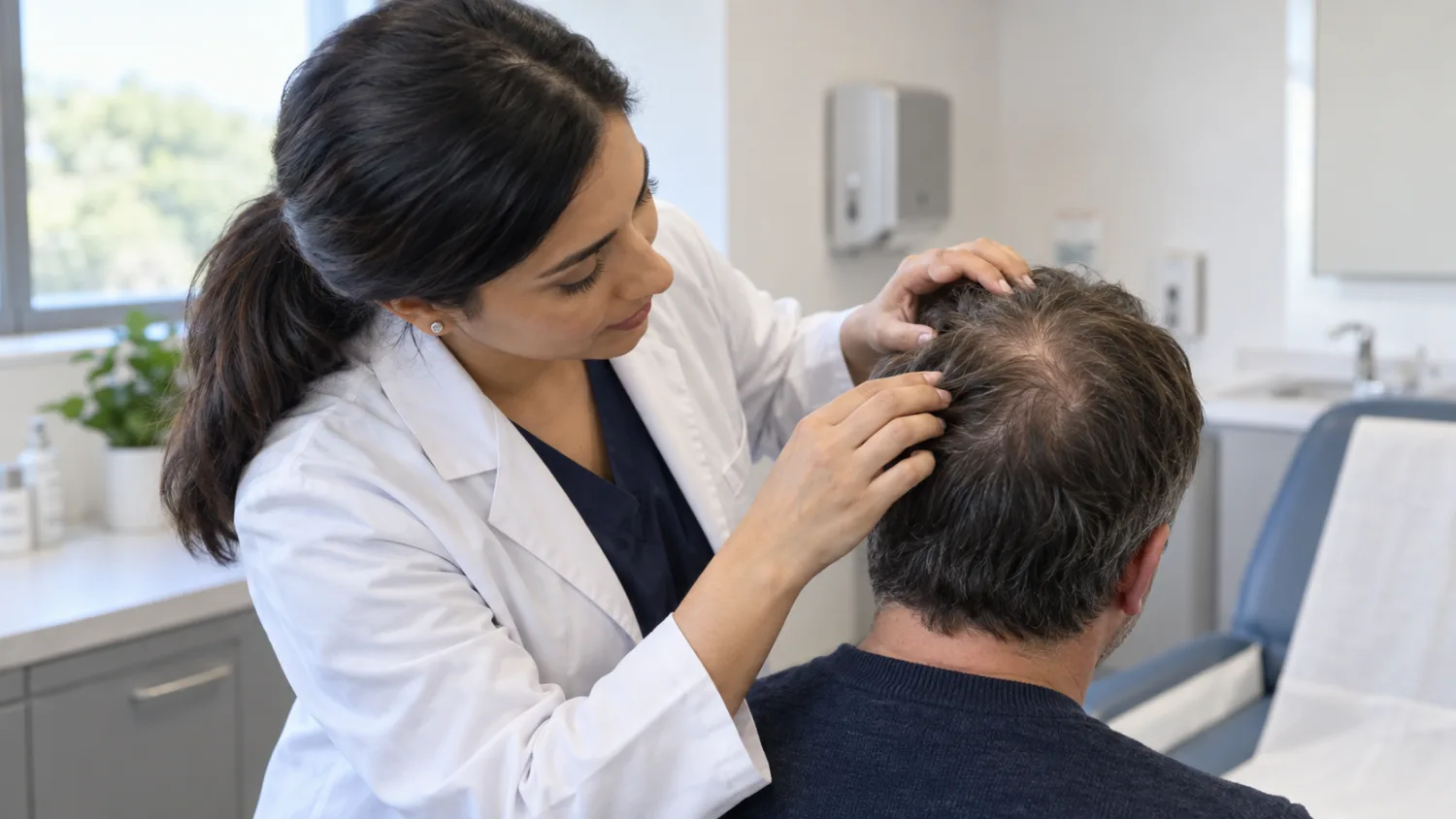
A comprehensive service should begin with an assessment of the type and pattern of hair loss. Injecting the scalp without establishing a likely diagnosis can waste money and delay appropriate treatment.
The quoted fee may include:
- a medical history and scalp examination;
- assessment of hair-loss pattern and progression;
- standardised clinical photographs;
- dermoscopy or digital trichoscopy;
- blood collection and PRP preparation;
- scalp cleansing and local numbing measures;
- the injections themselves;
- aftercare instructions;
- a follow-up review;
- repeat photographs or hair-density measurements.
Some clinics offer a free consultation, but it may be primarily a sales appointment rather than an independent medical diagnosis. Ask who conducts it and what professional registration they hold.
Confirm whether the price changes according to the treatment area. A crown-only session may be advertised at the lowest rate, while treatment of the hairline and entire top of the scalp costs more.
Which extra costs might be added?
Blood tests, prescriptions and combined procedures are not necessarily included in the PRP price.
Possible additions include:
| Additional service | Possible cost |
|---|---|
| Medical or dermatologist consultation | Approximately £100–£300+ |
| Hair-loss blood-test panel | Approximately £50–£250+ |
| Prescription medication | Paid monthly or per prescription |
| PRP combined with microneedling | May add £100–£300+ |
| PRF, growth-factor or exosome upgrade | Often several hundred pounds extra |
| Digital scalp analysis | Free to approximately £150 |
| Cancellation or package expiry | Depends on clinic terms |
Be cautious when PRP is automatically bundled with exosome products or other “regenerative” additions. These are not simply stronger versions of PRP, and the evidence and regulatory position may differ.
Ask whether every component is necessary and what evidence supports it. A more expensive biological-sounding package is not automatically more effective.
Our guide to regenerative-medicine costs in the UK explains why treatment names and package prices vary so widely.
How does PRP hair treatment work?
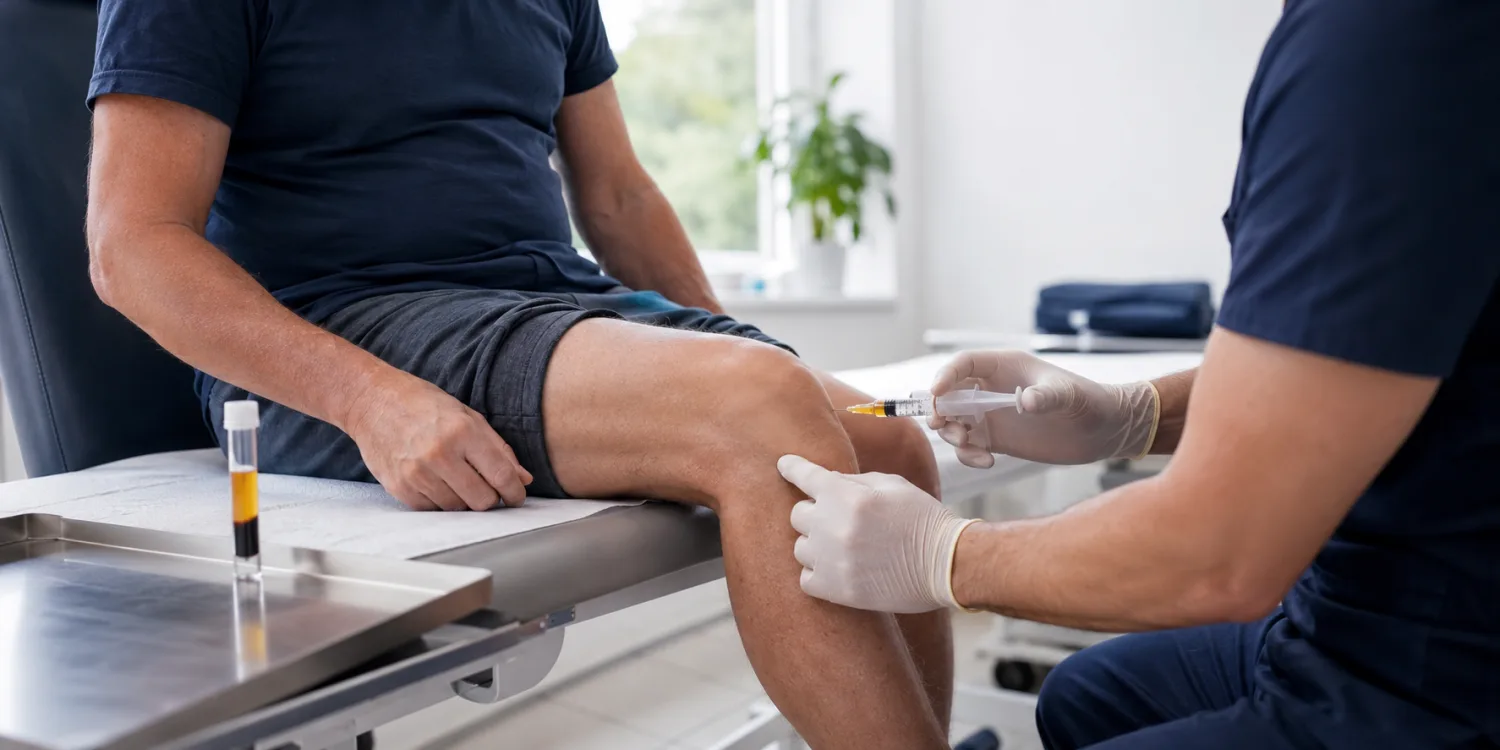
PRP is made from a sample of your own blood. The blood is placed into a centrifuge, which spins it to separate plasma and platelets from other components.
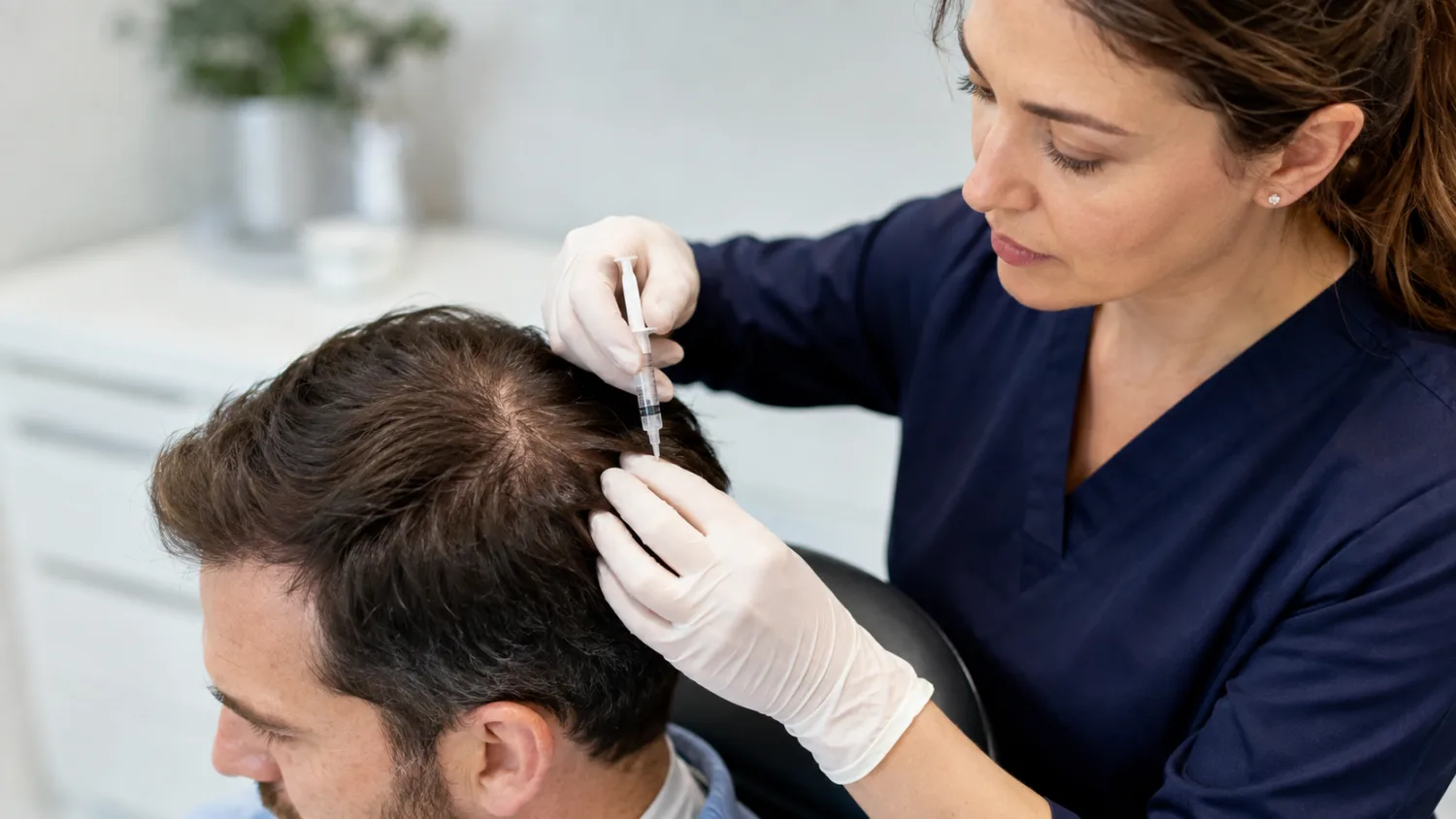
The platelet-rich portion is collected and injected into multiple points across the thinning scalp. Platelets contain proteins and signalling molecules involved in clotting, tissue repair and cell communication.
The theory is that concentrating these platelets around active but miniaturising hair follicles may influence the local environment and support the hair-growth cycle.
A typical appointment involves:
- confirming your health and medication history;
- taking blood from a vein in your arm;
- processing the blood in a centrifuge;
- cleaning and marking the treatment area;
- using ice, vibration or local anaesthetic if offered;
- injecting small amounts of PRP across the scalp;
- providing aftercare advice.
The appointment commonly takes 45 to 90 minutes. Only part of that time is spent performing injections because the blood must be collected and prepared first.
PRP is autologous, meaning it comes from your own body. This reduces the risk of an allergic reaction to the injected material, but it does not remove the risks of infection, bleeding, pain or poor technique.
How many sessions are normally recommended?
There is no universally accepted PRP protocol for hair loss. Clinics use different centrifuges, blood volumes, platelet concentrations, injection depths and treatment intervals.
A common initial schedule is:
- three sessions;
- approximately four to six weeks apart;
- a formal review after three to six months;
- maintenance once or twice a year if treatment appears beneficial.
Some clinics recommend four to six initial sessions. A longer course is not necessarily superior, particularly if no objective improvement is appearing.
Ask why the proposed number is appropriate for your diagnosis rather than accepting a standard package. The clinic should explain when photographs or measurements will be repeated and at what point treatment would be considered unsuccessful.
One isolated session is unlikely to establish whether PRP will work. However, paying for six or twelve treatments upfront removes the opportunity to stop after an ineffective initial course.
What results can you realistically expect?
PRP may modestly improve hair density, shaft thickness or shedding in some people with androgenetic alopecia, commonly called male or female pattern hair loss.
It is not a reliable way to recreate a lost hairline, reverse advanced baldness or produce transplant-like density. Results are gradual and can be difficult to distinguish from normal variation without standardised photographs.
A 2024 systematic review of PRP for male androgenetic alopecia found that several studies reported improvements in hair density or count. However, the authors also highlighted low-quality evidence, variation between treatment methods and a moderate risk of bias in most included studies.
This means PRP has potential, but claims such as “guaranteed regrowth” or a precise success percentage should be treated cautiously.
Possible outcomes include:
- less shedding;
- thicker-feeling existing hair;
- a modest increase in measured density;
- improved coverage where follicles are miniaturised;
- little or no visible difference.
PRP cannot create entirely new follicles. Areas that have been smooth and bald for a long time are much less likely to respond.
When should results become visible?
Hair grows slowly, so PRP results cannot be judged immediately. Temporary scalp swelling can make the hair look fuller for a short time, but this is not new growth.
A rough timeline may be:
- first few days: tenderness, redness or mild swelling from the procedure;
- one to three months: possible reduction in shedding;
- three to six months: the earliest useful time to compare density and thickness;
- six to twelve months: clearer view of the overall response and maintenance needs.
Not everyone follows this pattern. Hair growth is affected by the diagnosis, duration of loss, genetics, medication and whether an underlying deficiency or illness has been treated.
Useful monitoring should use photographs taken with the same:
- lighting;
- camera angle;
- hair length;
- parting;
- wet or dry condition;
- styling products.
Different lighting or combing can make before-and-after images misleading. Ask whether the clinic uses objective hair counts or trichoscopy rather than relying only on casual photographs.
Who is most and least likely to benefit?
PRP appears most plausible for early-to-moderate pattern hair loss where follicles remain present but produce progressively finer hairs.
Potential candidates include people with:
- early male-pattern hair loss;
- early female-pattern hair loss;
- diffuse thinning with a confirmed suitable diagnosis;
- existing medical hair-loss treatment that needs an adjunct;
- realistic expectations about modest improvement.
PRP is less likely to help when:
- the area has been completely bald for a long time;
- follicles have been destroyed by a scarring alopecia;
- untreated iron deficiency or thyroid disease is causing the shedding;
- hair is being lost through chemotherapy or another ongoing trigger;
- there is active scalp infection or inflammation;
- the diagnosis has not been established.
Alopecia areata, telogen effluvium and scarring alopecias are different conditions. PRP should not be sold as a universal injection for every type of hair loss.
Patchy loss, scalp pain, burning, pustules, heavy scaling or shiny scar-like areas should be assessed by a GP or dermatologist. Delaying treatment for scarring alopecia can result in permanent follicle loss.
Our guide to hair-loss causes and treatments explains how the main patterns differ.
Do you need blood tests before PRP?
Not every person needs a large private blood-test panel. Tests should be selected according to the pattern of hair loss, symptoms, medical history and examination.
Possible investigations include:
- a full blood count;
- ferritin and iron studies;
- thyroid function;
- vitamin B12 or folate in selected cases;
- vitamin D where deficiency is plausible;
- hormonal tests when symptoms suggest an endocrine condition;
- platelet count or clotting assessment when medically relevant.
PRP depends on drawing and processing your blood, but a routine platelet count alone does not show whether the treatment will grow hair.
Tell the practitioner if you have a blood disorder, low platelets, anaemia, active infection, cancer treatment or medication affecting bleeding. Do not stop anticoagulants, antiplatelet medication or prescribed anti-inflammatory medicines solely because a clinic instructs you to do so without consulting the clinician who prescribed them.
See our guide to blood tests that may help investigate hair loss. If ferritin is low, our guide to low ferritin with normal haemoglobin explains why iron stores can matter before anaemia develops.
How does PRP compare with other hair-loss treatments?
PRP is usually an adjunct rather than the first or only treatment for pattern hair loss. Medication generally costs less, but it also requires ongoing use and can cause side effects.
| Treatment | Main consideration |
|---|---|
| Topical minoxidil | Used regularly and relatively inexpensive; irritation and initial shedding can occur |
| Oral finasteride | Used mainly for male-pattern loss; potential sexual, mood and reproductive considerations |
| PRP | Repeated injections with variable evidence and significant ongoing cost |
| Low-level light therapy | Requires repeated use; device quality and evidence vary |
| Hair transplant | Moves existing follicles surgically; larger upfront cost and limited donor supply |
| Cosmetic fibres or hair systems | Improve appearance without medically treating follicle loss |
Finasteride and minoxidil have different mechanisms from PRP and may be used alongside it when appropriate. Combining treatments also increases cost and makes it harder to know which treatment produced the improvement.
Our comparison of finasteride and minoxidil explains benefits, limitations and side effects.
A transplant may provide more substantial coverage for established pattern baldness, but it is surgery and does not stop further loss from untreated native hair. See our guide to UK hair-transplant costs.
What are the risks and side effects?
PRP uses your own blood, but it is still an invasive procedure involving venepuncture, blood processing and multiple scalp injections.
Common short-term effects include:
- pain during injections;
- scalp tenderness;
- redness;
- small areas of swelling;
- bruising or pinpoint bleeding;
- headache;
- temporary tightness or itching.
Less common risks include:
- infection;
- significant bleeding or haematoma;
- nerve irritation;
- persistent inflammation;
- scarring;
- vasovagal fainting during the blood draw;
- reaction to local anaesthetic or another product used during treatment.
Using your own plasma reduces allergy and disease-transmission concerns, but poor blood handling or injection technique can still cause harm.
Contact the clinic promptly for increasing pain, spreading redness, heat, pus, fever, significant swelling or another worsening symptom after treatment.
How do you choose a safe PRP hair clinic?
PRP for hair loss sits across dermatology, hair restoration and aesthetic medicine. The quality of assessment and clinical governance varies.
Check who will personally:
- diagnose the hair-loss condition;
- take your blood;
- prepare the PRP;
- perform the injections;
- manage complications;
- review the result.
Verify the practitioner through the relevant professional register, such as the General Medical Council for doctors, Nursing and Midwifery Council for nurses or another appropriate statutory register.
In England, CQC registration depends on the provider and regulated activities being delivered. Do not assume that every cosmetic PRP service is CQC-registered, but check the CQC record when the clinic claims registration or provides regulated medical care. Scotland, Wales and Northern Ireland have separate healthcare regulators.
Questions to ask include:
- What is my diagnosis, and why should PRP help it?
- What evidence supports treatment for this type of hair loss?
- Who performs the injections, and what is their registration?
- How is blood handled and equipment sterilised?
- Is the PRP system closed and single-use where appropriate?
- How many sessions are recommended, and why?
- What exactly is included in the price?
- How will improvement be measured?
- When will you advise stopping?
- Who treats an infection or other complication?
Warning signs include guaranteed regrowth, pressure to pay for a long course immediately, refusal to discuss medication, no diagnosis, unclear practitioner qualifications and before-and-after images taken under obviously different conditions.
Our guide to choosing a safe UK aesthetic clinic or practitioner provides a broader checklist.
Frequently asked questions
How much is one PRP hair session in the UK?
A session commonly costs £200 to £600. Regional clinics may charge less, while premium London services can cost £500 to £850 or more.
How much is a complete PRP hair course?
An initial course of three sessions generally costs around £600 to £1,500. Four-session plans may cost £800 to £2,000 or more.
How many PRP sessions do you need for hair loss?
Many clinics begin with three sessions spaced four to six weeks apart. Some recommend four or more. The plan should be based on diagnosis and reviewed according to objective results.
Is PRP hair treatment a one-off procedure?
Usually not. If the initial course helps, maintenance may be recommended once or twice a year. Stopping maintenance may allow the underlying hair-loss process to become more noticeable again.
How much does PRP maintenance cost?
Each maintenance session may cost £200 to £600, producing a possible ongoing annual cost of £200 to £1,200 or more.
When will I see results?
A reduction in shedding may become noticeable after two or three months. Changes in density or thickness generally require at least three to six months to assess properly.
Does PRP regrow a receding hairline?
It may thicken miniaturising hairs where follicles remain active, but it is unlikely to rebuild a substantially lost hairline or regrow hair on a long-standing smooth bald area.
Does PRP work for female hair loss?
It may help some women with female-pattern hair loss, but shedding caused by iron deficiency, thyroid disease, hormonal changes or another condition should be identified and treated appropriately.
Does PRP work for alopecia areata?
Evidence is less established, and alopecia areata requires an appropriate medical diagnosis. Do not assume that a general aesthetic PRP package is suitable for patchy autoimmune hair loss.
Is PRP better than minoxidil or finasteride?
They work differently, and direct comparisons are limited. Minoxidil and finasteride have more established roles in pattern hair loss, while PRP may be considered as an additional treatment in selected patients.
Is PRP hair treatment painful?
Multiple scalp injections can be uncomfortable. Clinics may use ice, vibration, numbing cream or local anaesthetic, but discomfort and tenderness vary.
Can PRP cause hair loss?
Temporary shedding may occasionally be noticed around treatment, but significant or persistent worsening needs review. The underlying hair-loss condition can also continue despite PRP.
Can I wash my hair after PRP?
Clinics commonly advise waiting until later the same day or the following day, but aftercare protocols differ. Follow the written instructions from the treating practitioner.
Is PRP hair treatment available on the NHS?
PRP for cosmetic pattern hair loss is not routinely funded by the NHS. Most patients pay privately.
Does private health insurance cover PRP for hair loss?
Usually not, because it is commonly regarded as cosmetic or investigational. Check the policy before treatment if hair loss relates to a covered medical condition.
Is PRP worth the cost?
It may be worth considering for early pattern hair loss when the diagnosis is clear, expectations are modest and ongoing costs are affordable. It is poor value when sold for advanced baldness, unexplained shedding or without objective monitoring.