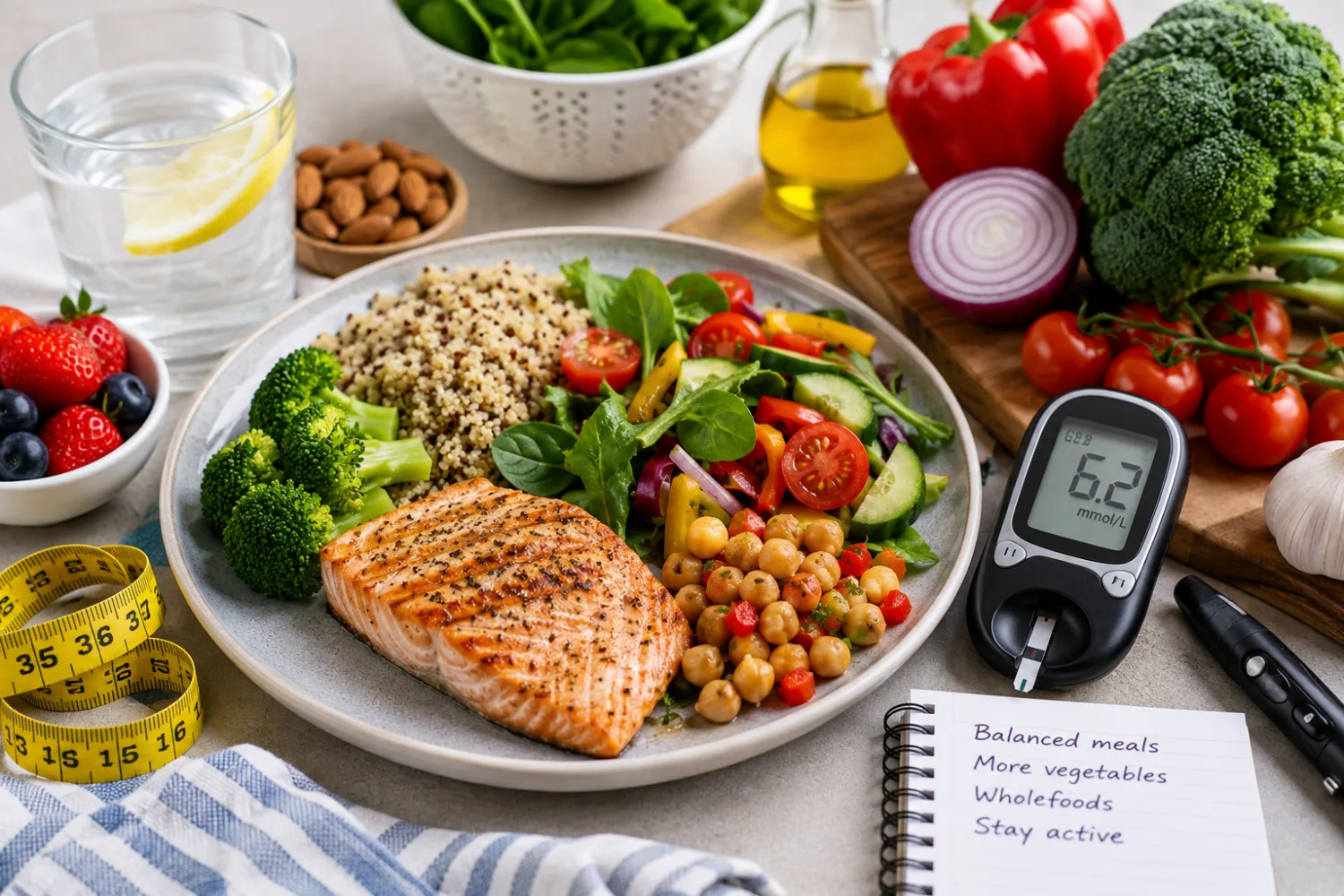
Food is one of the first things people worry about after being diagnosed with diabetes or prediabetes. It can feel as if every meal suddenly becomes a test: Is bread allowed? What about fruit? Should you stop eating rice? Is sugar completely banned? Do you need special diabetic foods?
The answer is more balanced than most people expect. A diabetes-friendly diet is not about eating perfectly, cutting out every carbohydrate, or never enjoying food again. It is about choosing foods and portions that help keep blood glucose steadier, support a healthy weight, protect your heart and kidneys, and fit into real life.
For people with type 2 diabetes or prediabetes, diet can make a major difference to HbA1c, weight, cholesterol and blood pressure. For people with type 1 diabetes, food choices and carbohydrate counting can help match insulin to meals and reduce glucose swings. The details differ, but the principle is the same: food should support your health, not make your life miserable.
This guide explains what to eat, what to reduce, how carbohydrates affect blood sugar, how to build better meals, and what to do if you are unsure where to start.
If you are still at the testing stage, read Diabetes Screening: Who Should Get Tested and When?. For a broader overview, see Diabetes Explained: Symptoms, Types, Tests and Treatment in the UK.
What a diabetes-friendly diet is really trying to do
A good diabetes diet has several goals. Blood sugar matters, but it is not the only target. Diabetes is also linked with heart disease, stroke, kidney disease, nerve damage, eye problems and circulation problems. That is why diet advice should consider the whole person, not only glucose readings.
A diabetes-friendly way of eating aims to:
- reduce big blood sugar spikes after meals
- improve HbA1c over time
- support weight loss or weight maintenance where appropriate
- improve cholesterol and triglycerides
- help control blood pressure
- protect heart and kidney health
- provide enough fibre, protein, vitamins and minerals
- be realistic enough to continue long term
This is why extreme diets can be risky. A very restrictive plan may reduce blood sugar for a while, but if it is miserable, socially difficult or nutritionally poor, it is unlikely to last. The best diet is not the one that looks perfect for two weeks. It is the one that improves your health and still works six months later.
For most people, the biggest wins come from reducing sugary drinks, improving carbohydrate quality, eating more fibre, managing portions, adding protein to meals, reducing highly processed foods, and building regular activity into the day.
Do people with diabetes need to avoid carbohydrates?
No, most people with diabetes do not need to avoid carbohydrates completely. Carbohydrates raise blood glucose more directly than protein or fat, so they do need attention. But “carbs” are not all the same.
Carbohydrates include foods such as bread, rice, pasta, potatoes, cereals, fruit, milk, yoghurt, beans, lentils, sweets, cakes, biscuits and sugary drinks. Some are nutritious and high in fibre. Others are highly processed and easy to overeat.
The key questions are:
- What type of carbohydrate is it?
- How big is the portion?
- What is it eaten with?
- How often is it eaten?
- How does it affect your own blood glucose, if you monitor it?
NICE recommends high-fibre, low-glycaemic-index carbohydrate sources such as fruit, vegetables, wholegrains and pulses for adults with type 2 diabetes. Diabetes UK also explains that low-carb eating should not mean no-carb eating, and that high-fibre wholegrain foods can support wider health.
Some people with type 2 diabetes choose a lower-carbohydrate approach, and it can help with weight loss and blood glucose control for some. But it should still be balanced, include enough fibre and nutrients, and be discussed with a healthcare professional if you take insulin or medicines that can cause low blood sugar.
If you use insulin, especially for type 1 diabetes, carbohydrate counting may be part of your treatment. In that case, the aim is not simply to avoid carbohydrates, but to understand them and match insulin safely.
What to eat more often
A diabetes-friendly diet is not just about cutting things out. It is also about adding foods that make meals more filling, steadier and better for long-term health.
Vegetables and salad
Most people benefit from eating more vegetables. Non-starchy vegetables such as broccoli, spinach, peppers, courgettes, cabbage, cauliflower, mushrooms, tomatoes, cucumber, lettuce and green beans are generally low in calories and carbohydrate while providing fibre, vitamins and minerals.
A simple habit is to fill half your plate with vegetables or salad at main meals. This can make meals more filling and reduce the space taken up by larger portions of rice, pasta, chips or bread.
Beans, lentils and pulses
Beans, lentils, chickpeas and peas are useful because they contain carbohydrate, protein and fibre together. They tend to be digested more slowly than many refined carbohydrates, and they are good for heart health too.
Examples include lentil soup, chickpea curry, bean chilli, hummus, mixed bean salad or adding lentils to mince-based meals.
Wholegrains and high-fibre carbohydrates
Better carbohydrate choices include oats, wholegrain bread, brown rice, wholewheat pasta, barley, quinoa, wholegrain cereals without lots of added sugar, and potatoes with skins. Portion size still matters, but these foods usually provide more fibre and nutrients than refined versions.
A swap from white bread to wholegrain bread, or from sugary cereal to porridge, may be more sustainable than trying to remove carbohydrates completely.
Protein at each meal
Protein helps meals feel more satisfying. Good options include fish, eggs, chicken, turkey, lean meat, tofu, tempeh, beans, lentils, Greek yoghurt, cottage cheese and other dairy or dairy alternatives.
Protein does not mean every meal needs to be meat-heavy. Plant proteins such as beans, lentils and tofu can be excellent choices, especially when trying to improve fibre and reduce saturated fat.
Healthy fats in sensible amounts
Unsaturated fats from foods such as olive oil, rapeseed oil, nuts, seeds, avocado and oily fish can fit well into a diabetes-friendly diet. They are better choices than large amounts of butter, cream, processed meat and fried foods.
Fats are calorie-dense, so portion size still matters, especially if weight loss is a goal. A handful of nuts is different from eating from the bag without noticing.
Fruit, in realistic portions
Fruit contains natural sugar, but it also provides fibre, vitamins and protective plant compounds. Most people with diabetes do not need to avoid fruit. The better approach is to choose whole fruit more often than juice or smoothies.
Practical choices include berries, apples, pears, oranges, peaches and plums. Larger portions of grapes, mango, pineapple or dried fruit can raise blood sugar more quickly, so portion size matters.
Fruit juice and smoothies can raise blood glucose quickly because they are easy to drink fast and contain less intact fibre than whole fruit. Whole fruit is usually the better choice.
What to reduce or limit
Very few foods need to be “banned” for everyone, but some foods make blood glucose, weight, cholesterol or blood pressure harder to manage if eaten often or in large amounts.
Sugary drinks
Sugary drinks are one of the clearest things to reduce. They can raise blood glucose quickly and add calories without making you feel full. This includes regular fizzy drinks, energy drinks, sweetened iced tea, sugary coffees, sweetened milk drinks, fruit juice and large smoothies.
Better everyday choices include water, sparkling water, unsweetened tea, coffee without added sugar, or sugar-free drinks if you use them.
Sweets, cakes, biscuits and desserts
You do not necessarily need to avoid these forever, but they are best treated as occasional foods rather than daily staples. They often combine sugar, refined flour and saturated fat, which can affect both blood glucose and heart health.
If you do have dessert, it is usually better to have a small portion after a balanced meal rather than on an empty stomach. A meal containing protein, fibre and vegetables can reduce the speed of glucose absorption compared with eating sugary foods alone.
Large portions of refined carbohydrates
White bread, white rice, chips, mashed potato, regular pasta, pastries and many breakfast cereals can raise blood glucose quickly, especially in large portions. You may not need to cut them out completely, but reducing portions and choosing higher-fibre versions can help.
Processed meat and high saturated fat foods
Diabetes increases cardiovascular risk, so heart health matters. Try to reduce frequent processed meats such as bacon, sausages, salami and processed ham, and limit foods high in saturated fat such as butter, cream, fatty cuts of meat, pies, pastries and some takeaway foods.
Alcohol
Alcohol can affect weight, blood sugar, sleep, liver health and medication safety. Some alcoholic drinks also contain a lot of sugar. If you drink, keep within UK low-risk drinking guidelines and avoid drinking on an empty stomach, especially if you take insulin or medicines that can cause hypos.
If weight, liver tests or blood pressure are concerns, reducing alcohol may make a noticeable difference.
How to build a better plate
A simple plate method can make diabetes eating easier without counting every gram.
For many meals, aim for:
- Half the plate: vegetables or salad
- Quarter of the plate: protein such as fish, chicken, eggs, tofu, beans or lentils
- Quarter of the plate: higher-fibre carbohydrate such as wholegrain rice, oats, wholemeal bread, potatoes with skin, wholewheat pasta, beans or lentils
- Small amount: healthy fats such as olive oil, seeds, avocado or nuts
This approach works because it reduces the chance that the meal becomes mostly carbohydrate. It also improves fullness, fibre and overall nutrition.
Examples of balanced meals include:
- porridge with berries, Greek yoghurt and seeds
- eggs with wholegrain toast and grilled tomatoes
- chicken salad with lentils or a small portion of wholegrain rice
- bean chilli with vegetables and a smaller portion of brown rice
- salmon with vegetables and new potatoes
- tofu stir-fry with vegetables and a moderate portion of noodles
- lentil soup with salad and a small slice of wholegrain bread
For people trying to lose weight, the same plate method can be used with smaller carbohydrate and fat portions. For people who are underweight, older, frail or recovering from illness, the advice may be different, so personalised guidance matters.
Breakfast, lunch, dinner and snacks: practical ideas
Many people struggle most with everyday routines rather than special meals. Breakfast cereals, sandwiches, snacks and evening portions often have the biggest effect.
Breakfast ideas
- porridge with berries, cinnamon and nuts or seeds
- plain Greek yoghurt with berries and a small portion of oats
- eggs with mushrooms, tomatoes and wholegrain toast
- avocado and egg on wholegrain toast
- low-sugar wholegrain cereal with milk and added seeds
Try to avoid making breakfast mostly refined carbohydrate, such as sugary cereal, white toast with jam, pastries or sweetened drinks. Adding protein and fibre usually keeps you fuller for longer.
Lunch ideas
- wholegrain wrap with chicken, hummus and salad
- lentil or bean soup with salad
- tuna, egg or tofu salad with a small portion of wholegrain bread
- leftover chilli, curry or stew with extra vegetables
- jacket potato with beans or tuna and salad, watching portion size
Dinner ideas
- fish with vegetables and new potatoes
- chicken or tofu stir-fry with lots of vegetables and a moderate portion of rice or noodles
- lean mince or lentil bolognese with wholewheat pasta and salad
- vegetable and chickpea curry with a smaller portion of rice
- omelette with salad and a slice of wholegrain toast
Snack ideas
Not everyone needs snacks. If you snack out of habit, boredom or stress, reducing snacks may help with weight and blood sugar. If you genuinely need a snack, choose something that combines fibre, protein or healthy fats.
- apple with peanut butter
- plain yoghurt with berries
- carrot sticks with hummus
- a small handful of nuts
- boiled eggs
- cottage cheese with cucumber or tomatoes
- wholegrain crackers with cheese in a modest portion
Can you still eat sugar, fruit, rice, pasta and bread?
This is where diabetes advice often becomes too strict or too vague. The realistic answer is: it depends on the food, portion, frequency, your medication, your blood glucose pattern and your goals.
Sugar: You do not need to ban every gram of sugar, but frequent sugary drinks, sweets, cakes and biscuits will usually make blood glucose and weight harder to manage. Keep them occasional and portion-controlled.
Fruit: Whole fruit is generally fine for most people. Fruit juice and smoothies are more likely to raise glucose quickly. Dried fruit is concentrated, so portions should be small.
Rice: Rice can be included, but portions matter. Brown or basmati rice may be better choices for some people than large portions of white rice. Add vegetables and protein rather than making rice the main part of the meal.
Pasta: Wholewheat pasta, smaller portions and adding protein and vegetables can help. Pasta cooked al dente may affect blood glucose differently from very soft pasta, but portion size remains important.
Bread: Wholegrain or seeded bread is usually a better everyday choice than white bread. Watch portions and toppings. Two large slices with jam is different from one slice with eggs and tomatoes.
Potatoes: Potatoes are not forbidden, but chips, crisps and large portions of mash can be less helpful. Boiled new potatoes with skin, served with protein and vegetables, may be a better option.
If you monitor blood glucose, you may notice that different carbohydrates affect you differently. That information can be useful, but avoid becoming anxious about every small change. Look for patterns and discuss them with your diabetes nurse or dietitian.
Diet for prediabetes, type 1 and type 2 diabetes
Diet advice changes depending on the type of diabetes and treatment.
Prediabetes
With prediabetes, the aim is to reduce the risk of type 2 diabetes. Weight loss where appropriate, more activity, smaller portions of refined carbohydrates, more fibre and fewer sugary drinks can make a big difference.
Read more in What Is Prediabetes and Can It Be Reversed?.
Type 2 diabetes
With type 2 diabetes, diet can help lower HbA1c, support weight loss, improve cholesterol and reduce medication needs for some people. Some people prefer a moderate-carbohydrate approach, while others choose lower-carb eating. The best plan should be safe, nutritionally balanced and sustainable.
If you take insulin or medicines that can cause low blood sugar, ask for advice before making major carbohydrate changes. Medication may need review.
Type 1 diabetes
With type 1 diabetes, insulin is essential. Diet still matters, but the focus often includes carbohydrate counting, matching insulin to meals, understanding exercise effects, preventing hypos and managing glucose around illness. People with type 1 diabetes should receive specialist education and support.
If you are unsure about the difference between diabetes types, read Type 1 vs Type 2 Diabetes: What’s the Difference?.
Weight loss, cholesterol and blood pressure
For many people with type 2 diabetes or prediabetes, weight loss is one of the most effective ways to improve blood glucose. This does not mean everyone needs to become slim, and it does not mean weight is the only factor. But if excess weight, especially around the waist, is part of the picture, losing even a modest amount can help insulin work better.
Diet also affects cholesterol and blood pressure. This matters because diabetes increases cardiovascular risk. A diet that lowers blood sugar but relies heavily on processed meat, butter, cream and fried foods may not be ideal for heart health.
Helpful habits include:
- choosing unsaturated fats instead of butter and processed meats
- eating more vegetables, beans, lentils and wholegrains
- reducing salt and processed foods
- eating oily fish if you eat fish
- keeping alcohol moderate
- reducing portion sizes if weight loss is a goal
For related guidance, read How Weight Loss Really Works, Why Am I Not Losing Weight?, Cholesterol Test Results Explained and Blood Pressure Chart Explained.
When to get personalised diet advice
General diet advice is useful, but some people need personalised support. Ask your GP, diabetes nurse or dietitian for guidance if:
- you use insulin
- you have frequent hypos
- you are pregnant or planning pregnancy
- you have kidney disease
- you have an eating disorder or a history of disordered eating
- you are underweight or losing weight unintentionally
- you have digestive conditions such as coeliac disease, IBD or IBS
- you follow a vegan, vegetarian, halal, kosher or other specific diet and need tailored advice
- you are considering a very low-carb or very low-calorie diet
- you take diabetes medication and want to make major diet changes
You should also ask for support if food feels overwhelming. Diabetes can create guilt and anxiety around eating, but the goal is not perfection. A dietitian can help you build meals around your culture, budget, preferences and health goals.
If you are using private healthcare, a registered dietitian can provide individual advice, but make sure they are properly qualified. Be cautious with anyone selling expensive supplements, “diabetes detoxes” or guaranteed cures.
For broader healthcare options, read Private GP Services in the UK: Costs, Private Health Check Cost in the UK and NHS vs Private Healthcare.
Frequently asked questions
What is the best diet for diabetes?
The best diet is one that helps control blood glucose, supports a healthy weight, protects heart health and is realistic long term. For many people this means more vegetables, high-fibre carbohydrates, beans, lentils, lean proteins, healthy fats and fewer sugary drinks, refined carbohydrates and highly processed foods.
Do I need to cut out carbs if I have diabetes?
Not usually. Carbohydrates affect blood glucose, so type, portion and timing matter. Many people do well by choosing higher-fibre carbohydrates and reducing portions of refined carbs rather than cutting carbohydrates out completely.
Can I eat fruit if I have diabetes?
Yes, most people with diabetes can eat whole fruit. Whole fruit is usually better than fruit juice or smoothies because it contains more intact fibre and is less easy to consume quickly in large amounts.
Is rice bad for diabetes?
Rice is not forbidden, but large portions of white rice can raise blood glucose. Smaller portions, brown or basmati rice, and meals that include protein and vegetables may be better choices.
Can I eat bread with diabetes?
Yes, but choose wholegrain, seeded or higher-fibre bread more often than white bread, and watch portion size. What you eat with bread also matters.
Are potatoes allowed with diabetes?
Potatoes can be included, but portion and cooking method matter. Boiled new potatoes with skin are usually a better everyday choice than chips, crisps or large portions of mash.
Should I buy diabetic foods?
Special “diabetic” foods are usually unnecessary and may still affect blood glucose or contain calories, fats or sweeteners. Ordinary healthy foods are usually a better approach.
Can I still eat chocolate or dessert?
Occasional small portions can fit into many diabetes diets, especially after a balanced meal. Daily sugary snacks, large desserts or sweet drinks are more likely to make blood glucose and weight harder to manage.
Is a low-carb diet good for type 2 diabetes?
A lower-carbohydrate diet can help some people with type 2 diabetes improve blood glucose and lose weight. It should still be balanced and include enough fibre and nutrients. If you take insulin or medicines that can cause hypos, speak to your healthcare team before making major changes.
What should I eat for breakfast with diabetes?
Good options include porridge with berries and seeds, eggs with wholegrain toast and vegetables, plain Greek yoghurt with berries, or low-sugar wholegrain cereal. Try to include protein and fibre rather than making breakfast mostly sugary or refined carbohydrate.
Can diet reverse type 2 diabetes?
Some people with type 2 diabetes can achieve remission, often after significant sustained weight loss. Diet can play a major role, but remission is not guaranteed and ongoing monitoring is still needed.
When should I ask for a dietitian?
Ask for dietitian support if you use insulin, have kidney disease, are pregnant, have frequent hypos, are losing weight unintentionally, have an eating disorder history, or feel unsure how to adapt diabetes advice to your lifestyle, culture or budget.