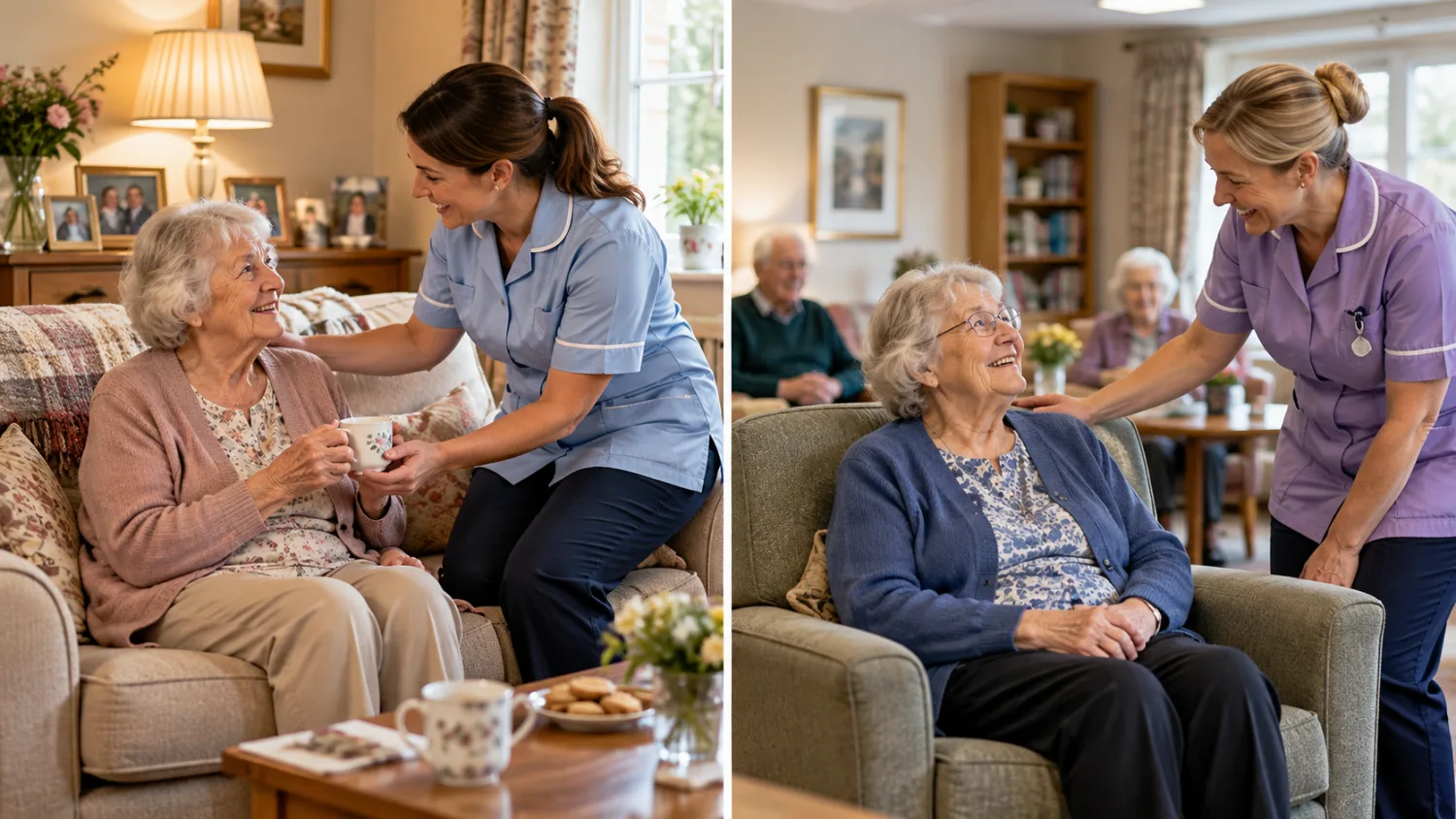
Moving into a care home is not just a practical change. For many families, it is emotional, stressful and full of small decisions. What should you pack? What should stay at home? How much furniture is allowed? What documents are needed? How do you help a parent settle? What if they are frightened, confused or refusing to go?
A good move is not about taking everything from home. It is about taking the right things: comfortable clothes, familiar objects, essential documents, medication information, personal routines, favourite toiletries, meaningful photos and enough detail for staff to understand the person behind the care plan.
This guide explains how to prepare for moving into a care home, what to pack, what not to bring, how to make the room feel familiar, what to arrange before moving day, how families can help during the first few weeks, and what to do if the move does not feel right.
If you are still choosing a home, read our guides to how to choose a care home in the UK, care home visit questions and care home red flags. If money and contracts are the main concern, see care home fees and care home contracts.
1. Before moving: confirm the important details
Before packing bags, confirm the basics with the care home. Families often focus on clothes and toiletries, but the most important preparation is making sure the home is ready to meet the person’s needs from the first day.
Ask the care home:
- What date and time should the person arrive?
- Who will welcome them on arrival?
- Will the manager, nurse or senior carer be available?
- Has the care needs assessment been completed?
- Has the care plan been started?
- Has medication information been received?
- What furniture can be brought?
- What electrical items are allowed?
- Do belongings need to be labelled?
- Who should receive emergency contact details?
- What happens during the first 24 hours?
- When will the first care plan review happen?
The NHS says families should consider whether a care home offers the right services, activities, location, cost and visiting arrangements before choosing. NHS care home guidance is a useful overview if you are still checking whether the home is the right fit.
In England, you can also check a care home’s inspection report and rating through the Care Quality Commission. CQC explains that it inspects and rates residential care homes and nursing homes, and families can use reports to understand the quality of care. CQC’s care home search guidance is useful before finalising a move.
If the move is happening after a hospital stay, ask whether discharge paperwork, medication changes, mobility needs, continence support and follow-up appointments have been passed to the care home. You may also find our guide to choosing a care home after a hospital stay helpful.
2. What to pack for a care home
The best packing list depends on the person’s needs, room size, laundry arrangements, hobbies and whether the move is permanent or temporary respite. Start with enough for comfort, dignity and familiarity, then add personal touches.
Clothing
Pack comfortable, easy-to-wear clothes that suit the person’s usual style. Do not only pack “practical” clothing if it makes them feel unlike themselves. If your mother always liked smart cardigans, scarves or jewellery, those details matter.
Consider packing:
- day clothes for at least 7 to 10 days;
- nightwear;
- underwear and socks;
- cardigans, jumpers or layers;
- comfortable trousers, skirts or dresses;
- slippers with good grip;
- well-fitting shoes;
- coat or jacket;
- hat, gloves or scarf for colder weather;
- light clothing for warmer weather;
- clothes suitable for activities or outings;
- special outfit for birthdays, family visits or religious services.
Choose clothing that is comfortable and washable. Avoid very delicate items unless the care home confirms they can be safely laundered or family will wash them separately.
Toiletries and personal care items
Favourite toiletries can make the care home feel more familiar. Familiar smells, textures and routines can be reassuring, especially for someone with dementia.
Pack:
- toothbrush and toothpaste;
- denture pot, denture cleaner and adhesive if used;
- soap or body wash;
- shampoo and conditioner;
- deodorant;
- moisturiser;
- shaving items;
- hairbrush or comb;
- nail file or clippers if appropriate;
- make-up or skincare if normally used;
- perfume or aftershave if allowed;
- hearing aid batteries;
- glasses and glasses case;
- continence products if needed for the first few days, unless the home provides them.
Ask the care home what it provides and what residents should bring. Some homes include basic toiletries, while others expect residents to provide their preferred products.
Medical and mobility items
Bring essential aids, but check with the care home first. Some equipment may need to be assessed, cleaned, labelled or checked for safety.
Possible items include:
- walking stick;
- walking frame;
- wheelchair;
- hearing aids;
- glasses;
- dentures;
- pressure cushion if already prescribed;
- orthopaedic shoes or insoles;
- CPAP machine if used;
- diabetes testing equipment if managed by the person or staff;
- communication aids;
- labelled storage for important aids.
If the person has falls risk, poor mobility or needs help transferring, ask whether physiotherapy, occupational therapy or a moving and handling assessment is needed. You may also want to read falls in care homes: what families should ask.
Personal items and memories
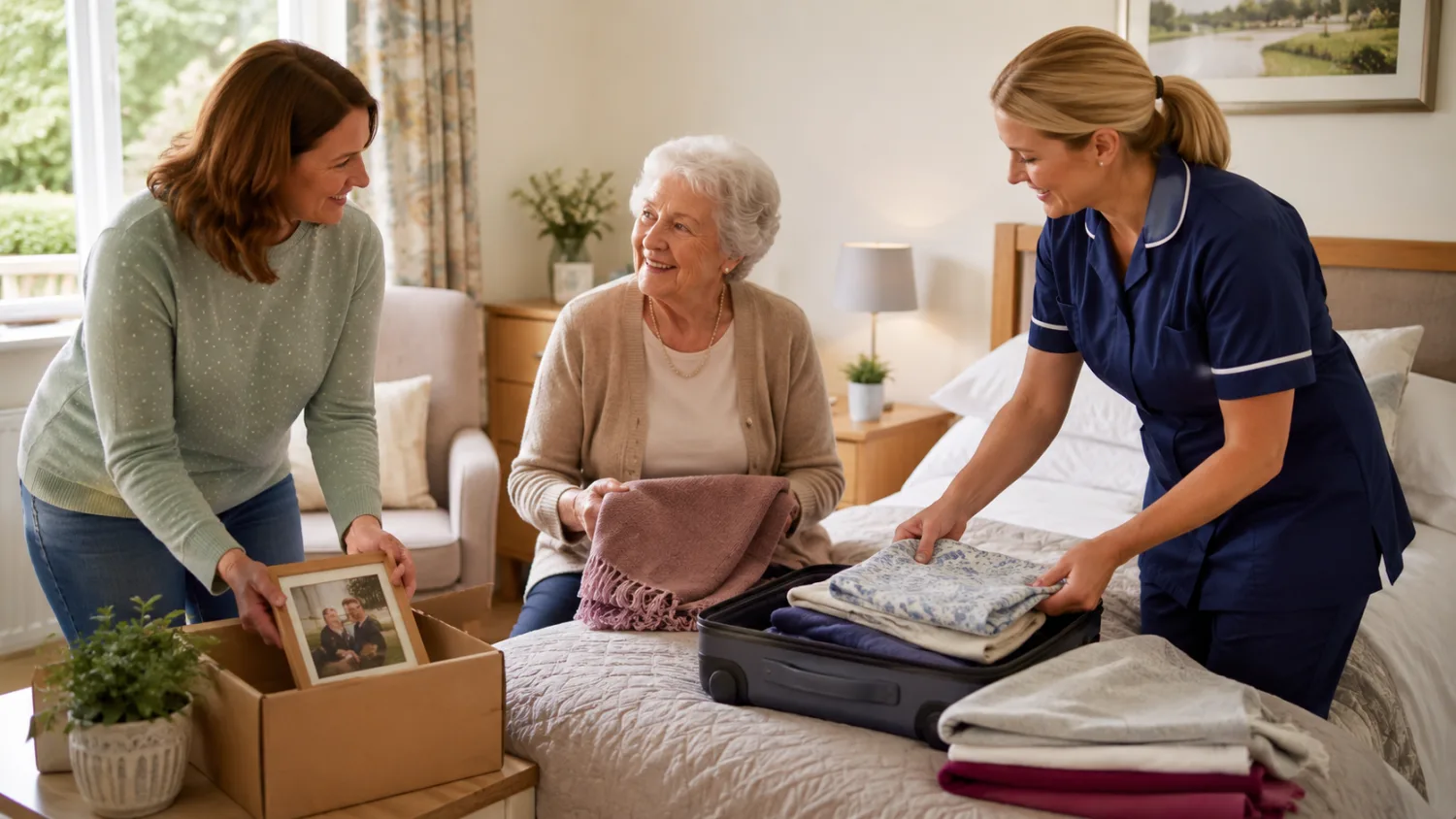
Age UK advises bringing home comforts, such as photos and soft furnishings, to make the room feel more personal. Age UK’s guide to moving into a care home includes practical settling-in tips.
Consider:
- family photos;
- photo albums;
- small ornaments;
- favourite blanket or cushion;
- favourite books;
- religious items;
- music player or radio;
- small clock;
- calendar;
- framed pictures;
- craft materials;
- knitting, puzzles or hobby items;
- memory box for someone with dementia.
Choose items that are meaningful, not necessarily expensive. A familiar cushion, family photo or favourite mug can matter more than a new item bought for the move.
3. What not to bring
Care home rooms are usually smaller than a person’s previous home, and communal living creates practical and safety considerations. Bringing too much can make the room cluttered, unsafe or hard to clean.
Check with the care home before bringing:
- large furniture;
- valuable jewellery;
- large amounts of cash;
- expensive watches;
- irreplaceable heirlooms;
- loose rugs that could increase falls risk;
- candles or anything with a flame;
- electric blankets unless approved;
- heaters or fans unless PAT tested and allowed;
- sharp tools or scissors if there are safety concerns;
- medication not handed over properly;
- alcohol unless agreed with the home;
- too many ornaments or breakables;
- pets unless the home has agreed.
If the person has dementia, confusion, wandering, self-neglect or challenging behaviour, ask the home what items are safe. For more on care homes supporting complex behaviour, see care homes for people with challenging behaviour.
Do not bring large amounts of money “just in case”. Ask the care home how personal spending money is handled, how records are kept and what safeguards are in place.
4. Documents, medication and care information
The care home needs more than belongings. Staff need accurate information to care safely from day one.
Important documents
Bring copies where possible rather than originals, unless the care home specifically asks for originals.
Useful documents may include:
- next of kin details;
- emergency contact numbers;
- GP details;
- NHS number if known;
- hospital discharge summary if relevant;
- current medication list;
- allergy information;
- care needs assessment;
- financial assessment documents if council funding is involved;
- Lasting Power of Attorney details if relevant;
- advance care plan if one exists;
- DNACPR form if one exists;
- funeral wishes or faith preferences if the person wants these recorded;
- insurance or pension correspondence if needed for fees;
- signed contract and fee agreement.
If the person may need council involvement, GOV.UK explains how to apply for a care needs assessment through the local council. GOV.UK’s needs assessment tool is a useful starting point.
Medication
Medication must be handled carefully. Do not simply pack tablets into a bag without telling the home exactly what they are and how they should be taken.
Before moving day, ask:
- Should medication be brought in original pharmacy packaging?
- Does the home need a GP medication summary?
- Who will order repeat prescriptions?
- Will the GP change after admission?
- How are controlled drugs handled?
- How are creams, eye drops and inhalers recorded?
- What happens if medication is refused?
- How are time-critical medicines managed?
This is especially important for Parkinson’s medication, diabetes medication, blood thinners, pain relief, epilepsy medication, inhalers, sedatives, antidepressants and end-of-life medicines. For condition-specific care, you may find Parkinson’s care homes, stroke care homes and palliative and end-of-life care in care homes useful.
Personal history and routines
One of the most useful things families can provide is a short “this is me” document. This helps staff see the person as a person, not only as a resident with care needs.
Include:
- preferred name;
- family members and important relationships;
- previous work;
- hobbies and interests;
- faith or cultural needs;
- food likes and dislikes;
- usual bedtime and waking time;
- preferred personal care routines;
- what helps when they are anxious;
- what makes them upset;
- favourite music, TV or radio;
- important life events;
- communication needs;
- mobility habits;
- how they usually show pain, fear or discomfort.
This is particularly valuable for someone with dementia. Alzheimer’s Society provides advice on supporting a person with dementia in a care home, including settling in and staying connected. Alzheimer’s Society’s care home dementia booklet is a useful family resource.
5. Making the room feel like home
A care home room should feel safe, practical and personal. It does not need to look like a show room. It should feel recognisable to the person living there.
Before arranging furniture or decorations, ask the care home what is allowed. Some homes allow residents to bring a favourite chair, small table, pictures or bedding. Others have limits because of fire safety, infection control, cleaning or room size.
Good items for making a room feel familiar include:
- family photographs;
- a familiar bedspread or blanket;
- a favourite chair if space and safety allow;
- small ornaments;
- familiar artwork;
- a clock with clear numbers;
- a calendar;
- labels or signs for someone with dementia;
- favourite books or magazines;
- a radio or music player;
- soft lighting if permitted;
- seasonal items that can be changed through the year.
For someone with dementia, avoid clutter and confusing layouts. Keep the bed, chair, toilet route and wardrobe easy to find. Use familiar objects to support memory, but do not overload the room.
If falls are a concern, avoid loose rugs, trailing cables, unstable furniture and too many objects around the bed or chair. Ask staff whether the room layout has been checked for falls risk.
6. Preparing emotionally for the move
Moving into a care home can bring relief, sadness, guilt, anger, fear and confusion. Families may feel they have failed, even when the move is necessary and safer. The person moving may feel abandoned, frightened or powerless. These feelings are common and should not be dismissed.
Try to talk about the move honestly but gently. Avoid making promises that may not be true, such as “it is only for a few days” if the move is likely to be permanent. At the same time, avoid making the move sound like a punishment or final loss of independence.
You might say:
“We want you to be somewhere safe where there is help day and night. We will still visit, and we will help make your room feel like yours.”
For someone who refuses care, the conversation may need to happen slowly and more than once. If refusal is a major issue, read what to do if a parent refuses care.
If the person has dementia
Someone with dementia may not understand why the move is happening, may forget explanations, or may ask repeatedly to go home. This can be very painful for families.
Helpful steps may include:
- using simple, calm explanations;
- bringing familiar objects;
- introducing staff gently;
- keeping routines as familiar as possible;
- visiting at predictable times if helpful;
- sharing life history with staff;
- asking staff how they manage “I want to go home” distress;
- avoiding long arguments about facts if the person is distressed.
If you are still choosing dementia care, read choosing a care home for someone with dementia and dementia care homes in the UK.
7. Moving day: how to make it calmer
Moving day can feel overwhelming. Keep it as calm and simple as possible. Avoid arriving with too many people, too much luggage or unresolved paperwork.
Before leaving home, check:
- medication is packed correctly;
- glasses, hearing aids and dentures are with the person;
- mobility aids are ready;
- important documents are in one folder;
- clothes and toiletries are labelled if needed;
- the care home knows the arrival time;
- the person has eaten and had drinks where appropriate;
- transport is suitable and not rushed.
On arrival:
- ask who is the named contact for the day;
- confirm medication handover;
- check the room is ready;
- help unpack key familiar items first;
- show the person where the toilet is;
- make sure call bell or alarm is explained;
- confirm mealtime arrangements;
- ask when family should leave if the person is unsettled;
- agree when you will call or visit next.
Some people settle better if family stay for a meal or a short visit. Others become more distressed by long goodbyes. Ask staff what usually helps, but trust your knowledge of the person too.
Try not to turn moving day into a full family gathering unless the person wants that. Too many people can make the day emotional and confusing.
8. The first week in a care home
The first week is about safety, settling and information gathering. It is normal for the person to feel unsure, tired, sad or unsettled. It is also normal for families to feel anxious and keep checking whether they made the right decision.
During the first week, ask the care home:
- How are they eating and drinking?
- Are they sleeping?
- Are they joining activities or staying in their room?
- Are they asking to go home?
- Have there been any falls or near misses?
- Is medication being taken as expected?
- Are there continence issues?
- Are they accepting personal care?
- Have staff noticed pain, anxiety or confusion?
- Does the care plan need changing?
Ask when the first review will happen. Many issues are easier to fix early: unsuitable clothing, missing hearing aid batteries, poor sleep, wrong mealtime preferences, confusion about call bells, or the person not knowing how to ask for help.
Do not panic if the first few days are emotional. But do take concerns seriously if the person is distressed, unsafe, neglected, not eating, repeatedly falling, not receiving medication properly or saying they are frightened.
If you are worried about unsafe care, read safeguarding adults in care homes. If you are seeing early warning signs, read care home red flags.
9. How families can help someone settle
Family involvement can make a big difference, but it needs to support the move rather than keep reopening the wound. The aim is to help the person feel connected, not abandoned, while also allowing staff to build trust.
Helpful family actions include:
- visiting regularly but not overwhelming the person;
- bringing familiar items gradually;
- sharing life history with staff;
- telling staff what calms the person;
- encouraging activities without forcing them;
- attending care plan reviews;
- checking clothes, toiletries and personal items;
- keeping communication polite and clear;
- raising concerns early;
- supporting the person’s relationships with staff and other residents.
If several relatives are involved, agree one main family contact. Care homes can struggle when multiple relatives give conflicting instructions.
Families can also help by creating a simple one-page profile:
- “What matters to me”
- “How I like to be supported”
- “What makes me anxious”
- “What helps me calm down”
- “Important people in my life”
- “Food I like and dislike”
- “Music, TV and hobbies I enjoy”
This can help care feel more personal from the start.
10. Money, contracts and practical admin
Moving into a care home involves practical administration. Some families leave money and paperwork until the last moment, which can create stress later.
Check:
- weekly fee;
- what is included;
- what costs extra;
- deposit terms;
- notice period;
- fee increase process;
- who is signing the contract;
- whether anyone is signing as guarantor;
- how personal spending money is handled;
- what happens during hospital admission;
- what happens after death;
- how invoices are sent and paid;
- whether council funding, NHS funding or top-up fees are involved.
If the person is self-funding, read self-funding a care home. If property is involved, see can you avoid selling your house to pay for care?. If council funding and family contributions are involved, read care home top-up fees explained.
Age UK explains that whether a home is included in a financial assessment depends on circumstances, and warns that giving away property to avoid care fees can be treated as deliberate deprivation of assets. Age UK’s guide to selling a home to pay for care is useful if property is part of the decision.
If the person may qualify for NHS Continuing Healthcare because their needs are primarily health-related, read NHS Continuing Healthcare: who qualifies and how to apply.
11. If the move does not feel right
It can take time to settle into a care home. Some sadness, confusion or anxiety is common. However, families should not ignore serious concerns.
Raise concerns if:
- the person is repeatedly distressed and no plan is made;
- medication is missed or unclear;
- falls are not reviewed;
- personal care is poor;
- the person is losing weight or becoming dehydrated;
- call bells are ignored;
- staff do not know the care plan;
- family communication is poor;
- the person says they are frightened;
- belongings or money go missing repeatedly;
- the home becomes defensive when you ask reasonable questions;
- the care home says it cannot meet needs after all.
Start by speaking to the nurse, senior carer or manager. Be specific. Instead of saying “Mum is not happy”, say:
“Mum has been tearful during three visits, says she does not know how to call for help, and her hearing aids were not in on two occasions. Can we review her settling-in plan and communication needs?”
If the issue is serious or repeated, ask for a care plan review. If you suspect neglect, abuse or unsafe care, contact the local authority safeguarding team and, in England, consider informing CQC. For more detail, see safeguarding adults in care homes.
If the placement is genuinely unsuitable, ask what alternatives exist. This might mean a different room, different care plan, more dementia support, a nursing home, a specialist home, temporary respite elsewhere or moving to another care home. If needs have changed significantly, ask for a reassessment.
12. Frequently asked questions
What should you pack when moving into a care home?
Pack comfortable clothing, nightwear, toiletries, glasses, hearing aids, dentures, mobility aids, medication information, important documents, family photos, favourite books, familiar bedding or cushions, and meaningful personal items. Ask the care home about furniture, electrical items and labelling.
How many clothes should someone take to a care home?
A good starting point is around 7 to 10 days of clothing, plus nightwear, underwear, socks, layers, shoes, slippers and seasonal items. Ask how often laundry is done and whether clothes need labels.
Do care home clothes need to be labelled?
Usually, yes. Many care homes ask for clothing and personal items to be labelled because laundry is shared and belongings can easily get mixed up. Ask whether the home provides labelling or expects families to do it.
Can you bring furniture into a care home?
Often, yes, but it depends on room size, safety and the home’s policy. A favourite chair, small table or pictures may be allowed. Always check before bringing furniture, especially if mobility or falls risk is a concern.
Can someone bring their own bedding to a care home?
Many homes allow familiar bedding, blankets or cushions, but fire safety, laundry and infection control policies may apply. Ask the home what is permitted.
Should valuables be taken to a care home?
It is usually better to avoid bringing expensive jewellery, large amounts of cash or irreplaceable items. If valuables are brought, ask how the home records and safeguards them.
What documents are needed when moving into a care home?
Useful documents include emergency contacts, GP details, medication list, allergy information, hospital discharge summary, care needs assessment, Lasting Power of Attorney details, advance care plan, DNACPR form if relevant, and signed contract or fee agreement.
What should families do with medication on moving day?
Ask the care home how medication should be handed over. Medication usually needs to be in original pharmacy packaging with a current medication list. Do not leave loose tablets without clear instructions.
How can you make a care home room feel homely?
Bring familiar photos, cushions, blankets, ornaments, books, a favourite chair if allowed, a clock, calendar and meaningful personal items. Keep the room personal but uncluttered and safe.
How long does it take to settle into a care home?
It varies. Some people settle within days, while others take weeks or longer. Dementia, anxiety, previous hospital stays, family guilt and the quality of support can all affect settling-in.
Should family visit often after moving into a care home?
Regular contact can help, but the right pattern depends on the person. Some benefit from frequent short visits, while others settle better with a predictable routine. Ask staff what seems to help.
What if a parent keeps asking to go home?
This is common, especially with dementia or anxiety. Respond calmly, avoid long arguments, offer reassurance and ask staff how they are supporting distress. If the person remains very distressed, request a care plan review.
What if the care home loses clothes or belongings?
Ask whether items were labelled and check the home’s laundry process. Keep a simple inventory of important belongings. Repeated missing valuables or poor responses may need escalation.
What should happen in the first care home review?
The review should look at eating, drinking, sleep, mood, personal care, medication, mobility, falls risk, continence, activities, family communication and whether the care plan needs changing.
What if the care home move is not working?
Speak to the manager, ask for a care plan review and be specific about concerns. If there are safety, neglect or safeguarding concerns, contact the local authority safeguarding team and, in England, consider informing CQC.