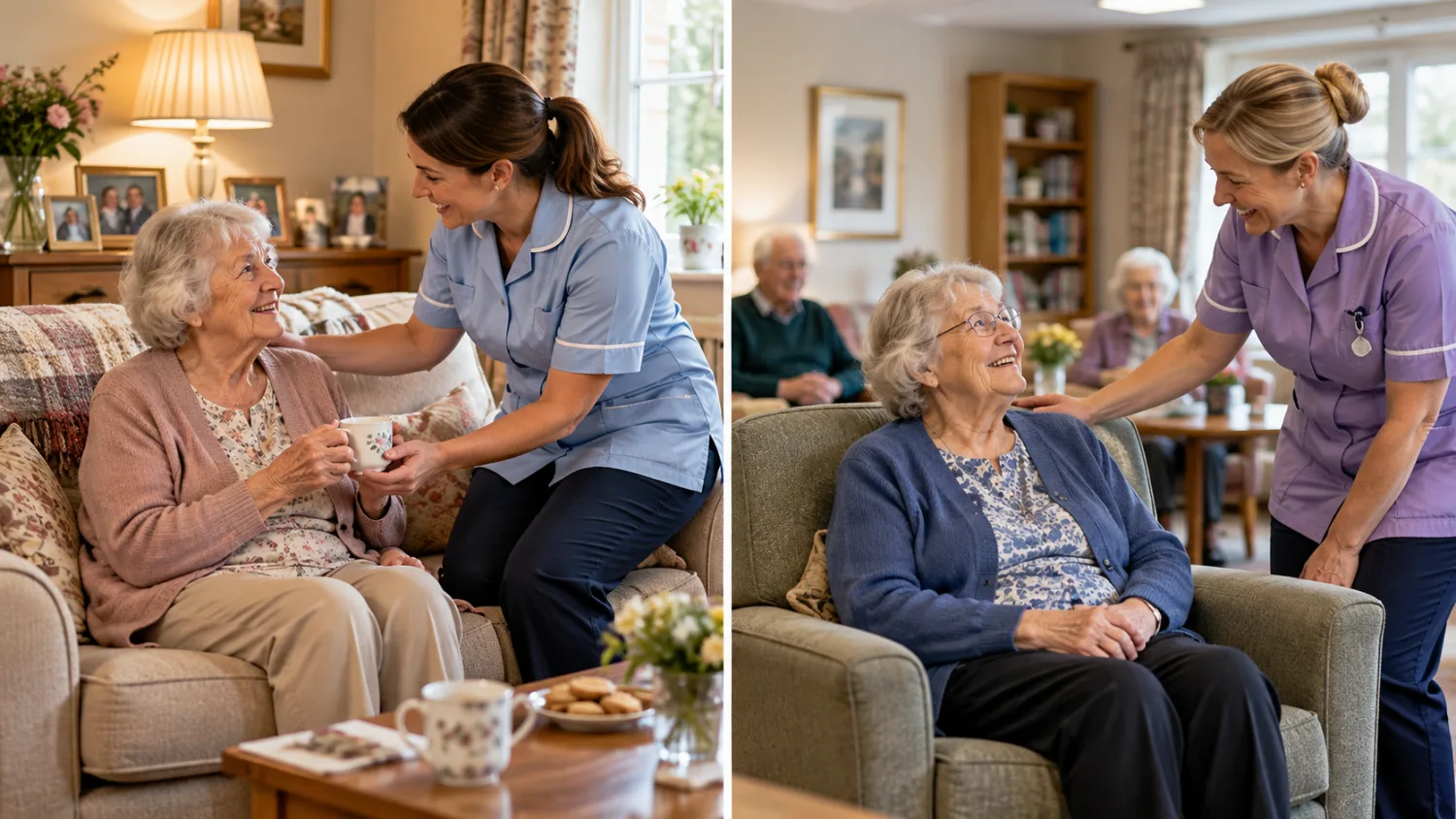
Staffing is one of the most important things to understand when choosing or reviewing a care home. A beautiful building, pleasant lounge and attractive brochure mean very little if there are not enough skilled, kind and available staff to meet residents’ needs safely.
Families often ask, “How many staff should a care home have?” The difficult answer is that there is no single safe number that applies to every care home. Staffing depends on the number of residents, their needs, whether nursing care is provided, dementia support, mobility, falls risk, medication, night-time needs, end-of-life care, behaviour, layout of the building and staff experience.
However, families can still ask clear questions. You can ask how staffing is planned, how many staff are on duty during the day and night, whether agency staff are used, how call bells are answered, how residents who need two carers are supported, what training staff receive, and what happens when someone’s needs increase.
This guide explains what families should ask about care home staffing levels, what good staffing looks like, how staffing affects safety and dignity, what red flags to watch for, and when concerns should be escalated.
If you are comparing homes, read our guides to how to choose a care home in the UK, care home visit questions and what a good care home looks like. If your concern is safety, see care home red flags and safeguarding adults in care homes.
1. Why staffing levels matter in a care home
Staffing affects almost every part of care home life. It influences whether residents are helped to wash, dress, eat, drink, take medication, move safely, join activities, use the toilet, sleep well and feel known as individuals.
Low or poorly planned staffing can contribute to:
- slow responses to call bells;
- rushed personal care;
- missed or delayed medication;
- poor support with eating and drinking;
- falls and unsafe transfers;
- residents left in bed or chairs too long;
- poor continence care;
- pressure sore risk;
- reduced activities and social contact;
- staff stress and burnout;
- weak communication with families;
- increased complaints and safeguarding concerns.
In England, CQC Regulation 18 covers staffing. CQC says the intention of this regulation is to make sure providers deploy enough suitably qualified, competent and experienced staff to meet all regulatory requirements. CQC Regulation 18 staffing guidance explains provider responsibilities.
Staffing is not only about numbers. A home may have staff present, but if they are inexperienced, poorly trained, unsupported, rushed or unfamiliar with residents, care can still suffer. Families should ask about staff numbers, skill mix, training, continuity and leadership.
2. Is there a legal minimum staffing ratio?
Families often ask whether there is a legal minimum care home staffing ratio, such as one carer for every five residents. In practice, UK care homes are expected to have enough suitable staff to meet residents’ assessed needs, but there is not one simple national ratio that applies to every home and every shift.
This is because resident needs vary widely. A small residential home where most residents are mobile and independent may need a different staffing pattern from a nursing home supporting residents with advanced dementia, hoisting needs, swallowing problems, pressure sore risk, end-of-life care and night-time distress.
Instead of asking only, “What is your staff ratio?”, ask:
- How do you calculate staffing levels?
- Do staffing levels change when residents’ needs increase?
- How many care staff are on duty in the morning, afternoon, evening and overnight?
- How many nurses are on duty if this is a nursing home?
- Is there always a senior carer, nurse or manager available?
- How many residents need two carers?
- How many residents need help with eating?
- How many residents are at high risk of falls?
- How many residents need dementia support or supervision?
- What happens if several residents need help at the same time?
Age UK suggests families ask whether there is a suitable ratio of staff to residents during the day, at night and at weekends, whether there is a manager and senior staff member on duty, and how staff are trained. Age UK’s choosing a care home guide is useful when preparing questions.
3. What families should ask before choosing a care home
Staffing questions should be part of every care home visit. Do not be embarrassed to ask. A good care home should be able to explain staffing calmly and clearly.
Ask:
- How many care staff are usually on duty during the day?
- How many staff are on duty overnight?
- How many nurses are on duty, if nursing care is provided?
- Is there always a senior staff member on site?
- Is the manager usually visible and available?
- How many residents does each carer usually support?
- How do staffing levels change at weekends?
- How do staffing levels change during sickness or holidays?
- How much agency staff do you use?
- How do you make sure agency staff know residents’ needs?
- How quickly are call bells usually answered?
- How many residents need two carers for transfers?
- How are staff trained in dementia care?
- How are staff trained in moving and handling?
- How do you support residents who need help eating?
Also ask what happens when needs change. A resident may move in needing light support, but later develop dementia symptoms, falls risk, swallowing problems, nursing needs or end-of-life care needs. The home should explain how care plans and staffing are reviewed.
If you are visiting several homes, use the same staffing questions at each visit. This makes comparison easier. For a wider visit checklist, see Care Home Visit Checklist: Questions to Ask Before You Decide.
4. Day staffing, night staffing and weekend cover
Staffing can look very different depending on the time of day. Families should ask separately about mornings, afternoons, evenings, nights and weekends.
Morning staffing
Mornings are often busy. Residents may need help getting up, washing, dressing, using the toilet, taking medication, eating breakfast and attending appointments. Staffing should reflect this pressure.
Ask:
- How many staff are on duty during morning personal care?
- How do you avoid rushing residents?
- How are residents who need two carers supported?
- How do you make sure people are not left waiting too long to get up?
- Can residents choose when they get up?
Mealtime staffing
Mealtimes need enough staff to support residents who need help eating, drinking, cutting food, using adapted cutlery, following swallowing guidance or staying focused because of dementia.
Ask:
- How many residents need help eating?
- Are enough staff available during meals?
- Are staff trained in safe feeding support?
- How do staff support residents with swallowing problems?
- How are food and fluid concerns recorded?
For more detail, read care home food and nutrition: what families should ask.
Night staffing
Night staffing is especially important for residents who are at risk of falls, need toileting support, wake confused, wander, need repositioning, have pain, or require nursing care.
Ask:
- How many staff are awake overnight?
- Is there a nurse on duty overnight?
- How often are residents checked?
- How are night-time falls prevented?
- How do staff support dementia-related wandering?
- How quickly are call bells answered at night?
- What happens if several residents need help at once?
If your relative has high night-time needs, compare this with our guide to night care at home, which explains why night support needs can be more demanding than families first realise.
Weekend staffing
Care homes operate every day, but staffing patterns can change at weekends. Managers, nurses, activity staff, housekeeping, kitchen teams and admin staff may have different weekend cover.
Ask:
- Are staffing levels the same at weekends?
- Is a senior staff member always on duty?
- Can families contact the manager out of hours?
- Are activities available at weekends?
- Are laundry, cleaning and kitchen services fully covered?
5. Skill mix: carers, nurses, seniors and managers
Staffing levels are only part of the picture. Families should also ask who is on duty and what skills they have.
Care home staff may include:
- care assistants;
- senior carers;
- registered nurses;
- deputy manager;
- registered manager;
- activity coordinators;
- kitchen staff;
- housekeeping staff;
- maintenance staff;
- administration staff;
- visiting professionals such as GPs, physiotherapists, occupational therapists, dietitians or speech and language therapists.
Ask:
- Who leads each shift?
- Is there always a senior carer or nurse on duty?
- How experienced are the senior staff?
- How often is the manager on site?
- How are new staff supervised?
- Who updates care plans?
- Who speaks to families after incidents?
- Who makes decisions if a resident becomes unwell?
If the home provides nursing care, ask about registered nurse cover. A nursing home should be able to explain how nursing needs are assessed, who is on duty, and how clinical risks are managed.
If your relative may need nursing care rather than residential care, read care home vs nursing home vs residential home.
6. Training, experience and staff turnover
A care home may have enough people on shift, but if staff are poorly trained or constantly changing, residents may still receive inconsistent care.
Ask about training in:
- moving and handling;
- medication support;
- dementia care;
- falls prevention;
- infection control;
- safeguarding;
- food hygiene;
- nutrition and hydration;
- pressure sore prevention;
- continence care;
- mental capacity;
- end-of-life care;
- challenging behaviour or distressed behaviour;
- communication with families.
Ask:
- How often do staff receive training?
- How is training checked in practice?
- Are staff trained before they work alone?
- How are new staff inducted?
- Do staff receive dementia training?
- Do staff know residents’ personal histories and preferences?
- What is staff turnover like?
- How do you retain experienced staff?
Skills for Care provides support and data on the adult social care workforce, including recruitment and retention. Its workforce resources highlight the importance of recruiting and retaining people with the right values and skills for adult social care. Skills for Care recruitment support and recruitment and retention data are useful for understanding wider sector pressures.
High staff turnover does not automatically mean poor care, but it can affect consistency. Residents with dementia, anxiety, communication needs or complex routines often benefit from familiar staff who know them well.
7. Agency staff and continuity of care
Agency staff can be necessary when permanent staff are sick, on leave or when recruitment is difficult. But heavy or poorly managed agency use can affect continuity, communication and resident confidence.
Ask:
- How often do you use agency staff?
- Do you use the same agency staff regularly?
- How are agency staff briefed before shifts?
- Do agency staff read care plans before supporting residents?
- Can agency staff give medication?
- Can agency staff support moving and handling?
- Who supervises agency staff?
- How do you protect continuity for residents with dementia?
The issue is not simply whether agency staff are used. The issue is whether they are competent, supervised and given enough information to support residents safely.
Red flags include:
- staff repeatedly do not know residents’ names;
- staff do not know care plans;
- families are told “I’m only agency, I don’t know”;
- medication or personal care is delayed because staff are unfamiliar;
- residents with dementia become distressed by constant unfamiliar faces;
- handover appears weak.
If agency use is high, ask what the home is doing to recruit and retain permanent staff.
8. Staffing for dementia, falls, behaviour and complex needs
Some residents need more staff time, supervision and skill than others. Families should ask whether staffing matches the actual needs in the home.
Dementia care
Dementia can affect memory, behaviour, communication, eating, continence, sleep, wandering and distress. A resident with dementia may need patient reassurance, not rushed instructions.
Ask:
- How many residents have dementia?
- Are staff trained in dementia care?
- How do staff support distress or agitation?
- How do staff support residents who walk around?
- How do you prevent residents being isolated in their rooms?
- How do you make sure personal care is not rushed?
For more detail, see dementia care homes in the UK and choosing a care home for someone with dementia.
Falls and mobility
Falls prevention often depends on staff availability. If a resident needs help to the toilet but waits too long, they may try to walk alone. If a resident needs two carers but only one is available, transfers may become unsafe.
Ask:
- How many residents need help with mobility?
- How many need two carers?
- How are toilet requests prioritised?
- How quickly are call bells answered?
- Do staff have time to support safe walking?
- Are falls reviewed after each incident?
Read falls in care homes: what families should ask if falls are a concern.
Challenging or distressed behaviour
Behaviour that is described as “challenging” is often a sign of distress, pain, fear, dementia, communication difficulty, trauma or unmet needs. Staffing must be good enough to understand and respond safely.
Ask:
- Are staff trained in positive behaviour support?
- How do staff respond to aggression, refusal of care or shouting?
- How do staff identify triggers?
- Is one-to-one support ever used?
- How are other residents protected?
- How is restraint avoided or managed safely?
For more detail, read care homes for people with challenging behaviour.
End-of-life care
End-of-life care may require more time, emotional support, symptom monitoring, family communication and coordination with district nurses, GPs or palliative care teams.
Ask:
- Do staff have end-of-life care training?
- How are residents kept comfortable?
- How are families updated?
- Are staff available to sit with someone who is dying?
- How are medicines and urgent symptoms managed?
See palliative and end-of-life care in care homes for more questions.
9. Signs staffing may not be enough
Families should look at what happens in practice, not only what they are told. A home may say staffing is safe, but the atmosphere may suggest otherwise.
Possible warning signs include:
- call bells ringing for long periods;
- residents calling for help repeatedly;
- staff rushing from task to task;
- residents left waiting for the toilet;
- people left in bed or chairs for long periods without explanation;
- meals served but residents not helped to eat;
- drinks out of reach;
- personal care appears rushed or poor;
- clothes, glasses, dentures or hearing aids are missing often;
- staff do not know residents well;
- families cannot get updates;
- staff seem stressed, upset or openly negative;
- high reliance on unfamiliar agency staff;
- falls, pressure sores or medication errors increase;
- activities are cancelled because there are not enough staff;
- managers are rarely visible.
One busy moment does not prove unsafe staffing. Care homes are active environments. But repeated signs should be taken seriously, especially if residents are unsafe, distressed or neglected.
If you see these warning signs during a care home visit, read care home red flags before deciding.
10. What to do if you are worried about staffing
If your relative already lives in a care home and you are worried about staffing, start by being specific. Vague complaints are easier to dismiss. Specific examples are harder to ignore.
Record:
- date and time;
- what you saw or heard;
- how long someone waited;
- what staff said;
- whether care was missed or delayed;
- whether there was harm or risk;
- whether this has happened before;
- who you reported it to;
- what response you received.
Then ask for a meeting with the manager or nurse. You might say:
“I am worried that staffing may not be meeting Mum’s needs. On three visits this week her call bell was ringing for more than 15 minutes, she said she was afraid to ask for the toilet, and her drink was out of reach. Can we review her care plan and how staffing is being organised around her needs?”
Ask:
- Has my relative’s care plan been reviewed?
- Does the home still believe it can meet their needs?
- Are there enough staff to support toileting, meals and mobility?
- Are staff following the care plan?
- What changes will be made?
- When will this be reviewed?
- Who should we contact if concerns continue?
If concerns are serious, repeated or ignored, use the home’s complaints process. If you suspect neglect, unsafe care or risk of harm, contact the local authority adult safeguarding team. In England, you can also tell CQC about concerns. CQC uses information from the public to help monitor and inspect services, although it does not usually resolve individual complaints. CQC’s complaint guidance explains what it can and cannot do.
For serious concerns, read safeguarding adults in care homes.
11. Staffing checklist for families
Before choosing a care home
- How many staff are on duty during the day?
- How many staff are on duty overnight?
- Is there always a senior staff member on duty?
- Is the manager visible and available?
- How many nurses are on duty if nursing care is provided?
- How are staffing levels calculated?
- How do staffing levels change as resident needs change?
- How often do you use agency staff?
- How quickly are call bells answered?
- How are staff trained?
If your relative already lives there
- Are call bells answered promptly?
- Is personal care rushed?
- Is your relative helped to eat and drink?
- Are toileting needs met?
- Are falls reviewed?
- Are staff familiar with the care plan?
- Are family updates clear?
- Are concerns acted on?
- Do residents appear calm and cared for?
- Does staffing feel different at night or weekends?
Questions after an incident
- How many staff were on duty?
- Was the care plan followed?
- Was the resident waiting for help?
- Was agency staff involved?
- Was the incident linked to staffing?
- What has changed since?
- Has the risk assessment been updated?
- Do staffing levels need review?
12. Frequently asked questions
What is a safe staffing level in a care home?
There is no single safe staffing ratio for every care home. Staffing should be based on residents’ needs, including mobility, dementia, nursing care, medication, mealtime support, night needs and risk levels.
Is there a legal minimum staff-to-resident ratio in care homes?
There is not one simple national ratio that applies to every care home. Providers are expected to deploy enough suitably qualified, competent and experienced staff to meet residents’ assessed needs.
What should families ask about staffing before choosing a care home?
Ask how many staff are on duty during the day, night and weekends, whether there is always a senior staff member, how often agency staff are used, how staff are trained and how call bells are answered.
Should a care home have a nurse on duty?
A nursing home should have registered nursing cover to meet nursing needs. A residential care home may not have nurses on duty but should know when to involve GPs, district nurses or emergency services.
How many staff should be on duty at night in a care home?
This depends on the number of residents and their needs. Families should ask how many staff are awake overnight, whether a nurse is on duty, how checks are done and how call bells are answered.
Is agency staff use a bad sign?
Not always. Agency staff can help cover sickness or vacancies. However, heavy reliance on unfamiliar agency staff may affect continuity, especially for residents with dementia or complex care needs.
What are signs a care home is understaffed?
Possible signs include long call bell waits, rushed care, residents waiting for toileting help, missed activities, poor mealtime support, frequent agency staff, stressed staff, poor communication and repeated incidents without review.
Can low staffing cause falls?
Low staffing can contribute to falls if residents wait too long for help, try to toilet alone, do not receive supervision or are transferred unsafely. Falls should always be reviewed to see whether staffing played a part.
Can poor staffing be a safeguarding issue?
Yes, if staffing problems lead to neglect, unsafe care, missed medication, poor nutrition, unmanaged falls, poor continence care, pressure sores or serious risk of harm.
What should I do if call bells are not answered?
Record dates, times and examples. Raise the concern with the manager, ask how call bell response times are monitored, and request a care plan review if your relative is at risk.
Should care homes tell families about staffing problems?
Care homes should communicate honestly when staffing affects care, safety or services. Families should be told about incidents, risks and changes that affect their relative.
What if the care home says staffing is fine but I am still worried?
Ask for specific evidence, such as care plan reviews, call bell monitoring, incident reviews and staffing arrangements. If concerns continue or there is risk of harm, use the complaints process or contact adult safeguarding.
Do dementia residents need more staff?
Often, yes. Dementia can increase support needs around personal care, meals, wandering, distress, continence, sleep and safety. Staffing should reflect these needs.
Can families ask to see the rota?
You can ask how staffing is planned, but homes may not share full rotas because of staff privacy. They should still be able to explain staffing levels, skill mix and how residents’ needs are covered.
Who should I contact if I think staffing is unsafe?
Start with the manager if it is safe to do so. If there is immediate danger, call 999. If you suspect neglect or serious risk, contact the local authority adult safeguarding team. In England, you can also tell CQC about concerns.