A good home blood pressure monitor does not need to be the most expensive or technologically impressive model. It needs to be independently validated, fitted with the correct cuff and simple enough that you will use it properly.
This is important because a familiar brand name, medical-looking packaging or “clinically tested” claim does not necessarily prove that a monitor is accurate. Thousands of electronic monitors are sold worldwide, but only a proportion have been assessed using an accepted validation protocol.
For most adults in the UK, the best choice is a fully automatic monitor that measures blood pressure at the upper arm. A straightforward validated model may cost around £25 to £50. More expensive monitors add features such as two-user memory, Bluetooth syncing, atrial fibrillation screening or a more forgiving cuff, but they do not automatically take a better basic reading.
This guide contains independent general information rather than personalised medical or purchasing advice. Prices and validation listings can change, so check the exact model number before buying.
What type of blood pressure monitor is best?
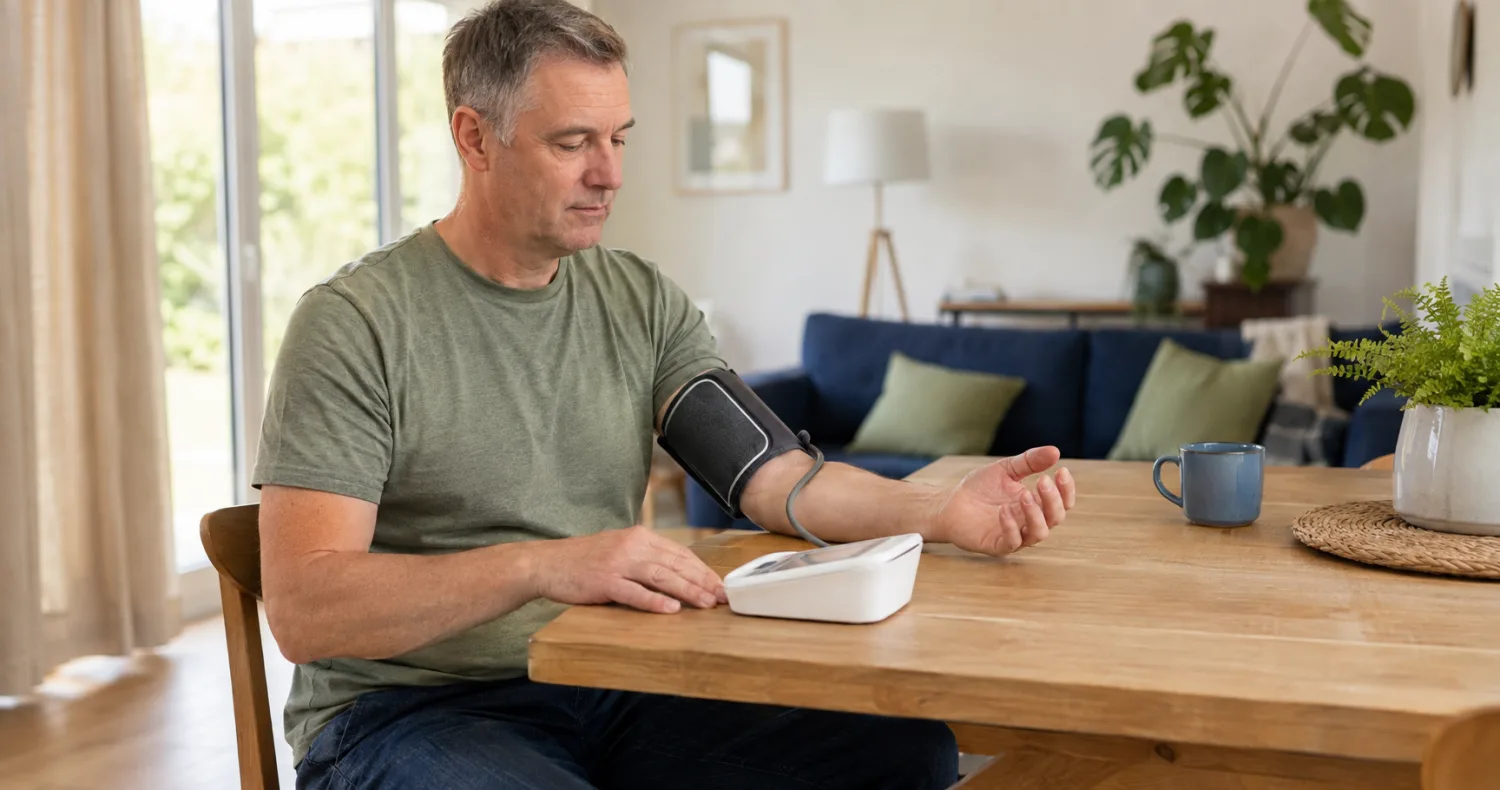
For routine home monitoring, choose an automatic electronic monitor with a cuff that wraps around the upper arm. These devices inflate the cuff, detect the pressure and display the systolic reading, diastolic reading and pulse.
NHS England recommends choosing a monitor that has been validated for accuracy. Upper-arm devices are generally preferred because they are easier to position consistently at heart level than wrist monitors.
A basic machine can be entirely adequate. At minimum, look for:
- independent validation of the exact model;
- an upper-arm cuff in the correct size;
- a clear display;
- fully automatic inflation and measurement;
- memory for at least several readings.
Everything beyond this is a convenience or a feature for a particular user. Bluetooth, smartphone apps and colour displays can be helpful, but accuracy and cuff fit come first.
Recommended home blood pressure monitors in the UK
The following models illustrate several good types of home monitor available to UK buyers. They appear on recognised validation lists at the time of writing, but model names and hardware can change. Confirm the complete model number on the box against the current STRIDE BP validated monitor database before ordering.
| Monitor | Best suited to | Notable features | Approximate price |
|---|---|---|---|
| Omron X2 Essential HEM-7188-EO | Simple everyday monitoring | One-button use, 30-reading memory, movement and irregular-heartbeat indicators | About £25–£35 |
| A&D UA-651 Plus | Good-value monitoring with optional cuff sizes | 60-reading memory, averaging and AFib screening indicator | About £30–£40 |
| Omron M3 Comfort AFib HEM-7196-FLE | Households wanting an easier-fit wide cuff and more memory | 22–42 cm cuff, two-user memory and AFib screening mode | About £40–£60 |
| Withings BPM Connect | People who want automatic app and Wi-Fi records | Rechargeable, compact design, wireless syncing and shareable history | About £110–£120 |
Prices are indicative and were checked in August 2026. Promotions and supplied cuff sizes vary between retailers. A low sale price is not good value if you must immediately buy another cuff.
These are examples rather than a definitive league table. Many other monitors from A&D, Omron, Microlife, Withings and other manufacturers are validated. The best model is the one that fits your arm, meets your recording needs and appears on a recognised validation list.
Best simple monitor: Omron X2 Essential
The Omron X2 Essential is a sensible option for someone who wants a familiar, uncomplicated upper-arm monitor without paying for app connectivity.
The current HEM-7188-EO model stores up to 30 readings and includes indicators for body movement, an irregular heartbeat and a high result. The supplied cuff commonly covers an arm circumference of 22 to 32 cm, with other compatible sizes available.
Its main advantage is simplicity: fit the cuff, sit correctly and press one button. This can matter more than a long feature list, particularly for an older person or anyone who finds connected devices frustrating.
The main limitation is the standard cuff supplied with many packages. An upper arm above 32 cm requires the compatible wider cuff, and a smaller arm may need a small cuff. Check the package rather than assuming every X2 listing includes the same accessory.
This model is well suited to one person recording results in a paper diary or showing the stored readings to a healthcare professional. A household with two users may find separate memory profiles more convenient.
Best value alternative: A&D UA-651 Plus
The A&D UA-651 Plus combines straightforward operation with more memory and an atrial fibrillation screening indicator. It is usually available for approximately £30 to £40, depending on the cuff supplied.
The monitor stores around 60 readings and can calculate an average. The standard package may include a cuff covering approximately 22 to 32 cm or another size, while compatible cuffs are available for a broader range of arm circumferences.
This flexibility can make it a good choice for someone who struggles to find a suitable cuff. However, compatible accessories and connectors should be checked carefully. A cuff made for another monitor—or even another generation of the same brand—may not fit or may not be validated with your particular device.
The AFib indicator is a screening aid, not a diagnosis. An alert can be triggered by movement or another irregular rhythm, and atrial fibrillation may occur intermittently without being detected during a blood pressure reading.
Best for an easier cuff and two users: Omron M3 Comfort AFib
The Omron M3 Comfort AFib is a useful middle-ground option for a couple or household sharing one monitor. It normally offers separate memory profiles and a broader 22 to 42 cm cuff.
The shaped or semi-rigid “comfort” cuff can be easier to position than a basic soft cuff, especially for someone measuring without help. It also reduces the chance of placing the cuff too loosely or unevenly, although it still needs to be fitted according to the instructions.
The AFib screening function performs multiple measurements and looks for a pattern that may indicate atrial fibrillation. This is more specific than a general irregular-heartbeat symbol, but it does not replace an ECG or medical assessment.
It is worth paying more for this model if the wider, easier-fit cuff or separate user memories will genuinely be used. If one person simply needs occasional readings and fits a standard cuff, a cheaper validated model may do the same essential job.
Best connected monitor: Withings BPM Connect
The Withings BPM Connect is aimed at people who want their measurements transferred automatically to a smartphone account. It can synchronise readings through Wi-Fi or Bluetooth, display a result on the device and create a history that is easier to share.
The all-in-one design is compact and rechargeable, which can be convenient for travel. It also avoids an air tube running between a separate display unit and cuff.
The disadvantage is price. At around £120, it may cost three or four times as much as a reliable basic machine. Most of that premium pays for design, connectivity and data management rather than a proportionate improvement in measurement accuracy.
Consider how comfortable you are with account setup, app permissions, software updates and storing health information online. A connected monitor is valuable if it helps you keep a consistent record. It is unnecessary if you would be equally happy writing results in a diary.
Before relying on an app export, check whether your GP surgery can use the format. A concise list of morning and evening averages may be more useful than dozens of screenshots.
Why independent validation matters
Blood pressure monitors estimate pressure from oscillations in the cuff rather than measuring it in exactly the same way as a clinician using a stethoscope. The device’s internal algorithm converts these signals into systolic and diastolic results.
Independent validation tests whether a model performs sufficiently well against a reference method in a defined group of people. Without this evidence, there is no reliable way for a buyer to know whether an attractive monitor produces clinically acceptable results.
STRIDE BP says that only a minority of the thousands of electronic monitors available worldwide are included on its approved lists. Its preferred home devices are upper-arm monitors validated using an accepted recent protocol and able to store or transfer multiple readings.
Marketing phrases are not interchangeable with validation. Claims such as “clinically tested”, “medical grade”, “NHS style”, “CE marked” or “used by doctors” do not necessarily mean that the exact model has passed an accepted accuracy study.
Search using the full model number, not just the product family. A manufacturer may sell several monitors under similar names, and one can be validated while another has not been independently assessed.
How to choose the correct cuff size
A validated monitor can still produce misleading readings when used with the wrong cuff. A cuff that is too small may give an artificially high result, while one that is too large may produce an inaccurately low reading.
Measure around the midpoint of your bare upper arm using a flexible tape measure. Compare the result in centimetres with the range printed on the cuff or stated in the manufacturer’s instructions.
Common adult cuff ranges include:
- small cuffs covering roughly 17 to 22 cm;
- standard cuffs covering roughly 22 to 32 cm;
- wide-range cuffs covering roughly 22 to 42 cm;
- large cuffs extending to approximately 45 cm or more.
These ranges are only examples. Use the specification for the exact monitor and cuff rather than choosing by the labels “medium” or “large”.
If two people share a machine, both must fall within the supplied cuff range. Otherwise, buy a compatible alternative cuff or choose a device with a suitable wide-range cuff.
People with very large, small or conical upper arms may need professional help finding an appropriate device. Ask a pharmacist, practice nurse or GP surgery whether they can check the fit.
Which extra features are worth paying for?
Memory is one of the most useful features. It reduces transcription errors and allows a clinician to review a sequence rather than relying on one remembered result. Separate profiles are worthwhile when two people use the same monitor.
An average-reading function can also help, although you should understand which readings the device includes. A seven-day average prepared according to your clinician’s instructions may be more meaningful than a monitor’s automatic average of an arbitrary group.
A cuff-position or movement indicator can alert you to common measurement errors. It is helpful, but it cannot identify every problem with posture or technique.
Bluetooth or Wi-Fi syncing is useful when it encourages regular monitoring and produces a clear record. It becomes a disadvantage if connection problems make the monitor harder to use.
An irregular-heartbeat indicator may be valuable, but it should not be confused with a diagnosis. A device with a specific AFib screening mode can flag a possible rhythm problem; only an appropriate clinical assessment and usually an ECG can confirm what the rhythm is.
Other features—voice guidance, backlit displays, large buttons and mains power—may be important for people with visual, hearing or dexterity difficulties. Choose according to practical need rather than the longest specification.
Should you buy a wrist, finger or smartwatch monitor?
An upper-arm device remains the safest default choice. Wrist monitors are highly sensitive to position: the wrist must be held at heart level, and a small difference can change the result.
A validated wrist monitor may sometimes be used when an upper-arm cuff cannot be fitted because of arm size, pain, injury or another physical limitation. In that situation, ask a healthcare professional to help confirm the technique and compare it with a clinical measurement.
Finger monitors are not recommended for diagnosing or managing high blood pressure. The arteries are smaller and affected more by temperature and circulation, making results less dependable.
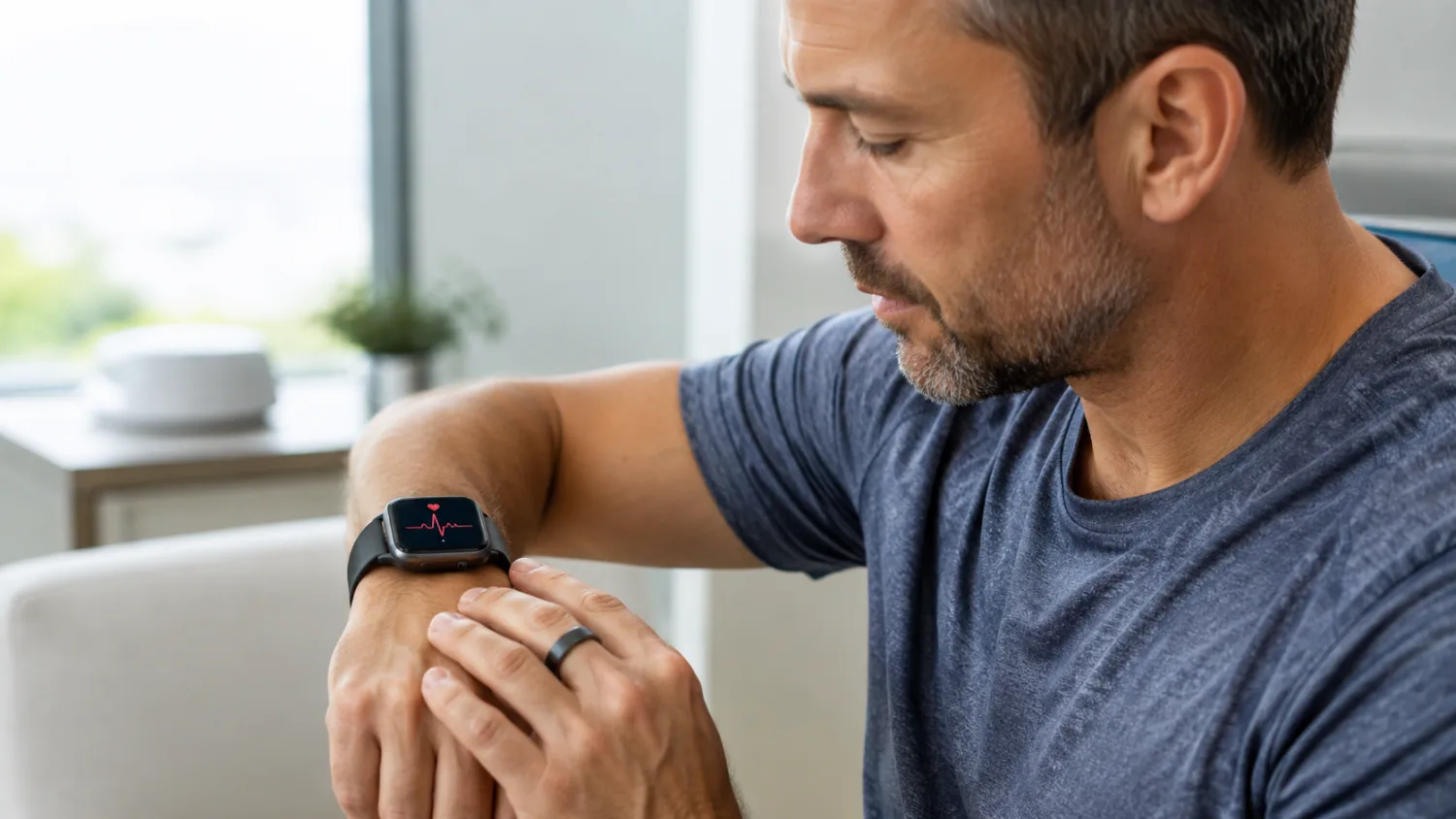
Smartwatches and rings that claim to estimate blood pressure without an inflatable cuff should also be treated cautiously. Some require regular calibration, and validation standards for cuffless devices are still developing. STRIDE BP does not currently recommend cuffless devices for diagnostic or treatment decisions.
A smartwatch may help track activity or heart rate, but it should not replace a validated cuff monitor when your GP asks for home blood pressure readings.
Special situations: pregnancy, children and irregular heart rhythms
A monitor validated in the general adult population is not automatically proven accurate during pregnancy. The circulatory changes of pregnancy—and conditions such as pre-eclampsia—mean it is important to choose a model specifically validated for pregnancy.
STRIDE BP publishes a separate list of monitors validated in pregnancy. Your maternity team may recommend or provide a particular model and explain when to report a result.
Children also need a correctly sized paediatric cuff and a monitor validated for their age group. Adult thresholds must not be applied to a child. Blood pressure in children is interpreted according to factors including age, sex and height.
Automated monitors may be less accurate when the pulse is irregular, including in atrial fibrillation. If your device repeatedly displays an irregular-heartbeat warning—or readings vary considerably despite correct technique—discuss this with a healthcare professional.
An AFib screening feature is not a substitute for assessment. Our guide to atrial fibrillation and stroke risk explains why identifying and properly diagnosing the rhythm matters.
How to take an accurate home reading
Even the best monitor will produce poor information if readings are taken immediately after rushing upstairs, while talking or with the cuff over clothing.
For a planned reading, avoid smoking, strenuous exercise and caffeine for around 30 minutes beforehand where practical. Empty your bladder and sit quietly for approximately five minutes.
Sit with your back supported, feet flat on the floor and legs uncrossed. Rest the arm on a table so the cuff is at heart level. Apply it to bare skin, following the position shown in the manufacturer’s instructions.
Remain still and silent while the monitor is operating. Talking, texting or watching something stressful can affect the result.
When home monitoring is used to investigate possible hypertension, NICE recommends taking two consecutive readings at least one minute apart, in the morning and evening. Monitoring should continue for at least four days and ideally seven, with the first day’s results discarded before the remaining readings are averaged.
Follow the plan given by your own GP or nurse, as monitoring instructions can differ according to why blood pressure is being checked. Our detailed guide to home blood pressure monitoring explains preparation, posture and recording in more detail.
How to interpret readings and when to seek help
One unusual reading does not normally diagnose high or low blood pressure. Blood pressure changes throughout the day and can rise because of activity, stress, pain, caffeine or incorrect technique.
The NHS generally considers a home blood pressure average of 135/85 mmHg or higher to be high. This differs from the usual clinic threshold of 140/90 because home readings tend to be slightly lower.
If readings are repeatedly raised, arrange a review with your GP practice or another appropriate healthcare professional. Do not change prescribed medication based on home numbers without advice.
If you obtain a very high result, sit quietly and repeat it using correct technique. Seek urgent clinical advice if it remains around 180/120 mmHg or above, particularly if this is new.
Call 999 if a very high reading is accompanied by chest pain, severe breathlessness, confusion, weakness or numbness on one side, difficulty speaking, a severe sudden headache, visual disturbance or another serious symptom.
Low results should also be interpreted alongside symptoms. Dizziness, fainting, severe weakness or signs of illness require assessment even when the number does not appear dramatically low.
For context, see our blood pressure chart guide, as well as our articles on high blood pressure and low blood pressure symptoms.
Frequently asked questions
What is the best blood pressure monitor to buy in the UK?
For most adults, the best choice is a validated automatic upper-arm monitor with a cuff that fits correctly. A simple model such as the Omron X2 Essential or A&D UA-651 Plus may be sufficient, while more expensive models add memory, easier cuffs or app connectivity.
How much should I spend on a home monitor?
A good validated basic monitor commonly costs around £25 to £50. Paying £100 or more may provide a connected app, rechargeable battery or premium design, but it does not necessarily improve the underlying accuracy.
Are cheap blood pressure monitors accurate?
Some are, provided the exact model has passed an accepted independent validation and the correct cuff is used. Price alone is not a reliable indicator of accuracy.
Are Omron blood pressure monitors accurate?
Many Omron models are independently validated, but this should not be assumed for every device bearing the brand. Check the exact model number against a current recognised validation list.
Which is better: Omron or A&D?
Both manufacturers sell validated monitors. The better choice depends on the exact model, cuff size, memory and features you need. Comparing brands without checking model-specific validation is not useful.
Are wrist blood pressure monitors accurate?
Some validated wrist models can be accurate when positioned perfectly, but they are easier to use incorrectly. An upper-arm monitor is generally preferred unless there is a practical reason it cannot be used.
Can I use the same monitor as my partner?
Yes, if the cuff fits both people. A monitor with two separate memory profiles is more convenient and prevents readings from being mixed together.
How do I know whether my monitor is validated?
Find the full model number on the machine or packaging and search for it in the STRIDE BP database or another recognised UK validation list. Do not rely only on the manufacturer’s use of the word “validated”.
Should I compare my monitor with the one at my GP surgery?
It can be helpful to take your monitor to an appointment so a nurse or clinician can review your technique, cuff fit and readings. Small differences between consecutive measurements are normal because blood pressure continually changes.
How often should a blood pressure monitor be replaced?
There is no universal replacement interval. Follow the manufacturer’s maintenance and calibration advice, replace damaged cuffs or tubing and investigate readings that become consistently implausible. A healthcare professional may be able to compare the device with a clinic monitor.
Do I need Bluetooth or a smartphone app?
No. Connectivity is useful only if it makes recording and sharing results easier. A validated basic monitor and a paper diary can provide equally useful clinical information when used consistently.