Looking after children’s teeth starts earlier than many parents expect. Baby teeth matter, even though they eventually fall out. They help children eat, speak, smile, sleep comfortably and hold space for adult teeth. When tooth decay, pain or infection affects baby teeth, it can disrupt eating, school, sleep and confidence.
The good news is that most tooth decay in children is preventable. A simple daily routine — brushing with fluoride toothpaste, keeping sugary foods and drinks to mealtimes, avoiding bottles at bedtime, and seeing a dentist early — can make a huge difference.
This guide explains children’s teeth from babyhood to the teenage years: when teeth come through, how to brush at each age, what toothpaste to use, NHS dental care, teething, diet, decay, accidents, braces, common problems and when to see a dentist.
You may also find our related dental guides useful: Tooth Decay Explained, Dental Emergencies: What Counts as Urgent?, Broken Tooth: What to Do, Scale and Polish: NHS vs Private and How to Choose a Dentist in the UK.
Quick summary
- Start brushing as soon as the first baby tooth comes through.
- Brush twice daily, including last thing at night.
- Use fluoride toothpaste. Children under 3 need only a smear; children aged 3 to 6 need a pea-sized amount.
- Spit out after brushing but do not rinse with lots of water, so fluoride stays on the teeth.
- Children need help with brushing until at least age 7.
- Take your child to the dentist when their first teeth appear and continue regular check-ups.
- NHS dental care is free for children under 18, or under 19 if in full-time education.
- Avoid putting babies to bed with bottles of milk, formula or juice.
- Keep sugary foods and drinks to mealtimes rather than grazing throughout the day.
- Seek urgent dental help for facial swelling, severe toothache, dental trauma, a knocked-out adult tooth or signs of infection.
Why children’s teeth matter
Baby teeth are sometimes called milk teeth or primary teeth. They may be temporary, but they are not disposable. Healthy baby teeth help children chew, speak clearly and smile confidently. They also guide adult teeth into position.
If baby teeth are lost early because of decay or infection, neighbouring teeth can move into the space. This may affect how adult teeth come through later. Painful teeth can also affect sleep, eating, behaviour and school attendance.
Tooth decay is preventable, but it remains a major problem in children. Prevention starts at home, but regular dental care matters too.
When do baby teeth come through?
Most babies get their first tooth at around 6 months, but this varies. Some babies are born with a tooth, while others do not get their first tooth until after their first birthday.
As a rough guide:
- 6 to 12 months: first front teeth often appear.
- 12 to 18 months: more front teeth and first molars may come through.
- 18 to 24 months: canines often appear.
- 2 to 3 years: second baby molars usually come through.
- By around age 3: most children have 20 baby teeth.
Timing can vary widely. If you are worried because teeth seem very delayed, one tooth looks abnormal, or your child has pain, swelling or feeding problems, speak to a dentist or health visitor.
When do adult teeth come through?
Adult teeth usually start coming through at around age 6. This often begins with the first adult molars at the back and the lower front teeth.
As a rough guide:
- Around age 6: first adult molars and lower front teeth begin to appear.
- Ages 7 to 8: upper front teeth often come through.
- Ages 9 to 12: canines and premolars replace baby teeth.
- Ages 11 to 13: second adult molars often come through.
- Late teens or twenties: wisdom teeth may appear, although not everyone has them.
The first adult molars are easy to miss because they come through behind the baby teeth rather than replacing a baby tooth. They need careful brushing as soon as they appear.
When should children first see a dentist?
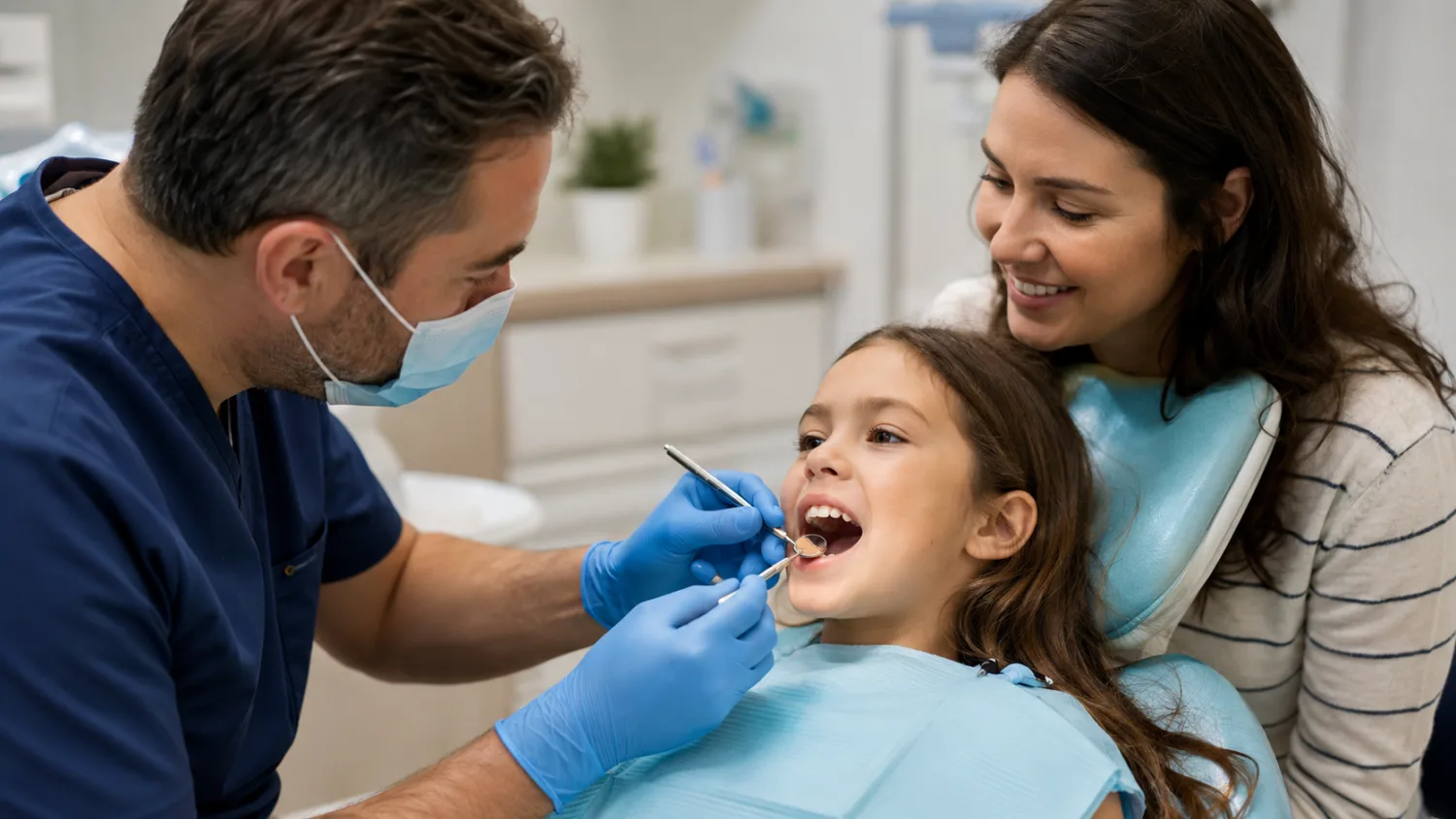
Children should see a dentist when their first teeth appear, or as early as possible if you have concerns. NHS advice says to take children to the dentist when their first milk teeth appear so they become familiar with the environment and the dentist can help prevent decay. The NHS has guidance on taking care of children’s teeth.
Early visits are not just for fixing problems. They help your child get used to the dental setting, allow the dentist to check development, and give parents practical advice on brushing, fluoride, diet and habits.
Is NHS dental care free for children?
Yes. NHS dental appointments and treatment are free if a child is under 18, or under 19 and in full-time education. NHS dental treatment is also free during pregnancy and for 12 months after having a baby. You can check NHS guidance on who gets free dental treatment here.
If you struggle to find an NHS dentist accepting children, keep checking local practices, use NHS online search tools where available, and contact NHS 111 if your child has urgent dental pain, swelling or trauma.
How often should children see a dentist?
The right interval depends on your child’s risk of decay, gum problems, tooth development and previous dental history. Some children may need check-ups every 3 to 6 months, while others may be advised to attend less often.
Your dentist should recommend an interval based on your child, not a fixed rule for every family.
How to brush children’s teeth by age
Toothbrushing should begin as soon as the first tooth comes through. The NHS advises using a baby toothbrush with a tiny smear of fluoride toothpaste when baby teeth start to appear. The NHS baby teeth guidance explains this here.
Babies under 1 year
- Start brushing as soon as the first tooth comes through.
- Use a small, soft baby toothbrush.
- Use a tiny smear of fluoride toothpaste.
- Brush twice daily, including before bed.
- Do not worry if brushing is brief at first. Building the habit matters.
Toddlers aged 1 to 3
- Brush twice daily.
- Use a smear of fluoride toothpaste.
- Brush last thing at night and one other time in the day.
- Parents should do the brushing, even if the child wants to “help”.
- Encourage spitting out, but do not rinse with lots of water.
Children aged 3 to 6
- Use a pea-sized amount of fluoride toothpaste.
- Brush twice daily for about 2 minutes.
- Supervise brushing closely.
- Teach your child to spit out toothpaste.
- Avoid rinsing with lots of water after brushing.
Children aged 7 and over
- Children still need supervision until at least age 7, and some need help for longer.
- Use fluoride toothpaste.
- Brush twice daily, especially last thing at night.
- Check they are reaching back teeth and gumlines.
- Introduce floss or interdental brushes if advised by a dentist or hygienist.
Teenagers
- Teenagers should brush twice daily with fluoride toothpaste.
- Interdental cleaning may be needed, especially with braces, retainers or crowded teeth.
- Energy drinks, fizzy drinks, vaping, snacking and poor sleep routines can increase dental risk.
- Encourage independence, but do not assume the routine is perfect.
What fluoride toothpaste should children use?
Fluoride helps strengthen teeth and reduce the risk of decay. NHS children’s teeth guidance recommends fluoride toothpaste and gives age-based amounts: a smear for children under 3 and a pea-sized amount for children aged 3 to 6. NHS guidance on children’s teeth includes brushing and toothpaste advice.
Many UK dental resources advise using toothpaste containing at least 1,000ppm fluoride for young children. Some children at higher risk of decay may be advised to use stronger toothpaste by a dentist. Do not use high-fluoride prescription toothpaste unless a dentist prescribes or recommends it for your child.
Should children rinse after brushing?
It is usually better to spit out toothpaste after brushing but not rinse with lots of water. Rinsing washes fluoride away. Leaving a small amount of fluoride on the teeth helps protect them.
Young children should not swallow toothpaste. Use only the correct amount and supervise brushing.
Manual or electric toothbrush for children?
Both manual and electric toothbrushes can work well if used properly. For younger children, the most important thing is parent help and good routine. An electric toothbrush may help some older children brush more thoroughly, especially if it has a timer and small brush head.
Choose a child-sized toothbrush with a small head and soft bristles. Replace it when the bristles splay or after illness if you prefer.
How to make brushing easier
Many children resist brushing at some stage. This is normal, but the routine still matters.
- Start early so brushing feels normal.
- Brush at the same times every day.
- Let your child choose a toothbrush.
- Use a 2-minute song or timer.
- Brush together as a family.
- Let them have a turn, then you finish properly.
- Use praise rather than threats.
- For toddlers, brushing while they sit on your lap can help.
- Keep toothpaste out of reach to avoid children eating it.
Diet and children’s teeth
Tooth decay happens when bacteria in plaque use sugars to produce acid. The more often teeth are exposed to sugar, the more acid attacks happen.
It is not only the amount of sugar that matters. Frequency matters too. A small sweet snack repeated many times through the day can be worse for teeth than having something sweet occasionally with a meal.
Best drinks for children’s teeth
- Water is the best everyday drink.
- Plain milk is also tooth-friendly at mealtimes.
- Avoid sugary drinks, fizzy drinks, juice drinks and sports drinks as everyday drinks.
- If fruit juice is given, keep it to mealtimes and dilute according to age guidance.
- Do not put juice, squash or fizzy drinks in bottles.
Snacks and teeth
Tooth-friendly snacks include:
- Cheese.
- Plain yoghurt.
- Vegetable sticks.
- Fruit at mealtimes or as part of a balanced routine.
- Toast or breadsticks with low-sugar toppings.
- Water between meals.
Try to reduce frequent grazing on sweets, biscuits, cakes, dried fruit bars, sugary cereals and sweet drinks. Dried fruit can be sticky and high in sugar, so it is generally better with meals than as a frequent snack.
Bottles, breastfeeding and bedtime
Babies should not be put to bed with bottles of milk, formula, juice or sweet drinks. Milk contains natural sugars, and frequent night-time exposure can increase decay risk once teeth are present.
If a baby needs comfort at night, avoid using bottles as a sleep aid once teeth come through. Water is the safest drink for teeth after brushing.
Breastfeeding has many health benefits. Dental decay risk increases when teeth are frequently exposed to sugars, especially overnight and when brushing routines are not established. If you breastfeed at night after teeth come through, speak to a dentist or health visitor for practical, non-judgemental advice on brushing and diet.
Dummies, thumb sucking and teeth
Dummies and thumb sucking are common in babies and young children. Many children stop naturally. Problems are more likely if habits continue for longer or are very frequent and intense.
Prolonged sucking habits may affect:
- Front tooth position.
- Bite development.
- Speech patterns in some children.
- Jaw growth in more persistent habits.
Never dip dummies in sugar, honey or sweet drinks. If your child still sucks a thumb or dummy beyond age 3 to 4, ask your dentist for advice.
Teething: what is normal?
Teething can make babies dribble, chew, become unsettled or have red cheeks. Some babies seem barely affected; others are uncomfortable.
Teething may cause:
- Dribbling.
- Chewing on objects.
- Irritability.
- Disturbed sleep.
- Red or tender gums.
- Slightly flushed cheeks.
Teething should not cause a high fever, severe diarrhoea, breathing problems, dehydration or a very unwell child. If your baby seems seriously unwell, seek medical advice rather than assuming it is teething.
Safe teething relief
You may try:
- A clean teething ring cooled in the fridge, not frozen.
- Gently rubbing the gums with a clean finger.
- Comfort, cuddles and distraction.
- Age-appropriate pain relief only if needed and suitable.
Avoid amber teething necklaces because of choking and strangulation risk. Be cautious with teething gels and always follow age guidance and pharmacist advice.
Tooth decay in children
Tooth decay is one of the most common dental problems in children. It can start as white chalky patches near the gumline and later become brown, black or cavitated holes.
Signs of tooth decay may include:
- White, yellow, brown or black marks on teeth.
- Holes or rough areas.
- Toothache.
- Sensitivity to cold or sweet foods.
- Pain when eating.
- Bad breath or bad taste.
- Swelling, gum boil or abscess.
- A child avoiding chewing on one side.
See a dentist as soon as possible if you think your child has decay. NHS advice for babies and toddlers says early treatment can help stop decay getting worse. The NHS Best Start in Life guidance explains this.
How dentists treat tooth decay in children
Treatment depends on the child’s age, the tooth, the depth of decay, symptoms and cooperation.
Options may include:
- Fluoride varnish and prevention advice for early decay.
- Fissure sealants on adult molars.
- Fillings.
- Stainless steel crowns for badly decayed baby molars in some cases.
- Root treatment for baby teeth in selected cases.
- Extraction if the tooth cannot be saved.
- Referral for sedation or hospital care if treatment is complex or the child is very young.
Prevention advice should be part of treatment. Filling holes without changing the cause of decay often leads to more problems later.
Fluoride varnish and fissure sealants
Fluoride varnish is a protective fluoride treatment painted onto the teeth. It can help reduce decay risk and is often offered to children at dental appointments.
Fissure sealants are protective coatings placed on the grooves of adult molars. These grooves can trap plaque and food, making decay more likely. Sealants can help protect teeth when children are at risk.
Ask your dentist whether your child would benefit from fluoride varnish or fissure sealants.
Children’s gum health
Gum disease in children is usually milder than in adults, but children can still develop gingivitis. Plaque around the gumline can cause gums to bleed, look red or feel tender.
Causes may include:
- Missed brushing.
- Plaque around orthodontic braces.
- Crowded teeth.
- Mouth breathing.
- Poor diet.
- Some medical conditions or medicines.
If your child’s gums bleed regularly, book a dental appointment. It usually means the gums need better plaque control and professional advice, not less brushing.
Bad breath in children
Occasional bad breath is common, especially in the morning. Persistent bad breath may be linked to plaque, tongue coating, dry mouth, tonsil problems, sinus issues, tooth decay, gum inflammation, mouth breathing or poor denture/brace cleaning in older children.
Dental causes should be checked if bad breath comes with:
- Bleeding gums.
- Toothache.
- Visible decay.
- A bad taste.
- Food trapping.
- Swelling or pus.
Read more: Bad Breath: Dental Causes and Treatment.
Children’s dental emergencies
Children can chip, break, loosen or knock out teeth through falls, play and sport. What to do depends on whether the tooth is a baby tooth or adult tooth.
Knocked-out baby tooth
Do not put a knocked-out baby tooth back in. This could damage the adult tooth developing underneath. Contact a dentist urgently for advice.
Knocked-out adult tooth
A knocked-out adult tooth is a dental emergency. Hold the tooth by the crown, not the root. If clean enough and the child is old enough to cooperate, place it back in the socket. If that is not possible, put it in milk or saliva and seek urgent dental care immediately.
Broken tooth
If a piece of tooth breaks off, keep it in milk or saliva and take it to the dentist. If there is severe pain, bleeding, swelling or trauma, seek urgent dental advice.
Read: Broken Tooth: What to Do.
When dental symptoms are urgent
Seek urgent dental advice if your child has:
- Severe toothache.
- Facial swelling.
- Swelling of the gum or jaw.
- Fever with dental pain or swelling.
- Pus or a gum boil.
- A broken adult tooth.
- A knocked-out adult tooth.
- A tooth pushed out of position after injury.
- Bleeding that does not stop.
- Difficulty opening the mouth.
- Difficulty swallowing.
Call 999 or go to emergency care if swelling affects breathing or swallowing, there is serious facial injury, or your child seems seriously unwell.
Children and orthodontics
Many children develop crowded teeth, gaps, prominent front teeth or bite problems. Not all need braces, and not all problems are treated at the same age.
A dentist may refer your child to an orthodontist if there are concerns about:
- Severe crowding.
- Protruding front teeth.
- Impacted teeth.
- Crossbite.
- Open bite.
- Underbite.
- Missing adult teeth.
- Jaw growth concerns.
- Thumb sucking affecting the bite.
NHS orthodontic treatment is usually for children with a clear clinical need, assessed using orthodontic criteria. Cosmetic minor straightening is usually private.
Read more: Invisalign and Clear Aligners in the UK.
Braces and cleaning
Braces make cleaning harder. Plaque can collect around brackets and wires, increasing the risk of white marks, decay and gum inflammation.
Children with braces should:
- Brush carefully around brackets and gumlines.
- Use interdental brushes if advised.
- Avoid frequent sugary snacks and drinks.
- Avoid hard foods that break brackets.
- Attend orthodontic and dental appointments.
- Use fluoride mouthwash if recommended, usually at a different time from brushing.
Sports mouthguards
Children who play contact sports should wear a mouthguard. Custom-made mouthguards from a dentist usually fit better and protect more reliably than boil-and-bite versions.
Mouthguards are especially important for rugby, hockey, boxing, martial arts, lacrosse and other sports with collision or stick/ball impact risk.
Dental anxiety in children
Children can become anxious about dental visits, especially if their first appointment happens during pain or emergency treatment. Early routine visits help make the dental setting normal.
Helpful tips include:
- Use positive language.
- Avoid saying “it will not hurt” repeatedly, as this can make children focus on pain.
- Do not use the dentist as a threat.
- Let your child bring a comfort item.
- Choose morning appointments if your child gets tired later in the day.
- Tell the dental team if your child is anxious, autistic, sensory-sensitive or has additional needs.
Children with additional needs
Some children need extra support with brushing, diet, dental visits or treatment. This may include children with autism, ADHD, learning disabilities, physical disabilities, sensory differences, medical conditions or medicines that affect the mouth.
Practical adjustments may include:
- Shorter familiarisation visits.
- Quiet appointment times.
- Visual stories before visits.
- Adapted toothbrush handles.
- Parent-assisted brushing for longer.
- Fluoride varnish and prevention planning.
- Referral to community dental services if needed.
If routine dental care is difficult, ask your dentist about referral options.
Teenagers and dental health
Teenagers may be more independent, but they are not always lower risk. Busy routines, braces, sports, vaping, energy drinks, sugary coffees, snacking and inconsistent brushing can all affect teeth.
Key advice for teenagers:
- Brush twice daily with fluoride toothpaste.
- Clean around braces or retainers carefully.
- Limit energy drinks and fizzy drinks.
- Drink water often.
- Wear a mouthguard for contact sports.
- Attend dental appointments even if nothing hurts.
- Do not ignore bleeding gums, sensitivity or wisdom tooth pain.
Common myths about children’s teeth
“Baby teeth do not matter because they fall out.”
Baby teeth matter for eating, speech, confidence and guiding adult teeth. Decay in baby teeth can cause pain, infection and early tooth loss.
“Fruit juice is healthy, so it is fine for teeth.”
Fruit juice contains sugar and acid. It is better kept to mealtimes and should not be sipped throughout the day.
“If my child’s tooth does not hurt, there is no decay.”
Early decay may not hurt. Pain often appears once decay is deeper.
“Children can brush properly once they can hold a toothbrush.”
Young children do not have the coordination to brush thoroughly. They need help until at least age 7, and some need help for longer.
“Mouthwash can replace brushing.”
It cannot. Brushing with fluoride toothpaste and cleaning between teeth when appropriate are the foundation.
Questions to ask your child’s dentist
- Are my child’s teeth developing normally?
- Does my child have any early decay?
- Are we using the right toothpaste and amount?
- Do they need fluoride varnish?
- Would fissure sealants help?
- How often should they come for check-ups?
- Are their adult molars coming through?
- Do they need orthodontic referral?
- Is thumb sucking or dummy use affecting the bite?
- How can we improve brushing at home?
- What should we do if they knock a tooth?
Red flags parents should not ignore
Book a dental appointment promptly if your child has:
- Toothache.
- Pain when eating.
- Visible holes, brown marks or white chalky patches.
- Swelling of the gum, cheek or face.
- A gum boil or pus.
- A broken tooth.
- A knocked or loose adult tooth after injury.
- Bleeding gums that do not improve.
- Bad breath that persists.
- Adult teeth coming through behind baby teeth and not settling.
- A baby tooth that has not fallen out but is blocking an adult tooth.
How to choose a dentist for your child
A good family dentist should be patient, preventive and clear with parents. Children’s dentistry is not just about filling teeth. It is about building habits, reducing fear and preventing problems before they become painful.
Look for:
- Experience with children.
- A calm and kind approach.
- Clear prevention advice.
- Fluoride varnish and fissure sealant advice where appropriate.
- Good handling of nervous children.
- Clear NHS/private information.
- Urgent advice for pain, swelling or trauma.
- Referral pathways for orthodontics, sedation or community care if needed.
You can browse local dental providers through All Health and Care, including our Top 10 Dentists in the UK and local pages such as Top 10 Dentists in London.
Final thoughts
Children’s dental health does not need to be complicated. The basics are powerful: start brushing when the first tooth appears, use fluoride toothpaste, brush twice daily, keep sugary foods and drinks to mealtimes, see a dentist early, and ask for help before small problems become painful.
Baby teeth matter. Adult teeth need protection from the moment they appear. A child who grows up with calm dental visits and a strong home routine has a much better chance of avoiding decay, pain and dental fear later in life.
For more patient-friendly dental guides, visit our Dental Health & Dentistry section.
Frequently asked questions about children’s teeth
When should I start brushing my baby’s teeth?
Start brushing as soon as the first baby tooth comes through. Use a small soft toothbrush and a tiny smear of fluoride toothpaste.
When should my child first see a dentist?
Take your child to the dentist when their first teeth appear, or earlier if you have concerns about feeding, teeth, gums, pain or development.
Is NHS dental care free for children?
Yes. NHS dental care is free for children under 18, or under 19 if they are in full-time education.
How often should children brush their teeth?
Children should brush twice daily, including last thing at night before bed.
How much toothpaste should children use?
Children under 3 should use a smear of fluoride toothpaste. Children aged 3 to 6 should use a pea-sized amount.
Should children rinse after brushing?
It is better to spit out toothpaste and not rinse with lots of water, so fluoride stays on the teeth longer.
What toothpaste should children use?
Use fluoride toothpaste. Many UK dental resources advise at least 1,000ppm fluoride for young children, with stronger toothpaste only if advised by a dentist.
Until what age should I help my child brush?
Help or supervise brushing until at least age 7. Some children need help for longer, especially around back teeth.
Are baby teeth important?
Yes. Baby teeth help children eat, speak and smile, and they hold space for adult teeth.
When do baby teeth come through?
The first baby tooth often appears around 6 months, but timing varies. Most children have 20 baby teeth by around age 3.
When do adult teeth come through?
Adult teeth usually start coming through around age 6, often with first adult molars and lower front teeth.
What are the first adult molars?
They are permanent back teeth that usually come through around age 6 behind the baby molars. They do not replace a baby tooth, so they can be missed.
What causes tooth decay in children?
Tooth decay is caused by bacteria in plaque using sugars to produce acid. Frequent sugary snacks and drinks increase risk.
What are early signs of decay in children?
White chalky patches, brown marks, holes, sensitivity, toothache or pain when eating can all be signs of decay.
Can baby tooth decay affect adult teeth?
It can. Infection, early tooth loss and poor habits can affect oral health and how adult teeth come through.
What drinks are best for children’s teeth?
Water and plain milk are the best everyday drinks. Sugary and acidic drinks should be limited.
Is fruit juice bad for children’s teeth?
Fruit juice contains sugar and acid. If given, it is better with meals rather than sipped throughout the day.
Are raisins and dried fruit bad for teeth?
Dried fruit can be sticky and high in sugar. It is generally better with meals than as a frequent snack.
Can babies sleep with a bottle?
Avoid putting babies to bed with bottles of milk, formula, juice or sweet drinks once teeth are present. Frequent night-time exposure increases decay risk.
Do dummies damage teeth?
Occasional dummy use in babies is common, but prolonged use can affect tooth and bite development. Never dip dummies in sugar or sweet drinks.
Does thumb sucking affect teeth?
Persistent thumb sucking can affect front teeth and bite development. Ask a dentist if the habit continues beyond early childhood.
What helps teething?
A cool teething ring, gentle gum rubbing and comfort can help. Avoid unsafe teething necklaces and seek medical advice if your baby is very unwell.
Can teething cause fever?
Teething may cause mild discomfort, but a high fever or very unwell child should not be assumed to be teething. Seek medical advice.
What should I do if my child knocks out a baby tooth?
Do not put a baby tooth back in. Contact a dentist urgently for advice.
What should I do if my child knocks out an adult tooth?
This is an emergency. Put the tooth back in the socket if possible, or store it in milk or saliva, and seek urgent dental care immediately.
When do children need braces?
It depends on the bite, crowding, tooth position and jaw development. A dentist can refer your child for orthodontic assessment if needed.
Are braces free on the NHS for children?
NHS orthodontic treatment is usually available for children with a clear clinical need. Minor cosmetic straightening is usually private.
How can I prevent my child being scared of the dentist?
Start visits early, keep language positive, avoid using the dentist as a threat, and choose a calm family-friendly practice.
When is children’s toothache urgent?
Seek urgent advice for severe pain, swelling, fever, pus, facial swelling, trauma, a knocked-out adult tooth or difficulty swallowing or breathing.