Macular degeneration, usually called age-related macular degeneration or AMD, is a common eye condition that affects the central part of your vision. In the UK, it is one of the leading causes of sight loss in older adults.
AMD does not usually cause total blindness, but it can make reading, recognising faces, driving, cooking and other everyday tasks much more difficult.
The condition affects the macula, the small central area of the retina responsible for sharp, detailed vision. When the macula becomes damaged, central vision can become blurred, distorted or patchy, while side vision is usually less affected.
The good news is that support and treatment are available. Dry AMD is usually managed with monitoring, practical support and lifestyle advice. Wet AMD may be treated with injections and specialist care to help slow vision loss. The earlier wet AMD is diagnosed and treated, the better the chance of protecting useful sight.
This guide explains macular degeneration, including symptoms, dry vs wet AMD, diagnosis, NHS and private treatment options in the UK, and when to seek urgent advice.
What macular degeneration means
Macular degeneration affects the macula, which is the part of the retina responsible for central vision. The retina sits at the back of the eye and turns light into signals that travel to the brain.
The macula helps you see fine detail clearly. This is why AMD can interfere with tasks such as:
- reading small print
- recognising faces
- threading a needle
- watching television
- seeing road signs
- using a phone or computer
- cooking safely
There are two main forms of AMD: dry AMD and wet AMD. Dry AMD is more common and usually develops slowly. Wet AMD is less common but more urgent because it can cause faster and more severe central vision loss if not treated promptly.
AMD usually affects people later in life and most often starts in people in their 50s or older. It can affect one eye first, but both eyes may become involved over time.
For official patient information, the NHS guide to age-related macular degeneration is a useful starting point.
Symptoms of macular degeneration
AMD symptoms vary depending on whether it is dry or wet, but the main problem is usually a change in central vision rather than side vision.
Symptoms may include:
- blurred central vision
- difficulty reading
- needing brighter light for close work
- straight lines appearing bent, wavy or distorted
- faces becoming harder to recognise
- colours looking less vivid
- a blurred, grey or dark patch in the centre of vision
- difficulty seeing detail even with glasses
- problems judging contrast
Dry AMD often worsens gradually over several years. Wet AMD can worsen much more quickly, sometimes over weeks or days. Sudden distortion or a rapid drop in central vision should never be ignored.
AMD does not usually cause pain or redness. If you have pain, flashing lights or a sudden curtain-like shadow across vision, a different eye problem may be involved and urgent assessment is needed.
If you are researching other common eye conditions, see cataracts symptoms, treatment and surgery options in the UK and dry eye syndrome symptoms, causes and treatment in the UK.
Dry AMD vs wet AMD
Understanding the difference between dry and wet AMD is important because the urgency and treatment options are different.
Dry AMD
Dry AMD is the most common type. It happens when cells in the macula gradually become damaged over time.
Vision loss is usually slower than with wet AMD. There is currently no approved treatment that reverses dry AMD, so management focuses on:
- monitoring
- healthy lifestyle measures
- low-vision support
- practical help with reading and daily tasks
- watching for signs of progression to wet AMD
Wet AMD
Wet AMD is less common but more urgent. It happens when abnormal blood vessels grow under the macula and leak fluid or blood. This can damage central vision quickly.
Wet AMD is usually treated with anti-VEGF eye injections. These medicines aim to reduce leakage and protect sight. Early diagnosis and treatment can make a significant difference.
The key difference is speed and urgency. Dry AMD is usually slower and managed supportively, while wet AMD needs urgent specialist assessment and may need regular treatment.
Who is most at risk?
Age is the biggest risk factor. AMD usually first affects people in their 50s or older and becomes more common with increasing age.
Other risk factors include:
- smoking
- family history of AMD
- being overweight
- high blood pressure
- cardiovascular disease
- low intake of fruit and vegetables
- long-term exposure to bright sunlight without eye protection
Smoking is especially important because it is one of the clearest modifiable risk factors for AMD. Stopping smoking may help reduce the risk of AMD getting worse.
Having a close relative with AMD does not mean you will definitely develop it, but your risk may be higher. Regular eye tests become especially important as you get older.
How macular degeneration is diagnosed in the UK
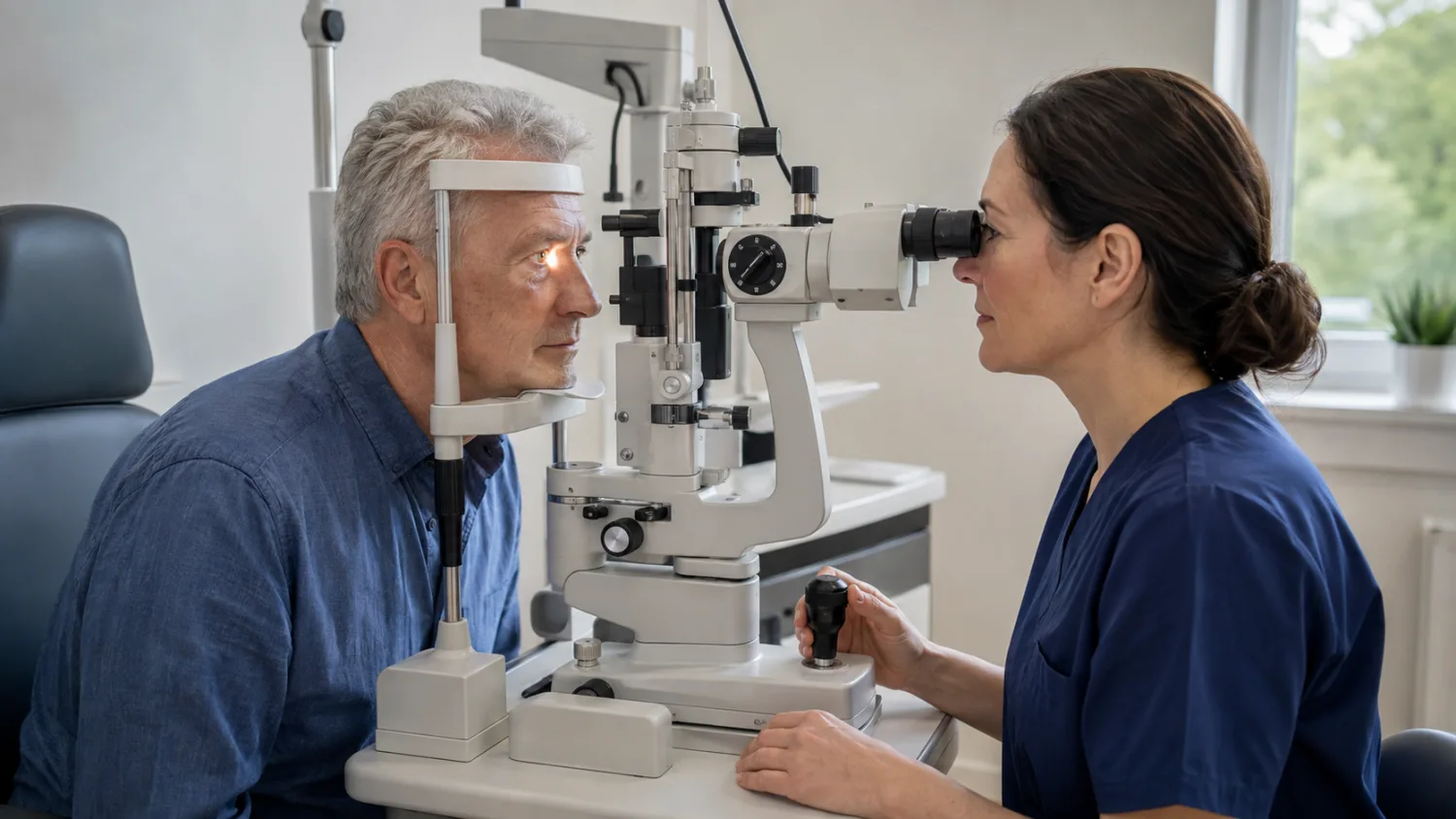
AMD may be noticed by the person affected, especially if straight lines look distorted or central vision becomes blurred. It can also be picked up during a routine eye test with an optician.
If wet AMD is suspected, referral should be urgent because delays can affect the chance of preserving sight.
Assessment may include:
- checking visual acuity
- examining the back of the eye
- checking central vision distortion
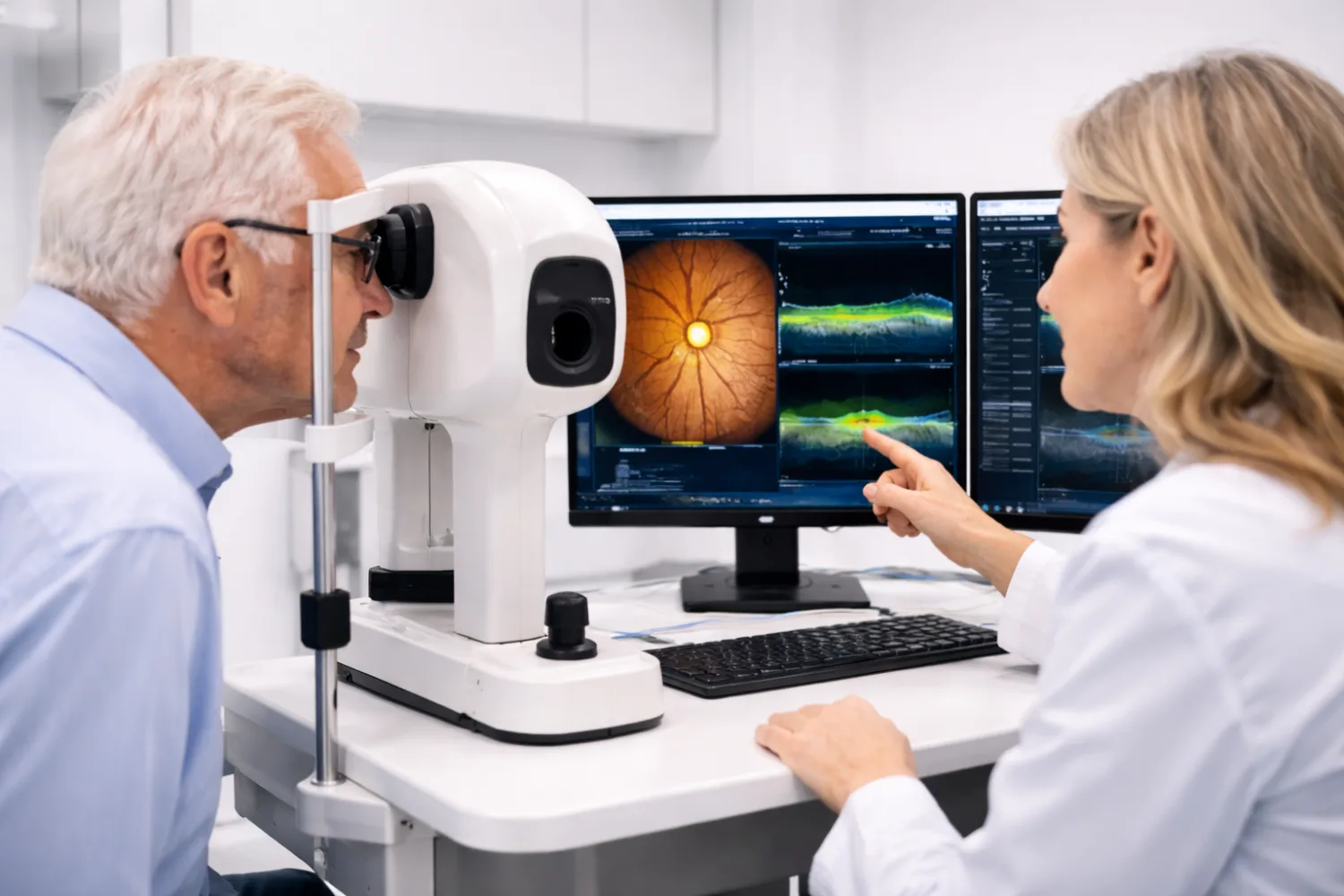
- optical coherence tomography, often called OCT
- retinal photography
- dye-based imaging in some cases
OCT scans show the retina in detail and can help identify fluid, swelling or structural changes in the macula.
If you want to understand what happens after an optician or GP appointment, see how hospital referrals work in the UK.
NICE also provides a guideline on age-related macular degeneration, including diagnosis and management in specialist services.
Treatment for macular degeneration
Treatment depends on the type of AMD.
For dry AMD, there is currently no approved medical treatment that reverses the condition. Care usually focuses on monitoring, practical support, low-vision services and advice on coping with everyday tasks.
For wet AMD, treatment usually becomes necessary as soon as active disease is confirmed. The aim is to reduce leakage, limit damage and protect as much sight as possible.
If you suddenly notice wavy lines, a dark patch in the centre of vision or a rapid drop in sight, seek urgent advice from an optician, eye clinic or urgent eye service.
Treatment for dry AMD
At present, dry AMD cannot usually be reversed with medical treatment. Management focuses on preserving independence, monitoring changes and making daily life easier.
Support may include:
- regular eye checks
- low-vision aids
- magnifiers
- better lighting
- large-print materials
- phone and computer accessibility settings
- advice on home safety
- support with reading and daily tasks
- lifestyle advice, especially stopping smoking
Some patients are advised about eye-health supplements, but these are not suitable for everyone and should be discussed with an optometrist, pharmacist or eye specialist, especially if you smoke or have other health conditions.
Treatment for wet AMD
Wet AMD is usually treated with anti-VEGF injections into the eye. These medicines help reduce leakage from abnormal blood vessels and may slow, stop or sometimes improve vision loss.
Treatment usually involves a course of injections followed by monitoring and repeat treatment depending on how the eye responds.
The idea of injections into the eye can sound frightening, but this is a routine specialist treatment in UK eye services. The eye is numbed before treatment, and the appointment is usually quick.
The Macular Society provides patient information and support for people affected by macular disease.
NHS and private treatment options
NHS treatment
In the UK, suspected wet AMD is treated as urgent because rapid diagnosis and treatment can help protect sight.
NHS eye clinics provide assessment, scans, injections where appropriate and ongoing monitoring. Dry AMD is usually managed through monitoring, practical support, low-vision services and advice rather than curative treatment.
Private treatment
Private eye clinics may offer faster access to retinal specialists, imaging and treatment appointments. Some patients choose private care for shorter waiting times, continuity with one consultant or easier scheduling.
Private treatment costs vary depending on consultation fees, imaging, injection medicine, follow-up and how often treatment is needed.
If you are comparing routes to care, see NHS vs private healthcare in the UK.
Risks, safety and long-term outlook
AMD can have a major effect on independence, confidence and quality of life because it affects central vision. Even so, AMD does not usually cause complete blindness because peripheral vision is often preserved.
Dry AMD often progresses slowly, but wet AMD can change quickly. With wet AMD, the goal of treatment is usually to preserve as much sight as possible rather than promise full recovery. Some patients improve, while others mainly aim to prevent further loss.
Long-term monitoring matters. Even after treatment starts, follow-up appointments are important because AMD activity can return and treatment needs can change over time.
Living well with macular degeneration
Many people live with AMD for years, and support can make a major difference. Low-vision clinics can help with practical tools and adaptations.
Helpful support may include:
- magnifiers
- brighter task lighting
- large-print books and labels
- screen readers
- phone accessibility settings
- high-contrast markings at home
- advice on safer cooking and moving around
- support with driving decisions
- emotional and peer support
Losing confidence in reading, driving or recognising faces can be upsetting and isolating. Charities such as the Macular Society can provide advice, information and peer support.
When to seek urgent specialist advice
You should seek urgent advice if:
- straight lines suddenly look bent or wavy
- a blurred, grey or dark patch appears in the centre of your vision
- central vision worsens quickly
- reading suddenly becomes much harder
- faces suddenly look distorted or harder to recognise
- one eye changes noticeably compared with the other
These can be signs of wet AMD and should be assessed promptly.
A sudden change in vision should never be ignored just because you already know you have dry AMD. Dry AMD can sometimes progress to wet AMD, and prompt review matters.
The NHS has an AMD symptom checklist for readers who want more detail.
FAQ: macular degeneration in the UK
What is macular degeneration?
Macular degeneration is an eye condition that affects the macula, the part of the retina responsible for central vision. It can make reading, recognising faces and seeing fine detail difficult.
What are the first signs of AMD?
Early signs may include blurred central vision, needing brighter light to read, difficulty recognising faces, faded colours or straight lines looking wavy or distorted.
What is the difference between dry and wet AMD?
Dry AMD is more common and usually progresses slowly. Wet AMD is less common but more urgent because abnormal blood vessels leak under the macula and can damage vision quickly.
Can macular degeneration cause total blindness?
AMD does not usually cause total blindness because side vision is often preserved. However, it can cause serious central vision loss and affect independence.
Is wet AMD an emergency?
Wet AMD needs urgent assessment. Sudden distortion, a dark patch in central vision or rapid sight loss should be checked quickly by an optician, eye clinic or urgent eye service.
How is AMD diagnosed?
Diagnosis usually involves an eye examination, vision testing and retinal imaging such as OCT. Wet AMD may need urgent referral to a specialist eye clinic.
Can dry AMD be treated?
Dry AMD cannot usually be reversed with treatment. Management focuses on monitoring, lifestyle advice, low-vision support and practical help with daily tasks.
How is wet AMD treated?
Wet AMD is usually treated with anti-VEGF injections into the eye. These help reduce leakage from abnormal blood vessels and protect sight.
Do eye injections hurt?
The eye is numbed before anti-VEGF injections. Many people find the idea worrying, but the procedure is routine and usually quick.
Can glasses fix macular degeneration?
Glasses can help correct focusing problems, but they cannot reverse AMD. Low-vision aids, magnifiers and better lighting may help with daily tasks.
Can lifestyle changes help AMD?
Stopping smoking is especially important. A healthy diet, managing blood pressure, regular eye tests and protecting eyes from bright sunlight may also support eye health.
Should I still have routine eye tests?
Yes. Regular eye tests can detect changes early, monitor existing AMD and identify other eye conditions such as cataracts or glaucoma.
Final takeaway
Macular degeneration is a common cause of central vision loss in older adults in the UK, but support and treatment are available. Understanding the difference between dry AMD and wet AMD is essential.
Dry AMD is usually managed with monitoring and practical support, while wet AMD often needs urgent injection treatment to help protect sight.
If you notice distortion, blurred central vision, a dark patch or difficulty reading and recognising faces, book an eye test or seek urgent eye advice. Early assessment can make a major difference, especially if wet AMD is developing.