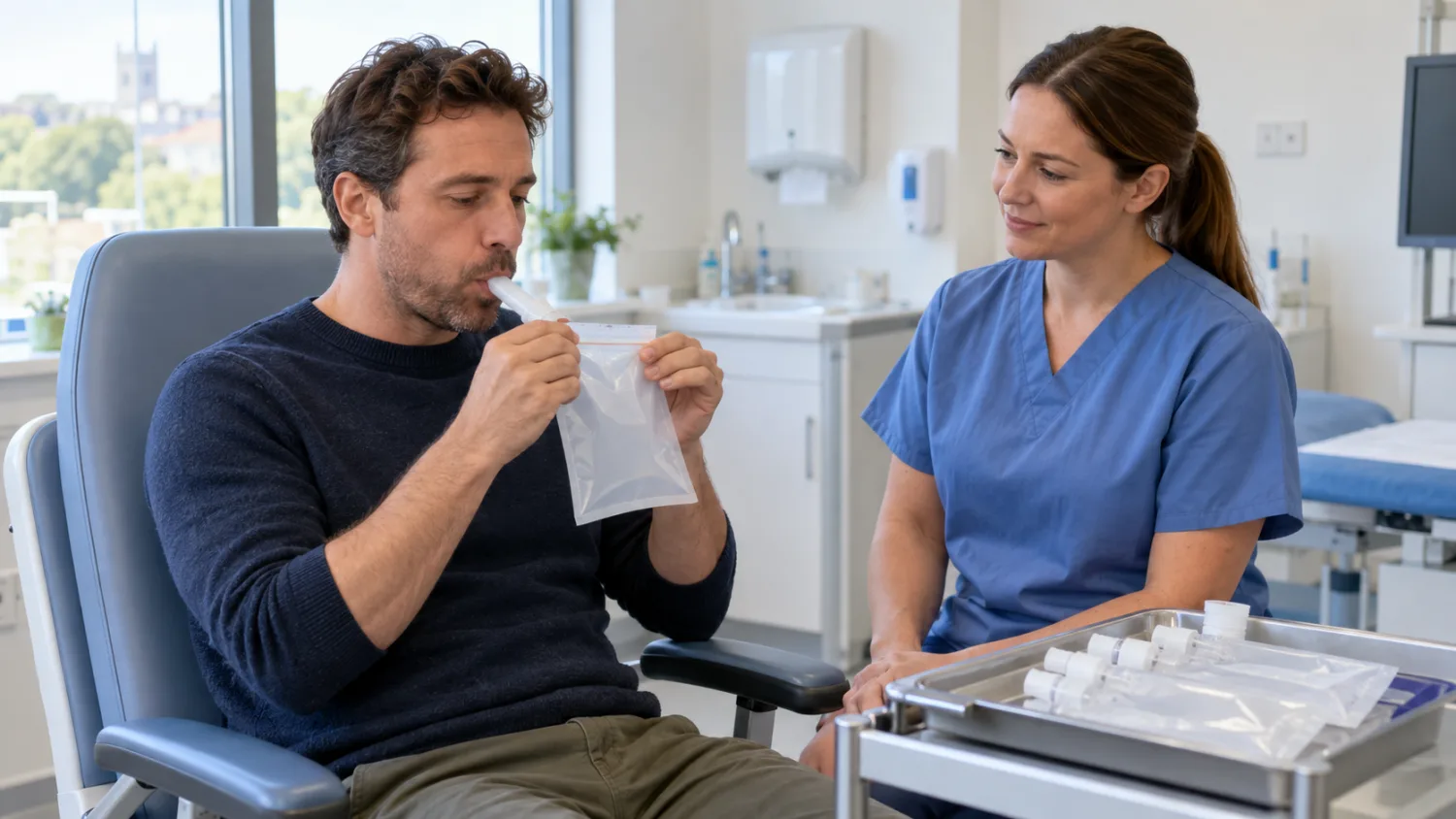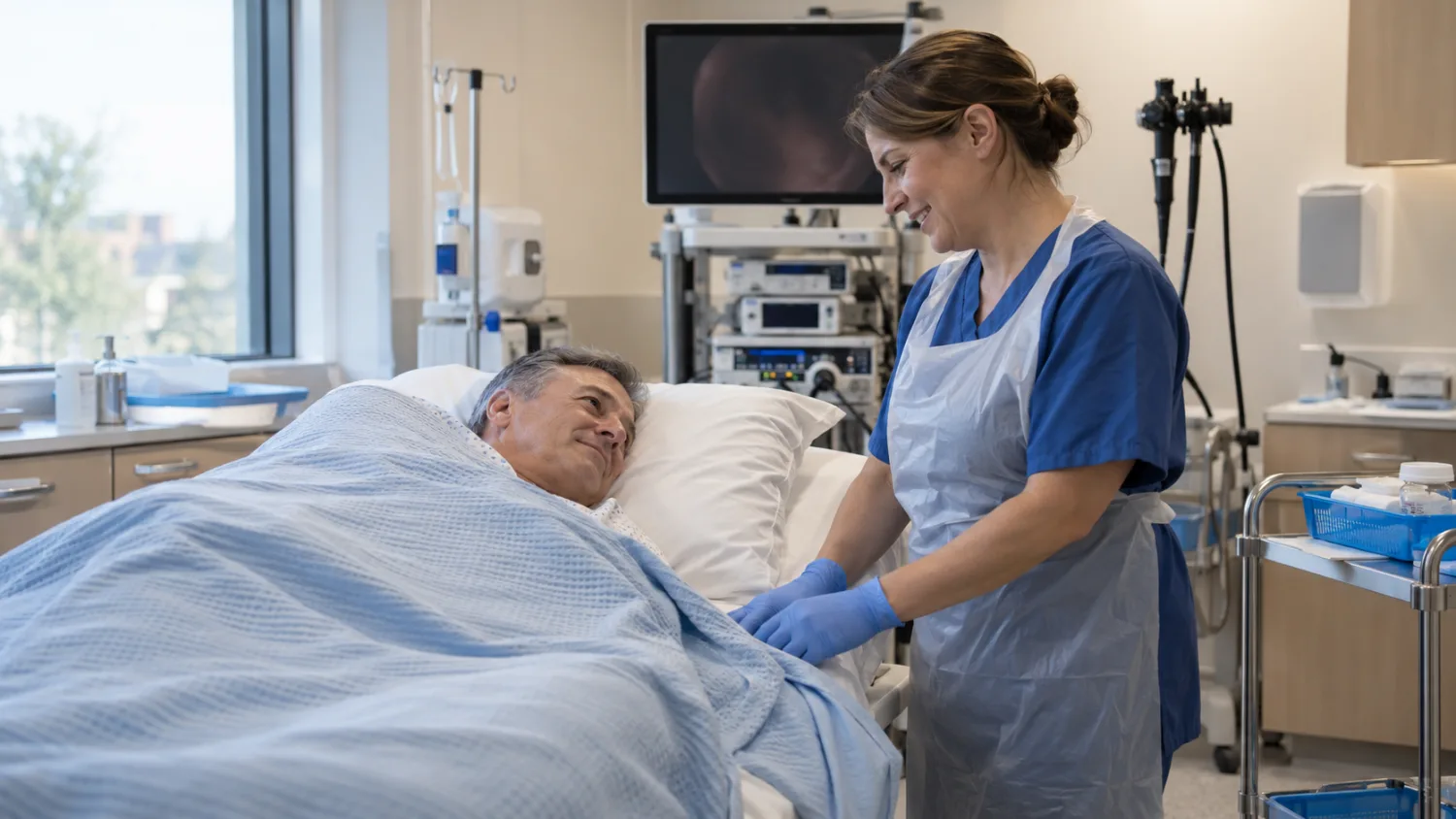
A private colonoscopy in the UK commonly costs between £1,500 and £3,000. Lower-cost independent providers may advertise prices from approximately £1,300 to £1,900, while major private hospitals and central London clinics may charge £2,500 to £4,000 or more.
The price shown on a clinic’s website may cover only the procedure and hospital facility. An initial gastroenterology consultation, sedation, biopsies, laboratory analysis, polyp removal and a follow-up appointment can be charged separately.
| Private colonoscopy service | Typical UK cost |
|---|---|
| Initial gastroenterologist consultation | £200–£350 |
| Diagnostic colonoscopy | £1,500–£3,000 |
| Lower-cost regional or independent package | Approximately £1,300–£2,000 |
| Premium hospital or London colonoscopy | £2,500–£4,000+ |
| Intravenous conscious sedation | Often included; otherwise £100–£300 |
| Anaesthetist-led deep sedation | Approximately £250–£500 extra |
| Biopsy collection | May be included in the procedure fee |
| Histology or laboratory analysis | Approximately £150–£500+ |
| Polyp removal | Included by some packages; otherwise £200–£1,000+ |
| Follow-up consultation | £150–£250 |
A complete pathway involving consultation, colonoscopy, sedation, tissue analysis and follow-up may therefore cost around £2,000 to £4,500. More complex polyp removal or treatment at a premium London hospital can cost more.
Always request a written estimate explaining what happens if biopsies or polyps are found. These decisions are often made during the procedure, so it is important to know in advance which additional charges you have authorised.
What is a colonoscopy?
A colonoscopy examines the lining of the rectum and large bowel, also called the colon. A gastroenterologist or specially trained endoscopist passes a long, flexible tube through the anus and carefully advances it around the bowel.
The instrument, called a colonoscope, contains a light and camera. Images are shown on a monitor, allowing the clinician to inspect the bowel lining.
Small instruments can be passed through the colonoscope to:
- take tissue samples called biopsies;
- remove polyps;
- treat some areas of bleeding;
- mark an abnormal area for future surgery;
- retrieve tissue for laboratory examination.
A colonoscopy usually takes approximately 30 to 45 minutes, although it can take longer when the bowel is difficult to examine or polyps need removing.
It is different from a gastroscopy, which examines the oesophagus, stomach and first part of the small intestine through the mouth. Our guide to gastroscopy and what to expect explains the upper digestive procedure.
How much do private hospitals charge?
Published UK prices vary substantially. Some independent endoscopy providers advertise a diagnostic colonoscopy from approximately £1,300 to £1,900. A London gastroenterology provider currently advertises a price of around £1,925 including the hospital and consultant fees.
Prices at major private hospital groups frequently exceed £2,000. Published examples at individual Ramsay hospitals range from approximately £2,200 to more than £3,300, depending on location and whether the procedure is classed as ambulatory or day-patient care.
Cleveland Clinic London advertises self-pay colonoscopy from approximately £2,100, while broader published estimates for central London commonly reach £2,500 to £4,000 or more once consultation and additional services are included.
The Private Healthcare Information Network states that colonoscopy procedure costs can range between approximately £2,000 and £4,000, with a separate initial consultation often costing £130 to £400.
Price differences can reflect:
- the hospital and its location;
- the consultant’s professional fee;
- whether the consultation is included;
- the type of sedation;
- whether an anaesthetist is present;
- biopsy and histology charges;
- whether routine polyp removal is included;
- the complexity and number of polyps;
- recovery-room and nursing charges;
- whether follow-up is included.
A higher price does not necessarily indicate a more accurate examination. More useful questions include who performs the procedure, the quality of the endoscopy service, what the package includes and how unexpected findings are charged.
What does the colonoscopy price include?
Some providers offer an all-inclusive self-pay package. Others separate the consultant, hospital, sedation and laboratory fees.
A comprehensive package may include:
- the pre-procedure assessment;
- bowel-preparation medication;
- the endoscopy facility;
- the consultant endoscopist’s fee;
- nursing and recovery care;
- intravenous sedation or gas and air;
- routine biopsies;
- straightforward polyp removal;
- a written procedure report;
- communication with your GP;
- a routine follow-up.
However, “all-inclusive” does not always include every possible finding. The package may exclude:
- the initial gastroenterology consultation;
- histology laboratory fees;
- removal of large or multiple polyps;
- special clips or other devices used to prevent bleeding;
- anaesthetist-led sedation;
- additional hospital time;
- treatment of a complication;
- further scans or surgery;
- a separate appointment to discuss results.
Ask the provider for both the lowest possible price and a realistic maximum for the planned procedure.
Our guide to private gastroenterologist costs compares consultation, blood-test, scan, endoscopy and follow-up fees.
How much do sedation options cost?
Many colonoscopies are performed with intravenous conscious sedation. Medicines are given through a cannula to make you relaxed and drowsy, but you are not normally fully unconscious.
Standard conscious sedation is often included in the procedure price. If charged separately, it may add approximately £100 to £300.
Options can include:
- no sedation;
- gas and air, also called Entonox;
- intravenous conscious sedation;
- deeper sedation supervised by an anaesthetist;
- general anaesthesia in selected cases.
No sedation
Some people choose to remain fully awake. This avoids sedative after-effects and may allow a faster return to usual activity, but discomfort varies between patients.
You can discuss whether sedation remains available if the procedure becomes uncomfortable.
Gas and air
Gas and air provides short-acting pain relief that is inhaled through a mouthpiece. Its effects wear off relatively quickly. Availability differs between hospitals.
Intravenous conscious sedation
Conscious sedation reduces anxiety and awareness but does not always remove all discomfort. You may remain able to respond to instructions and may remember little of the procedure.
If you receive intravenous sedation, you will normally need:
- a responsible adult to take you home;
- someone to remain with you for the period specified by the hospital;
- to avoid driving for at least 24 hours or as advised;
- to avoid alcohol;
- to avoid operating machinery;
- to avoid signing important documents or making significant decisions.
A hospital may refuse to provide sedation if you have not arranged an escort.
Deep sedation or general anaesthesia
Some private providers offer propofol sedation or a general anaesthetic for selected patients. This usually requires an anaesthetist and can add approximately £250 to £500 or more.
Deeper sedation is not automatically better. It involves additional monitoring and risk, so suitability should be assessed individually.
How much do biopsies and polyp removal cost?
A biopsy involves taking a very small piece of bowel lining for examination under a microscope. It can help diagnose inflammation, microscopic colitis, inflammatory bowel disease, infection and cancer.
You do not usually feel a biopsy being taken because the bowel lining does not sense cutting in the same way as the skin.
There may be two separate charges:
- the endoscopist’s or hospital’s charge for collecting the tissue;
- the laboratory or histology fee for analysing it.
Routine biopsy collection may be included in the colonoscopy price, while histology may add approximately £150 to £500 or more. Charges can depend on the number of samples and complexity of the analysis.
Polyp removal
Polyps are growths arising from the bowel lining. Most are not cancer, but some types can develop into cancer over time. Removing them can therefore prevent future disease.
Small polyps may be removed using:
- biopsy forceps;
- a cold snare;
- a heated snare using electrical current.
Some fixed-price packages include straightforward removal of one or more small polyps. Other clinics charge an additional £200 to £1,000 or more, depending on the number, size and technique required.
A large, flat or difficult polyp may not be removed during the initial diagnostic colonoscopy. You may need an advanced endoscopic procedure or surgery on another date, with a separate quote.
Ask the hospital:
- Is routine biopsy included?
- Is histology included?
- Does the package include removal of small polyps?
- Is there a maximum number or size covered?
- What happens if a large polyp is found?
- Will clips or specialist devices add to the bill?
- Who pays if the procedure must be repeated?
Why might you need a colonoscopy?
A colonoscopy may be recommended to investigate:
- blood in the stool;
- a persistent change in bowel habit;
- unexplained iron-deficiency anaemia;
- ongoing diarrhoea;
- persistent abdominal pain;
- unexplained weight loss;
- a raised FIT result;
- a raised faecal calprotectin level;
- suspected inflammatory bowel disease;
- abnormal findings on a scan;
- a personal history of polyps or bowel cancer;
- surveillance in people with certain bowel conditions or inherited risks.
Our guides to FIT results and faecal calprotectin results explain why these stool tests may lead to colonoscopy.
Colonoscopy can identify:
- bowel polyps;
- bowel cancer;
- ulcerative colitis;
- Crohn’s disease affecting the colon or end of the small intestine;
- diverticular disease;
- areas of bleeding;
- narrowing or inflammation;
- microscopic conditions when biopsies are analysed.
For more information about concerning symptoms and investigation, see our guide to bowel cancer symptoms and diagnosis.
Do you need a consultation before the procedure?
Most private hospitals require a GP referral or consultation with a gastroenterologist before colonoscopy. Some independent providers accept self-referrals but still conduct a clinical assessment before confirming the procedure.
The assessment is used to:
- decide whether colonoscopy is the correct test;
- review symptoms and previous investigations;
- check medicines and allergies;
- assess sedation risks;
- select the correct bowel preparation;
- discuss blood-thinning or diabetes medication;
- explain possible findings and treatments;
- obtain informed consent.
An initial private gastroenterology consultation commonly costs approximately £200 to £350. Some package prices include it, while others begin only after the consultant has recommended colonoscopy.
Do not assume that paying for a consultation commits you to having the procedure at the same hospital. You can request a copy of the clinical letter and compare written quotes elsewhere.
How do you prepare for a colonoscopy?
The bowel must be empty so the clinician can see its lining clearly. Poor preparation can hide small polyps and may result in an incomplete procedure that must be repeated.
The hospital will give you specific instructions. These may involve:
- following a low-fibre diet for one or more days;
- avoiding foods containing seeds, skins or whole grains;
- switching to clear fluids;
- drinking prescribed bowel-cleansing laxatives;
- stopping food and fluids at specified times;
- adjusting certain medicines under clinical guidance.
The laxative causes frequent, watery bowel movements. Stay close to a toilet after taking it and drink the permitted clear fluids to reduce dehydration.
A barrier cream can protect the skin around the anus. Soft toilet paper or unscented wipes may reduce irritation, although wipes should not normally be flushed.
Medicines that need special advice
Tell the hospital if you take:
- warfarin, apixaban, rivaroxaban, edoxaban or dabigatran;
- clopidogrel or another antiplatelet medicine;
- insulin or other diabetes treatment;
- iron tablets;
- medicines affecting kidney function or fluid balance;
- GLP-1 medicines such as semaglutide or tirzepatide;
- regular laxatives or constipation treatment.
Do not stop prescribed medicine independently. The plan depends on why you take it, the risk of bleeding and whether polyp removal is expected.
People with kidney, heart or liver disease may need a particular bowel preparation or additional monitoring because some laxatives alter fluid and electrolyte balance.
What happens during and after colonoscopy?
Before the procedure, the team will confirm your identity, medical history, consent and sedation plan. You will change into appropriate clothing and usually have a cannula inserted if intravenous medicine is planned.
During the colonoscopy:
- You lie on your left side with your knees bent.
- The clinician examines the rectal area and gently inserts the colonoscope.
- Carbon dioxide or air is introduced to open the bowel.
- The scope is advanced around the colon.
- The bowel lining is inspected as the instrument is withdrawn.
- Biopsies or polyps may be removed.
You may feel pressure, bloating or cramping, particularly as the scope moves around bends. Position changes and gentle pressure on the abdomen may help.
Afterwards, you will be monitored in a recovery area. The clinician may explain the immediate visual findings before you leave, but biopsy results usually take several days or longer.
Temporary effects can include:
- bloating and wind;
- mild abdominal cramps;
- tiredness after sedation;
- a small amount of blood after a biopsy or polyp removal;
- temporary changes in bowel habit following the preparation.
Follow the discharge instructions provided by the hospital. If you received sedation, arrange an escort and supervision as advised.
What are the risks?
Colonoscopy is commonly performed and serious complications are uncommon, but risk is not zero.
Possible complications include:
- bleeding, particularly after removal of a polyp;
- a tear or perforation in the bowel wall;
- reaction to sedation;
- breathing or heart problems;
- infection;
- dehydration or electrolyte disturbance from bowel preparation;
- an incomplete examination;
- a missed abnormality;
- post-polypectomy syndrome caused by heat injury to the bowel wall.
Removing a polyp generally carries a higher bleeding and perforation risk than inspection alone. Risk also varies with age, health, bowel disease, polyp size and the technique used.
Seek urgent medical advice after colonoscopy if you develop:
- severe or worsening abdominal pain;
- a firm or increasingly swollen abdomen;
- heavy or persistent rectal bleeding;
- black stools accompanied by weakness or dizziness;
- fever or chills;
- persistent vomiting;
- breathlessness, chest pain or collapse.
A small amount of blood can occur after a biopsy, but heavy bleeding, clots or feeling faint should not be dismissed as normal.
Are there alternatives to colonoscopy?
The appropriate alternative depends on the reason for testing.
CT colonography
CT colonography, sometimes called virtual colonoscopy, uses CT scans to create images of the large bowel. It still requires bowel preparation and inflation of the colon.
It does not usually allow the clinician to take a biopsy or remove a polyp. If an abnormality is found, a conventional colonoscopy may still be needed.
Flexible sigmoidoscopy
A flexible sigmoidoscopy examines the rectum and lower part of the colon rather than the entire large bowel. It may be appropriate for selected symptoms or follow-up pathways.
Capsule endoscopy
Colon capsule endoscopy uses a swallowed camera capsule. Availability is limited, preparation is still required and an abnormal result may lead to colonoscopy.
Stool tests
FIT detects small amounts of blood in stool, while faecal calprotectin assesses intestinal inflammation. These tests can help decide who needs further investigation but do not provide the same information as directly examining the bowel.
A negative test does not always rule out disease when symptoms remain concerning. The choice should be based on clinical advice rather than cost alone.
Can you have a colonoscopy through the NHS?
Yes. Colonoscopy is available without charge through the NHS when it is clinically indicated.
A GP may first arrange:
- blood tests;
- a FIT stool test;
- faecal calprotectin;
- other stool testing;
- physical examination;
- referral to gastroenterology or colorectal services.
The urgency depends on symptoms, results and personal risk. Possible bowel-cancer symptoms may lead to an urgent suspected-cancer referral.
Do not delay seeing a GP while deciding whether to pay privately if you have blood in the stool, persistent bowel changes, unexplained weight loss or iron-deficiency anaemia. Our guide to blood in stool explains common causes and warning signs.
Private testing may offer faster access or more choice of appointment and consultant. It does not guarantee that every finding will be treated privately within the original price.
If cancer or a complex condition is diagnosed, you can ask to be referred into NHS care. You may enter the NHS pathway at the point considered appropriate by the receiving team rather than automatically moving directly to treatment.
Will private medical insurance cover it?
Private health insurance commonly covers colonoscopy when it is required to investigate new symptoms and has been authorised in advance.
Cover depends on:
- the policy’s outpatient and diagnostic benefits;
- whether the condition is new or pre-existing;
- the need for a GP referral;
- the chosen consultant and hospital;
- the insurer’s fee limits;
- your excess;
- whether biopsy, histology and polyp removal are covered.
Obtain an authorisation code before booking. Ask whether the hospital, consultant, anaesthetist and pathologist will submit separate invoices.
Screening without symptoms or surveillance for a pre-existing condition may be excluded even when diagnostic colonoscopy for new symptoms is covered.
Questions to ask before paying
Before agreeing to the procedure, ask the provider:
- Is the consultant’s fee included?
- Does the quote include the initial consultation?
- Is bowel preparation included?
- Which sedation options are included?
- Would an anaesthetist generate a separate bill?
- Are biopsies included?
- Is laboratory analysis included?
- Does the package cover removal of small polyps?
- What are the additional charges for multiple or large polyps?
- Are clips and specialist devices included?
- Is a follow-up appointment included?
- What happens if the colonoscopy is incomplete?
- Who pays for treatment of a complication?
- What is the cancellation policy?
- Will the report and pathology results be sent to your GP?
A fixed-price package can provide useful certainty, but read the exclusions carefully. The most important hidden cost is often histology or treatment of a polyp found unexpectedly.
Frequently asked questions
How much does a private colonoscopy cost in the UK?
A private colonoscopy commonly costs £1,500 to £3,000. A complete pathway with consultation, sedation, biopsies, histology and follow-up may cost approximately £2,000 to £4,500.
Why do some colonoscopies cost less than £1,500?
Some independent providers use lower fixed prices or quote only the procedure and facility fee. Check whether consultation, sedation, biopsy analysis, polyp removal and follow-up are included.
Is sedation included in the price?
Standard conscious sedation is often included, but this varies. Anaesthetist-led deep sedation can add several hundred pounds.
How much does a biopsy add?
Biopsy collection may be included, while laboratory analysis can add approximately £150 to £500 or more. Charges depend on the number and complexity of samples.
Does the price include polyp removal?
Some packages include routine removal of small polyps. Large, multiple or technically difficult polyps may create additional charges or require a separate procedure.
Can you book a colonoscopy without a GP referral?
Some providers accept self-referrals, but many private hospitals require a GP referral or gastroenterology consultation before confirming the procedure.
How long does the procedure take?
The colonoscopy itself often takes 30 to 45 minutes. Allow several hours for admission, preparation checks, recovery and discharge.
Is a colonoscopy painful?
Experiences vary. People commonly feel pressure, bloating and cramping. Sedation, gas and air, position changes and careful technique can make the procedure more comfortable.
Can you drive home?
Not after intravenous sedation. You will need an escort and must avoid driving for at least 24 hours or for the period specified by the hospital.
How long do biopsy results take?
Results commonly take one to three weeks, although timing varies by laboratory and urgency. Ask how and when the result will be communicated.
Can a colonoscopy detect bowel cancer?
Yes. It allows the clinician to inspect suspicious areas and take biopsies. A laboratory must examine the tissue to confirm whether cancer is present.
Can colonoscopy diagnose Crohn’s disease or ulcerative colitis?
It can show inflammation and allow biopsies to be taken. Results are interpreted alongside symptoms, blood tests, stool tests and sometimes small-bowel imaging. See our guide to Crohn’s disease and ulcerative colitis.
Can a normal colonoscopy rule out IBS?
IBS does not usually create visible abnormalities during colonoscopy. A normal examination can help exclude some alternative conditions, but IBS diagnosis is based on the overall symptom pattern and appropriate testing.
Can colonoscopy see the small intestine?
It examines the large bowel and may enter the very end of the small intestine. It cannot examine most of the small bowel, stomach, gallbladder, liver or pancreas.
Is private colonoscopy worth the cost?
It may be worthwhile when faster investigation, consultant choice or appointment flexibility matters and the complete price is affordable. Clinical need and the appropriateness of colonoscopy are more important than choosing the fastest or most expensive provider.