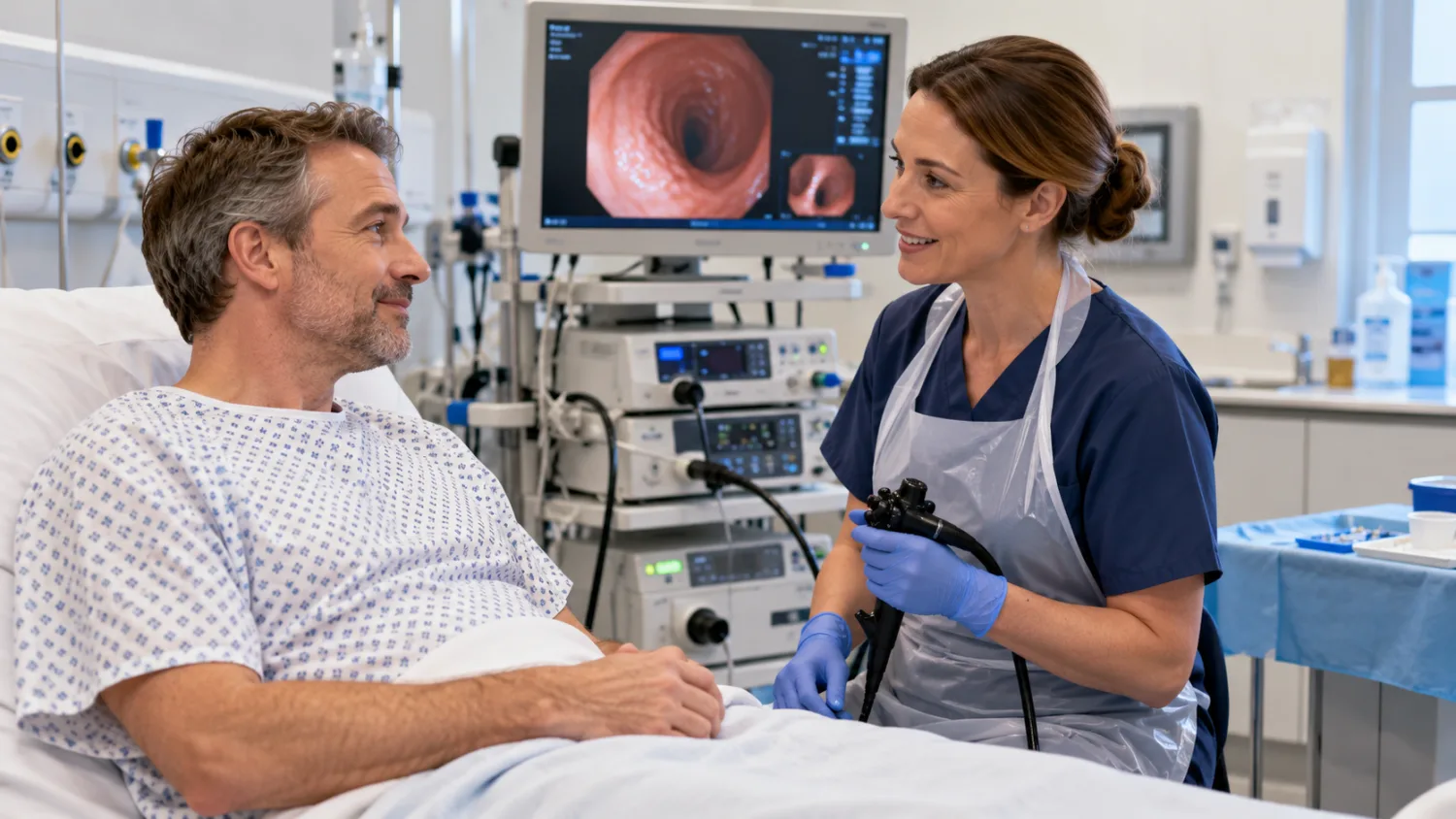
A private gastroenterologist consultation in the UK commonly costs £200 to £350. However, the first appointment is often only a small part of the complete cost. Blood tests, stool tests, scans, endoscopy, biopsies and a follow-up consultation may all be charged separately.
A relatively simple pathway involving an initial consultation, basic tests and a follow-up may cost approximately £450 to £1,000. If you need a gastroscopy or colonoscopy, the complete cost can rise to £1,800 to £4,000 or more, depending on the procedure, hospital and what the package includes.
Published prices vary considerably. Independent regional clinics may be less expensive, while central London hospitals and highly specialised consultants often charge more. The same gastroenterologist may also have different fees at different hospitals.
Do not wait for a routine private appointment if you are vomiting blood, passing a large amount of blood, producing black tar-like stools, experiencing severe or rapidly worsening abdominal pain, repeatedly vomiting or feeling faint and acutely unwell. These symptoms may require urgent NHS assessment.
This guide provides general UK price information. Tests should be chosen according to your symptoms and clinical assessment rather than purchased as a standard package.
How much does a private gastroenterologist cost?
Typical self-pay prices are:
| Private gastroenterology service | Typical UK price |
|---|---|
| Initial gastroenterologist consultation | £200–£350 |
| Higher-priced or specialist consultation | £350–£500+ |
| Follow-up consultation | £150–£275 |
| Basic blood tests | £50–£250+ |
| Stool tests | £50–£250+ |
| Abdominal ultrasound | £250–£500 |
| Gastroscopy | Approximately £1,200–£2,500+ |
| Colonoscopy | Approximately £1,500–£3,000+ |
| Combined gastroscopy and colonoscopy | Approximately £2,200–£3,500+ |
These figures are planning ranges rather than national tariffs. Published consultant profiles on the Private Healthcare Information Network commonly show first gastroenterology appointments between approximately £200 and £350 and follow-ups between £125 and £250.
An endoscopy fee can be more complicated. The consultant may quote only their professional procedure fee, while the hospital separately charges for the endoscopy unit, nursing staff, equipment, sedation and recovery facilities.
Always establish whether a quoted figure is:
- the consultant’s fee only;
- the hospital fee only;
- a fixed-price package;
- an estimate that can increase;
- inclusive of biopsies and pathology;
- inclusive of a follow-up consultation.
What might the complete private pathway cost?
The total depends on which symptom is being investigated and whether an invasive procedure is needed.
| Example private pathway | Possible total cost |
|---|---|
| Consultation and follow-up only | £350–£625 |
| Consultation, basic blood tests and follow-up | £450–£850 |
| Consultation, blood and stool tests, and follow-up | £500–£1,000+ |
| Consultation, abdominal ultrasound and follow-up | £600–£1,100 |
| Consultation, gastroscopy, biopsies and follow-up | £1,600–£3,200+ |
| Consultation, colonoscopy, biopsies and follow-up | £1,900–£4,000+ |
| Consultation, combined upper and lower endoscopy, pathology and review | £2,600–£4,500+ |
| Complex investigation involving endoscopy and advanced imaging | £3,000–£6,000+ |
For example, an initial consultation costing £300, blood and stool tests costing £200, a colonoscopy package costing £2,000 and a £200 follow-up would produce a total of £2,700.
If biopsies, polyp removal, specialist pathology or extra imaging are excluded from the package, the final bill may be significantly higher.
Ask the provider for two estimates:
- the minimum expected cost if no abnormality is found; and
- the possible cost if biopsies or polyp removal are required.
What happens at the initial consultation?
An initial private gastroenterology consultation commonly lasts approximately 20 to 45 minutes. It may take longer when symptoms are complex or previous investigations need detailed review.
The gastroenterologist will normally ask about:
- abdominal pain and its location;
- heartburn, reflux or indigestion;
- nausea or vomiting;
- bloating and excessive wind;
- diarrhoea or constipation;
- changes in bowel habit;
- blood, mucus or black stools;
- difficulty or pain when swallowing;
- unintentional weight loss;
- appetite and dietary triggers;
- medicines, including anti-inflammatory drugs;
- alcohol consumption and smoking;
- previous abdominal surgery;
- family history of bowel, stomach or liver disease.
The doctor may examine your abdomen and review previous blood tests, scans, stool-test results and endoscopy reports. Depending on the symptoms, they may also perform or arrange a rectal examination.
The consultation fee commonly includes:
- review of your history;
- a relevant physical examination;
- discussion of likely causes;
- an investigation or treatment plan;
- a clinical letter to you and your GP.
It does not necessarily include blood tests, stool tests, prescriptions, scans or procedures. Ask whether a follow-up is automatically required to receive the results.
Our overview of digestive symptoms and common gastrointestinal conditions explains which parts of the digestive system may be involved.
How much do blood and stool tests cost?
Basic private blood tests may add approximately £50 to £250. A broader panel or multiple specialised tests can cost £300 or more.
Possible blood tests include:
- full blood count;
- ferritin and iron studies;
- liver-function tests;
- kidney function and electrolytes;
- C-reactive protein or ESR;
- coeliac-disease antibodies;
- thyroid function;
- vitamin B12 and folate;
- amylase or lipase;
- selected nutritional or autoimmune markers.
The blood tests should be chosen to answer a clinical question. Large generic panels can produce mildly abnormal results that are unrelated to the symptoms and create further costs.
Our guides to understanding blood-test results, iron, ferritin and anaemia and CRP and inflammation results explain common gastroenterology investigations.
How much do private stool tests cost?
A single stool test may cost around £50 to £150, while several tests or a specialist panel may cost £150 to £400 or more.
Tests that may be clinically useful include:
| Stool test | What it may help investigate |
|---|---|
| Faecal calprotectin | Inflammation within the bowel |
| Faecal immunochemical test (FIT) | Small amounts of human blood in stool |
| Stool culture | Selected bacterial infections |
| Clostridioides difficile test | Diarrhoea associated with this bacterial infection |
| Ova, cysts and parasites | Selected parasitic infections |
| Pancreatic elastase | Reduced pancreatic digestive-enzyme production |
| H. pylori stool antigen | Current Helicobacter pylori infection |
Commercial microbiome, “gut health”, food-intolerance and broad digestive panels may cost hundreds of pounds but do not necessarily provide clinically actionable information. Ask how a result would change diagnosis or treatment before paying for one.
See our guides to faecal calprotectin results and H. pylori breath, stool and biopsy testing.
How much do private scans cost?
Scans may be requested when symptoms suggest gallstones, liver disease, pancreatic problems, inflammation, a mass or another structural abnormality.
| Private digestive investigation | Possible UK cost |
|---|---|
| Abdominal ultrasound | £250–£500 |
| CT abdomen and pelvis | £500–£1,000+ |
| MRI abdomen | £600–£1,300+ |
| MRCP bile-duct and pancreatic MRI | £700–£1,400+ |
| CT colonography | £600–£1,200+ |
| Small-bowel MRI or CT enterography | £700–£1,500+ |
An abdominal ultrasound is useful for examining organs such as the liver, gallbladder and kidneys. It does not provide a complete assessment of the stomach or bowel lining and cannot replace endoscopy when direct inspection or biopsy is required.
Read our guide to what an abdominal ultrasound can and cannot show.
CT uses X-rays and involves radiation. MRI does not use ionising radiation but takes longer and may require an injected contrast agent. The best test depends on the clinical question, not merely which scan produces the most detailed-looking images.
Confirm whether the price includes:
- contrast material;
- a radiologist’s report;
- blood tests required before contrast;
- copies of the images;
- a consultant appointment to interpret the findings.
How much do gastroscopy and colonoscopy cost?
A private gastroscopy commonly costs approximately £1,200 to £2,500. A private colonoscopy commonly costs £1,500 to £3,000. Central London prices and complex procedures may be higher.
A combined gastroscopy and colonoscopy performed during the same attendance may cost approximately £2,200 to £3,500 or more.
| Private endoscopy procedure | Typical planning range |
|---|---|
| Gastroscopy | £1,200–£2,500+ |
| Flexible sigmoidoscopy | £1,000–£2,000+ |
| Colonoscopy | £1,500–£3,000+ |
| Combined gastroscopy and colonoscopy | £2,200–£3,500+ |
| Capsule endoscopy | £1,500–£3,000+ |
| Endoscopic ultrasound | £2,000–£4,000+ |
| ERCP | Potentially £3,000–£7,000+ |
What is a gastroscopy?
A gastroscopy passes a thin flexible camera through the mouth to examine the oesophagus, stomach and first part of the small bowel. It may be recommended for swallowing difficulty, persistent upper-abdominal symptoms, unexplained anaemia, bleeding or other selected concerns.
Biopsies can be taken to investigate inflammation, coeliac disease, H. pylori, abnormal tissue or another suspected condition.
See our detailed guide to gastroscopy, preparation and possible findings.
What is a colonoscopy?
A colonoscopy passes a flexible camera through the rectum to examine the large bowel. It may be used to investigate rectal bleeding, a persistent change in bowel habit, iron-deficiency anaemia, inflammatory bowel disease or an abnormal FIT result.
During the procedure, the endoscopist can take biopsies and remove some polyps. Read our guide to colonoscopy preparation, sedation and recovery.
Why do endoscopy prices vary so much?
A low advertised fee may cover only the endoscopist’s professional charge. A comprehensive package may include the hospital, procedure, sedation, standard biopsies and follow-up.
Ask whether the quotation includes:
- the consultant endoscopist’s fee;
- hospital or endoscopy-unit fees;
- pre-assessment;
- bowel-preparation medication;
- throat spray, sedation or Entonox;
- nursing and recovery care;
- routine biopsy sampling;
- polyp removal;
- pathology and histology;
- special stains or laboratory analysis;
- a written procedure report;
- a follow-up appointment;
- treatment if a complication occurs.
Some fixed-price packages exclude larger polyp removal or complex pathology. Ask what would happen financially if the endoscopist finds something that needs treatment during the procedure.
How much do biopsies and pathology cost?
Biopsy sampling may be included in a fixed-price endoscopy package, but this should never be assumed. If charged separately, pathology may add approximately £100 to £500 or more, depending on the number and complexity of specimens.
Possible additional charges include:
- standard tissue examination;
- multiple biopsy sites;
- testing for H. pylori;
- special staining;
- coeliac-disease assessment;
- polyp histology;
- molecular or immunohistochemical tests;
- review by a specialist gastrointestinal pathologist.
A biopsy does not automatically mean that cancer is suspected. Small tissue samples are routinely used to diagnose inflammation, microscopic colitis, coeliac disease and other non-cancerous conditions.
Ask how and when you will receive the result. Visual findings may be discussed immediately after endoscopy, while biopsy results commonly take several days or longer.
What is included in a gastroenterology follow-up?
A follow-up consultation commonly costs £150 to £275. It may take place face to face, by video or by telephone.
The follow-up may be used to:
- explain blood, stool or imaging results;
- discuss endoscopy and biopsy findings;
- confirm or revise the diagnosis;
- start or adjust medication;
- recommend dietary changes;
- decide whether further testing is necessary;
- refer you to a surgeon, dietitian or another specialist;
- agree which aspects of care your GP can manage;
- arrange monitoring or surveillance.
Some clinics include a brief results call in the procedure price but charge for a full treatment-planning appointment. Others require a follow-up even when results are normal.
Ask before testing:
- Who will explain the result?
- Is that discussion included in the test price?
- Will I receive a written copy?
- Will my GP receive the report?
- How quickly will abnormal results be acted upon?
- What happens if I need ongoing monitoring?
A test result needs to be interpreted alongside symptoms and other findings. A normal colonoscopy, for example, does not exclude every cause of diarrhoea, abdominal pain or bloating.
Can you see a gastroenterologist through the NHS?
Yes. NHS gastroenterology consultations and medically necessary investigations are available without a direct charge to the patient.
Your GP may first arrange blood tests, stool tests or an abdominal examination. Depending on the results and symptoms, you may then be referred to gastroenterology, colorectal surgery, an urgent suspected-cancer pathway or another service.
In some areas, an appropriate patient may be sent directly for endoscopy or imaging rather than seeing a consultant first.
Referral urgency is based on clinical risk. Symptoms such as unexplained rectal bleeding, iron-deficiency anaemia, difficulty swallowing, persistent vomiting, significant weight loss or an abnormal FIT result may require a faster pathway.
NICE provides guidance on symptoms and findings that may warrant suspected-cancer investigation or referral. An urgent referral does not mean that cancer has been diagnosed; most referred patients have another explanation.
Private care may provide quicker access or a particular consultant, but it is not automatically more appropriate for urgent symptoms. See our guides to how hospital referrals work and NHS versus private healthcare.
Do you need a GP referral for private gastroenterology?
Many private gastroenterologists accept self-paying patients without a formal GP referral. However, a referral letter remains useful because it can provide:
- a summary of your symptoms;
- current medicines and allergies;
- relevant medical history;
- physical-examination findings;
- blood and stool-test results;
- previous scans or endoscopy reports;
- family-history information;
- the GP’s reason for requesting a specialist opinion.
A referral may be compulsory when you are using private medical insurance. Some hospitals also require a clinician’s referral before CT, MRI, endoscopy or another procedure.
Bring copies of relevant NHS and private records. Tests may be repeated when the consultant cannot access the original results, adding time and cost.
If you have already completed a FIT, calprotectin test, coeliac screen, ultrasound or endoscopy, provide the complete report rather than relying on a verbal summary.
Does private health insurance cover gastroenterology?
Private medical insurance may cover specialist consultation, investigations and treatment for a new gastrointestinal problem, subject to the terms of the policy.
Coverage depends on:
- whether symptoms began before the policy started;
- whether the condition is considered pre-existing;
- your outpatient consultation and diagnostic limits;
- the consultant and hospital network;
- whether you have a GP referral;
- prior authorisation for each test or procedure;
- your excess and any co-payment;
- the policy’s approach to chronic conditions;
- whether screening or surveillance is excluded.
Do not assume that authorisation for a consultation includes blood tests, imaging or endoscopy. Contact the insurer again when the gastroenterologist recommends a procedure.
Ask your insurer:
- Is this consultant recognised and fee-assured?
- Is the chosen hospital covered?
- How much outpatient cover remains?
- Do I need separate authorisation for pathology?
- Is polyp removal included?
- Will I owe an excess or fee shortfall?
- Are follow-up appointments covered?
- Would long-term management of the diagnosis be excluded?
Conditions such as inflammatory bowel disease can require long-term monitoring and treatment. A policy may cover the initial acute investigation but restrict ongoing management once the condition becomes chronic.
A new policy is unlikely to cover symptoms that were already present. Read our guides to pre-existing conditions and insurance, what private medical insurance covers and private health-insurance excesses.
When do digestive symptoms need urgent medical help?
Private price comparisons are intended for stable, non-emergency problems. Seek urgent medical advice if you develop:
- vomiting blood or material resembling coffee grounds;
- black, sticky or tar-like stools;
- a large amount of rectal bleeding;
- severe or rapidly worsening abdominal pain;
- a rigid, swollen or extremely tender abdomen;
- repeated vomiting with an inability to keep fluids down;
- fainting, confusion, marked weakness or signs of shock;
- severe dehydration;
- yellow skin with fever or significant abdominal pain;
- sudden abdominal pain during pregnancy;
- difficulty swallowing with inability to swallow saliva;
- severe pain after a recent endoscopy.
Call 999 for life-threatening symptoms, collapse, severe bleeding or signs of shock. Otherwise, NHS 111 can advise when you are unsure how urgently you need assessment.
Arrange a GP assessment for persistent or unexplained:
- blood in the stool;
- change in bowel habit;
- abdominal pain or bloating;
- iron-deficiency anaemia;
- weight loss;
- loss of appetite;
- difficulty swallowing;
- vomiting;
- diarrhoea, particularly at night;
- symptoms with a strong family history of gastrointestinal cancer.
See our guides to blood in the stool, changes in bowel habit, abdominal pain by location and bowel-cancer symptoms and diagnosis.
How do you choose a private gastroenterologist?
Gastroenterology contains several subspecialties. The right consultant for inflammatory bowel disease may not be the most appropriate choice for a complex liver or pancreatic condition.
Possible areas of interest include:
- general gastroenterology;
- diagnostic and therapeutic endoscopy;
- inflammatory bowel disease;
- irritable bowel syndrome and functional disorders;
- coeliac disease and nutrition;
- liver disease or hepatology;
- pancreatic and biliary disease;
- upper gastrointestinal disease;
- small-bowel disorders;
- neurogastroenterology and motility.
Check that the doctor is registered with the General Medical Council and appears on the specialist register in gastroenterology. You can also check consultant and hospital information through PHIN.
Before booking, ask:
- Does the consultant regularly treat my type of symptom or condition?
- What is included in the initial fee?
- Could existing NHS test results be used?
- What tests are likely to be considered?
- Where would endoscopy be performed?
- Is the endoscopy unit appropriately regulated?
- Are hospital and consultant fees separate?
- Are sedation, biopsy, pathology and polyp removal included?
- Who manages complications?
- How will results be provided?
- Will I need a paid follow-up?
- Can ongoing care be transferred to my GP or NHS team?
Be cautious about clinics that recommend broad panels, food-intolerance tests, repeated scans or endoscopy before taking an adequate history. A higher number of investigations does not automatically produce better care.
Frequently asked questions
How much is a private gastroenterologist consultation?
An initial private gastroenterology consultation commonly costs £200 to £350. Highly specialised or central London appointments may cost £350 to £500 or more.
How much is a follow-up appointment?
A follow-up commonly costs £150 to £275. Ask whether discussion of test or biopsy results is already included in the procedure package.
How much should I budget for consultation and basic tests?
A consultation, blood or stool tests and follow-up may cost around £450 to £1,000, depending on the number and type of investigations.
How much is a private gastroscopy?
A private gastroscopy generally costs approximately £1,200 to £2,500. Confirm whether sedation, biopsies, pathology and follow-up are included.
How much is a private colonoscopy?
A private colonoscopy commonly costs approximately £1,500 to £3,000. A complete pathway including consultation, pathology and review may cost £1,900 to £4,000 or more.
Are biopsies included in an endoscopy price?
Sometimes. Fixed-price packages may include standard biopsies, but consultant-only or basic hospital quotations may not. Complex pathology or removal of larger polyps may cost extra.
Can I book a gastroenterologist without seeing a GP?
Many consultants accept direct self-pay bookings, but a referral may be required by the hospital or your insurer. A GP letter can also prevent unnecessary repetition of tests.
Can I book a colonoscopy without a consultation?
Some providers offer direct-access endoscopy when you have an appropriate GP or specialist referral. Others require an initial consultation to confirm that the procedure is safe and suitable.
Will private health insurance pay for a colonoscopy?
It may cover a medically necessary colonoscopy for a new eligible condition, subject to referral, pre-authorisation, network restrictions and your excess. Screening and pre-existing symptoms may not be covered.
What is the difference between a gastroenterologist and a colorectal surgeon?
A gastroenterologist is a physician specialising in digestive diseases and endoscopy. A colorectal surgeon specialises in surgical and non-surgical conditions of the colon, rectum and anus. Their work overlaps, and either may perform colonoscopy.
What is the difference between IBS and IBD?
IBS affects bowel function without causing the same visible intestinal inflammation found in inflammatory bowel disease. IBD includes Crohn’s disease and ulcerative colitis. See our guides to IBS and inflammatory bowel disease.
Can blood tests diagnose a digestive condition?
Blood tests can identify anaemia, inflammation, coeliac antibodies, liver abnormalities and other clues, but they rarely diagnose every cause by themselves. Stool testing, imaging or endoscopy may still be required.
Does a normal colonoscopy rule out IBS?
No. A normal colonoscopy may help exclude certain structural or inflammatory conditions, but IBS is diagnosed from the symptom pattern and appropriate exclusion of alternative causes. Colonoscopy is not required for every person with typical IBS symptoms.
Is a private gastroenterologist worth the cost?
Private care may be useful for faster assessment, continuity with a chosen specialist or access to a particular facility. Before proceeding, make sure you can afford the likely complete pathway rather than only the first consultation.