A herniated disc, often called a slipped disc, is one of the most common causes of back pain and nerve-related symptoms such as sciatica. Despite the name, the disc does not actually “slip”. Instead, part of the soft cushioning disc between the bones of the spine pushes out and irritates nearby nerves.
For many people, this can be painful and worrying, especially when symptoms include shooting leg pain, numbness or weakness. However, most cases improve with time and appropriate treatment, and surgery is only needed in a small number of situations.
This guide explains what a herniated disc is, why it happens, how it is diagnosed in the UK, and the most effective ways to recover.
What a herniated disc means
The human spine is made up of small bones called vertebrae. Between these bones sit intervertebral discs, which act as cushions that absorb shock and allow the spine to bend and move.
Each disc has two main parts:
- a tough outer layer called the annulus fibrosus
- a softer gel-like centre called the nucleus pulposus
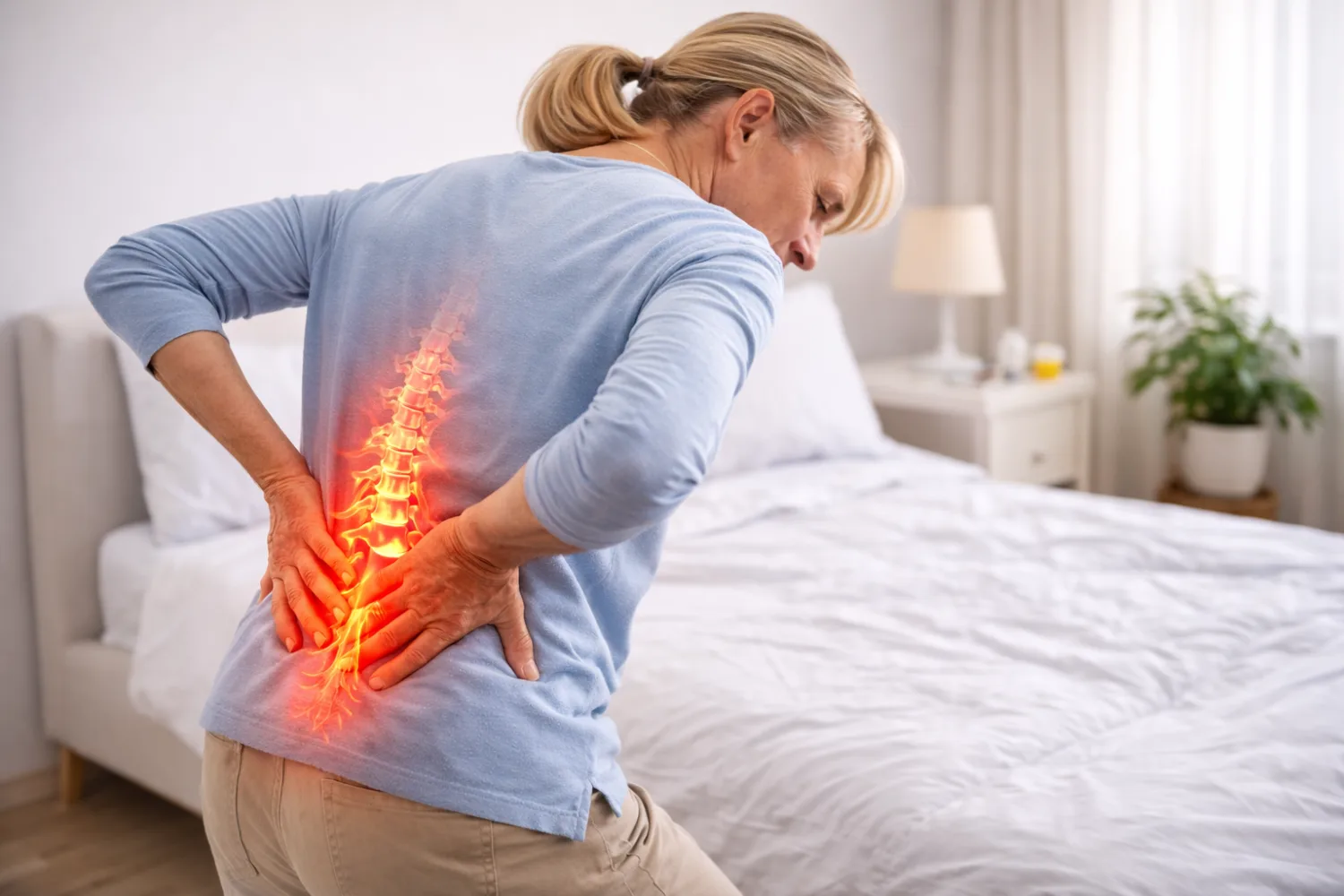
A herniated disc happens when the soft centre pushes through a tear or weak spot in the outer layer. When this bulging material presses on nearby nerves, it can cause pain, tingling, numbness or weakness.
The lower back, also called the lumbar spine, is the most common area affected because it carries much of the body’s weight and experiences significant stress during movement.
The NHS explains that a slipped disc occurs when one of the discs between the spinal bones bulges and presses on nerves in the spine.
Is a slipped disc really slipped?
No. The phrase “slipped disc” is commonly used, but it is not medically precise. The disc does not slide out of place. A better description is that part of the disc bulges, protrudes or herniates and may irritate a nearby nerve.
This distinction matters because many people imagine something is permanently out of position. In reality, many disc-related symptoms improve as inflammation settles, pressure reduces and the body adapts over time.
Why herniated discs occur
Most slipped discs are not caused by one single injury. They often develop gradually as discs age and lose flexibility, although sudden strain can trigger symptoms.
Age-related disc changes
As people get older, spinal discs slowly dry out and become less elastic. This natural ageing process makes them more vulnerable to tearing or bulging.
Slipped discs are most common in adults between their 30s and 50s, although they can happen at other ages too.
Sudden strain or injury
Heavy lifting, twisting awkwardly or sudden physical strain can trigger a disc herniation. This may happen during manual work, sport, gym training, moving furniture or lifting with poor technique.
Poor posture and long sitting
Long periods of sitting, especially with poor posture, can place pressure on the discs in the lower spine. Over time, this may contribute to disc irritation and back pain.
Sitting itself is not automatically harmful, but long periods without movement, weak supporting muscles and poor workstation habits can make symptoms more likely to persist.
Repetitive movements
Jobs or activities involving frequent bending, twisting or lifting can increase stress on spinal discs and contribute to herniation.
Other risk factors
Several factors can increase the likelihood of developing a herniated disc:
- being overweight
- smoking
- lack of regular exercise
- weak core muscles
- previous back injury
- heavy manual work
- family history or genetic predisposition
Symptoms of a herniated disc
Symptoms vary depending on where the disc is located and whether it presses on nearby nerves.
Some people have disc bulges on scans without noticeable symptoms. Others experience significant pain and nerve irritation.
Common symptoms include:
- lower back pain that worsens with movement
- sharp pain radiating down the leg
- sciatica
- tingling or numbness in the leg or foot
- muscle weakness in the affected leg
- pain that worsens when coughing, sneezing or sitting
- difficulty standing or walking comfortably
- pain that improves when lying down or changing position
When a herniated disc irritates a nerve root that contributes to the sciatic nerve, it can cause sciatica, with pain travelling from the lower back through the buttock and down the leg.
You can learn more in our guide to sciatica causes, symptoms and treatment in the UK.
Why symptoms do not always match scan findings
Disc bulges and age-related spinal changes are common, even in people who do not have pain. This is why clinicians do not usually diagnose a slipped disc from a scan alone.
The most useful diagnosis combines symptoms, physical examination and imaging only when needed. A disc seen on MRI matters most when it matches the person’s pain pattern, nerve symptoms and examination findings.
When symptoms need urgent medical attention
Most slipped discs are not dangerous, but certain symptoms need urgent assessment.
Seek immediate medical care if you experience:
- loss of bladder or bowel control
- new difficulty passing urine
- numbness around the groin, genitals or inner thighs
- severe or worsening weakness in one or both legs
- numbness in the saddle area
- severe symptoms after a major injury
- fever, unexplained weight loss or feeling very unwell with back pain
These symptoms may indicate a rare but serious condition such as cauda equina syndrome or another urgent spinal problem.
How herniated discs are diagnosed in the UK
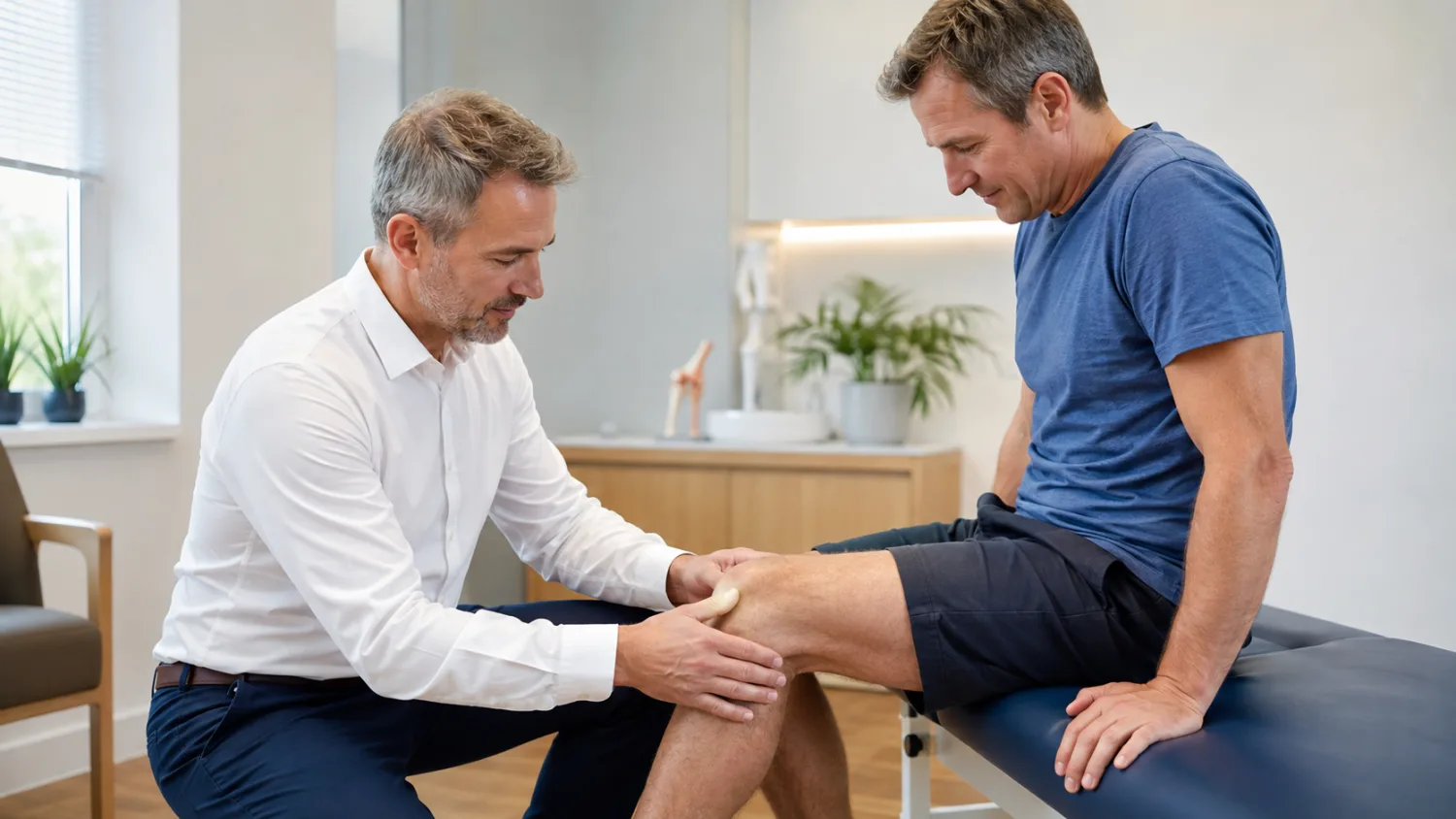
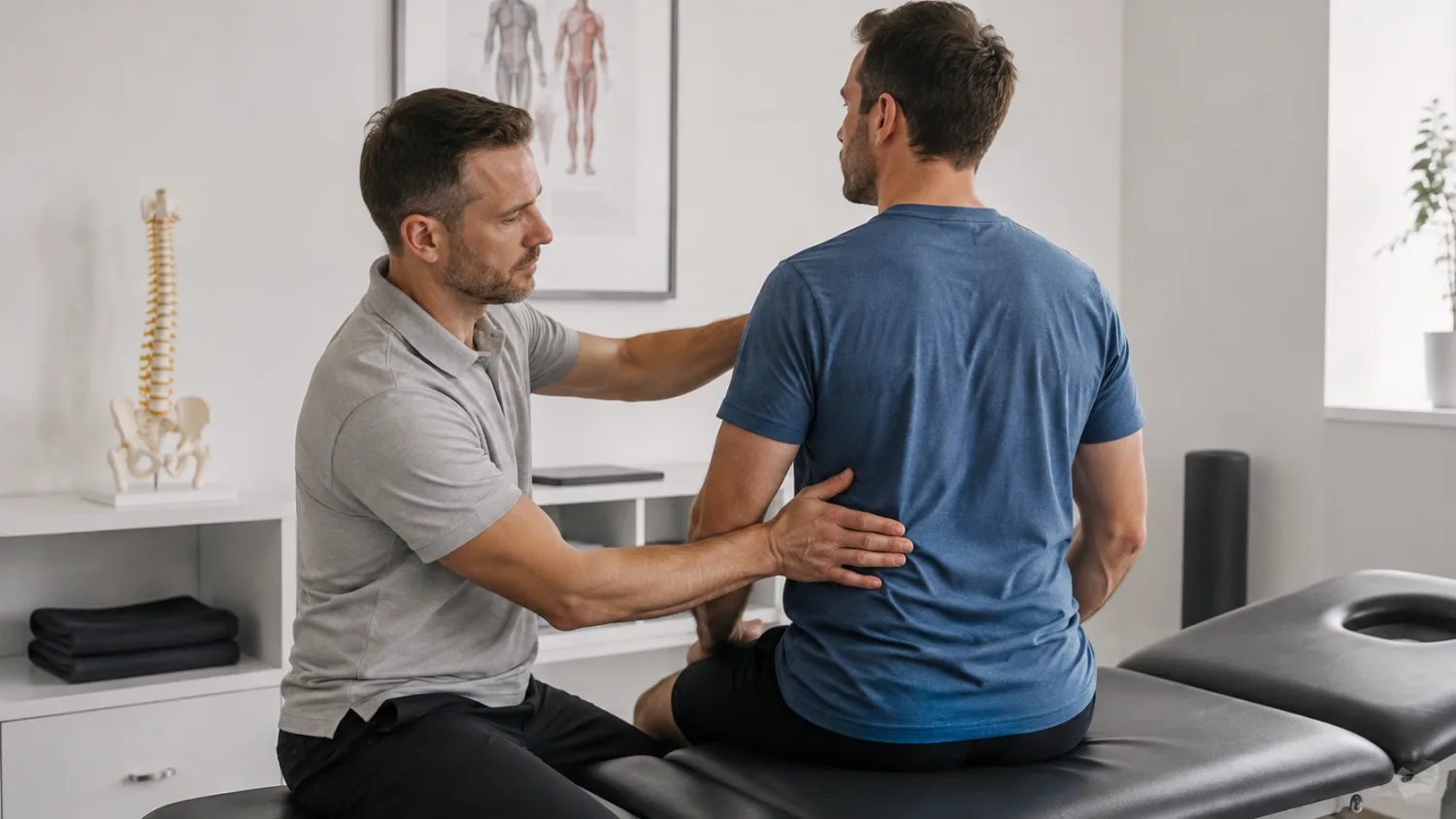
Most people first see their GP, physiotherapist or another musculoskeletal clinician when experiencing persistent back or leg pain.
A clinician will usually ask about:
- where the pain is felt
- whether pain travels into the leg
- numbness, tingling or weakness
- whether coughing or sneezing worsens symptoms
- how symptoms started
- work, sport and lifting habits
- previous back problems
- bladder, bowel or saddle-area symptoms
The examination may check posture, movement, walking pattern, reflexes, leg strength, sensation and nerve tension signs.
In many cases, imaging tests are not needed straight away because symptoms often improve with conservative treatment.
When scans may be used
If symptoms persist, are severe or suggest nerve damage, tests may include:
- MRI scan: usually the most useful scan for detecting disc herniation and nerve compression.
- CT scan: sometimes used if MRI is not suitable or available.
- X-rays: mainly used to rule out other spinal problems rather than show the disc itself.
If imaging is being considered, see what an MRI scan shows, ultrasound vs CT vs MRI and how to understand scan results.
If specialist referral is needed, read how hospital referrals work in the UK.
Treatment for a herniated disc
Most slipped discs improve within several weeks to a few months with conservative treatment. Treatment aims to reduce pain, keep you moving safely and allow the irritated nerve to settle.
Staying active
One of the most important recommendations is to remain active within tolerable limits. Gentle movement helps the spine recover and prevents stiffness.
Helpful activity may include:
- short walks
- gentle mobility exercises
- changing position regularly
- avoiding prolonged bed rest
- gradually returning to normal daily activities
This does not mean pushing through severe pain. It means avoiding complete inactivity and building movement gradually.
Physiotherapy
Physiotherapy is one of the most useful treatments for disc-related back pain and sciatica.
A physiotherapist can design an exercise programme to strengthen the muscles supporting the spine, improve movement and reduce nerve irritation.
Exercises may focus on:
- core stability
- spinal mobility
- hip strength
- flexibility
- nerve mobility where appropriate
- posture and lifting technique
- graded return to work, sport or exercise
Exercises should be tailored. Movements that help one person may aggravate another, especially when nerve pain is strong.
Pain relief medication
Pain relief can help people keep moving and sleep while symptoms settle. Options may include medicines recommended by a pharmacist, GP or clinician.
Anti-inflammatory medicines may help some people, but they are not suitable for everyone, including people with stomach ulcers, kidney disease, heart disease, high blood pressure, asthma triggered by NSAIDs or certain medications.
In some cases, medicines targeting nerve pain may be considered temporarily, but they can have side effects and are not suitable for everyone.
Heat and cold therapy
Ice packs may help reduce pain during the early stages of a flare-up. Heat can help relax tight muscles and relieve discomfort later.
Use heat or cold safely and avoid applying directly to the skin.
Epidural steroid injections
For persistent nerve pain, a specialist may consider epidural steroid injections. These injections deliver anti-inflammatory medicine near the irritated nerve.
They do not fix every disc problem, but they may provide temporary relief for some people and help them engage with rehabilitation.
When surgery is considered
Most slipped discs heal without surgery.
Surgery may be considered if:
- pain persists for several months despite appropriate treatment
- nerve compression causes severe or worsening weakness
- mobility becomes significantly limited
- symptoms remain disabling despite physiotherapy and pain management
- specialist assessment and imaging suggest surgery is likely to help
The most common surgical procedure is microdiscectomy, which removes the part of the disc pressing on the nerve.
Spinal surgery is usually considered only after conservative treatments have failed, unless there are urgent neurological symptoms.
NHS and private treatment options
On the NHS, herniated discs may be managed through GP care, physiotherapy, musculoskeletal services, pain clinics or spinal specialists depending on severity and local pathways.
Urgent symptoms such as bladder or bowel changes, saddle numbness or severe weakness need emergency assessment.
Some people choose private physiotherapy, private MRI scans, pain specialist assessment or private spinal consultation for faster access or more flexible appointments.
Private costs vary depending on consultation fees, imaging, injections, physiotherapy sessions, surgery and follow-up.
For broader comparison, read NHS vs private healthcare in the UK.
Recovery and prevention
Most people recover from a slipped disc within a few weeks to a few months. Even when symptoms improve, maintaining a healthy spine through exercise and good posture remains important.
Living well with a herniated disc
Pain flare-ups can occur occasionally, especially after heavy activity, prolonged sitting or sudden changes in training. They usually improve with gentle movement, activity modification and time.
During recovery, it can help to:
- change position regularly
- take short walks
- avoid heavy lifting during flare-ups
- use pain relief safely if needed
- follow physiotherapy advice
- build activity gradually
- avoid fear of movement where possible
The key to long-term recovery is not simply treating pain, but strengthening and protecting the spine.
Preventing another herniated disc
Not all slipped discs can be prevented, but several habits can help protect spinal health.
Helpful steps include:
- regular exercise
- strengthening the muscles that support the spine
- building core and hip strength
- using good lifting technique
- avoiding long periods of sitting without breaks
- maintaining a healthy weight where possible
- stopping smoking
- building activity gradually
- using correct technique during sport or gym training
Core-strengthening exercises and regular movement are particularly helpful for long-term spinal health.
Relationship between spinal and joint problems
Spinal conditions can affect posture and the way people walk or move. Over time, this can place strain on other joints, particularly the hips and knees.
Chronic joint conditions can also alter movement patterns and contribute to back problems.
Related guides include:
- lower back pain: causes, treatment and recovery
- knee pain causes and treatment
- knee replacement surgery in the UK
- hip replacement surgery in the UK
- arthritis explained
FAQ: herniated disc in the UK
What is a herniated disc?
A herniated disc happens when part of the soft centre of a spinal disc pushes through the tougher outer layer and irritates nearby nerves.
Is a herniated disc the same as a slipped disc?
Yes. “Slipped disc” is the common term, although the disc does not actually slip. It bulges or herniates and may press on nearby nerves.
What are the symptoms of a herniated disc?
Symptoms can include back pain, leg pain, sciatica, tingling, numbness, weakness and pain that worsens with sitting, coughing or sneezing.
Can a herniated disc heal on its own?
Many herniated discs improve with time, movement, physiotherapy and pain management. Most people recover without surgery.
How long does a herniated disc take to recover?
Many people improve within weeks, although some symptoms can take a few months to settle. Recovery depends on severity, nerve irritation and rehabilitation.
Do I need an MRI for a slipped disc?
Not always. MRI is usually considered if symptoms are severe, persistent, linked with weakness or if injections or surgery are being considered.
Is walking good for a herniated disc?
Short, gentle walks are often helpful if tolerated. Prolonged bed rest is usually not recommended, but activity should be built gradually.
What is the best treatment for a herniated disc?
The best treatment depends on symptoms. Many people improve with physiotherapy, staying active, safe pain relief and time. Injections or surgery may be considered for selected cases.
When is a herniated disc an emergency?
Seek emergency help if you develop bladder or bowel problems, saddle numbness, severe or worsening leg weakness, or symptoms after major trauma.
When is surgery needed?
Surgery may be considered if symptoms remain disabling for several months, there is significant nerve compression, or weakness is severe or worsening.
Can a slipped disc cause sciatica?
Yes. A slipped disc in the lower back can irritate nerve roots that form the sciatic nerve, causing pain that travels down the leg.
How can I prevent another slipped disc?
Regular exercise, core strengthening, good lifting technique, healthy weight management, stopping smoking and avoiding long periods of sitting can help reduce recurrence risk.
Final takeaway
A herniated disc can be painful and disruptive, but in most cases it is manageable. With appropriate care, physiotherapy and lifestyle adjustments, many people recover without needing surgery.
Understanding the causes of disc problems and learning how to protect the spine can help prevent future episodes and support long-term spinal health.
If symptoms persist, worsen or include numbness, weakness or bladder or bowel changes, seek professional medical advice promptly.