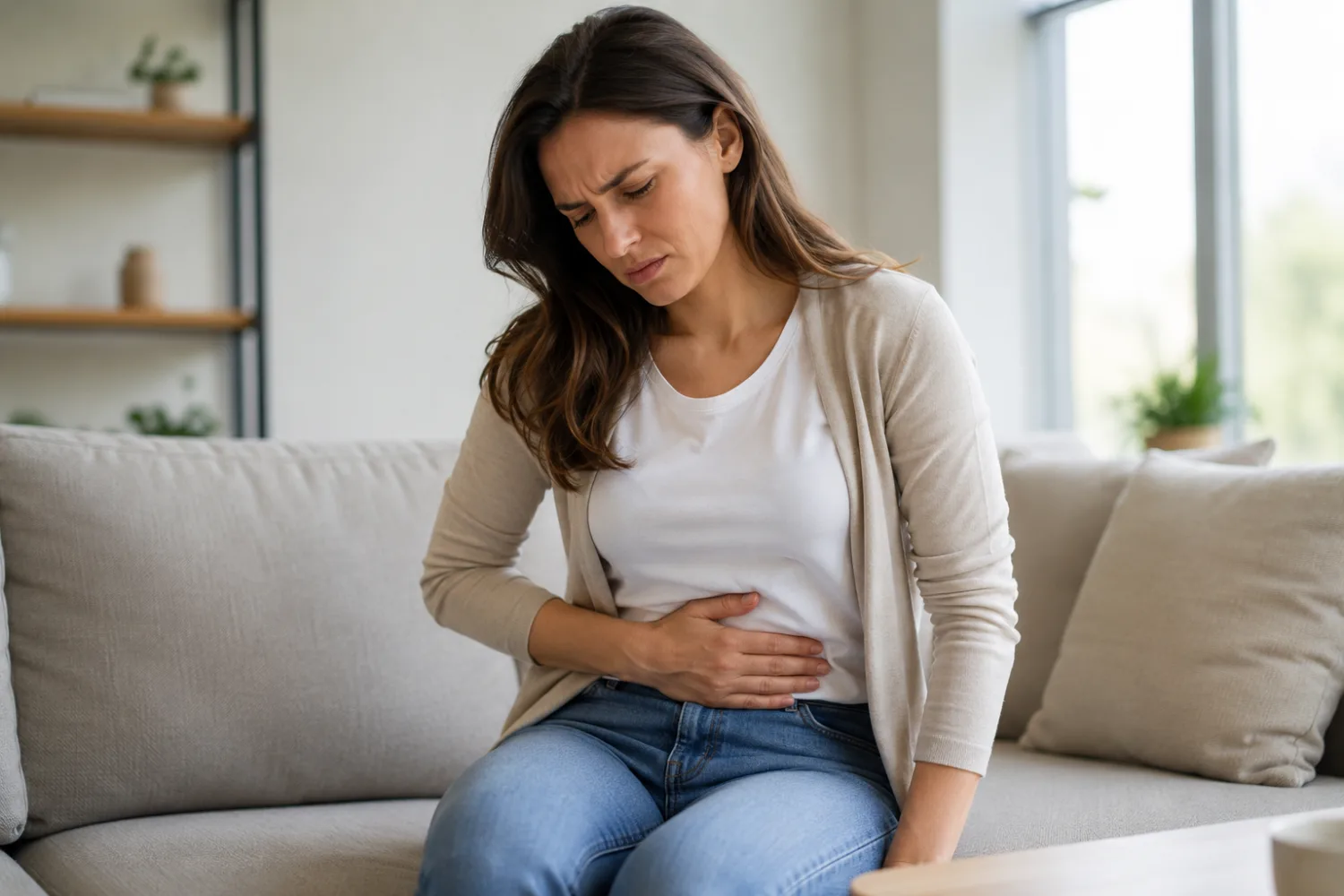
Pain in the lower left side of the abdomen can come from the bowel, urinary tract, reproductive organs, abdominal muscles or surrounding tissues. Common explanations include trapped wind, constipation, irritable bowel syndrome and diverticular disease. However, persistent or severe pain can sometimes indicate diverticulitis, a kidney stone, an ovarian problem, ectopic pregnancy or another condition requiring urgent treatment.
The location of the pain is useful, but it is only one part of the picture. Doctors also consider how suddenly the pain began, whether it is constant or comes in waves, changes in bowel movements, urinary symptoms, fever, vomiting, bleeding and the possibility of pregnancy.
Seek urgent medical advice if lower-left abdominal pain is severe, steadily worsening, associated with fever, repeated vomiting, blood in the stool or urine, difficulty passing urine, a swollen abdomen or an inability to pass stool or wind.
Call 999 or go to A&E immediately if the pain is sudden and extreme, you collapse or feel faint, you are confused or unusually drowsy, you vomit blood, pass black stools, have severe vaginal bleeding, or may be pregnant and develop one-sided pain with shoulder-tip pain, dizziness or fainting.
What is in the lower left side of the abdomen?
The lower left abdomen contains several structures that can produce pain. These include:
- the descending and sigmoid parts of the large bowel;
- loops of small bowel;
- the left ureter, which carries urine from the kidney to the bladder;
- part of the bladder;
- abdominal wall muscles and nerves;
- in people with female reproductive organs, the left ovary and fallopian tube.
Pain felt in this area does not always begin there. Kidney pain can travel down from the back or side. Problems involving the testicle can sometimes be felt in the lower abdomen. Hip, groin and spinal conditions may also produce referred pain.
The precise location can vary between people, and internal organs do not always create sharply defined pain. This is why left-sided pain cannot be diagnosed safely from a diagram or online symptom checker alone.
For a wider overview of pain in every part of the abdomen, see our guide to common causes of abdominal pain by location.
How the pain feels can provide useful clues
People often focus on exactly where the pain is, but its behaviour can be equally informative.
Cramping pain that comes and goes
Cramping or colicky pain commonly occurs when the bowel contracts around gas or stool. It can happen with constipation, diarrhoea, irritable bowel syndrome and gastroenteritis.
Kidney stone pain can also come in intense waves, although it often begins in the side or back and travels towards the lower abdomen, groin or genitals.
Constant, localised pain
Constant tenderness in the lower left abdomen, particularly with fever or a change in bowel habits, can occur with diverticulitis. Persistent localised pain can also come from inflammation involving the bowel, urinary tract or reproductive organs.
Sudden severe pain
Sudden intense pain deserves urgent assessment. Possible causes include a kidney stone, a ruptured ovarian cyst, ovarian torsion, ectopic pregnancy, bowel perforation or interruption of the blood supply to part of the bowel.
Pain related to bowel movements
Pain that improves after passing stool or wind commonly occurs with trapped wind, constipation, irritable bowel syndrome and diverticular disease. Pain accompanied by persistent diarrhoea, blood, mucus, weight loss or waking at night may require investigation for bowel inflammation or another underlying condition.
Pain related to movement
Pain that is clearly triggered by twisting, lifting, coughing or using the abdominal muscles may come from the abdominal wall. However, movement can also worsen pain caused by inflammation inside the abdomen, so this feature is not enough to rule out an internal cause.
Diverticular disease and diverticulitis
Diverticular disease is one of the most familiar causes of lower-left abdominal pain, particularly in middle-aged and older adults.
Diverticula are small pouches that form in weak points in the wall of the large bowel. Having these pouches without symptoms is called diverticulosis. When they are associated with symptoms such as pain, bloating or altered bowel habits, the term diverticular disease is used.
Typical symptoms of diverticular disease can include:
- intermittent lower-left abdominal pain;
- bloating;
- constipation, diarrhoea or alternating between the two;
- pain that becomes worse after eating;
- pain that improves after passing stool or wind;
- occasional rectal bleeding.
When one or more pouches become inflamed, the condition is called diverticulitis. The pain is usually more persistent and severe than with uncomplicated diverticular disease.
Possible symptoms of diverticulitis include:
- constant lower-left abdominal pain and tenderness;
- a raised temperature;
- feeling generally unwell;
- nausea or vomiting;
- constipation or diarrhoea;
- blood or mucus in the stool;
- abdominal bloating.
NICE advises clinicians to consider acute diverticulitis when a person has constant abdominal pain, usually in the left lower quadrant, together with tenderness and features such as fever or a sudden change in bowel habits.
Mild uncomplicated diverticulitis can sometimes be managed at home after medical assessment. More severe cases may need hospital treatment, imaging, intravenous fluids, antibiotics or, less commonly, surgery.
Complications can include an abscess, bowel obstruction, an abnormal connection between organs known as a fistula, or a hole in the bowel. Severe pain, a rigid or increasingly swollen abdomen, vomiting or marked illness requires urgent assessment.
Read more in our detailed guide to diverticular disease and diverticulitis. Further clinical information is available from the NICE guideline on diverticular disease.
Constipation, trapped wind and irritable bowel syndrome
Many episodes of lower-left pain come from bowel contents moving through the final parts of the large intestine.
Constipation
Constipation can cause aching, pressure, cramping and bloating, often most noticeable in the lower abdomen. Other signs include:
- passing stool less often than usual;
- hard, dry or pellet-like stools;
- straining;
- feeling that the bowel has not emptied fully;
- temporary relief after a bowel movement.
Constipation may follow changes in diet, reduced fluid intake, inactivity, illness, travel or medication. Opioid painkillers, iron tablets and some medicines used for mental health, blood pressure and bladder symptoms can contribute.
New constipation should not automatically be treated as harmless when it is accompanied by severe pain, vomiting, blood in the stool, weight loss or an inability to pass wind.
Our guide to constipation in adults explains common treatments and when laxatives may be appropriate.
Trapped wind
Gas can stretch the bowel and cause sharp, cramping or shifting pain. The discomfort may improve after passing wind, opening the bowels or changing position.
Trapped wind can follow large meals, fizzy drinks, eating quickly, chewing gum or a temporary change in digestion. It may also occur alongside constipation, lactose intolerance, coeliac disease and irritable bowel syndrome.
Severe or persistent pain should not be attributed to wind without considering other symptoms.
Irritable bowel syndrome
Irritable bowel syndrome, or IBS, can cause recurrent abdominal pain linked to bowel movements and changes in stool frequency or consistency.
Symptoms often include:
- cramping abdominal pain;
- bloating;
- diarrhoea, constipation or both;
- mucus in the stool;
- a feeling of incomplete emptying;
- symptoms that fluctuate over time.
IBS does not cause bowel inflammation or cancer, but its symptoms overlap with other conditions. A new diagnosis should be made thoughtfully, particularly when there is bleeding, anaemia, unintentional weight loss, fever, a family history of bowel cancer or symptoms beginning later in life.
See our full guide to IBS symptoms, diagnosis and treatment.
Bowel inflammation, infection and more serious bowel causes
Not all bowel-related pain is caused by constipation or IBS. Inflammation, infection and structural problems can also affect the lower left abdomen.
Gastroenteritis and food poisoning
A bowel infection commonly causes cramping, diarrhoea, nausea and vomiting. The pain may be spread across the abdomen or more noticeable on one side.
Most uncomplicated infections improve with rest and fluids. Seek medical advice if there is blood in the stool, severe localised pain, persistent fever, signs of dehydration or an inability to keep fluids down.
Inflammatory bowel disease
Ulcerative colitis and Crohn’s disease can cause abdominal pain, diarrhoea, urgency, blood or mucus in the stool, fatigue and weight loss.
Ulcerative colitis begins in the rectum and affects the large bowel, so discomfort may be felt in the lower abdomen. Crohn’s disease can affect any part of the digestive tract and may cause pain in several different locations.
Symptoms that continue for weeks, repeatedly wake you at night or include bleeding and weight loss should be assessed. Stool tests such as faecal calprotectin may help identify intestinal inflammation.
Colitis
Colitis means inflammation of the large bowel. It can result from infection, inflammatory bowel disease, reduced blood flow, medicines or other causes.
Possible symptoms include abdominal pain, frequent diarrhoea, urgency, fever and blood in the stool. Sudden severe pain with bloody diarrhoea, especially in an older person or someone with cardiovascular disease, requires urgent medical assessment.
Bowel obstruction
A blockage can prevent food, fluid and gas from moving through the bowel. Possible warning signs include:
- cramping or severe abdominal pain;
- a swollen abdomen;
- persistent vomiting;
- inability to pass stool or wind;
- constipation following previous abdominal surgery or a known hernia.
Suspected bowel obstruction requires urgent hospital assessment.
Bowel cancer
Most lower-left abdominal pain is not caused by cancer. Nevertheless, persistent pain may need investigation when it occurs alongside:
- blood in the stool;
- a lasting change in bowel habits;
- unexplained weight loss;
- iron-deficiency anaemia;
- unusual tiredness;
- a persistent abdominal lump or swelling.
Our guide to changes in bowel habits explains which patterns should be discussed with a GP.
Urinary and kidney causes of lower-left pain
Pain from the urinary tract can be felt in the lower abdomen, side, back, pelvis or groin.
Urinary tract infection
A lower urinary tract infection can cause:
- pain or burning when passing urine;
- needing to urinate more often or urgently;
- lower abdominal discomfort;
- cloudy, strong-smelling or blood-stained urine;
- feeling generally unwell.
A kidney infection usually causes more significant illness, fever and pain in the back or side. It may also cause nausea or vomiting.
Seek prompt medical advice for urinary symptoms with fever, shivering, back pain, pregnancy, confusion or worsening illness.
Kidney or ureteric stones
A stone moving from the left kidney towards the bladder can cause severe pain that comes in waves. It often begins in the side or back and travels towards the lower abdomen, groin, testicle or vulva.
Other possible symptoms include:
- nausea and vomiting;
- blood in the urine;
- urinary urgency;
- pain when passing urine;
- restlessness and difficulty finding a comfortable position.
Fever alongside suspected stone pain can indicate an infected, obstructed urinary system and requires urgent treatment.
Bladder conditions
Bladder inflammation, urinary retention and bladder pain syndrome can all produce central or one-sided lower abdominal discomfort.
An inability to pass urine despite a painful urge and a swollen lower abdomen requires urgent assessment.
Causes involving the ovaries, womb and pregnancy
In people with ovaries, lower-left abdominal pain may come from the left ovary, fallopian tube, womb or surrounding pelvic tissues.
Ovulation pain
Some people experience one-sided lower abdominal discomfort around the middle of the menstrual cycle. This is sometimes called mittelschmerz.
It is usually short-lived and may alternate sides from one month to another. Severe, persistent or unusual pain should not automatically be assumed to be ovulation pain.
Period pain
Menstrual cramps are commonly felt across the lower abdomen but may be more noticeable on one side. The pain often begins just before or at the start of a period.
Increasingly painful periods, pain during sex, bowel pain during periods or difficulty becoming pregnant can occur with endometriosis and should be discussed with a GP.
Ovarian cyst
Most ovarian cysts are harmless and cause no symptoms. Larger, leaking or bleeding cysts can cause one-sided pelvic pain, bloating, urinary pressure or changes to periods.
A ruptured cyst may produce sudden pain. Urgent assessment is appropriate if the pain is severe or accompanied by nausea, vomiting, faintness or heavy bleeding.
See our guide to ovarian cyst symptoms, scans and treatment.
Ovarian torsion
Ovarian torsion occurs when an ovary twists around the tissues supporting it, reducing its blood supply. It commonly causes sudden, severe one-sided pelvic or lower abdominal pain, often with nausea or vomiting.
The pain can occasionally come and go if the ovary twists and partially untwists. It is a surgical emergency because prompt treatment may be needed to preserve the ovary.
Endometriosis
Endometriosis can cause recurring pelvic pain, painful periods, pain during sex, discomfort when opening the bowels and sometimes lower abdominal pain outside menstruation.
The symptoms may be one-sided if an ovarian endometrioma or localised area of disease is present.
Read more in our guide to endometriosis symptoms, diagnosis and treatment.
Pelvic inflammatory disease
Pelvic inflammatory disease is an infection affecting the upper female reproductive tract. Possible symptoms include:
- lower abdominal or pelvic pain;
- pain during sex;
- unusual vaginal discharge;
- bleeding between periods or after sex;
- fever or feeling unwell.
Early treatment reduces the risk of complications such as chronic pelvic pain, fertility problems and ectopic pregnancy.
Ectopic pregnancy
An ectopic pregnancy develops outside the womb, most commonly in a fallopian tube. Symptoms may occur between around 4 and 12 weeks of pregnancy and can include:
- one-sided lower abdominal pain;
- a missed or late period;
- vaginal bleeding or brown watery discharge;
- pain when passing stool or urine;
- shoulder-tip pain;
- dizziness, faintness or collapse.
Contact NHS 111, an early pregnancy unit or urgent medical services if pregnancy is possible and you develop one-sided pain, even without a positive pregnancy test. Severe pain, shoulder-tip pain, heavy bleeding, fainting or collapse may indicate internal bleeding and requires emergency help.
The NHS ectopic pregnancy guide explains the warning signs in more detail.
Muscle, groin and nerve-related pain
Pain in the lower-left abdomen does not always come from an internal organ.
Abdominal muscle strain
A muscle strain can follow lifting, coughing, exercise or a sudden twisting movement. The pain is often:
- reproduced by movement or tightening the abdominal muscles;
- tender close to the surface;
- better with rest;
- unaccompanied by fever, vomiting or bowel changes.
Even so, internal abdominal pain can also worsen with movement. Seek advice if the diagnosis is uncertain or the pain continues.
Hernia
A groin or abdominal-wall hernia may cause aching, pressure or a noticeable lump. The lump may become more prominent while standing, coughing or lifting.
A hernia becomes an emergency if it is very painful, firm, discoloured or cannot be pushed back, particularly when accompanied by vomiting or an inability to pass stool or wind.
Nerve pain and shingles
Irritated nerves from the back can sometimes cause burning, tingling or shooting discomfort around the lower abdomen.
Shingles may begin with pain or skin sensitivity on one side before a blistering rash appears. Antiviral treatment works best when started promptly, so seek medical advice if shingles is suspected.
Hip and groin conditions
Hip joint, tendon and groin problems can occasionally be perceived as lower abdominal pain. Pain is usually related to walking, hip movement or specific activity rather than eating, bowel movements or urination.
When should lower-left abdominal pain be checked?
The seriousness of abdominal pain cannot be judged by location alone. Mild pain may still need assessment if it persists, while severe pain may require immediate treatment.
Contact a GP or NHS 111 urgently if:
- the pain is steadily worsening or does not settle;
- you have a fever or shivering;
- you are repeatedly vomiting;
- there is blood in your stool or urine;
- you have new persistent diarrhoea or constipation;
- your abdomen is becoming swollen or increasingly tender;
- you cannot pass urine;
- you have urinary symptoms with back pain or fever;
- you may be pregnant and have one-sided pain;
- you have sudden pelvic pain with nausea or vomiting;
- the pain follows recent abdominal surgery;
- you are older, immunosuppressed or have significant existing health conditions.
Call 999 or go to A&E if:
- the pain is sudden, severe or rapidly worsening;
- you collapse, faint or become confused;
- you have severe difficulty breathing;
- your abdomen is rigid or extremely painful to touch;
- you vomit blood or pass black, tar-like stools;
- you cannot pass stool or wind and are vomiting;
- you have heavy vaginal bleeding with severe pain;
- pregnancy is possible and you have severe one-sided pain, shoulder-tip pain, dizziness or fainting.
Appendicitis usually causes pain on the right, but anatomy and symptom patterns can vary. Pain that begins centrally and becomes increasingly severe should still be assessed. Our guide to appendicitis symptoms and emergency warning signs explains the usual and less typical presentations.
How doctors investigate lower-left abdominal pain
The tests needed depend on age, symptoms, medical history and the suspected cause.
A clinician may ask about:
- when the pain began and whether it was sudden or gradual;
- exactly where it is felt and whether it travels elsewhere;
- bowel frequency, stool consistency and bleeding;
- urinary symptoms;
- fever, nausea or vomiting;
- periods, vaginal symptoms and pregnancy possibility;
- previous bowel, kidney or gynaecological conditions;
- medicines, recent travel and abdominal surgery.
The examination may include checking temperature, pulse and blood pressure, feeling the abdomen for tenderness or swelling, and looking for a hernia. A pelvic, rectal or testicular examination may be suggested when relevant.
Urine and pregnancy tests
A urine test can help identify infection or blood associated with a kidney stone. A pregnancy test is important whenever pregnancy is possible because ectopic pregnancy can initially resemble bowel or urinary pain.
Blood tests
Blood tests may look for:
- infection or inflammation;
- anaemia;
- kidney function;
- electrolyte disturbance;
- liver or pancreatic abnormalities when the location is uncertain.
Normal blood tests do not rule out every cause, especially early in an illness.
Ultrasound
Ultrasound may be used to assess the ovaries, womb, urinary tract and other pelvic structures. It does not use ionising radiation and is often preferred during pregnancy.
CT scan
A CT scan provides detailed images of the bowel, kidneys and surrounding tissues. It may be used when diverticulitis, bowel obstruction, a kidney stone, abscess or another acute abdominal condition is suspected.
Stool tests and bowel investigations
Persistent diarrhoea, bleeding or changes in bowel habits may lead to stool testing. Depending on the findings, further investigation could include a FIT test, faecal calprotectin, colonoscopy or another form of bowel imaging.
Our guides to FIT test results and faecal calprotectin results explain how these tests are used.
What can you do while waiting for assessment?
Home care is reasonable only when the pain is mild, there are no warning signs and you are otherwise well.
You may find it helpful to:
- rest and avoid strenuous lifting;
- drink enough water;
- eat light meals if you feel able;
- note whether the pain relates to food, bowel movements, urination or periods;
- check your temperature;
- record any blood, diarrhoea, vomiting or urinary changes;
- use simple pain relief that is normally safe for you.
Paracetamol is often the simplest initial painkiller for undiagnosed abdominal discomfort when taken according to the instructions. Anti-inflammatory medicines such as ibuprofen may not be appropriate for people with kidney disease, stomach ulcers, pregnancy, blood-thinning treatment or certain other conditions.
Avoid taking laxatives for severe or unexplained pain, particularly if the abdomen is swollen or you cannot pass wind. Do not start leftover antibiotics. Antibiotics are not needed for every episode of diverticulitis and can make some other conditions harder to assess.
Do not repeatedly press the painful area or rely on online self-examination tests. Improvement after passing wind or taking pain relief can be reassuring, but it does not guarantee that the underlying cause is harmless.
Frequently asked questions about lower-left abdominal pain
What is the most common cause of pain in the lower-left abdomen?
Common causes include constipation, trapped wind, irritable bowel syndrome and diverticular disease. The likely explanation depends on age, bowel habits, duration and associated symptoms.
Does lower-left pain always mean diverticulitis?
No. Diverticulitis is one possibility, especially when pain is constant and accompanied by fever or bowel changes. Many other bowel, urinary, muscular and gynaecological conditions can cause pain in the same place.
What does diverticulitis pain feel like?
It commonly causes persistent tenderness or aching in the lower-left abdomen. The pain may become increasingly severe and can occur with fever, nausea, constipation, diarrhoea or feeling generally unwell.
Can trapped wind cause severe pain on the left?
Gas can cause sharp or intense cramping, especially where the bowel bends. However, severe, persistent or localised pain should not automatically be blamed on wind, particularly when there is fever, vomiting, bleeding or abdominal swelling.
Why does the pain improve after opening my bowels?
Relief after passing stool or wind is common with constipation, IBS, trapped wind and diverticular disease. It is less typical of acute inflammation, but symptoms can overlap.
Can constipation cause pain only on the left side?
Yes. Stool often accumulates in the descending or sigmoid colon on the left side. Constipation may therefore create localised pressure, bloating or cramping there.
Can a kidney stone cause lower-left abdominal pain?
Yes. A stone moving through the left ureter can cause pain in the side, back, lower abdomen, groin or genitals. The pain is often severe and comes in waves.
Can a urine infection cause pain on the lower left?
A bladder infection may cause central or one-sided lower abdominal discomfort along with burning, urgency and frequent urination. Fever or pain in the back or side may indicate a kidney infection.
Can ovulation cause lower-left pain?
Some people develop brief one-sided pain around ovulation. Severe, prolonged or recurrent pain needs assessment because ovarian cysts, endometriosis and other conditions can feel similar.
When should I worry about an ovarian cyst?
Seek urgent advice for sudden severe pelvic pain, especially if accompanied by nausea, vomiting, dizziness or heavy bleeding. These symptoms may indicate rupture, bleeding or ovarian torsion.
Could left-sided pain be an ectopic pregnancy?
Yes. Ectopic pregnancy can cause pain low down on either side. Pregnancy may be possible even if contraception was used or there has not yet been a positive test. One-sided pain with bleeding, shoulder-tip pain, dizziness or fainting requires urgent help.
Can appendicitis cause left-sided pain?
Appendicitis usually causes lower-right pain, but atypical anatomy and unusual presentations are possible. A worsening abdominal illness should not be dismissed solely because the pain is on the left.
Does lower-left pain mean bowel cancer?
Most cases do not. Persistent pain should be discussed with a GP when accompanied by rectal bleeding, a lasting change in bowel habits, anaemia, fatigue or unexplained weight loss.
How long should I wait before contacting a doctor?
Seek advice promptly if pain is worsening, persistent or associated with other symptoms. Severe pain, bleeding, fever, repeated vomiting, faintness or possible pregnancy should not be watched at home.
Can fatty liver disease cause lower-left abdominal pain?
Fatty liver disease does not usually cause lower-left pain. When it causes discomfort, it is more likely to be felt beneath the ribs on the right because that is where most of the liver lies. Read more in our guide to fatty liver disease, MASLD and NAFLD.