Norovirus is one of the most common causes of vomiting and diarrhoea in the UK. It is often called the “winter vomiting bug”, but that name can be misleading because you can catch norovirus at any time of year.
For most healthy adults and children, norovirus is unpleasant but short-lived. Symptoms often come on suddenly, can feel intense for a day or two, and usually improve within a few days. The main risk is dehydration, especially in babies, young children, older adults, pregnant people and people with long-term health conditions.
Norovirus spreads very easily. It can move quickly through households, schools, nurseries, hospitals, care homes, cruise ships, restaurants and shared accommodation. It only takes a small amount of virus to make someone ill, and alcohol hand gels do not work well against it. Soap, water and proper cleaning matter.
This guide explains what norovirus is, how it works, how people catch it, symptoms to look for, what to do at home, when to seek medical help, and how to reduce the spread.
Quick answer: Norovirus is a highly contagious stomach bug that causes sudden vomiting and diarrhoea. Most people recover in 2 to 3 days, but you should stay home until at least 48 hours after symptoms stop, drink plenty of fluids, and avoid visiting hospitals or care homes while infectious.
What is norovirus?
Norovirus is a virus that infects the stomach and intestines, causing gastroenteritis. Gastroenteritis means inflammation of the gut, usually causing diarrhoea, vomiting, stomach cramps and feeling unwell.
Norovirus is not the same as flu, even though people sometimes call it “stomach flu”. Flu mainly affects the respiratory system, causing symptoms such as fever, cough, sore throat, body aches and tiredness. Norovirus mainly affects the digestive system.
The NHS describes norovirus as a stomach bug that causes vomiting and diarrhoea. The main symptoms usually start suddenly and include feeling sick, vomiting and diarrhoea. You may also have a high temperature, headache, tummy pain and body aches. See the NHS guide to norovirus.
Why is norovirus so contagious?
Norovirus spreads so easily because people can shed large amounts of virus in vomit and stool. The virus can survive on surfaces, spread through tiny particles after vomiting, contaminate food or water, and pass from person to person through close contact.
You can catch norovirus by:
- having close contact with someone who is infected
- touching contaminated surfaces and then touching your mouth
- eating food handled by someone who is infected
- eating contaminated food, especially raw or undercooked shellfish
- drinking contaminated water
- cleaning up vomit or diarrhoea without good hygiene precautions
UKHSA explains that norovirus symptoms usually develop after an incubation period of 12 to 48 hours, which is the time between catching the virus and becoming ill. UKHSA also highlights that symptoms can include sudden sickness, projectile vomiting, diarrhoea, stomach pain, high temperature and aching limbs. See UKHSA’s advice on what to do if you catch norovirus.
How norovirus works in the body
After norovirus enters the body, it reaches the digestive system and infects cells in the small intestine. This disrupts normal gut function, leading to fluid loss, diarrhoea, nausea, vomiting and cramps.
The illness often starts suddenly because the virus can trigger strong gut and nervous system responses. Many people feel fine one moment, then quickly develop nausea, vomiting or diarrhoea.
Your immune system usually clears the infection within a few days. However, you can still spread the virus after you start feeling better, which is why public health guidance advises staying away from work, school, nursery and vulnerable settings until at least 48 hours after symptoms have stopped.
Norovirus symptoms
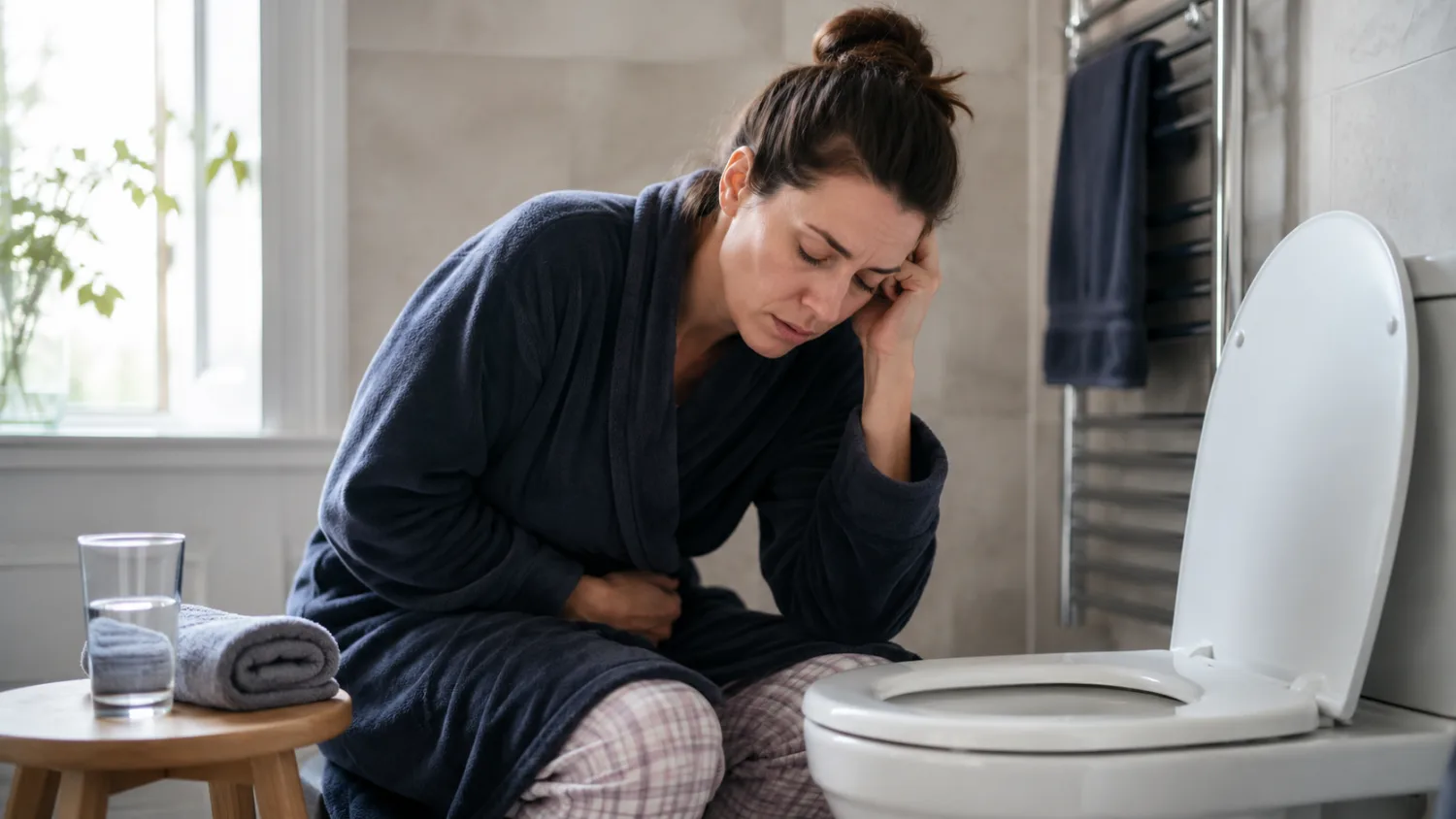
Norovirus symptoms often come on quickly and can feel dramatic. Vomiting may be sudden and forceful. Diarrhoea is usually watery. Some people have mainly vomiting, others mainly diarrhoea, and many have both.
Common symptoms include:
- sudden nausea
- vomiting
- watery diarrhoea
- stomach cramps or tummy pain
- feeling weak or exhausted
- headache
- body aches
- high temperature or chills
- loss of appetite
Symptoms usually last around 1 to 3 days. Some people feel washed out for a few more days afterwards, especially if they have not been drinking enough or have lost a lot of fluid.
How quickly do symptoms start?
Norovirus symptoms usually begin 12 to 48 hours after exposure. This means you may catch it from someone and not feel ill until the next day or the day after.
This delay is one reason outbreaks spread quickly. Someone may prepare food, go to work, attend school or visit relatives before realising they are infected.
How long does norovirus last?
Most people recover within 2 to 3 days. The vomiting often improves first, while diarrhoea and tiredness may continue slightly longer.
You should stay home and avoid work, school, nursery or visiting vulnerable people until 48 hours after your symptoms have stopped. UKHSA has repeatedly advised that people should avoid hospitals and care homes until at least 48 hours after symptoms clear, because norovirus can be dangerous for vulnerable people and can cause outbreaks in healthcare settings.
NHS Inform also advises staying at home until you are feeling better and drinking plenty of fluids to avoid dehydration. See NHS Inform’s guide to norovirus.
Is norovirus dangerous?
Norovirus is usually not dangerous for healthy adults and older children, but it can still make you feel very unwell. The main danger is dehydration, which can happen when vomiting and diarrhoea cause the body to lose too much fluid and salts.
Norovirus can be more serious for:
- babies
- young children
- older adults
- pregnant people
- people with kidney disease
- people with diabetes
- people with heart conditions
- people with weakened immune systems
- people living in care homes
Most people do not need medical treatment, but some people may need medical advice or hospital care if dehydration becomes severe or if symptoms suggest something other than norovirus.
If fluid loss is a concern, our guide to dehydration symptoms in adults and children explains what to look for.
Signs of dehydration
Dehydration can develop quickly if vomiting and diarrhoea are frequent. It is especially important to watch babies, children and older adults, who may not be able to explain how they feel.
Signs of dehydration in adults can include:
- feeling very thirsty
- dry mouth, lips or tongue
- dark yellow urine
- peeing less than usual
- dizziness or lightheadedness
- headache
- weakness or exhaustion
- confusion or drowsiness
Signs of dehydration in babies and children can include:
- fewer wet nappies than usual
- dry mouth
- crying with few or no tears
- sunken eyes
- unusual sleepiness or irritability
- cold hands or feet
- fast breathing or fast heartbeat
- poor feeding
Seek urgent medical advice if you are worried about dehydration, especially in a baby, young child, older adult or vulnerable person.
How to treat norovirus at home
There is no specific medicine that cures norovirus. Antibiotics do not work because norovirus is caused by a virus, not bacteria. Treatment is about rest, fluids and preventing spread.
Most people can manage norovirus at home by:
- drinking plenty of fluids
- taking small sips often if vomiting
- using oral rehydration solution if needed
- resting
- eating plain food when able
- avoiding alcohol
- staying home until 48 hours after symptoms stop
The NHS advice for diarrhoea and vomiting is that the most important thing is to drink lots of fluids to avoid dehydration. See the NHS guide to diarrhoea and vomiting.
What should you drink with norovirus?
Water is often fine for mild illness. If vomiting or diarrhoea is frequent, oral rehydration solution from a pharmacy may be helpful because it replaces salts as well as water.
Try small, frequent sips rather than large drinks. If you vomit, wait a few minutes and start again with small sips. Children may tolerate teaspoons or small amounts more often.
Suitable options may include:
- water
- oral rehydration solution
- diluted squash
- clear soups or broths
- breast milk or formula for babies, as usual
Avoid alcohol. Be careful with large amounts of fruit juice or fizzy drinks, especially in children, as they may worsen diarrhoea.
What should you eat with norovirus?
You do not need to force food if you feel very sick. Drinking is more important at first. When you feel able to eat, choose simple foods.
Foods that may be easier to tolerate include:
- toast
- crackers
- rice
- bananas
- soup
- plain pasta
- boiled potatoes
Return to your normal diet gradually. Children should not be kept without food for long once they want to eat. Babies should continue breastfeeding or formula feeding unless a healthcare professional advises otherwise.
Should you take anti-diarrhoea medicine?
Some adults may consider anti-diarrhoea medicine for short-term relief, but it is not suitable for everyone. It is generally not recommended for young children unless advised by a healthcare professional.
Do not use anti-diarrhoea medicine if you have blood in your stool, a high fever, severe abdominal pain, or suspected bacterial food poisoning unless a clinician advises it.
A pharmacist can advise what is suitable for your age, symptoms and medical history. Our guide to when to see a pharmacist instead of a GP may help you decide where to start.
When should you contact NHS 111 or a GP?
Norovirus usually settles without medical care, but you should seek advice if symptoms are severe, prolonged or worrying.
Contact NHS 111 or your GP if:
- you cannot keep fluids down
- you have signs of dehydration
- diarrhoea lasts more than 7 days
- vomiting lasts more than 2 days
- there is blood in your stool
- you have severe or worsening tummy pain
- you have a high temperature that does not settle
- you are pregnant and concerned
- a baby or young child is affected and you are worried
- you are older, frail or have a long-term condition
- you have recently travelled abroad
- you may have food poisoning from a shared meal or restaurant
You can use NHS 111 online if you are in England, or call 111 if you need advice.
When is vomiting or diarrhoea an emergency?
Call 999 or seek emergency help if someone:
- is confused, very drowsy or difficult to wake
- has blue or grey lips
- has severe breathing problems
- has signs of severe dehydration
- has a seizure
- has severe abdominal pain or a swollen abdomen
- is vomiting blood or has black, tarry stool
- has a stiff neck, rash that does not fade under pressure, or severe headache
- has collapsed or is fainting repeatedly
Trust your judgement. If a baby, child, older person or vulnerable adult looks seriously unwell, seek urgent help.
How long are you infectious?
You are most infectious while you have symptoms and for at least 48 hours after symptoms stop. This is why the 48-hour rule matters.
Stay away from work, school, nursery and social events until 48 hours after vomiting and diarrhoea have stopped. Avoid visiting hospitals and care homes during this time, even if you feel better.
If you work in healthcare, social care, childcare or food preparation, follow your workplace policy. You may need to be excluded from work until at least 48 hours after symptoms stop.
Why alcohol hand gel is not enough
Alcohol hand gels are useful for many infections, but they are not reliable against norovirus. UKHSA has warned that alcohol gels do not kill norovirus effectively. Washing hands with soap and warm water is much better.
Wash hands carefully:
- after using the toilet
- after changing nappies
- after cleaning vomit or diarrhoea
- before preparing food
- before eating
- after helping someone who is unwell
Handwashing should be thorough, including fingertips, thumbs, between fingers and wrists.
Cleaning after norovirus
Norovirus can survive on surfaces, so cleaning matters. Focus on toilets, bathrooms, taps, door handles, light switches, kitchen surfaces, remote controls, phones and other frequently touched items.
UKHSA advises washing hands frequently with warm soapy water and using bleach-based products to clean surfaces where possible. Bleach-based cleaners are more effective against norovirus than many ordinary sprays.
Cleaning tips:
- wear disposable gloves if possible
- clean up vomit or diarrhoea promptly
- use paper towels or disposable cloths where practical
- use bleach-based disinfectant on suitable hard surfaces
- wash contaminated clothing and bedding separately if possible
- use the hottest wash suitable for the fabric
- do not shake dirty laundry, as this may spread particles
- wash hands after cleaning
Keep sick people away from food preparation areas where possible.
Can you catch norovirus more than once?
Yes. You can catch norovirus more than once. There are different strains, and immunity after infection does not last forever. This is one reason outbreaks can happen repeatedly in the same season.
Having norovirus once does not mean you are protected for the rest of the year.
Norovirus in children
Children often catch norovirus because they have close contact in nurseries, schools and households. They may spread it easily because hand hygiene is harder and symptoms can come on suddenly.
Most children recover at home with fluids and rest. The main risk is dehydration.
Seek medical advice if your child:
- has fewer wet nappies or is peeing much less than usual
- cannot keep fluids down
- is unusually sleepy, floppy or irritable
- has blood in stool
- has severe tummy pain
- has symptoms lasting longer than expected
- has a high temperature and looks unwell
- is under 12 months and you are worried
Children should stay off school or nursery until 48 hours after the last episode of vomiting or diarrhoea.
Norovirus in older adults and care homes
Norovirus can be especially disruptive and dangerous in care homes because residents may be older, frail or have long-term conditions. It can spread rapidly among residents, staff and visitors.
People with symptoms should not visit care homes until at least 48 hours after symptoms have stopped. Staff should follow workplace infection control policies. Care homes may restrict visiting during outbreaks to protect residents.
If you care for someone older or frail at home, focus on hydration, handwashing, separate towels, cleaning high-touch surfaces and seeking advice early if they become weak, confused, dehydrated or unable to drink.
For related social care topics, you may find our guides to home care and care homes in the UK useful.
Norovirus and food poisoning: what is the difference?
Norovirus can be a cause of food poisoning if food is contaminated by an infected person or contaminated water. But not all food poisoning is norovirus. Bacteria such as Salmonella, Campylobacter or E. coli can also cause diarrhoea and vomiting.
Clues that food poisoning may be involved include several people becoming ill after eating the same meal, symptoms linked to a restaurant, takeaway or event, or diarrhoea with blood, severe cramps or high fever.
If you suspect food poisoning from a business or shared event, seek medical advice and consider reporting it to your local council environmental health team.
Norovirus and food preparation
If you have norovirus symptoms, do not prepare food for other people until at least 48 hours after symptoms stop. This is especially important if you cook for children, older adults, care home residents, hospital patients or anyone with a weakened immune system.
Food handlers should follow workplace rules and not return to work too early. Even if you feel better, the virus can still spread.
Can norovirus spread through the air?
Norovirus is not an airborne virus in the same way as measles or COVID. However, vomiting can create tiny droplets or particles that contaminate nearby surfaces and can be swallowed if they reach hands, food or the mouth.
This is why cleaning vomit carefully, washing hands and disinfecting surfaces are important. If someone vomits in a shared room, move others away if possible and clean the area promptly and safely.
Can norovirus be prevented?
You cannot prevent every case, but you can reduce the risk.
Prevention steps include:
- wash hands with soap and water
- do not rely on alcohol gel alone
- stay home when ill
- avoid preparing food for others while ill
- wait 48 hours after symptoms stop before returning to work, school or nursery
- avoid hospitals and care homes until 48 hours after symptoms stop
- clean toilets, taps, handles and surfaces with suitable disinfectant
- wash contaminated laundry on a hot wash where possible
- cook shellfish thoroughly
- keep sick people’s towels separate
There is no routine norovirus vaccine available for the public in the UK.
Norovirus versus rotavirus
Norovirus and rotavirus can both cause vomiting and diarrhoea. Norovirus is common in adults and children. Rotavirus has historically been a major cause of severe diarrhoea in young children, but babies in the UK are offered rotavirus vaccination as part of the NHS childhood immunisation schedule.
In practice, most people do not need to know exactly which virus caused a short stomach bug unless symptoms are severe, prolonged, part of an outbreak, or linked to healthcare settings.
Norovirus versus COVID, flu or food poisoning
Norovirus mainly causes vomiting and diarrhoea. Flu mainly causes fever, cough, body aches and respiratory symptoms. COVID can cause a range of symptoms and sometimes digestive symptoms, but vomiting and diarrhoea are not usually the only features.
Food poisoning can look very similar to norovirus because norovirus can be foodborne. Bloody diarrhoea, severe abdominal pain, high fever, symptoms after travel, or symptoms after a shared meal may need medical advice.
If you are unsure, focus on safety: stay home, drink fluids, avoid spreading illness, and seek help if symptoms are severe or worrying.
What not to do if you have norovirus
Some common mistakes can spread norovirus or make dehydration more likely.
- Do not go to work, school or nursery while symptomatic.
- Do not return before 48 hours after symptoms stop.
- Do not visit hospitals or care homes while infectious.
- Do not prepare food for others while ill.
- Do not rely on alcohol hand gel instead of soap and water.
- Do not stop drinking because you keep vomiting; take small sips often.
- Do not give young children anti-diarrhoea medicine unless advised.
- Do not ignore dehydration in babies, children or older adults.
Can a pharmacist help with norovirus?
A pharmacist cannot cure norovirus, but they can help with symptom relief and dehydration prevention. They may advise oral rehydration solution, suitable medicines for adults, and when to seek medical help.
Ask a pharmacist before using medicines if you are pregnant, breastfeeding, treating a child, older, frail, taking regular medicines or have long-term conditions.
When can you return to normal activities?
You can usually start returning to normal routines once you feel well and have been free from vomiting and diarrhoea for at least 48 hours.
Do not rush back too early. Returning before the 48-hour period increases the risk of infecting others. This is especially important for healthcare, care home, childcare and food preparation settings.
After the illness, rebuild gradually. Start with simple foods, keep drinking, and rest if you still feel weak.
Final thoughts
Norovirus is a common, highly contagious stomach bug that causes sudden vomiting and diarrhoea. It usually improves within a few days, but it can spread quickly and can be serious for babies, older adults and vulnerable people because of dehydration risk.
The most important steps are simple: stay home, drink fluids, wash hands with soap and water, clean surfaces properly, avoid preparing food for others, and wait at least 48 hours after symptoms stop before returning to work, school, nursery or visiting hospitals and care homes.
For official advice, see the NHS guide to norovirus, NHS advice on diarrhoea and vomiting, and UKHSA guidance on stopping the spread of norovirus.
This article is for general information only and should not replace medical advice. If you are worried about symptoms, dehydration, a baby, child, older adult or vulnerable person, contact NHS 111, your GP or call 999 in an emergency.
Frequently asked questions
What is norovirus?
Norovirus is a highly contagious virus that causes gastroenteritis, meaning inflammation of the stomach and intestines. It usually causes sudden vomiting, diarrhoea, nausea and stomach cramps.
Why is norovirus called the winter vomiting bug?
Norovirus is often called the winter vomiting bug because outbreaks are common in winter, especially in schools, hospitals and care homes. However, you can catch norovirus at any time of year.
How do you catch norovirus?
You can catch norovirus from close contact with an infected person, touching contaminated surfaces, eating contaminated food, drinking contaminated water, or cleaning up vomit or diarrhoea without good hygiene precautions.
How long does norovirus take to start after exposure?
Symptoms usually start 12 to 48 hours after exposure. This is called the incubation period.
How long does norovirus last?
Most people recover within 2 to 3 days. Some people feel tired or weak for a few more days afterwards, especially if they became dehydrated.
How long are you contagious with norovirus?
You are most contagious while you have vomiting or diarrhoea and for at least 48 hours after symptoms stop. Stay home and avoid work, school, nursery, hospitals and care homes during this time.
Does hand sanitiser kill norovirus?
Alcohol hand gel is not reliable against norovirus. Wash hands thoroughly with soap and warm water, especially after using the toilet, changing nappies, cleaning up vomit or diarrhoea, and before preparing food.
Can antibiotics treat norovirus?
No. Antibiotics do not work against norovirus because it is caused by a virus. Treatment is mainly fluids, rest and preventing dehydration.
What should I drink if I have norovirus?
Drink small amounts often. Water is usually fine for mild illness, but oral rehydration solution from a pharmacy can help replace salts if vomiting or diarrhoea is frequent. Babies should continue breast milk or formula unless a healthcare professional advises otherwise.
When should I seek medical help for norovirus?
Seek advice if you cannot keep fluids down, have signs of dehydration, vomiting lasts more than 2 days, diarrhoea lasts more than 7 days, there is blood in your stool, you have severe tummy pain, or a baby, child, older adult or vulnerable person is affected and you are worried.
Can you get norovirus twice?
Yes. You can catch norovirus more than once because there are different strains and immunity does not last forever.
Can norovirus spread through food?
Yes. Food can become contaminated if handled by someone with norovirus or through contaminated water. Raw or undercooked shellfish can also be a source. Do not prepare food for others while ill or for 48 hours after symptoms stop.
Should children stay off school with norovirus?
Yes. Children should stay off school or nursery while they have vomiting or diarrhoea and should not return until 48 hours after symptoms have stopped.
What cleaning products work against norovirus?
Bleach-based disinfectants are recommended for suitable hard surfaces. Ordinary cleaning sprays may not be enough. Always follow product instructions and avoid mixing cleaning products.
Is norovirus dangerous in pregnancy?
Norovirus is usually not dangerous to the pregnancy itself, but dehydration can be a concern. Pregnant people should drink fluids and seek medical advice if they cannot keep fluids down, feel faint, have reduced urination, severe symptoms or are worried.