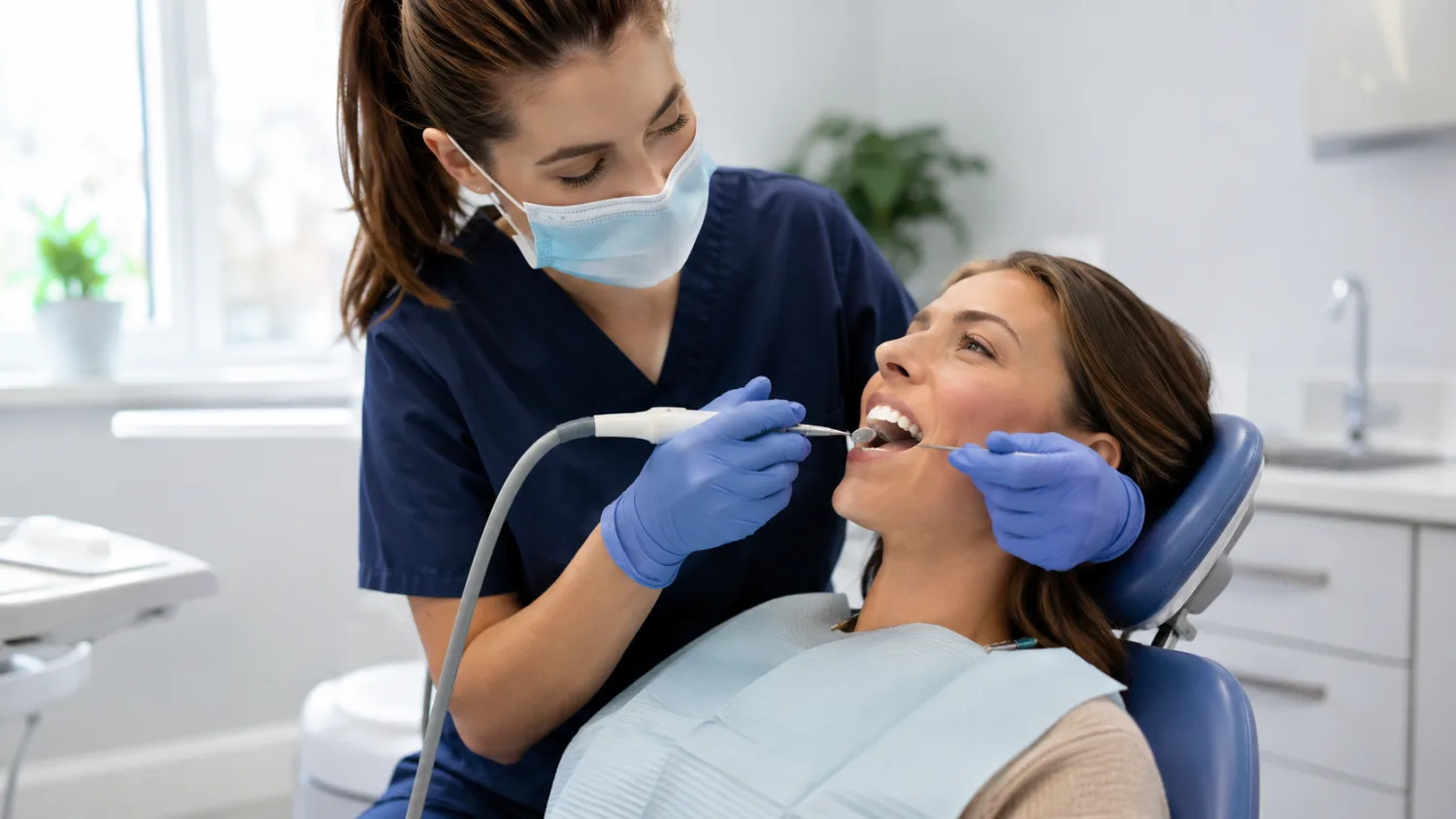
A dental hygienist appointment is one of the most useful parts of preventive dental care. It is not just a “clean” or a cosmetic polish. A hygienist can help remove plaque and tartar, support gum health, explain how to clean more effectively, and help reduce the risk of bleeding gums, bad breath, tooth decay and gum disease.
Many people book a hygienist because their teeth feel stained or rough. Others are referred because their gums bleed, they have gum disease, or they need ongoing periodontal maintenance. Some people are unsure whether hygienist treatment is available on the NHS, how much it costs privately, or whether it is different from a scale and polish at a dentist.
This guide explains what dental hygienists do, what happens during an appointment, how NHS and private hygienist care differ, typical UK costs, when you may need deeper gum treatment, how often to go, and what to expect afterwards.
If you are comparing dental services, you may also find our guides to bleeding gums and gum disease, what makes a good dental practice, how to choose a dentist in the UK and private dentist prices in the UK useful.
Quick summary
- A dental hygienist helps prevent and treat gum disease and supports good oral hygiene.
- Appointments may include scaling, polishing, gum assessment, oral hygiene advice, interdental cleaning advice and stain removal.
- NHS scaling is available if clinically needed; if it is not clinically necessary, you may need to pay privately.
- In England, NHS Band 1 is £27.90 from 1 April 2026 and may include a scale and polish if clinically needed. More complex gum treatment may fall under Band 2 at £76.60.
- Private hygienist appointments commonly cost around £60 to £150+, depending on appointment length, clinic and treatment.
- A routine scale and polish is different from deeper periodontal treatment for gum disease.
- Bleeding gums are not a reason to stop cleaning; they are often a sign that gums need better plaque control and professional advice.
- Some people need hygienist care every 3 months; others may only need it every 6 to 12 months, depending on gum health and risk.
What does a dental hygienist do?
A dental hygienist is a registered dental professional who focuses on prevention, gum health and oral hygiene. Hygienists help patients maintain healthy teeth and gums by removing plaque and tartar, treating gum inflammation, giving cleaning advice and supporting people with gum disease.
The General Dental Council describes dental hygienists as registered dental professionals who help patients maintain oral health by preventing and treating periodontal disease and promoting good oral health practice. Hygienists can treat patients directly or under prescription from a dentist, depending on the treatment and setting. You can read more in the GDC scope of practice guidance.
A hygienist may help with:
- Removing plaque and tartar.
- Cleaning around the gumline.
- Supporting gum disease treatment.
- Stain removal.
- Polishing teeth.
- Advice on brushing technique.
- Interdental cleaning advice.
- Fluoride advice.
- Diet and smoking advice related to oral health.
- Maintenance around crowns, bridges, implants, dentures and orthodontic appliances.
- Helping nervous patients build confidence with routine care.
Is a hygienist appointment the same as a scale and polish?
Not exactly. A scale and polish is one treatment that may happen during a hygienist appointment, but a good hygienist visit is often broader than that.
A scale and polish usually means removing hard deposits of tartar and polishing the teeth. A hygienist appointment may also include gum measurements, bleeding checks, personalised home-care advice, interdental brush sizing, stain removal, deep cleaning where needed and long-term gum maintenance planning.
For people with healthy gums, the appointment may be mostly preventive. For people with gum disease, it may be part of a structured treatment plan.
Are hygienist appointments available on the NHS?
NHS hygienist care is available when it is clinically necessary. The NHS says that if your dental healthcare professional says scaling is clinically needed, you can get it on the NHS, and it can be done by a hygienist or dental therapist. Scaling is usually included in Band 1, but extensive treatment or treatment for complex gum problems may be charged as Band 2. If the dentist says scaling is not clinically necessary, you will have to pay privately. The NHS dental treatment costs page explains this.
In England, from 1 April 2026:
- Band 1: £27.90, which may include examination, diagnosis, advice, X-rays if needed, preventive care and a scale and polish if clinically necessary.
- Band 2: £76.60, which may apply to more extensive treatment or complex gum problems.
This means a cosmetic clean for stain removal alone may not be available on the NHS. NHS care is based on clinical need, not purely cosmetic preference.
How much does a private dental hygienist cost in the UK?
Private hygienist appointments in the UK commonly cost around £60 to £150+. Costs vary depending on appointment length, location, whether you are seeing a hygienist directly or through a dentist, and whether extra treatments such as airflow polishing or periodontal therapy are included.
| Appointment type | Typical private UK cost range | Notes |
|---|---|---|
| Routine hygienist appointment | Approximately £60 to £100+ | Often 20 to 30 minutes; suitable for maintenance and light to moderate cleaning. |
| Longer hygienist appointment | Approximately £90 to £150+ | Often 40 to 60 minutes; useful for heavier build-up, gum advice or more detailed cleaning. |
| Airflow stain removal | Approximately £80 to £180+ | May be included in some hygiene appointments or charged separately. |
| Periodontal or deep cleaning appointment | Approximately £120 to £300+ per session | Costs vary widely depending on gum disease severity and appointment length. |
| Implant maintenance hygiene visit | Approximately £80 to £180+ | May need specific instruments and careful monitoring around implants. |
These are broad guide prices only. Ask the practice what is included, how long the appointment is, and whether extra stain removal, periodontal charting or review appointments cost more.
Why do hygienist prices vary?
Hygienist fees vary because the appointment can range from a short maintenance clean to a detailed gum disease session.
Prices may depend on:
- Appointment length.
- Clinic location.
- Whether airflow polishing is included.
- How much tartar or staining is present.
- Whether you have gum disease.
- Whether local anaesthetic is needed.
- Whether periodontal charting is included.
- Whether the appointment is part of a dental plan.
- Whether you are seeing a specialist periodontal service.
What happens at a dental hygienist appointment?
The exact appointment depends on your mouth and the reason for the visit. A routine hygienist appointment usually includes several stages.
1. Medical and dental history
The hygienist may ask about your medical history, medicines, allergies, smoking, pregnancy, diabetes, bleeding problems, heart conditions or previous gum treatment. This matters because oral health and general health can affect each other.
2. Gum assessment
The hygienist or dentist may assess your gums for bleeding, inflammation, plaque, tartar and gum pocketing. If gum disease is suspected, more detailed periodontal measurements may be needed.
3. Plaque and tartar removal
Scaling removes hardened tartar and plaque deposits that brushing cannot remove. This may be done with ultrasonic instruments, hand instruments or both.
4. Polishing or stain removal
Polishing can make teeth feel smoother and remove some surface stains. Some clinics offer airflow polishing, which uses a controlled stream of air, water and powder to remove staining more effectively.
5. Oral hygiene advice
This is one of the most important parts of the appointment. The hygienist may show you how to brush more effectively, which interdental brushes or floss to use, and how to clean difficult areas.
6. Personalised prevention plan
You may receive advice on fluoride toothpaste, mouthwash, diet, smoking, dry mouth, gum disease risk, implants, bridges, crowns or orthodontic appliances.
7. Review or follow-up recommendation
The hygienist or dentist may recommend when to return. This depends on your gum health, plaque control, medical risk factors and treatment needs.
Does a hygienist appointment hurt?
A routine hygienist appointment should not be very painful, but it can feel uncomfortable if you have sensitive teeth, inflamed gums, heavy tartar or gum disease.
You may feel:
- Vibration from ultrasonic instruments.
- Cold water spray.
- Pressure around the gumline.
- Tenderness where gums are inflamed.
- Sensitivity afterwards.
If you are worried about pain, tell the hygienist before treatment starts. For deeper gum cleaning, local anaesthetic may sometimes be used.
Why do gums bleed during or after a hygienist appointment?
Bleeding often happens because the gums are inflamed. Healthy gums usually bleed less. If plaque and tartar have been sitting around the gumline, the gums may bleed when cleaned.
The British Society of Periodontology patient information explains that gums may bleed more at first after treatment, but patients should keep cleaning because this is normal and should improve as gum health improves. It also notes that as gums become healthier they may shrink slightly, spaces may appear between teeth, and teeth may become more sensitive to hot and cold. You can read the BSP patient leaflet here.
If bleeding continues despite good cleaning, or if your gums bleed frequently, book a dental assessment. Bleeding gums can be a sign of gingivitis or periodontitis.
Scale and polish vs deep cleaning: what is the difference?
A routine scale and polish is usually for removing plaque, tartar and surface staining around the teeth and gumline. It is often used for maintenance or early gum inflammation.
Deep cleaning, sometimes called periodontal cleaning or root surface debridement, is used when gum disease has caused deeper pockets around the teeth. It aims to remove bacterial deposits from below the gumline and help the gums become healthier.
| Feature | Routine scale and polish | Deep periodontal cleaning |
|---|---|---|
| Main purpose | Maintenance and removal of plaque, tartar and stains | Treatment of gum disease and deeper deposits |
| Depth | Mainly above and around the gumline | May clean below the gumline in periodontal pockets |
| Appointment length | Often shorter | Often longer and may need several visits |
| Anaesthetic | Usually not needed | May be used if pockets are deep or gums are tender |
| Who needs it? | People needing routine maintenance or light gum care | People with periodontitis or more complex gum problems |
What is airflow polishing?
Airflow polishing uses air, water and fine powder to remove surface stains and biofilm from the teeth. It can be helpful for staining from tea, coffee, smoking, red wine or certain foods.
Airflow can make teeth feel very clean, but it does not whiten teeth in the same way as professional whitening. It removes external staining; it does not change the natural internal colour of the tooth.
If your main concern is tooth colour, read: Teeth Whitening in the UK: Options, Safety and Costs.
Can a hygienist whiten teeth?
A hygienist can remove some surface stains, which may make teeth look brighter. This is not the same as teeth whitening.
Teeth whitening changes the shade of teeth using whitening gel and must be provided legally and safely by a registered dental professional or under their direction. A hygienist may be involved in whitening care if trained and working within appropriate arrangements, but cosmetic whitening should not be confused with hygiene cleaning.
How often should you see a dental hygienist?
There is no single schedule for everyone. Some people need hygienist appointments every 3 months. Others may only need them every 6 to 12 months.
You may need more frequent appointments if you have:
- Gum disease.
- Bleeding gums.
- Heavy tartar build-up.
- Dental implants.
- Crowns, bridges or dentures that need extra maintenance.
- Orthodontic braces or aligners.
- Diabetes.
- Dry mouth.
- Smoking or vaping habits.
- Difficulty cleaning because of dexterity problems.
- A history of repeated decay or gum problems.
Your dentist or hygienist should recommend a recall interval based on your individual risk.
Do you still need a dentist if you see a hygienist?
Yes. A hygienist is important for gum health and prevention, but a dentist checks for tooth decay, broken teeth, oral cancer signs, bite problems, infections and treatment needs.
Hygienist appointments and dental check-ups work best together. A hygienist may notice something that needs dentist review, such as decay, a cracked tooth, a failing filling or suspicious soft tissue changes.
Can you see a hygienist without seeing a dentist first?
Many dental practices offer direct access hygienist appointments, meaning you may be able to book with a hygienist without first seeing a dentist. However, direct access does not replace a dental examination.
If the hygienist finds signs of decay, infection, gum disease beyond their direct care plan, oral lesions or other concerns, they may advise you to see a dentist.
Hygienist appointments for gum disease
Gum disease is one of the main reasons to see a hygienist. Early gum inflammation, called gingivitis, is often reversible with improved cleaning and professional support. More advanced gum disease, called periodontitis, can damage the bone and tissues that hold teeth in place.
The British Society of Periodontology says gum disease is highly preventable and, especially in the early stages, quite easily treatable. It also notes that more than 45% of adults in the UK are affected by gum disease. The BSP has gum health resources for patients here.
Hygienist care for gum disease may include:
- Detailed gum measurements.
- Plaque and bleeding scores.
- Scaling above and below the gumline.
- Root surface cleaning.
- Interdental cleaning instruction.
- Smoking advice.
- Review appointments to measure improvement.
- Supportive periodontal maintenance.
If gum disease is advanced, you may need care from a dentist with a special interest in periodontics or a specialist periodontist.
Hygienist appointments for bad breath
Bad breath can be caused by plaque, gum disease, tongue coating, dry mouth, smoking, diet, dental infection or other health issues. A hygienist can help if the cause is related to plaque, tartar or gum inflammation.
They may advise:
- Cleaning between teeth.
- Tongue cleaning.
- Improved brushing technique.
- Treating gum inflammation.
- Managing dry mouth.
- Seeing a dentist if infection, decay or other causes are suspected.
Hygienist appointments if you have braces or clear aligners
Orthodontic treatment can make cleaning more important. Fixed braces create extra plaque traps around brackets and wires. Clear aligners can trap plaque, sugar and acid against the teeth if oral hygiene is poor.
A hygienist can help with:
- Cleaning around braces.
- Choosing interdental brushes.
- Reducing white mark risk.
- Cleaning advice for aligner wearers.
- Managing gum inflammation during orthodontic treatment.
If you are considering aligners, read: Invisalign and Clear Aligners in the UK.
Hygienist appointments if you have implants, crowns or bridges
Dental restorations need maintenance. Crowns, bridges and implants can collect plaque around their edges and need careful cleaning.
A hygienist can help you clean around:
- Dental crowns.
- Dental bridges.
- Dental implants.
- Dentures and partial dentures.
- Veneers.
- Composite bonding.
This matters because decay can develop around crown edges, bridges need cleaning underneath, and implants can develop inflammation in the surrounding tissues.
Related guides: Dental Crowns Explained, Dental Bridges Explained and Dental Implants in the UK.
Can a hygienist remove all stains?
A hygienist can remove many external stains from tea, coffee, red wine, smoking or certain foods. However, not all discolouration is surface staining.
Stains may be:
- External: on the surface of the tooth, often removable by cleaning.
- Internal: inside the tooth structure, usually not removable by hygiene cleaning.
- Restoration-related: old fillings, crowns, veneers or bonding may stain or mismatch.
- Decay-related: brown or black areas may be decay and need dentist assessment.
If staining does not come off with cleaning, your dentist can advise whether whitening, bonding, replacement fillings or other treatment is suitable.
What should you do after a hygienist appointment?
After a routine hygiene appointment, your teeth may feel smooth and your gums may feel tender for a short time. Sensitivity can happen, especially if tartar was heavy or gums were inflamed.
Helpful aftercare includes:
- Continue brushing twice daily with fluoride toothpaste.
- Use interdental brushes or floss as advised.
- Do not stop cleaning if gums bleed slightly at first.
- Follow any mouthwash or fluoride advice.
- Avoid smoking after deeper cleaning if possible.
- Contact the practice if pain is severe or swelling develops.
If you had airflow or polishing, the practice may advise avoiding heavily staining foods or drinks for a short period, depending on the treatment used.
Can teeth feel loose after a hygienist appointment?
Some people notice teeth feel different after heavy tartar is removed. Tartar can sometimes act like a hard deposit around teeth, but it is not healthy support. If teeth are genuinely loose, this may be due to gum disease and bone loss, not the cleaning itself.
If your teeth feel mobile, ask your dentist or hygienist for a gum assessment and explanation.
Can gums shrink after hygienist treatment?
Yes, gums may appear to shrink as inflammation reduces. This can make spaces between teeth more noticeable and teeth may look longer. This is often a sign that swollen, inflamed gums are becoming healthier, but it can also reveal gum recession or bone loss that was already present.
If you are concerned about gum recession or sensitivity, ask your dental team for advice.
Questions to ask your hygienist
A hygienist appointment is a good time to ask practical questions.
- Are my gums healthy?
- Do I have gingivitis or periodontitis?
- Where am I missing when I brush?
- What size interdental brushes should I use?
- Should I use floss, interdental brushes or both?
- Do I need a mouthwash?
- How often should I see a hygienist?
- Do I need deeper gum treatment?
- Are my implants, crowns or bridges being cleaned properly?
- Are my stains surface stains or something else?
- What can I do about sensitivity?
How to choose a dental hygienist or practice
A good hygienist should do more than clean your teeth. They should explain what they are doing, help you understand your gum health and give realistic advice that fits your mouth and routine.
Look for:
- GDC registration.
- Clear pricing.
- Explanation of NHS vs private options.
- Personalised cleaning advice.
- Good communication with nervous patients.
- Clear referral to a dentist if problems are found.
- Experience with gum disease maintenance if needed.
- No pressure to buy unnecessary products.
You can browse local dental providers through All Health and Care, including our Top 10 Dentists in the UK and local pages such as Top 10 Dentists in London.
Red flags to watch out for
Be cautious if a practice or provider:
- Does not explain whether treatment is NHS or private.
- Does not tell you the cost before treatment.
- Dismisses bleeding gums without assessment.
- Provides repeated polishing but no gum advice.
- Does not refer you to a dentist when decay, infection or suspicious lesions are suspected.
- Uses pressure selling for cosmetic treatments.
- Claims a clean will whiten teeth like bleaching.
- Does not give aftercare advice after deeper gum cleaning.
Final thoughts
Dental hygienist appointments are not just about making teeth feel clean. They are a key part of preventing gum disease, managing bleeding gums, protecting dental work and improving the way you clean at home.
NHS hygienist care or scaling is available when clinically needed, while private hygienist appointments may offer more time, stain removal options and flexible access. The right frequency depends on your gum health and risk, not a fixed rule for everyone.
If your gums bleed, your breath has changed, tartar builds up quickly, or you have crowns, bridges, implants or aligners, a hygienist appointment can be one of the most valuable dental visits you make.
For more patient-friendly dental guides, visit our Dental Health & Dentistry section.
Frequently asked questions about dental hygienist appointments
What does a dental hygienist do?
A dental hygienist helps prevent and treat gum disease, removes plaque and tartar, gives oral hygiene advice and supports long-term gum health.
Is a hygienist appointment worth it?
It can be very worthwhile, especially if you have bleeding gums, tartar build-up, stains, gum disease, bad breath, implants, bridges, braces or difficulty cleaning effectively.
Can I see a hygienist on the NHS?
Yes, if scaling or gum treatment is clinically necessary. If it is not clinically needed and is mainly cosmetic, you may need to pay privately.
How much does a hygienist cost privately?
Private hygienist appointments commonly cost around £60 to £150+, depending on appointment length, location and treatment included.
What is a scale and polish?
A scale and polish removes plaque, tartar and surface staining from the teeth. It may be done by a dentist, hygienist or dental therapist.
Is a scale and polish included on the NHS?
NHS scaling is included if clinically necessary. It is usually Band 1, but more extensive treatment or complex gum problems may be Band 2.
Does a hygienist appointment hurt?
It can feel uncomfortable if gums are inflamed, teeth are sensitive or tartar is heavy. Tell the hygienist if you are nervous or sensitive.
Why do my gums bleed during cleaning?
Bleeding usually means the gums are inflamed. As plaque control improves, bleeding often reduces.
Should I stop brushing if my gums bleed?
No. Bleeding gums usually need better cleaning, not less cleaning. Ask your hygienist to show you the best technique.
How often should I see a hygienist?
It depends on your gum health and risk. Some people need appointments every 3 months; others may need them every 6 to 12 months.
Can a hygienist treat gum disease?
Yes, hygienists play a major role in treating and maintaining gum disease. Advanced cases may need dentist or specialist periodontist involvement.
What is deep cleaning?
Deep cleaning is periodontal treatment that removes bacterial deposits below the gumline in people with gum disease. It may need longer appointments and sometimes local anaesthetic.
What is airflow polishing?
Airflow polishing uses air, water and fine powder to remove surface stains and biofilm. It can make teeth look brighter but does not bleach them.
Can a hygienist whiten my teeth?
A hygienist can remove surface stains, but this is not the same as whitening. Whitening changes tooth shade using bleaching gel under dental professional care.
Can a hygienist remove tartar?
Yes. Removing tartar is one of the main parts of hygienist care.
Can tartar be removed at home?
No. Once plaque hardens into tartar, it needs professional removal. Do not scrape teeth yourself with sharp tools.
Can a hygienist help with bad breath?
Yes, if bad breath is linked to plaque, tartar, gum disease or tongue coating. Other causes may need dentist or medical assessment.
Do I need to see a dentist before a hygienist?
Not always, as many practices offer direct access hygienist appointments. However, a hygienist visit does not replace a dental check-up.
Can a hygienist diagnose cavities?
A hygienist may notice possible decay and advise you to see a dentist, but a dentist is usually needed for diagnosis and treatment planning.
Can hygienists clean around implants?
Yes, hygienists often help maintain implants using appropriate techniques and instruments. Implant maintenance is important to reduce inflammation risk.
Can hygienists clean under bridges?
Yes. They can clean around bridges and show you how to use superfloss, floss threaders, interdental brushes or other aids at home.
Can teeth be sensitive after a hygienist appointment?
Yes, temporary sensitivity can happen, especially if tartar was heavy or gums were inflamed. Ask your hygienist for sensitivity advice.
Can gums shrink after cleaning?
Gums may appear to shrink as inflammation improves. This can reveal spaces or recession that were hidden by swelling.
Is polishing bad for teeth?
Professional polishing is generally safe when used appropriately. It should not replace diagnosis and gum care.
What should I do before a hygienist appointment?
Brush as normal, bring a list of medicines if relevant, and tell the hygienist about sensitivity, bleeding, pregnancy, medical conditions or dental anxiety.
What should I do after a hygienist appointment?
Continue brushing and interdental cleaning as advised. Mild tenderness or bleeding can happen at first, but persistent pain or swelling should be checked.