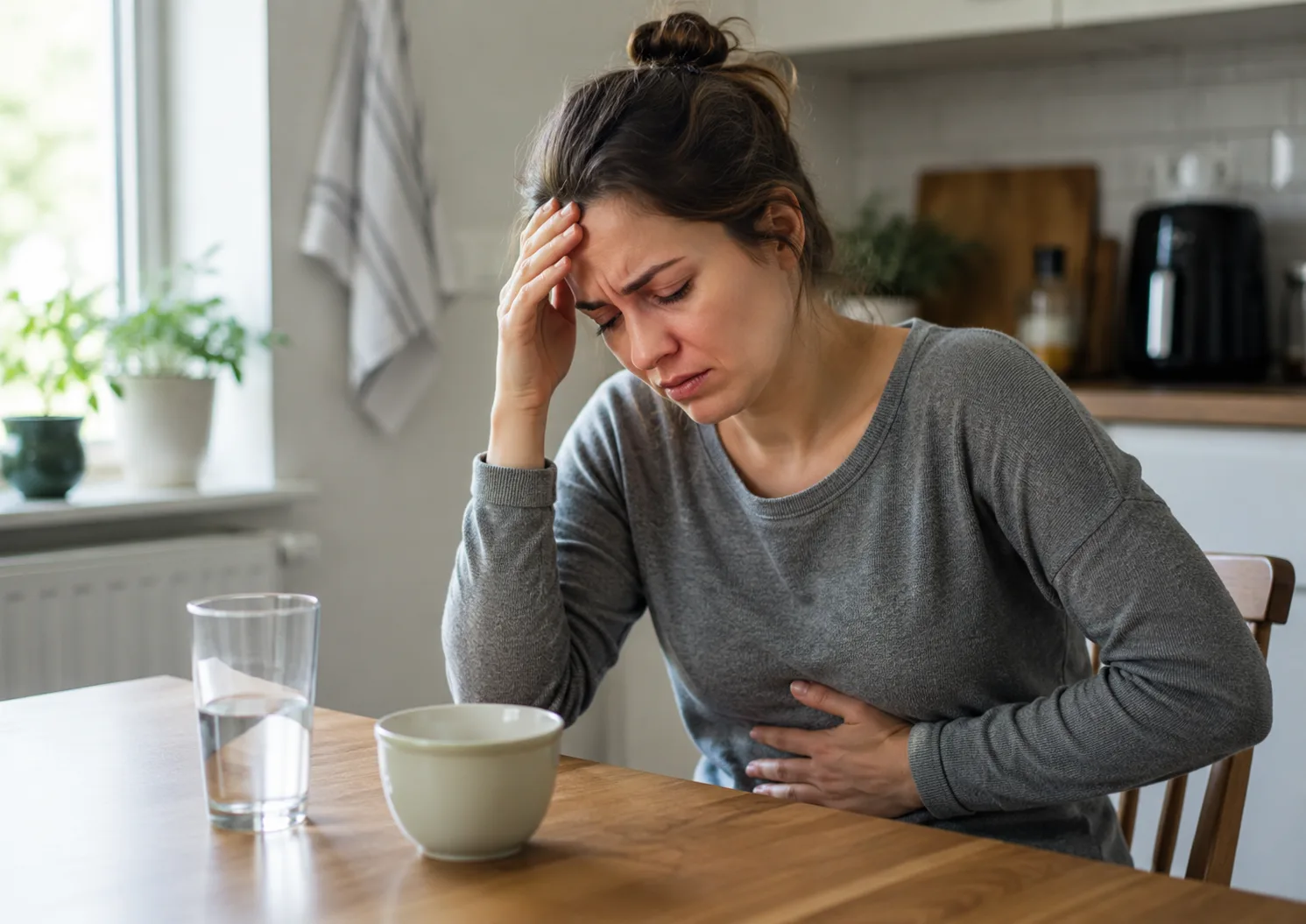
Food poisoning happens when you eat or drink something contaminated with bacteria, viruses, parasites or toxins. It can cause sudden diarrhoea, vomiting, stomach cramps, nausea, fever and feeling generally unwell. Most cases are unpleasant but short-lived and improve at home within a few days.
The main risk is dehydration, especially if you are vomiting repeatedly, have frequent watery diarrhoea, cannot keep fluids down, are older, pregnant, frail, immunosuppressed, or have a long-term condition such as diabetes or kidney disease.
This guide explains the common symptoms of food poisoning, how long it usually lasts, what to do at home, how to reduce the risk of spreading it, and when to contact a pharmacist, GP, NHS 111 or 999.
Important: Seek medical advice if you have blood in your stool, black stool, severe or worsening abdominal pain, signs of dehydration, persistent vomiting, a high fever, symptoms after recent travel, or you are pregnant, older, frail, immunosuppressed or have a serious long-term condition.
What is food poisoning?
Food poisoning is illness caused by eating contaminated food or drinking contaminated water. The contamination may come from bacteria, viruses, parasites, toxins, poor food storage, poor hand hygiene, undercooked food, cross-contamination or food left at unsafe temperatures.
Common causes include:
- Salmonella
- Campylobacter
- E. coli
- Listeria
- norovirus
- Staphylococcus aureus toxins
- Clostridium perfringens
- parasites, especially after travel
Food poisoning can happen after eating at home, from a takeaway, restaurant, buffet, barbecue, picnic, workplace canteen, event catering or food bought from a shop. Sometimes several people who ate the same food become ill. Other times only one person is affected.
The NHS says food poisoning is rarely serious and usually gets better within a week. The most important thing is to drink plenty of fluids to avoid dehydration. You can read official NHS guidance on food poisoning.
Food poisoning symptoms
Food poisoning symptoms can start quickly or take several days to appear, depending on the cause. Symptoms can be mild, moderate or severe.
Common symptoms include:
- feeling sick
- vomiting
- diarrhoea
- watery stools
- stomach cramps
- abdominal pain
- fever or chills
- headache
- muscle aches
- loss of appetite
- tiredness or weakness
- feeling dizzy or lightheaded
Some people mainly vomit. Others mainly have diarrhoea. Some have both. If your main symptoms are diarrhoea and vomiting rather than a clear food-related trigger, see our guide to Diarrhoea and Vomiting in Adults.
How quickly does food poisoning start?
Food poisoning can start within a few hours, but it can also take 1 to 3 days or longer depending on the germ or toxin involved.
As a general guide:
- Within a few hours: sometimes linked with toxins produced by bacteria in food.
- 12 to 48 hours: can happen with norovirus and some bacterial causes.
- 1 to 3 days: common with several bacterial infections.
- Several days or longer: possible with some bacteria, parasites or travel-related infections.
The timing can give clues, but it does not prove the cause. A meal you ate yesterday may not always be responsible. Sometimes the source was a different meal, contaminated surfaces, poor hand hygiene, contact with someone unwell, or a shared environment.
How long does food poisoning last?
Many cases improve within 24 to 48 hours, especially when vomiting is the main symptom. Diarrhoea can last a few days longer. The NHS says food poisoning symptoms usually get better within a week.
You may feel washed out for several days after the worst symptoms stop. Appetite may take time to return, and your bowel habit may be unsettled for a short while.
Seek medical advice if:
- vomiting is persistent and you cannot keep fluids down
- diarrhoea is severe or not improving
- symptoms last longer than expected
- you develop signs of dehydration
- you have blood or mucus in your stool
- you have severe or worsening abdominal pain
- you have a high or persistent fever
If fever is a major symptom, read Fever in Adults: What Temperature Means and When to Worry.
Food poisoning or stomach bug?
Food poisoning and stomach bugs can look very similar. Both can cause diarrhoea, vomiting, nausea, stomach cramps and fever. In everyday conversation, people often use the terms interchangeably.
Food poisoning is more likely if:
- symptoms started after a suspicious meal
- several people who ate the same food became ill
- symptoms started quite suddenly
- there was undercooked meat, poultry, eggs, seafood or reheated rice involved
- food was left out for a long time at room temperature
A stomach bug such as norovirus is more likely if:
- someone at home, work, school or care setting has similar symptoms
- vomiting came on suddenly
- there is an outbreak in a shared setting
- symptoms spread between people who did not eat the same food
In practice, treatment is often similar: rest, fluids, hygiene, and watching for dehydration or red flags. For more detail, see What Is Norovirus?.
Common foods linked with food poisoning
Food poisoning can come from many foods, especially if they are undercooked, stored incorrectly, contaminated after cooking, or handled with poor hygiene.
Foods more commonly linked with food poisoning include:
- undercooked chicken or turkey
- undercooked meat
- raw or undercooked eggs
- unpasteurised milk or cheese
- seafood and shellfish
- cooked rice that has been stored incorrectly
- buffet food left out too long
- ready-to-eat meats
- pre-packed sandwiches or salads
- unwashed fruit and vegetables
- food prepared by someone with diarrhoea or vomiting
Any food can become unsafe if it is contaminated or not stored properly. Good hand hygiene, cooking food thoroughly, chilling food quickly and avoiding cross-contamination are key prevention steps.
Food poisoning from chicken
Chicken and other poultry can be linked with bacteria such as Campylobacter or Salmonella if not handled or cooked properly. Symptoms may include diarrhoea, stomach cramps, fever, nausea and vomiting.
To reduce risk:
- cook chicken until it is steaming hot all the way through
- avoid washing raw chicken, as this can spread germs around the kitchen
- use separate chopping boards for raw meat and ready-to-eat foods
- wash hands after handling raw poultry
- clean surfaces and utensils properly
- chill leftovers quickly and reheat thoroughly
Food poisoning from rice
Cooked rice can cause food poisoning if it is left at room temperature for too long. Uncooked rice can contain spores of Bacillus cereus. Cooking may not destroy all spores, and if rice is left warm, bacteria can multiply and produce toxins.
To reduce risk:
- serve rice as soon as it is cooked
- cool leftovers quickly
- store rice in the fridge
- reheat rice until steaming hot
- avoid reheating rice more than once
Food poisoning from rice can cause vomiting or diarrhoea and may start within hours.
Food poisoning from seafood or shellfish
Seafood and shellfish can cause food poisoning if contaminated, undercooked or stored incorrectly. Some shellfish-related illnesses can come on quickly and may cause vomiting, diarrhoea, abdominal cramps and sometimes neurological symptoms such as tingling or weakness.
Seek medical advice if symptoms after seafood are severe, unusual, include weakness, tingling, breathing problems, confusion, severe dizziness or persistent vomiting.
Food poisoning after a takeaway or restaurant meal
If you become unwell after a takeaway or restaurant meal, it can be tempting to assume that meal caused it. Sometimes it did, but symptoms can also appear after earlier meals or from contact with someone infectious.
Consider whether:
- other people who ate the same food became ill
- food tasted or smelled unusual
- food was undercooked or lukewarm
- there were hygiene concerns
- symptoms started within a plausible time window
- you had contact with someone with diarrhoea or vomiting
If you suspect a food safety or hygiene problem, you can report it. The Food Standards Agency explains that consumers can report suspected food poisoning, dirty premises, poor hygiene, poor food handling and other food safety concerns through the appropriate local authority route. See Food Standards Agency guidance on reporting a food safety or hygiene issue.
Dehydration: the biggest risk
Dehydration happens when you lose more fluid than you take in. Food poisoning can cause dehydration through vomiting, diarrhoea, fever, sweating and reduced drinking.
Signs of dehydration in adults include:
- feeling very thirsty
- dry mouth or dry lips
- dark yellow or strong-smelling urine
- peeing less than usual
- dizziness or lightheadedness
- headache
- weakness
- fast heartbeat
- confusion in more severe cases
People at higher risk of dehydration include older adults, frail people, pregnant women, people with diabetes, kidney disease or heart disease, people taking diuretics, and people who cannot drink enough.
For more detail, see Dehydration Symptoms in Adults and Children.
What to drink with food poisoning
Fluids are more important than food at first. Try small, frequent sips rather than large amounts at once, especially if you are vomiting.
Useful options include:
- water
- oral rehydration solution from a pharmacy
- diluted squash
- clear soup or broth
- weak tea if tolerated
Oral rehydration sachets can help replace salts and fluids, especially if you have frequent diarrhoea, repeated vomiting, older age, dehydration symptoms or higher medical risk.
Avoid alcohol. It can worsen dehydration and irritate the stomach. Very sugary drinks may worsen diarrhoea in some people.
What should you eat after food poisoning?
Do not force food while you feel very sick. Start eating when you feel able. Plain, light foods may be easier at first.
Examples include:
- toast
- rice
- bananas
- crackers
- plain pasta
- potatoes
- soup
- small portions of normal food as appetite returns
Avoid very greasy, spicy, heavy or rich foods until your stomach settles. Return to your usual diet gradually.
Should you take anti-diarrhoea medicine?
Some adults use anti-diarrhoea medicines such as loperamide for short-term symptom control. However, these medicines are not suitable for everyone and are not always appropriate for food poisoning.
Avoid anti-diarrhoea medicine and seek advice first if you have:
- blood or mucus in your stool
- a high fever
- severe abdominal pain
- suspected severe food poisoning
- recent antibiotic use
- inflammatory bowel disease
- diarrhoea that is not improving
A pharmacist can advise whether an over-the-counter medicine is suitable for your situation.
Do you need antibiotics for food poisoning?
Most people do not need antibiotics for food poisoning. Many cases are viral or self-limiting bacterial infections that improve with fluids, rest and time.
Antibiotics may be needed in specific situations, such as certain bacterial infections, severe illness, high-risk patients, travel-related infections or infections confirmed by stool testing. A clinician may request a stool sample if symptoms are severe, persistent, bloody, linked with travel or part of an outbreak.
Do not take leftover antibiotics or someone else’s antibiotics. They may not help and can sometimes make diarrhoea worse.
When to stay off work
If you have diarrhoea or vomiting, stay away from work until at least 48 hours after the last episode of diarrhoea or vomiting. This is especially important if you work with food, healthcare, care homes, young children or vulnerable people.
If you work in food handling, healthcare, childcare or social care, your employer may have stricter rules. Follow workplace policies and public health advice.
NHS Inform advises staying off school or work until you have not been sick or had diarrhoea for at least 2 days. See NHS Inform guidance on food poisoning.
How to stop food poisoning spreading
Food poisoning and stomach bugs can spread through contaminated hands, surfaces, toilets, towels, food and close contact.
Practical steps include:
- wash hands thoroughly with soap and water
- wash hands after using the toilet and before preparing food
- avoid preparing food for others while unwell
- clean toilet seats, flush handles, taps and door handles
- wash soiled bedding, towels and clothes separately if needed
- use separate towels
- disinfect surfaces touched during illness
- stay away from work or school until 48 hours after symptoms stop
Alcohol hand gel is useful in many situations, but it is not a complete replacement for soap and water, especially with some stomach bugs such as norovirus.
Food poisoning in pregnancy
Pregnant women should be more cautious with food poisoning because dehydration and certain infections can be more concerning. Listeria, for example, is uncommon but can be serious in pregnancy.
Seek medical advice if you are pregnant and have:
- persistent vomiting
- diarrhoea that is severe or not improving
- fever
- signs of dehydration
- blood in your stool
- severe abdominal pain
- reduced baby movements later in pregnancy
- concern after eating high-risk foods
Do not wait if you feel seriously unwell or cannot keep fluids down.
Food poisoning in older adults or people with long-term conditions
Older adults, frail people and people with long-term conditions may become dehydrated more quickly or develop complications. Food poisoning can also destabilise blood pressure, diabetes control, kidney function or heart conditions.
Seek advice earlier if the person has:
- diabetes
- kidney disease
- heart failure
- a weakened immune system
- cancer treatment
- frailty
- dementia
- difficulty drinking enough
- confusion or sudden decline
If diabetes is relevant, see HbA1c and Blood Sugar Results Explained. If kidney function is relevant, see Kidney Blood Test Results Explained.
Food poisoning after travel
Diarrhoea and vomiting after foreign travel may be caused by contaminated food or water, unfamiliar bacteria, parasites or travel-related infections. Most cases improve, but some need medical assessment.
Contact a GP or NHS 111 if you have symptoms after travel and:
- you have a fever
- there is blood or mucus in your stool
- diarrhoea is severe or persistent
- you are dehydrated
- you have severe abdominal pain
- you recently visited an area where malaria or other serious infections are possible
- you are pregnant or immunosuppressed
Tell the clinician where you travelled, when you returned, what you ate or drank, whether anyone else became unwell, and whether you took antibiotics or malaria prevention tablets.
Food poisoning or allergic reaction?
Food poisoning usually causes digestive symptoms such as vomiting, diarrhoea and stomach cramps. A food allergy may cause symptoms very quickly after eating and can involve the skin, breathing, throat or circulation.
Call 999 if symptoms after eating include:
- swelling of the lips, tongue, throat or face
- difficulty breathing
- wheezing
- difficulty swallowing
- collapse or fainting
- confusion
- widespread hives or rash with breathing symptoms
These may be signs of anaphylaxis, a severe allergic reaction. For related guidance, see Rash in Adults: Common Causes and When to Seek Urgent Help.
When to see a pharmacist
A pharmacist can help with mild to moderate food poisoning symptoms if you are not severely unwell. They can advise on oral rehydration sachets, suitable pain relief, anti-diarrhoea medicine, nausea remedies and when to seek medical help.
Ask a pharmacist if:
- you have mild dehydration symptoms
- you are unsure what to drink
- you want oral rehydration sachets
- you are considering anti-diarrhoea medicine
- you take regular medicines and are not sure what to do
- you are older, pregnant or have a long-term condition
For more about pharmacy advice, see When to See a Pharmacist Instead of a GP.
When to contact a GP or NHS 111
Contact a GP, out-of-hours service or NHS 111 if:
- you cannot keep fluids down
- you have signs of dehydration
- you are peeing much less than usual
- you have blood or mucus in your stool
- you have black stool
- you have severe or worsening abdominal pain
- you have a high or persistent fever
- diarrhoea lasts more than a week
- vomiting is persistent or lasts more than 1 to 2 days
- symptoms started after recent travel
- you recently took antibiotics
- you are pregnant
- you are older, frail or immunosuppressed
- you have diabetes, kidney disease, heart disease or another significant condition
- several people are ill after eating the same food
- you are worried or symptoms are not improving as expected
You can use NHS 111 online in England if you need urgent advice but it is not a 999 emergency.
If you need help arranging care, see How to Get a GP Appointment Quickly in the UK.
When to call 999 or go to A&E
Call 999 or seek emergency help if food poisoning symptoms come with signs of a serious emergency.
Call 999 if you or someone else has:
- confusion or severe drowsiness
- collapse or fainting that does not quickly recover
- severe dehydration
- blue, grey, pale or blotchy skin, lips or tongue
- severe chest pain
- severe breathing difficulty
- a stiff neck with severe headache or light sensitivity
- a non-blanching rash that does not fade when pressed
- vomit that contains blood or looks like coffee grounds
- severe, sudden or worsening abdominal pain
- signs of sepsis
- severe weakness or neurological symptoms such as trouble speaking, swallowing or moving
Trust your judgement. If someone looks seriously unwell or is deteriorating quickly, seek urgent help.
Blood in stool after food poisoning
Blood in the stool should not be ignored. It can happen with some infections, piles, inflammatory bowel disease and other causes. In the context of food poisoning, it may suggest a more significant bowel infection or inflammation.
Seek medical advice if you notice:
- blood in diarrhoea
- black or tar-like stool
- mucus with severe symptoms
- blood with fever
- blood with severe abdominal pain
- blood with dizziness, weakness or dehydration
For more detail, read Blood in Stool: Causes and When to Get Help.
Severe abdominal pain after food poisoning
Stomach cramps are common with food poisoning, but severe, localised or worsening abdominal pain needs more caution. Not every stomach pain with vomiting or diarrhoea is food poisoning.
Seek medical advice urgently if pain is:
- severe
- worsening
- focused in one area
- associated with a rigid abdomen
- linked with persistent vomiting
- linked with blood in stool
- associated with fainting, confusion or severe weakness
For related guidance, see Abdominal Pain: Common Causes by Location and When to Get Help.
What tests might be needed?
Most mild cases of food poisoning do not need tests. If symptoms are severe, persistent, bloody, linked with travel, or part of an outbreak, a clinician may consider tests.
Possible tests include:
- stool sample
- blood tests for dehydration or infection
- kidney function tests
- electrolytes
- urine test
- further tests if abdominal pain suggests another condition
If blood tests are done and results are confusing, see How to Understand Blood Test Results, U&E Blood Test Results Explained and CRP and Inflammation Blood Test Results Explained.
When to report suspected food poisoning
You may want to report suspected food poisoning if you think it came from a restaurant, takeaway, shop, workplace canteen, event caterer or other food business.
It is especially worth reporting if:
- several people became ill after eating the same food
- symptoms are severe
- there is blood in stool
- you suspect poor hygiene or unsafe food handling
- food looked, smelled or tasted unsafe
- the food was sold past its use-by date
- the case may be part of a wider outbreak
In the UK, suspected food poisoning or food hygiene concerns can be reported through the Food Standards Agency route to the relevant local authority. See report a food safety or hygiene issue.
How to prevent food poisoning
You cannot avoid every stomach bug, but safe food handling reduces risk.
Helpful prevention steps include:
- wash hands before preparing food
- wash hands after using the toilet, changing nappies or handling raw meat
- cook meat and poultry thoroughly
- keep raw and cooked foods separate
- use separate chopping boards for raw meat and ready-to-eat foods
- keep fridges cold enough
- cool leftovers quickly
- reheat food until steaming hot
- do not eat food past its use-by date
- wash fruit and vegetables
- avoid preparing food for others if you have diarrhoea or vomiting
Take extra care when cooking for pregnant women, young children, older adults, frail people or people with weakened immune systems.
Frequently asked questions about food poisoning
How long does food poisoning usually last?
Many cases improve within 24 to 48 hours, but diarrhoea can last a few days longer. The NHS says food poisoning symptoms usually get better within a week. Seek advice if symptoms are severe, worsening, bloody, linked with dehydration, or not improving as expected.
How quickly can food poisoning start?
Food poisoning can start within a few hours, but some causes take 1 to 3 days or longer. The timing depends on whether illness is caused by a toxin, bacteria, virus or parasite.
What are the first signs of food poisoning?
Early symptoms often include nausea, stomach cramps, vomiting, diarrhoea, fever, chills, headache or feeling suddenly unwell. Some people mainly vomit, while others mainly develop diarrhoea.
What should I drink with food poisoning?
Take small, frequent sips of water or oral rehydration solution. Clear soup, diluted squash or weak tea may also be tolerated. Avoid alcohol. If you cannot keep fluids down, seek medical advice.
Should I eat if I have food poisoning?
Do not force food if you feel sick. Fluids matter most at first. When you feel able, try small amounts of plain food such as toast, rice, crackers, bananas, soup or potatoes.
Can I take loperamide for food poisoning?
Loperamide may help some adults with short-term diarrhoea, but it is not suitable for everyone. Avoid it and seek advice if you have blood in your stool, high fever, severe abdominal pain, suspected severe infection, inflammatory bowel disease or diarrhoea after antibiotics.
Do I need antibiotics for food poisoning?
Usually not. Many cases improve without antibiotics. Antibiotics may be considered for certain bacterial infections, severe illness, travel-related infections or high-risk patients. A clinician may request a stool sample before deciding.
When should I worry about food poisoning?
Seek advice if you have blood in stool, severe abdominal pain, persistent vomiting, signs of dehydration, high fever, symptoms after travel, severe weakness, confusion, pregnancy, older age, frailty, immune suppression or a significant long-term condition.
How long should I stay off work after food poisoning?
Stay off work until at least 48 hours after your last episode of diarrhoea or vomiting. If you work with food, healthcare, childcare or vulnerable people, follow workplace and public health guidance.
Can food poisoning cause fever?
Yes. Fever can happen with food poisoning, especially with some bacterial or viral infections. A mild fever may settle as the illness improves, but a high, persistent or worsening fever needs medical advice.
Can food poisoning cause dizziness?
Yes. Dizziness can happen because of dehydration, fever, low food intake or weakness. Seek advice if dizziness is severe, you faint, you are confused, or you are peeing much less than usual.
What if several people became ill after the same meal?
This increases the chance of a shared food source or outbreak. Seek medical advice if symptoms are severe, and consider reporting the suspected food poisoning through the Food Standards Agency/local authority route.
Can food poisoning be dangerous?
Most cases are not dangerous and improve at home, but food poisoning can be serious in pregnant women, older adults, frail people, babies, people with weakened immune systems and people with long-term conditions. Severe dehydration, blood in stool, sepsis symptoms or neurological symptoms need urgent help.
Can food poisoning cause blood in stool?
Yes, some infections can cause bloody diarrhoea. Blood in stool should be assessed, especially if there is fever, severe pain, dehydration, recent travel or you feel very unwell.
How can I tell if it is food poisoning or norovirus?
It can be difficult because symptoms overlap. Food poisoning is more likely if several people became ill after eating the same food. Norovirus is more likely if symptoms spread between people in the same household, workplace, school, hospital or care setting. Treatment is often similar: fluids, rest, hygiene and watching for red flags.
Final thoughts
Food poisoning is common and usually improves within a few days. The main treatment is rest, fluids and avoiding dehydration. Many people recover without needing tests or antibiotics.
However, food poisoning should not be ignored if symptoms are severe, bloody, persistent, linked with dehydration, or affecting someone at higher risk such as a pregnant woman, older adult, frail person or someone with a weakened immune system. Severe abdominal pain, confusion, collapse, blood in vomit, severe dehydration or signs of sepsis need urgent help.
For official guidance, see NHS information on food poisoning, NHS guidance on diarrhoea and vomiting, NHS advice on dehydration, and Food Standards Agency guidance on reporting a food safety or hygiene issue.
This article is for general information only and should not replace medical advice. If you are worried about your symptoms or someone else’s, contact NHS 111, your GP, a pharmacist, or call 999 in an emergency.