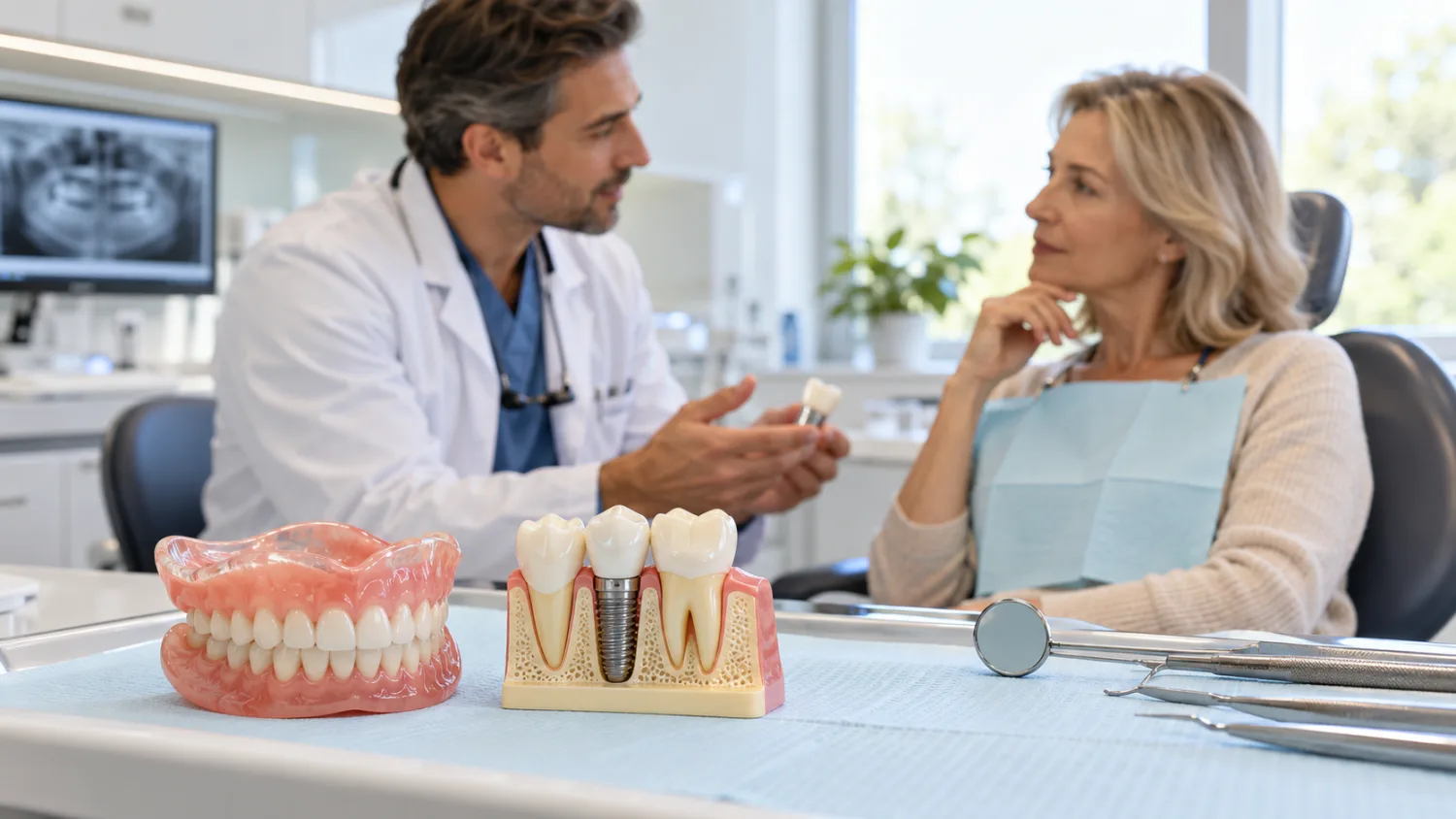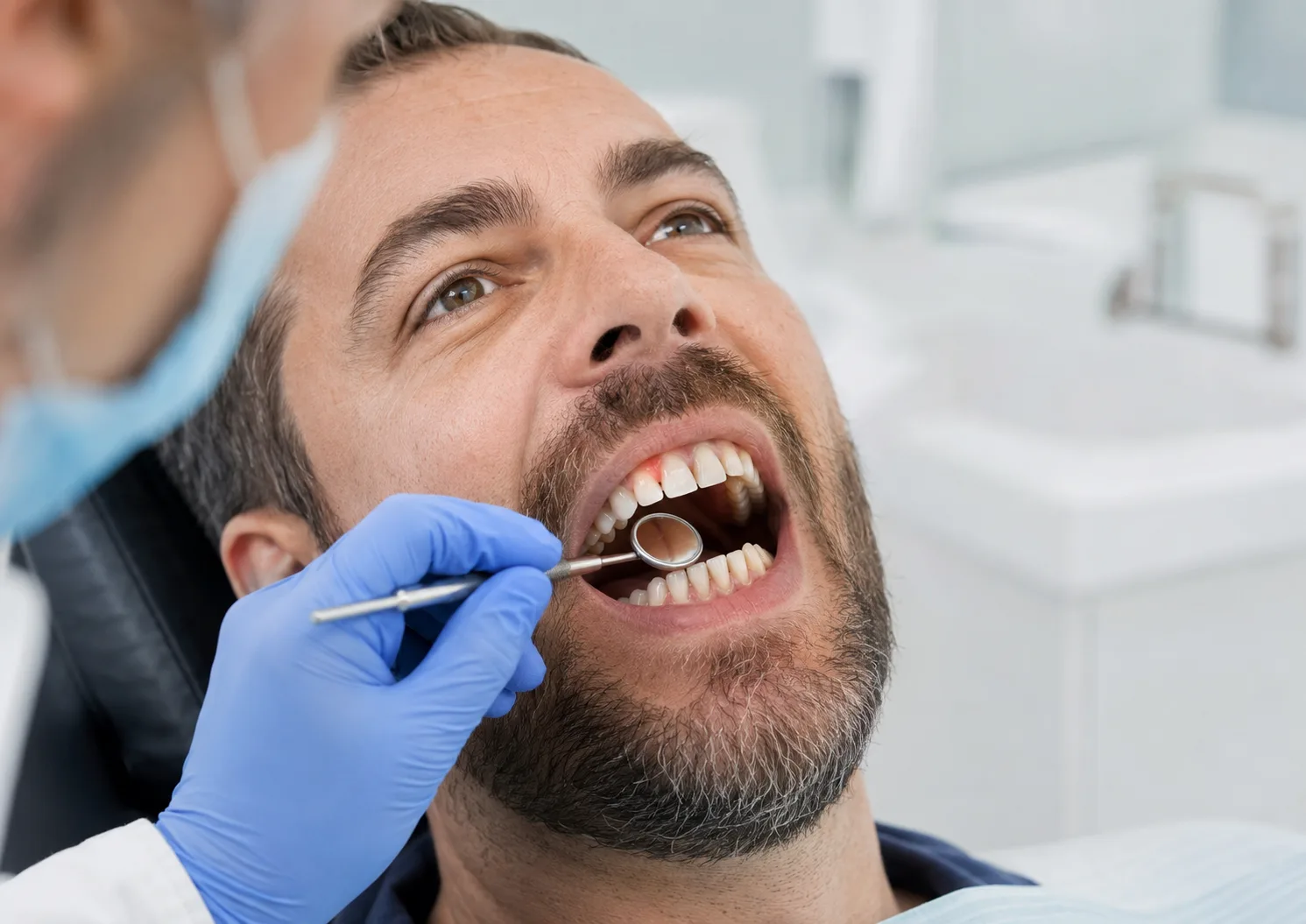
Receding gums are common, but they are not something to ignore. Gum recession means the gum has moved away from its normal position around the tooth, exposing more of the tooth or its root. Teeth may look longer, gaps may appear near the gumline, and the exposed areas may feel sensitive to cold, brushing or sweet foods.
Gum recession can happen slowly over years, so many people do not notice it at first. It may be caused by gum disease, overbrushing, tooth position, grinding, smoking, age, previous orthodontic treatment, piercings, trauma or thin gum tissue. Sometimes several factors are involved.
This guide explains what receding gums look like, what causes them, whether they grow back, how dentists treat gum recession, NHS and private options in the UK, when gum grafting may be considered, and how to stop recession getting worse.
If you have bleeding gums, bad breath or loose teeth, you may also want to read our guide to bleeding gums and gum disease. For related care, see Dental Hygienist Appointments Explained, Scale and Polish: NHS vs Private, Sensitive Teeth: Causes, Relief and Treatment and What Makes a Good Dental Practice?.
Quick summary
- Receding gums happen when the gum margin moves away from the tooth, exposing more tooth or root surface.
- Common causes include gum disease, overbrushing, thin gums, tooth position, grinding, smoking, piercings and previous orthodontic movement.
- Receding gums usually do not grow back naturally, but treatment can help stop progression and manage sensitivity.
- Early gum disease is treatable; more advanced periodontitis can be controlled but lost gum and bone support may not fully return.
- Treatment may include improved brushing technique, interdental cleaning, hygienist care, desensitising toothpaste, fluoride, fillings, bite management or gum grafting.
- Gum grafting may be considered for selected cases, especially where recession causes sensitivity, cleaning difficulty or aesthetic concerns.
- NHS gum treatment is available when clinically needed, but cosmetic gum grafting is usually private.
- See a dentist if recession is worsening, teeth are sensitive, gums bleed, teeth feel loose, or roots are exposed.
What are receding gums?
Receding gums, also called gum recession, happen when the gum tissue around a tooth pulls back or wears away. This exposes more of the tooth surface and sometimes the root.
Healthy gums should sit firmly around the teeth and form a scalloped outline. The British Society of Periodontology explains that healthy gums should be firmly attached to teeth and should not bleed on cleaning or professional probing. Its patient leaflet on recession also notes that gum disease may cause gums to become red, swollen and bleed, and that gums can shrink as gum health improves after treatment. You can read the BSP leaflet on receding gums and gaps here.
Gum recession can affect one tooth, several teeth or the whole mouth. It may be mild and stable, or it may gradually worsen over time.
What do receding gums look like?
Receding gums can look different depending on the cause and severity.
Common signs include:
- Teeth looking longer than before.
- Yellowish root surface showing near the gumline.
- A notch or groove near the gumline.
- Dark triangles or gaps between teeth.
- Gumline appearing uneven.
- Tooth sensitivity near the gumline.
- Food trapping between teeth.
- Bleeding gums if gum disease is present.
- Loose teeth in more advanced gum disease.
Some people first notice recession when their teeth become sensitive to cold water or brushing. Others notice that a crown, veneer or filling edge looks more visible because the gum has moved.
Do receding gums grow back?
Receded gum tissue usually does not grow back naturally. Once the gum margin has moved down the root, it generally cannot return to its original position without specialist treatment.
However, this does not mean nothing can be done. Treatment can often:
- Stop recession getting worse.
- Reduce sensitivity.
- Improve cleaning around the area.
- Treat gum inflammation.
- Reduce root decay risk.
- Improve appearance in selected cases.
- Cover exposed roots with gum grafting in suitable patients.
The most important first step is finding out why the gums are receding.
What causes receding gums?
Gum recession is not caused by one single thing. It can result from disease, habits, anatomy, tooth position, dental treatment history or trauma.
Gum disease
Gum disease is one of the most important causes of gum recession. In early gum disease, called gingivitis, the gums may become red, swollen and bleed. If it progresses to periodontitis, the tissues and bone supporting the teeth can be damaged.
NHS guidance says gum disease treatment depends on severity. In early stages, care may include advice on keeping teeth clean, stopping smoking if relevant, and having teeth cleaned by a hygienist. More serious gum disease may need more involved treatment. You can read the NHS gum disease page here.
NHS England’s prevention toolkit describes periodontitis as a chronic inflammatory disease that causes progressive destruction of the tissues supporting the teeth, with plaque being the most important risk factor. You can read the periodontal disease chapter here.
Brushing too hard
Brushing aggressively, using a hard-bristled toothbrush or scrubbing sideways at the gumline can contribute to gum recession and tooth wear. The gum may gradually wear away, especially where the tissue is naturally thin.
This does not mean you should brush less. It means you should brush better: gently, thoroughly and with the right technique.
Not cleaning well enough
Poor plaque control can inflame gums and increase gum disease risk. Plaque around the gumline can harden into tartar, which makes inflammation worse and needs professional removal.
This is why both extremes can be harmful: scrubbing too aggressively can damage gums, but not removing plaque properly can also lead to gum problems.
Thin gum tissue
Some people naturally have thin gums. Thin gum tissue is more vulnerable to recession, especially around teeth that sit forward in the jaw or have been moved during orthodontic treatment.
Tooth position
Teeth that are crowded, tilted, rotated or positioned outside the ideal bony housing may have thinner gum support. This can make recession more likely.
Orthodontic treatment
Braces and clear aligners can move teeth into healthier positions, but if teeth are moved outside the supporting bone or gum tissue is thin, recession risk may increase in some cases. This is one reason orthodontic treatment needs proper assessment and monitoring.
Read more: Invisalign and Clear Aligners in the UK.
Grinding and clenching
Grinding or clenching may contribute to tooth wear, notches near the gumline, sensitivity and stress on teeth. It may not be the only cause of recession, but it can make symptoms worse.
Smoking and vaping
Smoking is a major risk factor for gum disease and can reduce gum healing. It may also hide bleeding, meaning gum disease can be present without obvious warning signs.
Lip or tongue piercings
Oral piercings can rub against gums and teeth. Repeated trauma from jewellery can contribute to local gum recession, chipped teeth or gum irritation.
Dental restorations
Crowns, veneers, fillings, bridges or dentures that are bulky, poorly fitting or difficult to clean around may contribute to local gum inflammation or recession.
If you have dental work and the gum is receding around it, ask your dentist to check the fit, margins and cleaning access.
Age and long-term wear
Gum recession becomes more common with age, partly because small changes can accumulate over time. But it should not be dismissed as “just ageing” if it is worsening, sensitive or linked to bleeding or loose teeth.
Is gum recession the same as gum disease?
Not always. Gum recession means the gum margin has moved away from the tooth. Gum disease is inflammation and infection affecting the gums and supporting tissues.
Gum disease can cause gum recession, but recession can also happen without active gum disease. For example, one tooth may recede because of overbrushing, thin tissue or tooth position while the rest of the gums are healthy.
This distinction matters because treatment depends on the cause. Recession caused by overbrushing is managed differently from recession caused by periodontitis.
Symptoms linked with receding gums
Gum recession may cause no symptoms at first. When symptoms do occur, they may include:
- Sensitivity to cold air or cold drinks.
- Sensitivity when brushing.
- Sensitivity to sweet foods.
- Teeth looking longer.
- Notches near the gumline.
- Food trapping.
- Bleeding gums.
- Bad breath.
- Gum tenderness.
- Loose teeth in advanced gum disease.
- Changes in how the teeth bite together.
Recession with bleeding, swelling, pus or loose teeth needs dental assessment because it may indicate gum disease or infection.
When should you see a dentist?
Book a dental appointment if you notice:
- Gums pulling back from the teeth.
- Teeth looking longer.
- Sensitivity near the gumline.
- Bleeding gums.
- Bad breath that does not improve.
- Loose teeth.
- Food trapping between teeth.
- Gum recession around crowns, bridges, implants or veneers.
- Recession that appears to be getting worse.
- Gum pain, swelling, pus or a gum boil.
Seek urgent dental advice if recession is accompanied by swelling, pus, severe pain, fever or facial swelling.
How dentists diagnose receding gums
A dentist or hygienist will examine your gums, teeth and bite. They may measure gum pockets, check bleeding, assess plaque and tartar, and take X-rays if gum disease or bone loss is suspected.
They may check:
- How much recession is present.
- Whether there is bleeding or inflammation.
- Whether gum pockets are present.
- Whether bone support has been lost.
- Whether brushing technique is contributing.
- Whether tooth position is a factor.
- Whether grinding or bite forces may be involved.
- Whether dental restorations are irritating the gum.
- Whether root decay is present.
If the recession is complex, severe or cosmetic treatment is being considered, referral to a periodontist may be recommended.
Treatment for receding gums
Treatment depends on the cause, severity and symptoms. There is no single treatment that suits every case.
Improving brushing technique
If overbrushing is contributing, your dentist or hygienist may recommend a softer toothbrush, an electric toothbrush with pressure sensor, and a gentler technique.
The goal is to remove plaque without scrubbing the gumline aggressively.
Interdental cleaning
Cleaning between teeth is essential for gum health. Depending on the spaces between your teeth, your dental team may recommend interdental brushes, floss, tape or water flossing as an extra aid.
Scale and polish
If tartar and plaque are contributing to gum inflammation, professional cleaning can help. NHS scaling is available when clinically needed. Private hygienist care may offer longer appointments, stain removal and more detailed advice.
Read more: Scale and Polish: NHS vs Private.
Deep gum cleaning
If recession is linked to periodontitis, deeper periodontal cleaning may be needed. This can involve cleaning below the gumline and may require local anaesthetic in some cases.
Periodontitis is not usually “cured” by one appointment. It often needs long-term maintenance and careful home care.
Stopping smoking
Stopping smoking can improve gum health and healing. If you smoke and have gum recession or gum disease, your dentist may strongly recommend quitting support.
Treating sensitivity
Exposed roots can be sensitive because root surfaces do not have the same enamel covering as the crown of the tooth.
Treatment may include:
- Sensitivity toothpaste.
- Fluoride varnish.
- Desensitising agents applied by a dentist.
- Bonding over exposed root surfaces.
- Gum grafting in selected cases.
- Managing acid erosion or grinding if relevant.
Composite bonding or fillings near the gumline
If recession has caused notches, root wear or sensitivity near the gumline, your dentist may use tooth-coloured composite to cover the exposed area. This can reduce sensitivity and protect the root surface.
However, bonding does not move the gum back. It treats the exposed tooth surface.
Bite adjustment or night guard
If grinding, clenching or bite stress is contributing to symptoms, your dentist may discuss a night guard or other bite management. This is usually considered alongside plaque control and gum assessment, not as a standalone answer.
Replacing poorly fitting dental work
If crowns, veneers, fillings or dentures are irritating the gum or difficult to clean, they may need adjustment or replacement. This should be carefully assessed before treatment.
Gum grafting
Gum grafting is a surgical procedure used in selected cases to cover exposed roots or thicken gum tissue. It is often done by a periodontist or dentist with advanced gum surgery training.
Leeds Teaching Hospitals explains that soft tissue grafting can be used to treat gum recession, especially where root surfaces are exposed. It also notes that gum recession does not always affect the long-term lifespan of teeth, but affected teeth may be sensitive, harder to clean or uncomfortable to clean, which can increase decay or gum disease risk around that tooth. You can read its periodontal surgery guidance here.
What is gum grafting?
Gum grafting, also called soft tissue grafting or periodontal plastic surgery, uses gum tissue to cover or thicken areas where the gum has receded.
Tissue may be taken from the roof of the mouth, moved from nearby gum tissue, or sometimes supplied as a donor material depending on the technique and clinician.
Gum grafting may be considered when:
- Recession is causing significant sensitivity.
- Root surfaces are difficult to clean.
- Recession is worsening.
- There is very thin gum tissue.
- Appearance is a major concern.
- Recession is around a visible front tooth.
- Orthodontic or restorative planning requires better gum support.
Gum grafting is not suitable for every case. Results depend on the type of recession, gum thickness, tooth position, bone support, smoking status, oral hygiene and healing.
Can all receding gums be fixed with gum grafting?
No. Gum grafting works best in selected cases. If there is severe bone loss between teeth, advanced periodontitis, poor plaque control or smoking, the chance of full root coverage may be lower.
Before gum grafting, gum inflammation must be controlled and cleaning must be stable. Surgery on unhealthy gums is less likely to succeed.
NHS treatment for receding gums
NHS care may be available when gum treatment is clinically necessary. In England, NHS Band 1 is £27.90 from 1 April 2026 and can include examination, diagnosis, advice and clinically needed scaling. Band 2 is £76.60 and may apply to more extensive treatment or complex gum problems. The NHS says the dental professional should tell you the cost before treatment starts. You can check current NHS dental charges here.
NHS treatment may focus on:
- Assessment and diagnosis.
- Oral hygiene advice.
- Clinically necessary scaling.
- Gum disease treatment.
- Referral for specialist care if needed and available.
- Treatment of decay or sensitivity where clinically appropriate.
Cosmetic gum grafting to improve appearance alone is usually private. Availability of specialist NHS periodontal treatment may vary by local area and clinical need.
Private costs for receding gum treatment in the UK
Private costs vary widely depending on the cause and treatment. A simple hygiene appointment is very different from specialist gum graft surgery.
| Treatment | Typical private UK cost range | Notes |
|---|---|---|
| Dental examination | Approximately £40 to £150+ | May include gum screening; X-rays may cost extra. |
| Hygienist appointment | Approximately £60 to £150+ | Depends on appointment length and stain removal. |
| Deep periodontal cleaning | Approximately £120 to £300+ per session | Often needs several visits depending on gum disease severity. |
| Sensitivity treatment or fluoride varnish | Approximately £30 to £150+ | May be included in a dental appointment or charged separately. |
| Composite bonding for root sensitivity | Approximately £150 to £400+ per tooth | May protect exposed root surfaces but does not move the gum back. |
| Night guard for grinding | Approximately £150 to £600+ | Depends on type and practice. |
| Specialist periodontal consultation | Approximately £150 to £350+ | Often needed before grafting or complex gum treatment. |
| Gum grafting | Approximately £700 to £2,500+ per area | Costs vary by number of teeth, technique, complexity and specialist fees. |
These are broad guide prices only. Ask for a written treatment plan, especially for gum grafting, periodontal treatment or cosmetic root coverage.
How to stop receding gums getting worse
Prevention depends on the cause. In many cases, the aim is to stabilise recession rather than fully reverse it.
Helpful steps include:
- Use a soft toothbrush or electric toothbrush with pressure sensor.
- Avoid aggressive scrubbing at the gumline.
- Brush twice daily with fluoride toothpaste.
- Clean between teeth daily with the right size interdental brushes or floss.
- Attend dental check-ups.
- See a hygienist if recommended.
- Treat gum disease early.
- Stop smoking if you smoke.
- Manage grinding or clenching if present.
- Check crowns, bridges, dentures or veneers if they irritate gums.
- Use a sports mouthguard for contact sports.
- Avoid oral piercings rubbing against the gums.
Best toothbrush for receding gums
There is no single best toothbrush for everyone, but a soft-bristled toothbrush is usually safer for receding gums than a hard brush. Many people benefit from an electric toothbrush with a pressure sensor because it warns you if you press too hard.
Technique matters more than brand. Ask your hygienist to show you how to clean the gumline gently but effectively.
Best toothpaste for receding gums
Toothpaste cannot make gums grow back, but the right toothpaste can help with sensitivity and decay prevention.
Your dentist may recommend:
- Fluoride toothpaste for daily decay prevention.
- Sensitivity toothpaste for exposed roots.
- High-fluoride prescription toothpaste if root decay risk is high.
- Avoiding very abrasive whitening toothpastes if recession and sensitivity are present.
If sensitivity is significant, do not keep switching products every few days. Sensitivity toothpaste often needs regular use over time.
Can mouthwash help receding gums?
Mouthwash may help in some situations, but it is not a cure for gum recession. It cannot remove tartar and it cannot replace brushing or interdental cleaning.
Your dentist may recommend a specific mouthwash for short-term gum inflammation, after treatment, or if you are at higher decay risk. Long-term use should be based on professional advice.
Receding gums and sensitive teeth
Gum recession is a common cause of sensitive teeth because exposed root surfaces are less protected than enamel. Sensitivity may be triggered by:
- Cold drinks.
- Cold air.
- Sweet foods.
- Brushing.
- Touch near the gumline.
Sensitivity from recession can often be managed, but a dentist should check that the sensitivity is not caused by decay, a cracked tooth, a lost filling or infection.
Read more: Sensitive Teeth: Causes, Relief and Treatment.
Receding gums around one tooth
Recession around one tooth may be caused by local factors such as brushing trauma, tooth position, a high frenum attachment, a piercing, previous orthodontic movement or a poorly fitting restoration.
Local recession should still be checked. If it is worsening or causing sensitivity, early treatment may prevent more complex problems.
Receding gums around crowns or veneers
Gum recession around crowns or veneers can make margins visible and affect appearance. It may also create sensitivity or cleaning problems.
Causes may include:
- Natural gum changes over time.
- Thin gum tissue.
- Overbrushing.
- Gum disease.
- Bulky or overhanging restoration margins.
- Poor cleaning access.
- Tooth movement or bite issues.
Treatment may involve hygiene care, improving cleaning, replacing restorations, managing sensitivity or referral for gum grafting in selected cases.
Receding gums around implants
Gum recession around dental implants should be assessed carefully. Implants cannot decay, but the gum and bone around them can become inflamed or recede. This can expose implant threads, affect appearance and make cleaning harder.
If you notice gum changes around an implant, book a review. Early management is important.
Read more: Dental Implants in the UK.
Can receding gums cause teeth to fall out?
Mild recession alone does not necessarily mean a tooth will fall out. Leeds Teaching Hospitals notes that gum recession does not always affect the long-term lifespan of teeth. However, recession can make teeth sensitive, harder to clean and more prone to decay or gum disease around that tooth.
If recession is caused by advanced periodontitis with bone loss, the risk is more serious. Teeth may become loose and can eventually be lost without treatment.
Questions to ask your dentist
If you have receding gums, ask:
- What is causing my gum recession?
- Do I have gum disease?
- Are my gums stable or worsening?
- Do I have bone loss?
- Is my brushing technique contributing?
- What toothbrush and interdental tools should I use?
- Do I need hygienist treatment or deep gum cleaning?
- Is sensitivity caused by recession or something else?
- Do I need X-rays?
- Would gum grafting help in my case?
- Is treatment available on the NHS?
- What would private treatment cost?
- How often should this be monitored?
Red flags to watch out for
Be cautious if a provider:
- Offers gum grafting without checking gum disease first.
- Promises gums will grow back naturally with a product.
- Sells toothpaste or mouthwash as a cure for recession.
- Does not measure gum pockets when gum disease is suspected.
- Does not discuss brushing technique or plaque control.
- Ignores loose teeth, bleeding gums or pus.
- Does not explain NHS and private options clearly.
- Does not give realistic expectations for cosmetic gum treatment.
When should you get a second opinion?
Consider a second opinion if:
- You have been told you need expensive gum grafting.
- You have worsening recession and no clear diagnosis.
- You have loose teeth or advanced gum disease.
- You are considering orthodontics with already thin or receding gums.
- Recession is around implants, veneers or crowns.
- You are unsure whether treatment is cosmetic or clinically necessary.
- You feel pressured into private treatment.
How to choose a dentist or periodontist for receding gums
For mild recession, a general dentist and hygienist can often help with diagnosis, prevention and monitoring. For advanced gum disease, complex recession or gum grafting, you may need a periodontist.
Look for:
- Clear gum assessment.
- Gum measurements where appropriate.
- X-rays if bone loss is suspected.
- Explanation of the cause.
- Personalised cleaning advice.
- Discussion of NHS and private options.
- Realistic expectations about gum grafting.
- Clear maintenance plan.
- No pressure selling.
You can browse local dental providers through All Health and Care, including our Top 10 Dentists in the UK and local pages such as Top 10 Dentists in London.
Final thoughts
Receding gums are common, but they deserve proper assessment. They may be caused by gum disease, brushing trauma, tooth position, thin tissue, grinding, smoking or dental work. The treatment depends on the cause.
Gum tissue usually does not grow back naturally, but recession can often be stabilised. Sensitivity can be managed, gum disease can be treated, and gum grafting may help selected patients.
The best approach is early diagnosis, gentle but effective cleaning, regular dental care and realistic treatment planning. Do not wait until teeth are loose, roots are badly exposed or sensitivity becomes severe.
For more patient-friendly dental guides, visit our Dental Health & Dentistry section.
Frequently asked questions about receding gums
What are receding gums?
Receding gums happen when the gum margin moves away from the tooth, exposing more of the tooth or root surface.
What do receding gums look like?
Teeth may look longer, yellowish root surfaces may show near the gumline, gaps may appear between teeth, or the gumline may look uneven.
Do receding gums grow back?
Receded gums usually do not grow back naturally. Treatment can help stop progression, reduce sensitivity and, in selected cases, gum grafting may cover exposed roots.
What causes receding gums?
Causes include gum disease, overbrushing, thin gum tissue, tooth position, grinding, smoking, orthodontic movement, piercings, trauma and poorly fitting dental work.
Are receding gums always caused by brushing too hard?
No. Brushing too hard is one cause, but gum disease, tooth position, thin gums and other factors can also contribute.
Are receding gums a sign of gum disease?
They can be, but not always. Recession can happen without active gum disease, so a dental assessment is needed.
Can gum disease cause receding gums?
Yes. Periodontitis can damage the tissues and bone that support teeth, leading to gum recession, gaps and loose teeth.
Can receding gums cause sensitivity?
Yes. Exposed root surfaces are more sensitive than enamel-covered tooth surfaces and can react to cold, brushing or sweet foods.
Can receding gums cause teeth to fall out?
Mild recession alone does not always threaten a tooth, but recession linked to advanced gum disease and bone loss can lead to loose teeth and tooth loss.
How are receding gums treated?
Treatment may include improved brushing technique, interdental cleaning, hygienist care, deep gum cleaning, sensitivity treatment, fillings, night guards, restoration adjustment or gum grafting.
What is gum grafting?
Gum grafting is a surgical procedure that uses gum tissue to cover or thicken areas where gums have receded.
Is gum grafting painful?
It is usually done with local anaesthetic, so the procedure should not be painful. Soreness afterwards is expected, especially if tissue is taken from the roof of the mouth.
Is gum grafting available on the NHS?
It may be available in selected clinically necessary cases, but cosmetic gum grafting is usually private. Availability can vary by area and referral criteria.
How much does gum grafting cost privately?
Private gum grafting may cost around £700 to £2,500+ per area, depending on the number of teeth, technique, complexity and specialist fees.
Can toothpaste fix receding gums?
No toothpaste can make gums grow back. Sensitivity toothpaste can help symptoms, and fluoride toothpaste helps protect exposed roots from decay.
Can mouthwash fix receding gums?
No. Mouthwash cannot reverse recession. It may help in some gum care routines but should not replace brushing, interdental cleaning or dental treatment.
Should I use a soft toothbrush for receding gums?
A soft toothbrush is usually safer than a hard brush. Technique matters, so ask your hygienist to show you how to clean gently and effectively.
Is an electric toothbrush good for receding gums?
It can be, especially if it has a pressure sensor. Pressing too hard can worsen gum trauma, so use it gently.
Can flossing cause gum recession?
Correct flossing should not cause recession. Snapping floss into the gum or using the wrong technique can injure gums. Interdental brushes may be better for some spaces.
Can braces or aligners cause gum recession?
Orthodontic movement can contribute to recession in some cases, especially if teeth are moved outside the supporting bone or gums are thin. Proper planning reduces risk.
Can smoking cause receding gums?
Smoking increases gum disease risk and can impair healing. It can also make gum disease harder to notice because bleeding may be reduced.
Can receding gums around one tooth be fixed?
Sometimes. Treatment depends on the cause. Options may include changing brushing technique, treating gum disease, bonding, correcting local trauma or gum grafting.
Can receding gums around crowns or veneers be treated?
Yes, but treatment depends on the cause. The dentist may check gum health, restoration margins, cleaning access and whether gum grafting or replacement dental work is appropriate.
Can receding gums around implants be treated?
Sometimes, but implant recession needs careful assessment. See a dentist or implant clinician promptly if gum tissue changes around an implant.
When should I see a dentist for receding gums?
See a dentist if recession is worsening, teeth are sensitive, gums bleed, teeth feel loose, roots are exposed, or recession appears around dental work or implants.
Can receding gums be prevented?
Not always, but risk can be reduced with gentle brushing, good plaque control, interdental cleaning, regular dental care, smoking cessation and treatment of gum disease.