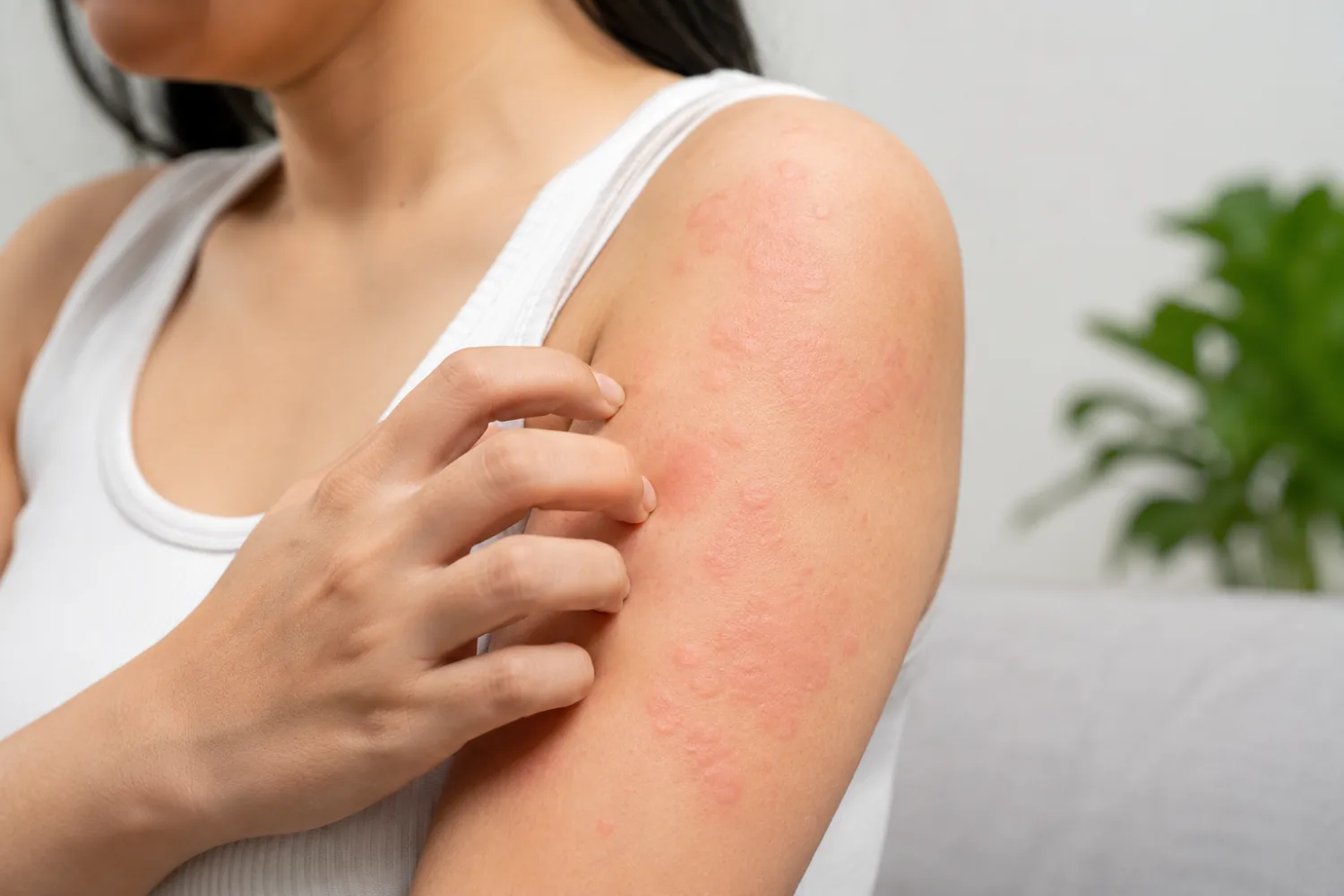
Hives, also called urticaria, are raised, itchy welts that can appear suddenly on the skin and then fade again, sometimes within hours. They can look alarming, especially when the rash spreads quickly or appears together with swelling of the lips or eyelids. In many cases, hives are short-lived and settle without causing serious harm. But sometimes they are linked to allergy, infection, medicines, stress, or an underlying condition, and occasionally they can be part of a medical emergency.
Some people get hives once after a virus or food reaction and never have them again. Others find they come and go for weeks or even months. Because the rash often changes shape and location quickly, it can be confusing and worrying.
This guide explains what hives are, what usually causes them, whether they always mean allergy, how stress may be involved, what treatment can help, and when you should seek urgent medical advice.
Quick answer: Hives are itchy, raised, short-lived skin welts caused by histamine release in the skin. Common triggers include infections, allergy, medicines, heat, cold, pressure, exercise and stress. Most cases improve with antihistamines and avoiding triggers, but urgent help is needed if hives happen with breathing problems, throat swelling, dizziness, faintness or widespread facial swelling.
What are hives?
Hives are a skin reaction in which raised, swollen patches appear on the skin. These patches are often called wheals. They can be small and round, or larger and irregular, and they may join together to form bigger areas of swelling.
The rash happens because chemicals such as histamine are released in the skin. This makes tiny blood vessels leak fluid, leading to swelling, redness and itching.
One of the most distinctive features of hives is that they often move around. A patch may appear on one part of the body, fade within a few hours, and then a new patch may appear somewhere else.
Hives are common. They can affect children and adults, and they do not always have a clear single cause.
What do hives look and feel like?
Hives usually look like raised pink, red or skin-coloured welts. On lighter skin they often appear red or pink. On darker skin they may look more skin-coloured, slightly darker or subtly raised rather than obviously red.
Typical features include:
- itchy raised patches or bumps
- welts that change shape or size
- rash that appears suddenly
- patches that fade within hours, then reappear elsewhere
- a stinging or burning feeling in some cases
- swelling that may be worse in the evening or after scratching
Hives can affect any part of the body, including the arms, legs, trunk, face and scalp. Sometimes deeper swelling happens in the lips, eyelids, hands or feet. This is known as angioedema, which is related to hives but affects deeper layers of the skin.
If you are not sure whether a rash is hives, you may also find these guides useful: Rash in Adults, Common Rashes in Children, Itchy Skin and Insect Bites and Stings.
What causes hives?
There are many possible causes of hives. In some people, a clear trigger is obvious. In others, no clear cause is found, especially if the hives keep recurring.
Common triggers include:
- viral infections, especially colds and other short-term illnesses
- food allergy, such as nuts, shellfish, eggs or other trigger foods
- medicines, including antibiotics, aspirin and anti-inflammatory painkillers
- insect stings or bites
- stress and anxiety
- heat, sweating or exercise
- cold exposure
- pressure on the skin, such as tight clothing or straps
- skin contact triggers, including plants, latex or chemicals
- some long-term autoimmune conditions in chronic hives
In children, hives are often triggered by infections rather than true allergy. In adults, medicines, stress, physical triggers and chronic urticaria are also common explanations.
If the rash appeared during a cold or flu-like illness, see Flu-Like Symptoms: Cold, Flu, COVID or Something Else?. If the hives started after an insect sting or bite, our guide to Insect Bites and Stings may help.
Do hives always mean allergy?
No. This is one of the biggest misunderstandings about hives.
Although hives can be caused by allergy, especially if they come on quickly after a food, medicine or sting, many episodes are not due to a true allergic reaction. Viral infections are a very common cause, particularly in children. Chronic hives, which last for weeks or keep recurring, are often not caused by a specific food allergy at all.
Clues that allergy may be involved include:
- hives coming on quickly after eating a specific food
- symptoms after taking a new medicine
- reaction after a bee or wasp sting
- repeated reactions to the same trigger
- hives together with lip swelling, wheeze or throat symptoms
Clues that it may be something else include:
- hives during or after a viral illness
- rash appearing without a clear food trigger
- frequent episodes over many weeks
- hives linked to heat, stress, pressure or exercise
If hay fever or other allergy symptoms are also present, these guides may be useful: Hay Fever and Spring Allergies in Children.
Can stress cause hives?
Stress does not cause every case of hives, but it can definitely play a part. Stress can make the skin more reactive and may trigger or worsen hives in some people. This is particularly common in people with recurrent or chronic urticaria.
Some people notice that hives appear:
- during emotionally stressful periods
- before exams or interviews
- during poor sleep or exhaustion
- when anxiety symptoms are worse
- alongside other stress-related symptoms such as headaches, palpitations or digestive upset
Stress-related hives are still real hives. The fact that stress may be a factor does not mean the symptoms are imagined. It simply means the nervous system and immune system may be interacting in a way that makes the skin more reactive.
If anxiety or stress seems to be an important part of the picture, see Anxiety Disorder, Panic Attack and Depression.
Acute hives vs chronic hives
Doctors usually divide hives into two broad types.
Acute hives last less than six weeks. These are often linked to infections, short-term triggers, food, medicines or insect stings.
Chronic hives are hives that keep appearing for more than six weeks. They may happen most days or on and off over a long period. Chronic hives are often frustrating because there may be no simple trigger. In many people, they are not caused by a classic allergy.
Chronic hives can be linked with:
- autoimmune processes
- physical triggers such as heat, cold or pressure
- stress
- idiopathic causes, meaning no clear cause is found
If hives have been going on for weeks, it is reasonable to speak to a GP. You may need a review of triggers, medicines and sometimes blood tests, especially if other symptoms are present.
When hives are accompanied by swelling
Some people with hives also develop angioedema, which is deeper swelling under the skin. This often affects the lips, eyelids, cheeks, hands, feet or genitals.
Angioedema can be mild, but it becomes serious if it affects the tongue, throat or breathing.
Seek urgent medical help if swelling is affecting:
- the lips and is rapidly worsening
- the tongue
- the throat
- breathing
- swallowing
Swelling with dizziness, faintness, wheezing or a hoarse voice may be part of anaphylaxis, which is a medical emergency.
What helps hives at home?
For many mild cases, symptoms can be managed at home, especially if the cause is short-term and there are no red flags.
What may help includes:
- taking a non-drowsy antihistamine, if suitable
- using a cool compress on itchy areas
- wearing loose, soft clothing
- avoiding overheating
- avoiding scratching if possible
- keeping a note of possible triggers
- avoiding known trigger foods or medicines if advised
Antihistamines are often the main treatment. A pharmacist can advise on suitable options. Some people need them for a few days. Others with chronic hives may need longer courses under medical advice.
If the rash seems linked to heat or sweating, staying cool may help. If it appears after pressure from waistbands, straps or tight clothing, reducing that pressure may help. If anti-inflammatory painkillers seem to trigger it, speak to a pharmacist or GP about alternatives.
When to speak to a pharmacist or GP
You can often speak to a pharmacist first if the hives are mild and you are otherwise well. A pharmacist can help you choose an antihistamine and advise when to see a GP.
Speak to a pharmacist or GP if:
- the hives are very itchy or uncomfortable
- the rash keeps returning
- you think a medicine may be causing it
- there is swelling of the lips or eyelids but no breathing مشکل
- the rash has lasted more than a few days
- you are not sure whether the rash is hives
- the hives have been coming and going for more than six weeks
See a GP if hives are frequent, persistent, severe or associated with other symptoms such as bruising, joint pain, fever or weight loss. In some cases, the rash may need investigation to rule out another diagnosis.
For care access, you may also find these useful: When to See a Pharmacist Instead of a GP and How to Get a GP Appointment Quickly.
When is hives serious?
Most hives are not dangerous, but some situations need urgent attention.
Call 999 immediately if hives happen together with:
- difficulty breathing
- wheezing
- tightness in the throat
- trouble swallowing
- swelling of the tongue
- severe lip or facial swelling
- dizziness, faintness or collapse
- a person becoming pale, confused or floppy
These may be signs of anaphylaxis, a life-threatening allergic reaction.
You should also seek urgent medical advice if:
- a child or adult is becoming very unwell
- the rash is accompanied by high fever and looks unusual
- the rash is painful rather than itchy
- the marks last in the same place for more than 24 hours and leave bruising
- there is concern about a medicine reaction
If you are not sure whether it is hives or something more serious, it is safer to seek advice.
Final thoughts
Hives are common, often itchy, often dramatic-looking, and usually temporary. They may be triggered by allergy, but just as often they are linked to infection, stress, medicines, physical triggers or no obvious cause at all. In many cases, antihistamines and time are enough.
The most important thing is to recognise when the rash is part of something more serious. Hives with breathing difficulty, throat swelling, tongue swelling, dizziness or collapse need emergency help. Recurrent or chronic hives should be assessed if they are affecting quality of life or have no obvious explanation.
If the rash is mild but bothersome, a pharmacist is often a good first step. If it is recurrent, severe or unclear, speak to a GP.
Frequently asked questions
Are hives always caused by allergy?
No. Hives can be caused by allergy, but infections, stress, heat, cold, pressure, medicines and other triggers are also common. Many cases are not due to a true food allergy.
How long do hives last?
Individual hives often fade within a few hours, although new ones may keep appearing. Acute hives usually settle within days or weeks. Chronic hives are hives that keep recurring for more than six weeks.
Can stress really cause hives?
Yes, stress can trigger or worsen hives in some people, especially if they are prone to recurrent or chronic urticaria.
What is the difference between hives and a heat rash?
Hives are raised itchy welts that often move around and fade quickly. Heat rash tends to be made up of tiny prickly bumps caused by blocked sweat glands and usually appears in hot, sweaty areas.
Do hives spread by touch?
Hives themselves are not contagious. However, if the hives are triggered by an infection, the infection itself may be contagious.
What is the best treatment for hives?
Non-drowsy antihistamines are often the main treatment. Avoiding triggers, keeping cool and using cool compresses can also help. A pharmacist or GP can advise on the best option for you.
When should I worry about hives?
Worry more if hives are accompanied by lip or tongue swelling, wheezing, throat tightness, dizziness or collapse, or if the rash is painful, bruising, long-lasting in one spot, or associated with fever and feeling very unwell.
Can children get hives?
Yes. Children often get hives during viral illnesses. Most cases are mild, but urgent help is needed if there are breathing problems, marked swelling or signs of anaphylaxis.
Can ibuprofen make hives worse?
Yes, in some people anti-inflammatory painkillers such as ibuprofen can trigger or worsen hives. If you suspect this, speak to a pharmacist or GP.
Do I need allergy testing for hives?
Not always. Short-lived hives do not automatically require allergy testing. Testing may be considered if the history strongly suggests a specific allergic trigger, especially food, medicine or stings.