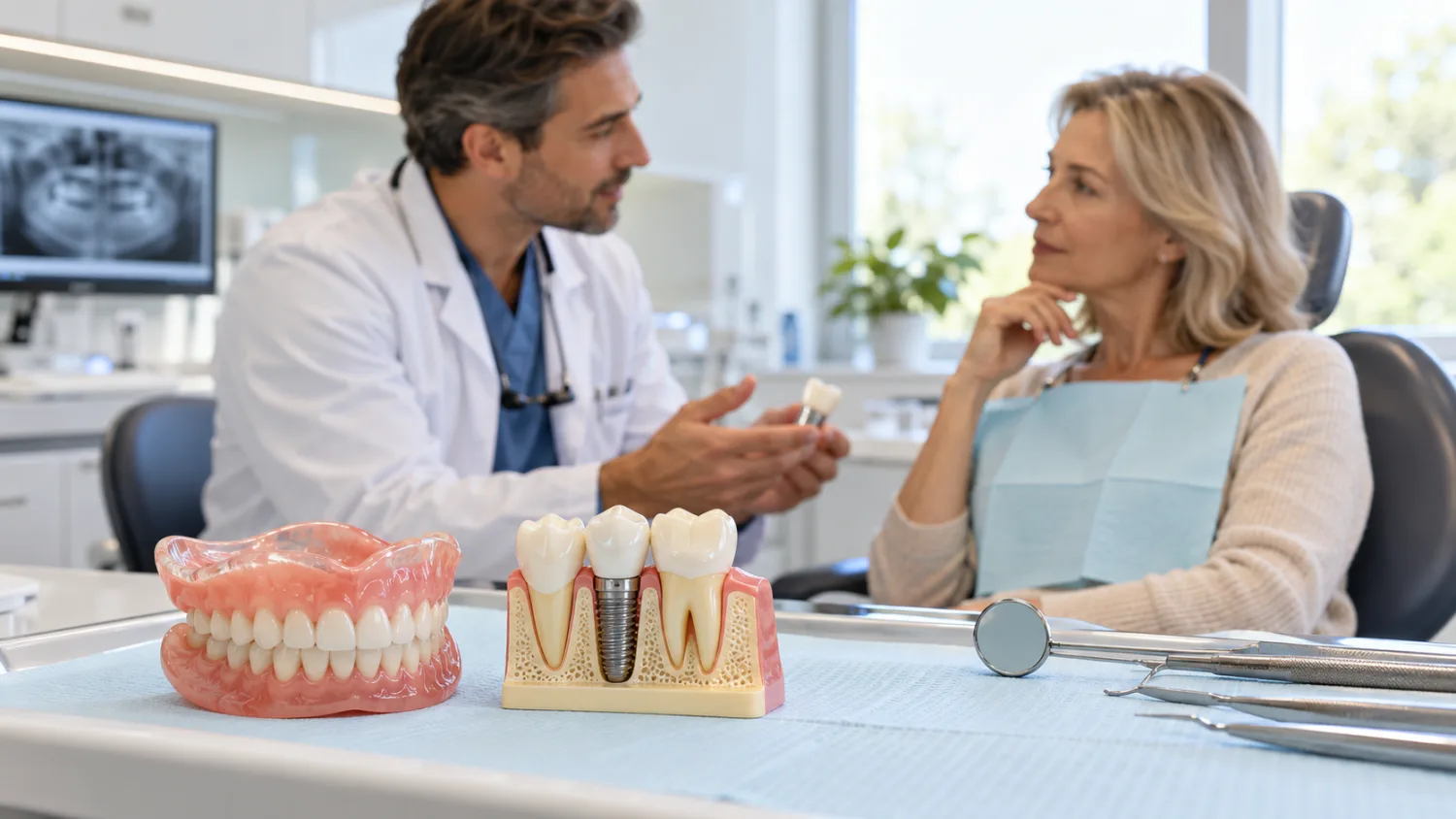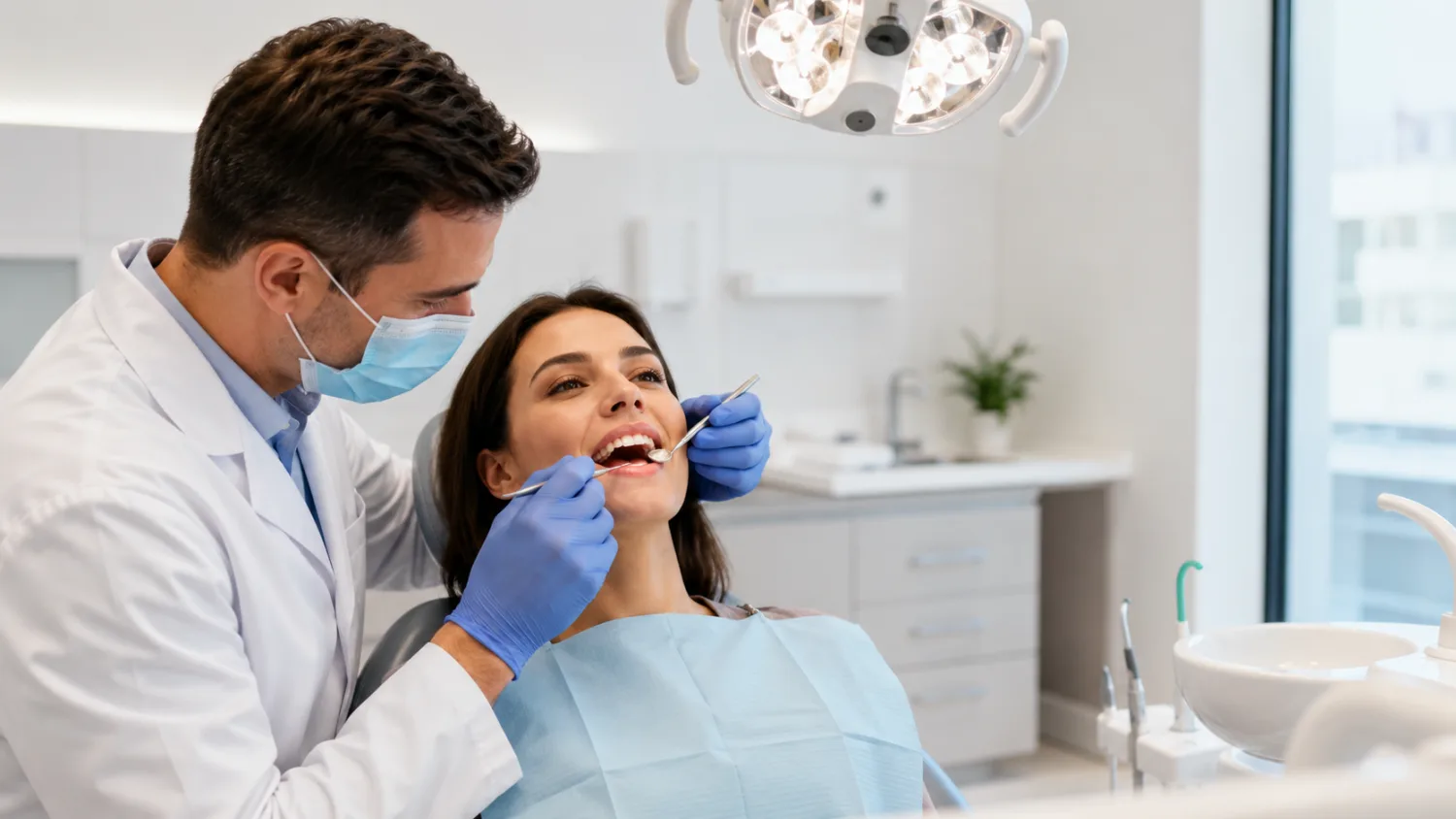
A dental check-up is one of the simplest ways to protect your teeth, gums and overall oral health. It is not just a quick look for cavities. A good check-up can spot early tooth decay, gum disease, tooth wear, mouth ulcers, infection, problems with old fillings or crowns, and warning signs that may need further investigation.
Many people only think about seeing a dentist when something hurts. That is understandable, especially when NHS dental access can be difficult in some areas and private dental costs can feel unclear. But waiting for pain often means a problem has already become more advanced. Regular check-ups are designed to find issues while they are still small, easier to treat and often less expensive to manage.
This guide explains what happens at a dental check-up, how often you really need one, what it costs on the NHS and privately, and how to get the most value from your appointment.
Why dental check-ups matter
A dental check-up is not only about whether you need a filling. Dentists are trained to assess the whole mouth, including the teeth, gums, tongue, cheeks, jaw, bite and soft tissues. They look for signs of disease, damage, infection and changes that may not be obvious to you at home.
The most useful thing about a check-up is timing. Early dental problems can be quiet. Tooth decay may start before you feel pain. Gum disease can develop gradually, sometimes with only mild bleeding when brushing. A cracked tooth may cause occasional discomfort before it becomes a dental emergency. A dental check-up gives your dentist the chance to spot these things earlier and explain what to do next.
Regular visits can also help you avoid unnecessary treatment. For example, if early enamel damage is picked up before a cavity forms, prevention may be enough. If gum inflammation is found early, improved cleaning, advice and sometimes a hygienist appointment may prevent more serious gum disease. If a filling or crown is starting to fail, it may be repairable before the tooth breaks.
If you are already dealing with symptoms, a check-up may not be enough on its own. Severe toothache, facial swelling, trauma, uncontrolled bleeding or signs of infection may need urgent dental care. You can read more in our guides to toothache, dental abscess and dental emergencies.
What happens at a dental check-up?
A dental check-up usually starts with a conversation. Your dentist may ask whether you have had pain, sensitivity, bleeding gums, ulcers, bad breath, jaw problems, dry mouth or changes in your general health. They may also ask about medication, smoking, alcohol, diet, previous dental treatment and any worries you have about dental care.
The clinical part of the appointment usually includes an examination of your teeth and gums. The dentist checks for decay, broken teeth, worn enamel, loose teeth, gum inflammation, plaque, tartar, bite problems and signs that existing fillings, crowns, bridges, veneers, implants or dentures need attention.
Your dentist may use a small mirror, probe, light and sometimes X-rays. They may measure gum pockets if there are signs of gum disease. They should also check the soft tissues of the mouth, including the tongue, cheeks, lips, palate and floor of the mouth. This is sometimes called an oral soft tissue check or mouth cancer screening, although it is usually part of a routine dental examination rather than a separate dramatic procedure.
At the end, your dentist should explain what they found. You may be told that everything is stable, that you need preventive advice, or that you need further treatment such as a filling, scale and polish, root canal treatment, extraction, crown, denture repair or referral. If treatment is needed, you should be given a clear explanation of the options, likely costs, benefits, risks and what could happen if you delay treatment.
How often should you have a dental check-up?
The old idea that everyone must see a dentist every six months is too simple. Some people need more frequent reviews, while others with very stable oral health may not need to attend as often.
In the UK, check-up intervals should usually be based on your risk. NHS guidance explains that the time between dental check-ups can vary from 3 months to 2 years, depending on the health of your teeth and gums and your risk of future problems. NICE guidance also supports an individual recall interval rather than the same fixed schedule for everyone.
As a rough guide, you may need more frequent dental check-ups if you have active gum disease, frequent decay, many fillings or crowns, dry mouth, diabetes, a history of mouth cancer, smoking, heavy alcohol use, orthodontic treatment, dental implants, dentures, or difficulty cleaning your teeth properly.
You may be able to go less often if your teeth and gums are healthy, you have a low risk of decay, you clean well at home, you do not smoke, and your dentist has seen stable results over time.
The important point is that your dentist should tell you when to come back and why. If you are told to return in three months, six months, one year or two years, ask what the reason is. A good dentist should be able to explain whether the recall interval is based on gum health, decay risk, medical history, previous treatment or another concern.
For official information, see the NHS guide to dental check-ups and the NICE guidance on dental recall intervals.
NHS dental check-up vs private dental check-up
An NHS dental check-up and a private dental check-up have the same basic purpose: to assess your oral health and identify whether you need advice, monitoring or treatment. The difference is usually in access, appointment length, pricing, treatment choice and what happens next.
With an NHS dentist, treatment is provided according to clinical need and charged using NHS dental bands in England. A routine examination falls under Band 1 if you are not exempt from charges. NHS care can be very good value, especially if you need basic examination, diagnosis, X-rays, preventive advice or clinically necessary scaling. The challenge for many patients is finding an NHS dentist accepting new patients.
Private dental check-ups are usually priced separately by the practice. The appointment may be longer, there may be more flexibility with appointment times, and the dentist may offer a wider choice of materials, cosmetic options, advanced scans, private hygienist appointments or specialist referrals. However, private costs can vary significantly between clinics, so it is important to ask for prices before booking.
NHS dentistry is not automatically “basic” and private dentistry is not automatically “better”. The right choice depends on access, urgency, complexity, budget, expectations and the type of treatment you may need. If you are unsure, our guide to NHS dentist vs private dentist explains the differences in more detail.
How much does an NHS dental check-up cost?
In England, an NHS dental check-up usually comes under Band 1. From April 2026, the NHS Band 1 charge in England is £27.90. Band 1 covers an examination, diagnosis, advice on preventing future problems, X-rays if needed, and a scale and polish if it is clinically necessary.
One useful feature of NHS dental charging is that you pay one charge for a course of treatment, not a separate fee for every visit within that course. For example, if your Band 1 course of treatment needs more than one visit to complete, you should not be charged a new Band 1 fee each time for the same course.
If your dentist finds that you need treatment beyond a check-up, the cost may move into a higher NHS band. Band 2 includes treatments such as fillings, extractions and root canal treatment. Band 3 includes more complex work such as crowns, dentures and bridges. Urgent NHS dental treatment has its own charge in England.
Charges and rules can differ in Scotland, Wales and Northern Ireland, and some people are entitled to free or reduced-cost NHS dental care. This can include certain people on qualifying benefits, people under 18, some students under 19, pregnant women and those who have had a baby in the previous 12 months, depending on the country and eligibility rules.
For current official charges and help with costs, check the NHS pages on NHS dental treatment costs and the NHS Business Services Authority guide to help with NHS dental costs.
How much does a private dental check-up cost?
Private dental check-up prices vary by location, clinic, appointment length and what is included. A simple private examination may be relatively affordable, while a longer new patient consultation with X-rays, photographs, digital scans or a detailed treatment plan may cost more.
As a broad UK guide, many private dental check-ups are priced somewhere around £40 to £120, although some practices charge less and some charge more, especially for extended new patient assessments or specialist consultations. X-rays may be included or charged separately. A hygienist appointment is often separate from the check-up.
Before booking privately, ask what the fee includes. Useful questions include:
- Is this a routine check-up or a longer new patient consultation?
- Are small X-rays included if needed?
- Will I receive a written treatment plan if treatment is recommended?
- Are hygienist appointments priced separately?
- Do you offer NHS treatment, private treatment, or both?
- Are emergency appointments charged differently?
Private dental costs are not standardised in the same way as NHS charges, so clear pricing matters. A reputable dental practice should be willing to explain fees before treatment begins. For more detailed examples, see our guide to private dentist prices in the UK.
What is the dentist looking for?
A good dental check-up is a structured health assessment. Your dentist is not only looking for holes in teeth. They are building a picture of your risk: what is healthy, what is changing, what needs treatment now, and what might become a problem later.
One key area is tooth decay. Early decay may appear as enamel changes before a cavity forms. If it is caught early, your dentist may recommend fluoride, diet changes, better cleaning around problem areas and monitoring. If a cavity has already formed, a filling may be needed. You can learn more in our guide to tooth decay.
Another major area is gum health. The dentist checks for plaque, tartar, bleeding, gum recession, swelling and signs that the bone supporting the teeth may be affected. Bleeding gums are common, but they should not be ignored. Our guide to bleeding gums and gum disease explains when gum bleeding needs attention.
The dentist may also look for tooth wear caused by grinding, acidic drinks, reflux or brushing too hard. They may check whether your bite is causing stress on teeth or restorations. If you have existing crowns, bridges, veneers, implants, dentures or large fillings, the dentist will check whether they are stable and cleanable.
Soft tissue checks are also important. Most mouth ulcers and sore patches are harmless and heal on their own, but ulcers that do not heal, unexplained lumps, red or white patches, persistent pain or changes in the mouth should be assessed. Our article on mouth ulcers and red flags explains when to get checked.
Will you need dental X-rays?
You do not necessarily need X-rays at every dental check-up. Dentists use X-rays when they need information they cannot get by looking in the mouth alone. X-rays can help detect decay between teeth, infection around roots, bone loss from gum disease, impacted wisdom teeth, problems under old fillings or crowns, and the position of teeth before certain treatments.
How often X-rays are needed depends on your risk and symptoms. Someone with frequent decay, many fillings or new symptoms may need X-rays more often than someone with stable oral health and low risk. Children, pregnant patients and people with medical considerations may need a more careful risk-benefit discussion, although dental X-rays use low levels of radiation and are only taken when clinically justified.
If your dentist recommends an X-ray, it is reasonable to ask what they are looking for and how the result may change your treatment plan. If the answer is clear, the X-ray is likely being used as part of a proper diagnosis rather than as a routine add-on.
Do you need a scale and polish or hygienist appointment?
A dental check-up and a hygienist appointment are related, but they are not the same thing. The check-up is mainly an examination and diagnosis. A hygienist appointment focuses more on cleaning, gum health, plaque control, tartar removal, stain removal and personalised oral hygiene advice.
On the NHS in England, scaling can be included in Band 1 if your dentist says it is clinically necessary. More complex gum treatment may fall under Band 2. However, a cosmetic scale and polish or stain removal that is not clinically necessary may not be available as NHS treatment and may need to be paid for privately.
Private hygienist appointments are common, especially for people with gum disease, tartar build-up, implants, braces, staining or difficulty cleaning certain areas. The value of a hygienist visit is not just that your teeth feel cleaner afterwards. The bigger benefit is learning where plaque is building up and how to clean those areas better at home.
For more detail, see our guides to scale and polish and dental hygienist appointments.
How to prepare for a dental check-up
You do not need to do anything special before a dental check-up, but a little preparation can make the appointment more useful.
Think about any symptoms you have noticed, even if they seem minor. Mention sensitivity, bleeding gums, food getting stuck, bad breath, jaw clicking, dry mouth, ulcers, pain when biting, headaches, broken fillings, loose crowns or changes around dentures. Dental symptoms often make more sense when the dentist knows the full pattern.
Bring a list of medications if you take any regularly. Some medicines can affect bleeding, dry mouth, healing or infection risk. Tell your dentist if you are pregnant, have diabetes, have heart conditions, take blood thinners, have had radiotherapy to the head or neck, are immunosuppressed, or have had recent surgery or major illness.
If you are nervous, say so at the start. Dental anxiety is common, and a good practice should not dismiss it. You can ask the dentist to explain each step, agree a stop signal, avoid sudden movements, or begin with a simple examination only. Our guide to dental anxiety and finding a gentle dentist may help if you have avoided care for a long time.
It is also sensible to ask about costs before treatment begins. For NHS treatment, ask which band applies. For private treatment, ask for a written estimate or treatment plan. If you are comparing clinics, our guides to how to choose a dentist in the UK and what makes a good dental practice explain what to look for.
When not to wait for a routine check-up
A routine check-up is for planned dental care. Some symptoms should be dealt with sooner because they may suggest infection, trauma or another urgent problem.
Contact a dentist urgently or use NHS 111 if you have severe toothache that is not settling, swelling in the gum or face, a suspected dental abscess, a broken tooth with pain, a knocked-out adult tooth, bleeding after dental treatment that will not stop, or signs of infection such as fever or feeling very unwell.
Call 999 or go to emergency care if you have facial swelling that affects breathing, swallowing or the eye area, heavy uncontrolled bleeding, serious facial trauma, or signs of a severe spreading infection.
Do not rely on antibiotics alone for dental infections. Tooth infections often need dental treatment to remove the source of infection, such as drainage, root canal treatment or extraction. Painkillers and antibiotics may help in some situations, but they do not repair the underlying dental problem.
FAQ
Is a dental check-up painful?
A routine dental check-up should not usually be painful. The dentist examines your teeth, gums and mouth using a mirror, light and dental instruments. You may feel some pressure or mild discomfort if your gums are inflamed or a tooth is sensitive. Tell the dentist if you are nervous or if something hurts.
How long does a dental check-up take?
A routine check-up may take around 10 to 20 minutes, although this varies. A new patient private consultation, appointment with X-rays, complex dental history or detailed treatment planning may take longer.
Do I really need a check-up every six months?
Not always. Some people need check-ups every three to six months, while others may only need them every 12 to 24 months. Your dentist should recommend an interval based on your oral health, dental history and risk of future problems.
What is included in an NHS dental check-up?
In England, an NHS Band 1 course of treatment includes an examination, diagnosis, preventive advice, X-rays if needed, and a scale and polish if clinically necessary. If you need further treatment, such as fillings or extractions, a higher band may apply.
Can a dentist spot mouth cancer during a check-up?
A dentist checks the soft tissues of the mouth as part of a routine examination and may notice ulcers, lumps, red or white patches, or other changes that need further assessment. Most mouth changes are not cancer, but anything persistent or unexplained should be checked.
Will the dentist clean my teeth at a check-up?
Sometimes, but not always. If scaling is clinically necessary, it may be included in NHS treatment. Many people have a separate hygienist appointment for more detailed cleaning, gum care and oral hygiene advice.
Are dental X-rays safe?
Dental X-rays use low levels of radiation and are taken only when the dentist believes they are clinically needed. They can help find problems that are not visible during a normal examination, such as decay between teeth, infection or bone loss.
What should I do if I cannot find an NHS dentist?
Check the NHS “find a dentist” service, contact local practices directly, and ask whether they are accepting new NHS patients. If you need urgent care and cannot access a dentist, use NHS 111. You can also consider private care, but ask for clear prices before booking.
Is a private dental check-up worth it?
It can be worth it if you need faster access, a longer appointment, more flexible times, detailed treatment planning or wider treatment options. However, NHS check-ups can be excellent value when available. The best choice depends on access, cost, urgency and your dental needs.
What questions should I ask at a dental check-up?
Good questions include: Are my gums healthy? Do I have any early decay? Do I need X-rays? How often should I come back? Do I need a hygienist? What can I improve at home? If treatment is needed, ask what the options are, what each option costs, and what happens if you wait.
Can children have NHS dental check-ups?
Yes. Children can have NHS dental care, and regular visits help monitor tooth development, brushing, fluoride, diet, decay risk and orthodontic concerns. Parents may also find our guides to children’s teeth and tooth decay in children useful.
What happens if I miss a dental check-up?
If you miss one check-up, do not panic. Book another appointment when you can. The risk of delaying depends on your oral health. If you already have pain, swelling, bleeding gums, broken teeth or mouth changes that do not heal, do not wait for a routine appointment.