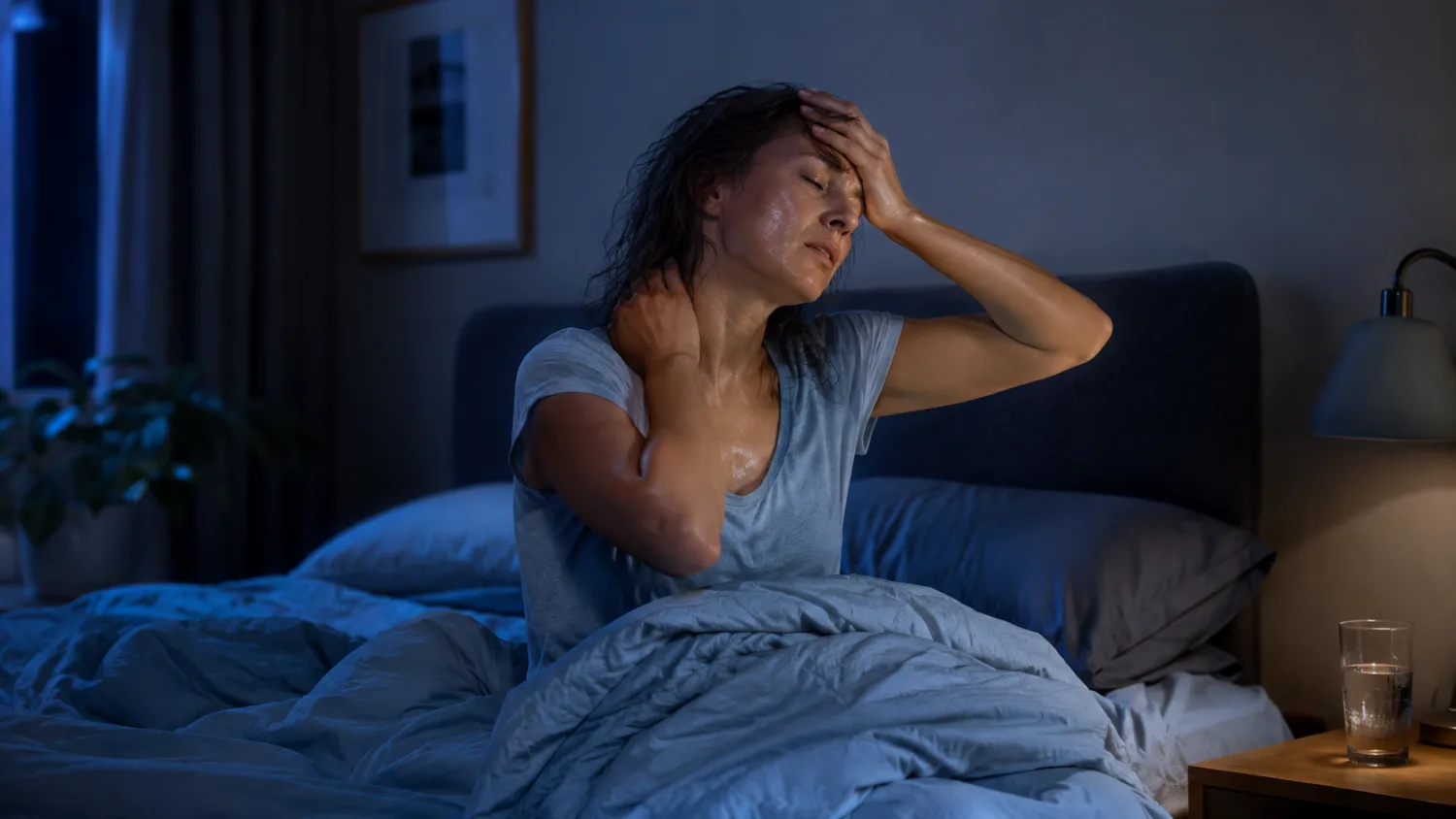
Night sweats are episodes of sweating during sleep that can leave your nightwear, bedding or pillow damp or soaked. Many people occasionally wake up hot because the room is too warm, bedding is too heavy, or they have been sleeping in thick clothing. But regular, drenching or unexplained night sweats can sometimes point to an underlying health issue.
Night sweats can be caused by simple things such as a warm bedroom, alcohol, spicy food, stress or fever. They can also happen with menopause, infections, anxiety, medicines, thyroid problems, low blood sugar, sleep apnoea and, less commonly, more serious conditions such as lymphoma or other illnesses.
This guide explains common causes of night sweats, what may help, what symptoms to watch for, when to speak to a pharmacist or GP, and when to seek urgent help.
Quick answer: See a GP if you regularly have night sweats that wake you up or worry you, if you also have fever, cough, diarrhoea or unexplained weight loss, or if the sweating is severe, drenching, persistent or unexplained.
What are night sweats?
Night sweats mean sweating during sleep beyond what would be expected from a warm room or heavy bedding. Some people wake up slightly clammy. Others wake up drenched and need to change nightwear or bedding.
A one-off sweaty night is usually not a concern if there is an obvious reason. For example, you may sweat if the room is hot, you have a fever, you drank alcohol, you are anxious, or you used heavy bedding during warm weather.
Night sweats matter more when they:
- happen repeatedly
- wake you from sleep
- soak nightwear or bedding
- happen without an obvious trigger
- come with other symptoms
- are new or getting worse
The NHS advises seeing a GP if you have night sweats regularly that wake you up or worry you, if you also have a very high temperature or feel hot, cold or shivery, a cough or diarrhoea, or if you have night sweats with unexplained weight loss. You can read official NHS guidance on night sweats.
Common causes of night sweats
Night sweats have many possible causes. Sometimes more than one factor is involved. For example, menopause symptoms may be worse in a warm bedroom, and alcohol can trigger both reflux and sweating.
Common causes include:
- a warm bedroom or heavy bedding
- fever or infection
- menopause or perimenopause
- anxiety, stress or panic
- alcohol
- spicy food or hot drinks before bed
- medicines
- low blood sugar, especially in people with diabetes
- thyroid problems
- sleep apnoea
- acid reflux
- pregnancy or hormonal changes
- some long-term infections
- rarely, cancers such as lymphoma
The pattern can help. Sweats with hot flushes and changing periods may suggest perimenopause. Sweats with fever, cough or diarrhoea may suggest infection. Sweats with weight loss, swollen lymph nodes or unexplained fatigue need medical assessment.
Is it night sweats or just overheating?
Not every sweaty night is a medical symptom. Many people sweat because of the sleep environment.
Overheating is more likely if:
- the bedroom is warm
- you use thick bedding
- you wear heavy sleepwear
- you share a bed and get too warm
- the weather is hot or humid
- you recently changed duvet, mattress topper or bedding
- you have heating on overnight
Try adjusting the room temperature, bedding and sleepwear first if there are no other symptoms. If the sweating continues despite a cooler sleep environment, or if it is drenching or unexplained, arrange medical advice.
Night sweats with fever or infection
Infections are a common reason for sweating at night. When your body temperature rises and falls during an illness, you may sweat heavily as the fever breaks.
Possible infection-related causes include:
- flu or COVID-like illness
- chest infection
- urinary infection
- kidney infection
- gastroenteritis
- food poisoning
- infected wounds or skin infections
- longer-lasting infections such as tuberculosis, although this is less common
Seek medical advice if night sweats come with fever that is high, persistent or recurrent, or if you feel very unwell.
Related guides include Fever in Adults: What Temperature Means and When to Worry, Cough in Adults: Causes, Red Flags and When to See a GP, Food Poisoning: Symptoms, How Long It Lasts and When to Get Help and Diarrhoea and Vomiting in Adults.
Menopause and perimenopause
Night sweats are a common symptom of perimenopause and menopause. They are often linked with hot flushes, where the face, neck and chest suddenly feel very hot or cold. This can cause sweating, palpitations, anxiety or dizziness, and it may happen during the day or at night.
Menopause-related night sweats may come with:
- irregular periods
- hot flushes
- sleep problems
- mood changes
- anxiety
- brain fog
- vaginal dryness
- reduced libido
- joint aches
NHS guidance says hot flushes can happen during the day or night and may last for several minutes. Night sweats can also worsen sleep problems. See NHS information on menopause and perimenopause symptoms.
For more detail, read Menopause Symptoms, HRT and Treatment.
What helps menopause-related night sweats?
If night sweats are linked with menopause or perimenopause, practical changes may reduce the intensity, although they may not remove symptoms completely.
NHS advice for easing hot flushes and night sweats includes wearing light clothing, keeping the bedroom cool at night, taking a cool shower, using a fan or cold drink, reducing stress, reducing triggers such as spicy food, caffeine, hot drinks, smoking and alcohol, exercising regularly, and losing weight if overweight. See NHS guidance on things you can do for menopause and perimenopause symptoms.
A GP may discuss treatment options such as HRT or non-hormonal treatments depending on your symptoms, age, medical history and preferences.
Anxiety, stress and panic
Anxiety can trigger sweating during the day or at night. Some people wake from sleep feeling hot, sweaty, panicky or with a racing heart. Stress can also make sleep lighter, increase body tension and make normal temperature changes feel more noticeable.
Anxiety-related night sweating may come with:
- racing heart
- feeling on edge
- panic attacks
- nightmares
- poor sleep
- tight chest or fast breathing
- stomach upset
- daytime worry
Even if anxiety seems likely, new night sweats should not automatically be dismissed as stress, especially if they are drenching, persistent or linked with fever, weight loss, swollen lymph nodes, cough or diarrhoea.
Related guides include Mental Health Support Options in the UK, How to Access Mental Health Services in the UK and Heart Palpitations: Causes and When to See a Doctor.
Alcohol and night sweats
Alcohol can cause night sweats by widening blood vessels, affecting sleep quality, triggering reflux, altering blood sugar and increasing dehydration. Some people sweat after drinking even small amounts, while others notice it after heavier drinking.
Alcohol-related sweating may be more likely if:
- you drink close to bedtime
- you drink more than usual
- you wake with palpitations or anxiety
- you also have reflux or nausea
- you feel dehydrated or hungover
If night sweats are linked with alcohol, reducing or avoiding alcohol for a few weeks can help show whether it is a trigger. If you may be dependent on alcohol, do not stop suddenly without medical advice, as withdrawal can be dangerous.
If nausea is part of the pattern, see Nausea: Common Causes, What Helps and When to Get Medical Advice.
Medicines that can cause night sweats
Some medicines can cause sweating or make sweating worse. This may happen soon after starting a medicine, after a dose increase, or sometimes after long-term use.
Medicines that may sometimes be linked with sweating include:
- some antidepressants
- some diabetes medicines, especially if they cause low blood sugar
- some hormone treatments
- some pain medicines
- some fever-reducing medicines as a fever breaks
- some blood pressure or heart medicines
- steroids
- some cancer treatments
Do not stop prescribed medicine suddenly without advice. Speak to a pharmacist, GP or prescribing clinician if night sweats started after a new medicine or dose change.
Low blood sugar at night
Low blood sugar, also called hypoglycaemia, can cause sweating, shakiness, hunger, anxiety, palpitations, headache, confusion, nightmares or waking suddenly. It is most relevant for people with diabetes who use insulin or certain diabetes medicines.
Night-time low blood sugar may cause:
- waking sweaty
- nightmares
- morning headache
- feeling unusually tired on waking
- confusion or irritability
- blood glucose readings that are low overnight or on waking
If you have diabetes and suspect night-time hypos, speak to your diabetes team or GP. Do not ignore repeated night sweats with shakiness or low readings.
Related guides include HbA1c and Blood Sugar Results Explained and Shaky Hands or Feeling Shaky: Common Causes and When to Get Help.
Thyroid problems
An overactive thyroid can make the body’s metabolism run faster than usual, which may cause sweating, heat intolerance, palpitations, weight loss, tremor, anxiety, diarrhoea and sleep problems. Some people notice sweating more at night.
Symptoms that may suggest thyroid involvement include:
- feeling hot when others are comfortable
- increased sweating
- palpitations
- unexplained weight loss
- shaky hands
- anxiety or irritability
- looser stools
- tiredness or muscle weakness
- changes in periods
A GP may arrange thyroid blood tests if symptoms suggest an overactive thyroid. See Thyroid Blood Test Results Explained.
Sleep apnoea and night sweats
Obstructive sleep apnoea can cause repeated pauses or reductions in breathing during sleep. People may snore loudly, wake choking or gasping, feel unrefreshed, have morning headaches, or feel sleepy during the day. Some people also report night sweats.
Possible signs include:
- loud snoring
- pauses in breathing noticed by someone else
- waking choking or gasping
- morning headaches
- dry mouth on waking
- daytime sleepiness
- poor concentration
- high blood pressure
Sleep apnoea is important because it can affect daytime safety, driving, blood pressure and cardiovascular risk. See Snoring and Sleep Apnoea: The Complete UK Guide.
Acid reflux and night sweats
Acid reflux can disturb sleep and sometimes wake people with coughing, choking, nausea, chest burning or discomfort. Some people sweat during these episodes, especially if symptoms feel intense or frightening.
Reflux-related night symptoms may include:
- heartburn
- acid taste in the mouth
- burping
- cough at night
- hoarse voice in the morning
- nausea
- worse symptoms after alcohol, spicy foods or late meals
Seek medical advice if reflux is persistent, severe, new after age 55, or linked with difficulty swallowing, vomiting blood, black stools, unexplained weight loss or anaemia.
For related guidance, see Heartburn, Acid Reflux and GORD.
Night sweats and weight loss
Night sweats with unexplained weight loss should be checked by a GP. This does not mean you have cancer, but the combination can sometimes be linked with infections, thyroid disease, inflammatory conditions, diabetes, lymphoma or other serious causes.
Seek medical advice if you have:
- night sweats with weight loss without trying
- reduced appetite
- persistent fatigue
- fevers or chills
- swollen lymph nodes
- persistent cough
- blood in stool or urine
- ongoing diarrhoea
For related information, see Unexplained Weight Loss: When to See a GP and Loss of Appetite: Common Causes and When to Get Checked.
Night sweats and swollen lymph nodes
Swollen lymph nodes are common after infections, but painless, persistent or unexplained swelling should be assessed, especially if it comes with night sweats, fever, weight loss or unusual tiredness.
NHS guidance lists non-Hodgkin lymphoma symptoms including painless swelling in the neck, armpit or groin, high temperature or feeling hot, cold or shivery, night sweats, shortness of breath, itchy skin and sudden unexplained weight loss. See NHS information on non-Hodgkin lymphoma symptoms.
Most swollen glands are not cancer, but persistent or unexplained symptoms deserve medical review. Read Swollen Lymph Nodes: Causes and When to See a Doctor.
Night sweats and itchy skin
Night sweats and itching can happen together for simple reasons, such as a warm bedroom, dry skin, eczema, hives or menopause. But persistent night sweats with widespread itching and other symptoms should be checked.
Speak to a GP if night sweats and itching come with:
- unexplained weight loss
- swollen lymph nodes
- fever or chills
- persistent fatigue
- yellow skin or eyes
- dark urine or pale stools
- rash, lumps or skin changes you are worried about
For more detail, see Itchy Skin: Common Causes, Rash or No Rash, and What Helps.
Night sweats after illness
It is common to sweat more while recovering from a viral illness, flu-like infection, stomach bug or fever. Sweating can happen when your temperature rises and falls, or when your body is still recovering.
This should gradually improve as you recover. Seek medical advice if sweats continue, symptoms return, fever persists, you have weight loss, cough, chest pain, shortness of breath, ongoing diarrhoea or you feel worse again after initially improving.
Related guides include Flu-Like Symptoms: Cold, Flu, COVID or Something Else? and Shortness of Breath: Common Causes and When to Call 999.
Night sweats during hot weather
Hot weather can easily cause sweating at night, especially if the room stays warm after sunset, you use heavy bedding, or the air is humid. This is common during UK heatwaves.
What may help:
- use lighter bedding
- wear breathable nightwear
- keep curtains closed during the hottest part of the day
- open windows when outdoor air is cooler, if safe
- use a fan if available
- take a cool shower before bed
- keep water nearby
- avoid alcohol before bed
If sweating comes with dizziness, weakness, headache, nausea, confusion or collapse, consider heat illness. See Heat Exhaustion and Heatstroke, Dehydration Symptoms in Adults and Children and How to Prevent Heat Exhaustion and Heatstroke in Hot Weather.
What can help night sweats at home?
If there are no red flags and overheating seems likely, simple changes may reduce sweating and improve sleep.
Try:
- keeping the bedroom cool
- using lighter bedding
- wearing lightweight, breathable nightwear
- using layers you can remove easily
- avoiding alcohol close to bedtime
- reducing spicy foods or hot drinks in the evening
- avoiding heavy meals late at night
- managing stress before bed
- checking whether a new medicine could be contributing
- tracking when sweats happen and possible triggers
If night sweats are regular, drenching or unexplained, do not rely only on lifestyle changes. Arrange a GP appointment.
Should you keep a night sweats diary?
A short diary can help your GP spot patterns. Track symptoms for 1 to 2 weeks if symptoms are not urgent.
Useful things to record include:
- how often sweats happen
- whether they wake you
- whether clothing or bedding is soaked
- room temperature and bedding
- alcohol, spicy food or caffeine intake
- period pattern or menopause symptoms
- fever, cough, diarrhoea or other infection symptoms
- weight changes
- new medicines or supplements
- blood sugar readings if you have diabetes
When to see a GP
See a GP if:
- you have night sweats regularly that wake you up
- you are worried about the sweating
- the sweats are drenching
- night sweats are new and unexplained
- night sweats continue despite a cool sleeping environment
- you also have a high temperature or feel hot, cold or shivery
- you have a cough
- you have diarrhoea
- you are losing weight without trying
- you have swollen lymph nodes
- you feel unusually tired or weak
- you have itchy skin without an obvious cause
- you have symptoms of thyroid disease
- you have diabetes and suspect night-time low blood sugar
- night sweats started after a new medicine
The NHS specifically advises seeing a GP for night sweats that regularly wake you up or worry you, night sweats with very high temperature or feeling hot, cold or shivery, cough or diarrhoea, or night sweats with unexplained weight loss.
When to seek urgent help
Night sweats alone are usually not a 999 emergency. But seek urgent help if sweating happens with symptoms that suggest a serious illness.
Use NHS 111 or urgent care if you have:
- persistent high fever
- shortness of breath
- chest pain that is not severe but concerning
- confusion that is new or worsening
- severe dehydration
- severe weakness
- symptoms rapidly worsening
- fever with a rash you are worried about
Call 999 if you have:
- severe chest pain, pressure or heaviness
- severe difficulty breathing
- collapse or fainting that does not quickly recover
- blue, grey, pale or blotchy lips, skin or tongue
- stroke symptoms such as face drooping, arm weakness or speech problems
- severe confusion or reduced consciousness
- a rash that does not fade when pressed
- signs of sepsis or rapidly worsening illness
You can use NHS 111 online in England if you need urgent advice and it is not a 999 emergency.
What tests might a GP arrange?
The tests depend on your symptoms, age, medical history and examination. Many people will not need extensive tests if the cause is clear, such as menopause or a recent infection. If symptoms are unexplained or persistent, a GP may investigate further.
Possible checks include:
- temperature, pulse and blood pressure
- weight check
- examination for swollen lymph nodes
- chest examination if there is cough or breathlessness
- full blood count
- CRP or inflammation markers
- thyroid blood tests
- liver function tests
- kidney function tests
- HbA1c or blood sugar tests
- urine test
- menopause-related discussion or hormone tests in selected cases
- chest X-ray if symptoms suggest it
- further referral if there are concerning signs
Related guides include Full Blood Count Results Explained, CRP and Inflammation Blood Test Results Explained, Liver Function Test Results Explained, Kidney Blood Test Results Explained and How to Understand Blood Test Results.
How to describe night sweats clearly
When speaking to a GP or NHS 111, try to describe the sweats clearly. This helps them decide whether it sounds like overheating, hormones, infection or something that needs tests.
Useful details include:
- how long it has been happening
- how often it happens
- whether it wakes you up
- whether bedding or clothes are soaked
- whether you have fever or chills
- whether you have a cough or diarrhoea
- whether you have lost weight without trying
- whether you have swollen glands
- whether you have itchy skin
- whether you have menopause symptoms
- whether you have diabetes or low blood sugar episodes
- whether you started a new medicine
- whether alcohol, spicy food or stress makes it worse
- whether you have travelled recently
Frequently asked questions about night sweats
When should I worry about night sweats?
Worry more if night sweats are regular, drenching, wake you up, are unexplained, or come with fever, cough, diarrhoea, unexplained weight loss, swollen lymph nodes, itchy skin, severe fatigue or feeling generally unwell. See a GP if this happens.
Are night sweats usually serious?
No. Many cases are caused by a warm bedroom, alcohol, stress, menopause, a recent infection or medicines. But persistent, drenching or unexplained night sweats should be checked, especially with other symptoms.
Can menopause cause night sweats?
Yes. Night sweats are common during perimenopause and menopause and may happen with hot flushes, sleep problems, mood changes, irregular periods and brain fog. A GP can discuss lifestyle changes, HRT and other treatment options.
Can anxiety cause night sweats?
Yes. Anxiety and stress can cause sweating, disturbed sleep, racing heart, panic symptoms and waking hot or clammy. However, night sweats should not automatically be blamed on anxiety if they are drenching, persistent or linked with fever, weight loss or swollen glands.
Can alcohol cause night sweats?
Yes. Alcohol can trigger sweating, poor sleep, reflux, dehydration and changes in blood sugar. If alcohol is a trigger, reducing or avoiding it may help. Seek medical support if you may be dependent on alcohol.
Can diabetes cause night sweats?
Yes. Night sweats can happen if blood sugar drops too low overnight, especially in people using insulin or certain diabetes medicines. Speak to your diabetes team if you suspect night-time hypos.
Can thyroid problems cause night sweats?
An overactive thyroid can cause sweating, heat intolerance, palpitations, weight loss, tremor, anxiety and sleep problems. A GP can arrange thyroid blood tests if symptoms suggest this.
Can night sweats be a sign of cancer?
Rarely, yes. Night sweats can happen with lymphoma and some other cancers, especially when combined with unexplained weight loss, fever, swollen lymph nodes, persistent fatigue or itching. Most night sweats are not cancer, but persistent or unexplained symptoms should be checked.
What infections cause night sweats?
Many infections can cause sweating, especially when fever breaks. Examples include flu-like illnesses, chest infections, urinary infections, gastroenteritis and some longer-lasting infections. Seek advice if sweats come with high fever, cough, diarrhoea, weight loss or feeling very unwell.
Can night sweats happen after food poisoning?
Yes. Food poisoning or stomach bugs can cause fever, chills, sweating, diarrhoea and vomiting. The main concern is dehydration. Seek advice if symptoms are severe, bloody, persistent or you cannot keep fluids down.
How can I stop night sweats?
Try keeping the bedroom cool, using lighter bedding, wearing breathable sleepwear, avoiding alcohol, caffeine, hot drinks and spicy food before bed, managing stress, and tracking triggers. If sweats are regular, drenching or unexplained, see a GP.
Should I change my bedding or mattress?
Lighter bedding, breathable fabrics and avoiding overheating can help if night sweats are environmental. But if sweating continues despite a cool room and lighter bedding, or comes with other symptoms, seek medical advice.
What tests are done for night sweats?
A GP may check temperature, weight, lymph nodes, chest and blood pressure. They may arrange blood tests such as full blood count, inflammation markers, thyroid, liver, kidney and blood sugar tests, urine tests or a chest X-ray depending on symptoms.
Can night sweats be caused by medication?
Yes. Some medicines can cause sweating, including some antidepressants, hormone treatments, diabetes medicines, pain medicines and steroids. Speak to a pharmacist or GP if symptoms started after a new medicine or dose change.
Final thoughts
Night sweats are often caused by simple factors such as a warm room, heavy bedding, alcohol, stress, menopause or a recent infection. In many cases, adjusting the sleep environment and avoiding triggers can help.
However, regular, drenching or unexplained night sweats should not be ignored. See a GP if they wake you, worry you, keep coming back, or come with fever, cough, diarrhoea, unexplained weight loss, swollen lymph nodes, itchy skin, fatigue or other symptoms.
For official guidance, see NHS advice on night sweats, NHS guidance on menopause and perimenopause symptoms, and NHS information on non-Hodgkin lymphoma symptoms.
This article is for general information only and should not replace medical advice. If you are worried about night sweats or other symptoms, contact NHS 111, your GP, a pharmacist, or call 999 in an emergency.