Hot weather can be uncomfortable for anyone, but heatwaves can be especially risky for older adults. As people age, the body may become less efficient at regulating temperature. Some long-term conditions, medicines, reduced mobility, memory problems and living alone can also make it harder to keep cool, drink enough and notice early warning signs.
In the UK, heatwaves are becoming a more regular part of summer. Many homes are designed to retain warmth, which can make bedrooms, flats, care homes and upstairs rooms uncomfortably hot even after the outdoor temperature drops. For older people, prolonged heat can increase the risk of dehydration, heat exhaustion, falls, confusion, worsening heart or lung symptoms, kidney strain and, in severe cases, heatstroke.
The good news is that many heat-related problems can be prevented with simple planning: keeping the home cooler, drinking regularly, avoiding the hottest part of the day, reviewing medicines where needed, checking in on vulnerable relatives or neighbours, and acting quickly when symptoms appear.
This guide explains why older adults are more vulnerable in hot weather, how to stay safe during a heatwave, what carers and families should look out for, and when heat symptoms need urgent medical help.
Quick answer: Older adults should take extra care during heatwaves by staying indoors during the hottest part of the day, keeping rooms cool, drinking regularly, wearing light clothing, eating lighter meals, avoiding excess alcohol, checking medicines and asking for help early if they feel dizzy, weak, confused, unusually tired, breathless or unwell. Call 999 if there is confusion, collapse, seizure, severe breathlessness, chest pain, or symptoms of heatstroke.
Why heatwaves are more risky for older adults
Older adults are more likely to become unwell in hot weather for several reasons. The body may not respond to heat as quickly, sweating may be reduced, thirst may be less obvious, and some people may not feel hot even when their body is overheating.
Heat risk can be higher if someone:
- is aged over 65, especially over 75
- lives alone
- has dementia, memory problems or reduced awareness of thirst
- has heart, lung, kidney, diabetes-related or neurological conditions
- takes medicines that affect fluid balance, blood pressure, urination or sweating
- has reduced mobility and cannot easily move to a cooler room
- has difficulty opening windows, closing curtains or getting drinks
- lives in an upstairs flat, poorly ventilated home or care setting that overheats
- has recently had vomiting, diarrhoea, fever or infection
- has poor appetite or is already undernourished
GOV.UK’s hot weather advice says anyone can become unwell if they get too hot, but some people are at higher risk and may need extra support. GOV.UK Beat the Heat guidance.
For related All Health and Care guides, see Dehydration Symptoms in Adults and Children, Heat Exhaustion and Heatstroke and How to Prevent Heat Exhaustion and Heatstroke in Hot Weather.
Early signs that heat is affecting an older person
Heat-related illness does not always start dramatically. In older adults, early signs may be subtle. Someone may not say “I feel too hot”. Instead, they may become tired, quiet, confused, dizzy, unsteady or less interested in food and drink.
Early warning signs can include:
- feeling unusually tired or weak
- dizziness or light-headedness
- headache
- thirst or dry mouth
- passing less urine than usual
- dark yellow urine
- muscle cramps
- loss of appetite
- nausea
- sleep disturbance
- confusion or unusual behaviour
- falls or near-falls
- worsening breathlessness
- fast pulse or feeling faint
Do not dismiss sudden confusion, weakness or falls as “just old age”. During hot weather, these can be signs of dehydration, overheating, infection, medication problems or another medical issue.
Useful related guides include Dizziness: Common Causes and When to Worry, Fainting and Blackouts, Loss of Appetite, Muscle Cramps and Early Signs of Dementia.
How to keep the home cooler
Keeping the home cool is one of the most important heatwave safety steps. This matters especially for older adults who spend most of the day indoors or cannot easily go somewhere cooler.
During the day:
- close curtains or blinds on windows facing the sun
- keep windows closed if the air outside is hotter than indoors
- turn off unnecessary lights and electrical appliances
- avoid using the oven during the hottest part of the day
- stay in the coolest room if possible
- use a fan to move air around if it feels helpful
- move downstairs if upstairs rooms are very hot
In the evening and overnight, open windows when the outside air becomes cooler and it is safe to do so. If possible, create a cross-breeze by opening windows on opposite sides of the home. Security, falls risk, noise and pollution should still be considered.
GOV.UK has a home checklist to help identify whether a home may be at risk of overheating and how to reduce that risk. GOV.UK Beat the Heat: keep cool at home checklist.
If sleep is affected, see How to Sleep in Hot Weather.
Hydration: how to reduce dehydration risk
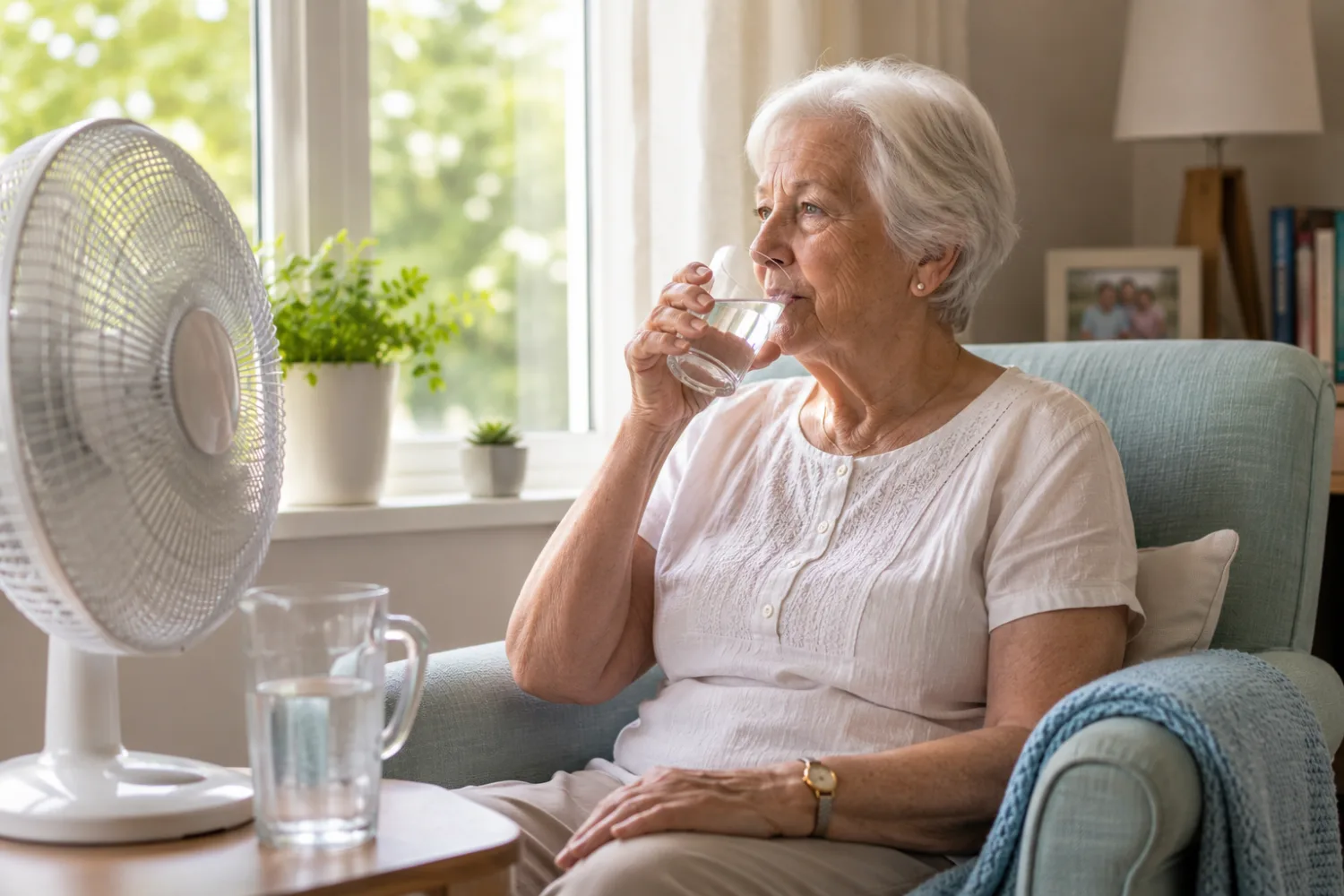
Older adults may not always feel thirsty, even when they need fluids. Some people also avoid drinking because they worry about needing the toilet, especially overnight or if mobility is limited. But dehydration can increase the risk of dizziness, confusion, constipation, urine infections, kidney strain and falls.
Practical hydration tips include:
- drink regularly throughout the day rather than waiting for thirst
- keep a drink within easy reach
- use a jug, bottle or glass with markings to track intake
- offer small drinks often if large glasses feel too much
- include water, diluted squash, milk, herbal tea or oral rehydration solution when appropriate
- eat water-rich foods such as fruit, yoghurt, soup, cucumber or melon
- increase fluids after sweating, fever, vomiting or diarrhoea
- limit alcohol, as it can worsen dehydration and sleep quality
Age UK advises resting in a cool, dark place and drinking plenty of water if dehydrated or overheating, and recommends calling NHS 111 if symptoms get worse. Age UK: how to keep cool in hot weather.
If someone has heart failure, kidney disease or has been told to restrict fluids, they should follow their clinician’s advice and seek medical guidance during heatwaves if unsure.
Food, appetite and alcohol in hot weather
Many older adults eat less during hot weather. This may be because of heat, tiredness, nausea, low mood, medication, poor sleep or not wanting to cook. A few lighter days may not be a problem, but prolonged poor intake can contribute to weakness, falls, weight loss and slower recovery from illness.
Helpful food ideas include:
- smaller, more frequent meals
- cold meals such as salads, sandwiches, yoghurt, fruit, eggs or cooked meats
- soups served lukewarm or cool if preferred
- easy snacks kept nearby
- protein with meals, such as eggs, fish, chicken, beans, cheese or yoghurt
- avoiding heavy cooking during the hottest part of the day
Alcohol can increase dehydration risk, worsen sleep, affect balance and interact with medicines. It is best avoided or limited during heatwaves, especially in older adults who are already dizzy, sleepy, confused, unsteady or taking regular medication.
For more detail, see Loss of Appetite: Common Causes and When to Get Checked, Nausea: Common Causes and What Helps and Constipation in Adults.
Medicines and long-term conditions during heatwaves
Some medicines can make heatwaves more risky. They may increase fluid loss, affect blood pressure, reduce sweating, cause drowsiness, or make dehydration more likely. This does not mean medicines should be stopped. It means heatwave planning is important.
Medicines that may need extra awareness include:
- diuretics, also called water tablets
- some blood pressure medicines
- some heart medicines
- some diabetes medicines
- some antidepressants, antipsychotics or sedatives
- medicines that affect kidney function
- laxatives if they cause diarrhoea or fluid loss
Do not stop prescribed medicines without advice. Instead, ask a pharmacist, GP or specialist team if a medicine plan is needed during very hot weather, especially if the person has kidney disease, heart failure, diabetes, high blood pressure, dementia, frailty or previous heat-related illness.
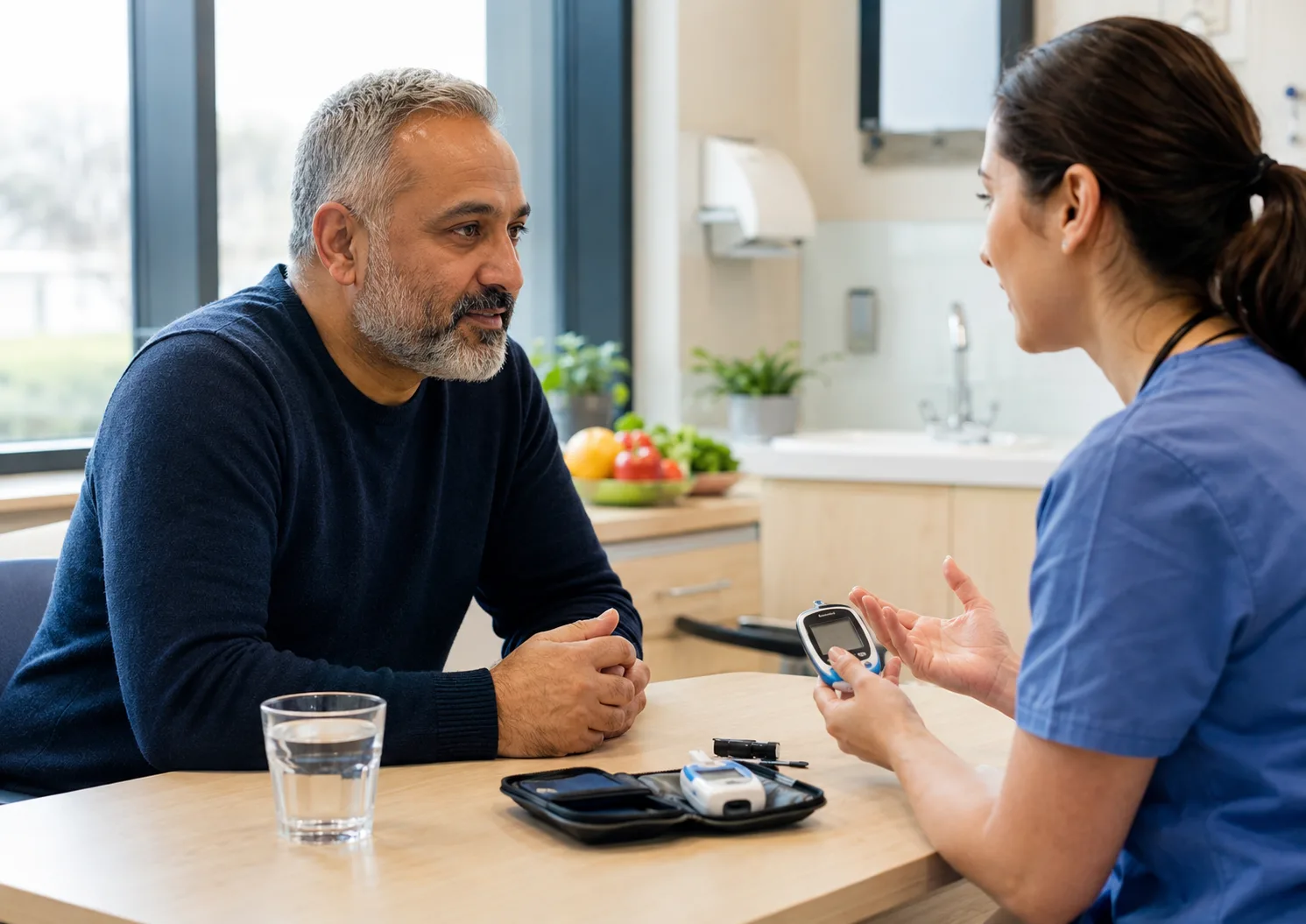
People with diabetes may need to be especially careful about hydration, blood sugar monitoring and safe storage of medicines. See Diabetes Explained, HbA1c and Blood Sugar Results, High Blood Pressure, Home Blood Pressure Monitoring and eGFR and Creatinine Results.
Heatwave safety for people with dementia or memory problems
People with dementia, delirium risk or memory problems may need extra support during hot weather. They may not remember to drink, may wear too many layers, may not open windows safely, or may not understand why they feel unwell.
Families and carers can help by:
- leaving drinks clearly visible and within reach
- offering drinks regularly, not just asking “are you thirsty?”
- checking clothing is light and suitable
- keeping the coolest room comfortable and accessible
- closing curtains during the day
- checking fridge contents and food safety
- using reminders or prompts for fluids
- checking for confusion, drowsiness, falls or reduced urine output
- arranging extra visits or calls during heatwaves
Heat can worsen confusion, and dehydration can contribute to delirium. Sudden confusion, agitation, hallucinations, sleepiness or a major change from normal behaviour should be taken seriously.
Related guides include Dementia vs Depression vs Mild Cognitive Impairment, Choosing a Care Home for Someone with Dementia, What to Do if a Parent Refuses Care and Night Care at Home.
Checking on older relatives, neighbours and care home residents
Heatwave safety is not only an individual issue. Older adults who live alone, have limited mobility or rely on carers may need practical support.
When checking on someone, ask or look for:
- Is the room very hot?
- Are curtains closed on sunny windows?
- Is there a drink within reach?
- Have they passed urine today?
- Are they eating at least small amounts?
- Are they more confused, sleepy or weak than usual?
- Are they wearing suitable light clothing?
- Do they have enough food, fluids and medicines?
- Can they move safely to a cooler room?
- Do they know who to call if they feel unwell?
During heatwaves, practical help may be more useful than general advice. This could include bringing groceries, filling water bottles, moving a chair to a cooler room, helping close blinds, checking medication supplies, or arranging extra care visits.
GOV.UK’s Prepare campaign advises offering practical help to people at greater risk before periods of hot weather, such as helping them stock up on water or medication. GOV.UK Prepare: hot weather.
If care arrangements are becoming difficult, see Home Care: Types of Support, Funding and How to Choose, Home Care vs Live-in Care vs Care Home, Questions to Ask a Home Care Agency and Emergency Respite Care.
Going outside safely during a heatwave
Older adults do not need to stay indoors all summer, but outdoor activity should be planned carefully during very hot weather.
Safer outdoor habits include:
- avoid going out during the hottest part of the day, often late morning to mid-afternoon
- choose early morning or evening for essential trips
- stay in the shade where possible
- wear a wide-brimmed hat and loose, light clothing
- use sunscreen on exposed skin
- carry water
- avoid rushing or carrying heavy shopping
- use transport rather than walking long distances in heat
- take breaks in cool public spaces if needed
Age UK advises avoiding spending time outside or exercising during the hottest part of the day, especially between 11am and 3pm where possible. Age UK: staying cool in a heatwave.
If outdoor heat triggers chest pain, severe breathlessness, faintness, weakness or confusion, seek medical advice urgently. Related guides include Chest Pain: When to Worry, Shortness of Breath, Stroke Symptoms and TIA and Cardiovascular Risk.
Heat exhaustion and heatstroke: when it is urgent
Heat exhaustion can often improve if someone is moved to a cooler place, cooled down and given fluids. Heatstroke is a medical emergency.
Possible heat exhaustion symptoms include:
- headache
- dizziness
- heavy sweating
- weakness or tiredness
- feeling sick
- muscle cramps
- fast pulse
- thirst
- cool, clammy skin
If heat exhaustion is suspected:
- move the person to a cooler place
- remove unnecessary clothing
- cool the skin with water, a fan, cool cloths or a cool shower if safe
- give cool drinks if the person is awake and able to swallow
- stay with them and monitor symptoms
The NHS says heat exhaustion does not usually need emergency medical help if the person can cool down within 30 minutes, but heatstroke should be treated as an emergency. NHS heat exhaustion and heatstroke guidance.
Call 999 if the person:
- is confused or not acting normally
- faints or loses consciousness
- has a seizure
- has severe breathlessness
- has chest pain
- has very hot skin and is not sweating despite heat
- does not improve after cooling measures
- cannot drink or keep fluids down
- seems seriously unwell
Do not wait if you are worried. Heatstroke can be life-threatening.
Preparing before a heatwave
The safest heatwave plan is made before the hottest days arrive. This is especially important for older people living alone, care home residents, people with dementia and those with heart, lung, kidney or diabetes-related conditions.
A simple preparation checklist:
- check the weather forecast and Heat-Health Alerts
- identify the coolest room in the home
- make sure curtains or blinds work
- check fans are safe and working
- stock up on drinks and easy meals
- make sure medicines are available
- ask a pharmacist about medicine concerns if needed
- arrange check-in calls or visits
- keep emergency contacts visible
- plan transport for appointments if walking would be risky
- know when to call NHS 111 or 999
The UKHSA Heat-Health Alert system provides early warning when adverse temperatures are likely to affect health and wellbeing. UKHSA Heat-Health Alerts.
If a person depends on care, consider whether the care plan covers heatwave risks: hydration, clothing, room temperature, medication storage, extra checks, night-time comfort and emergency escalation.
Final thoughts
Heatwaves can be dangerous for older adults, but many problems are preventable. The key steps are simple: keep the home cool, drink regularly, avoid the hottest part of the day, wear light clothing, eat small nourishing meals, check medicines if needed, and make sure someone is checking in during very hot weather.
Families, neighbours, carers and care homes all have a role. A short visit, phone call or practical task can prevent dehydration, confusion, falls and heat illness.
Take heat symptoms seriously. Dizziness, weakness, headache, cramps, poor urine output, confusion or worsening breathlessness should not be ignored. Call 999 if there are signs of heatstroke, collapse, severe breathlessness, chest pain, seizure or serious confusion.
For official advice, see NHS heatwave advice, GOV.UK Beat the Heat, Age UK hot weather advice and UKHSA Heat-Health Alerts.
This article is for general information only and should not replace medical advice. If an older person is confused, collapsed, severely breathless, has chest pain, has a seizure, or seems seriously unwell during hot weather, call 999.
Frequently asked questions
Why are older adults more at risk during heatwaves?
Older adults may regulate body temperature less efficiently, feel thirst less strongly, have long-term conditions, take medicines that affect fluid balance, or have reduced mobility. These factors can increase the risk of dehydration, overheating, falls and heat illness.
How can older people stay cool during a heatwave?
Stay in the coolest room, close curtains during the day, open windows when it is cooler and safe, wear loose light clothing, drink regularly, avoid peak heat and use a fan if it helps.
How much should an older person drink in hot weather?
There is no single amount for everyone, but regular fluids throughout the day are important. People with heart failure, kidney disease or fluid restrictions should follow medical advice and ask for guidance during heatwaves if unsure.
What are early signs of dehydration in older adults?
Dry mouth, thirst, dizziness, headache, dark urine, passing less urine, tiredness, confusion, constipation and weakness can all suggest dehydration.
Can hot weather cause confusion in older people?
Yes. Heat, dehydration, infection, medication problems and poor sleep can all contribute to confusion or delirium. Sudden confusion should be taken seriously and may need urgent medical advice.
Should older adults avoid going outside in a heatwave?
They should avoid the hottest part of the day where possible, especially late morning to mid-afternoon. Essential trips are safer early in the morning or evening, with water, shade and rest breaks.
Are fans safe for older people?
Fans can help many people feel cooler, especially when the air is not extremely hot. They should be stable, clean and safely placed. Drinking enough fluid still matters because fans do not prevent dehydration.
Which medicines can be a problem in hot weather?
Diuretics, some blood pressure medicines, heart medicines, diabetes medicines, sedatives and some mental health medicines may increase heat-related risks in some people. Do not stop medicines without advice; ask a pharmacist or GP if concerned.
What should carers check during a heatwave?
Check room temperature, fluids, urine output, clothing, food intake, confusion, dizziness, falls risk, medication supplies and whether the person can move to a cooler room.
When should I call NHS 111?
Call NHS 111 if an older person has heat symptoms that are not improving, dehydration concerns, worsening dizziness, weakness, confusion, vomiting, or you are unsure what level of help is needed.
When should I call 999 during a heatwave?
Call 999 for confusion, collapse, seizure, chest pain, severe breathlessness, suspected heatstroke, loss of consciousness, or if the person seems seriously unwell.
Can heat make heart or lung conditions worse?
Yes. Heat can strain the body and may worsen breathlessness, chest symptoms, dizziness or fatigue in people with heart or lung conditions. New or severe symptoms should be assessed urgently.
Can heat increase falls risk?
Yes. Dehydration, dizziness, low blood pressure, weakness, poor sleep and medication effects can all increase falls risk during hot weather.
How can families help an older relative in a heatwave?
Call or visit regularly, make sure drinks are within reach, help keep rooms cool, check medication supplies, bring easy meals, watch for confusion or weakness, and arrange extra support if needed.
What should care homes do during heatwaves?
Care homes should monitor residents closely, support hydration, keep rooms cool, reduce heat exposure, review care plans, identify high-risk residents, and escalate quickly if heat illness symptoms appear.