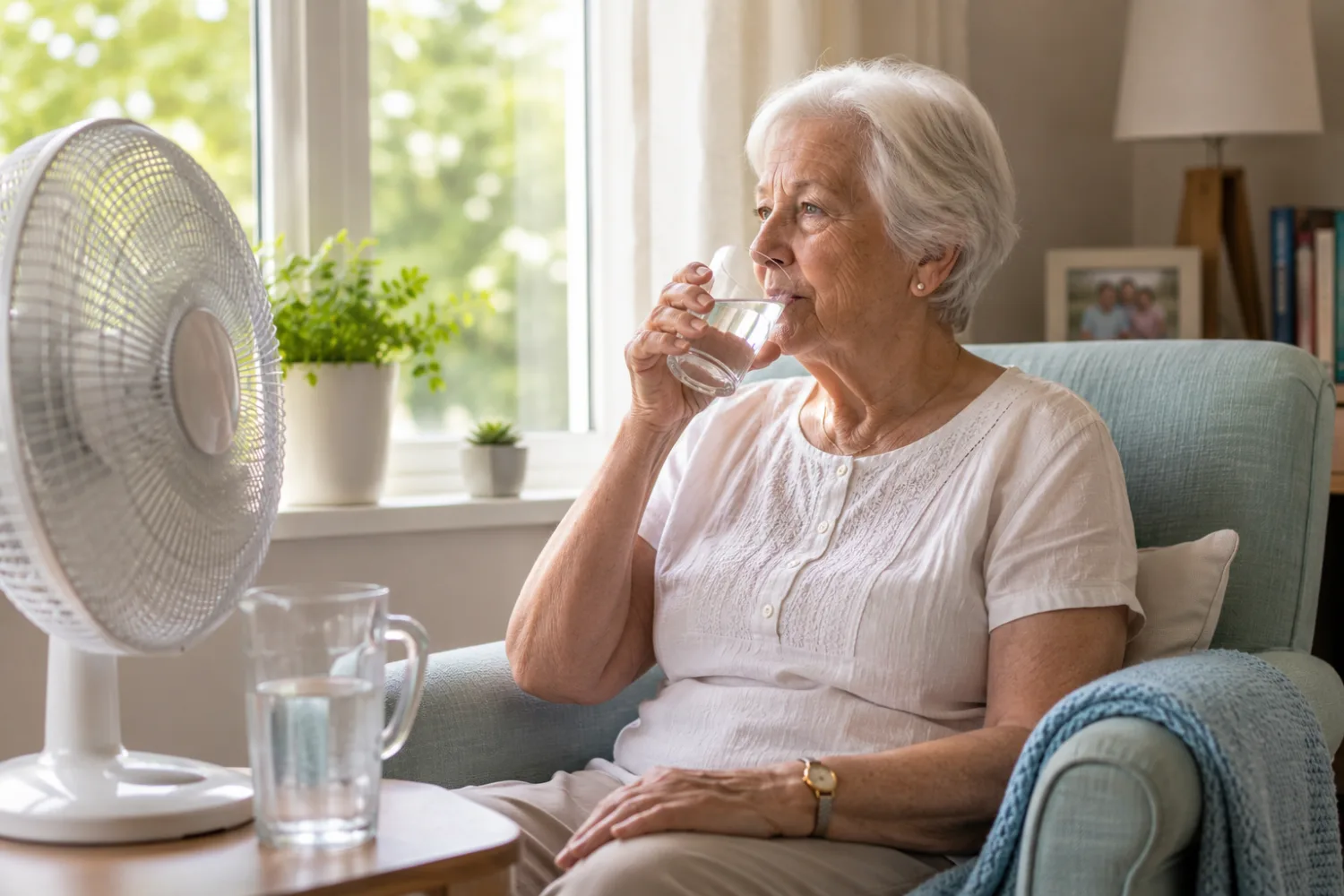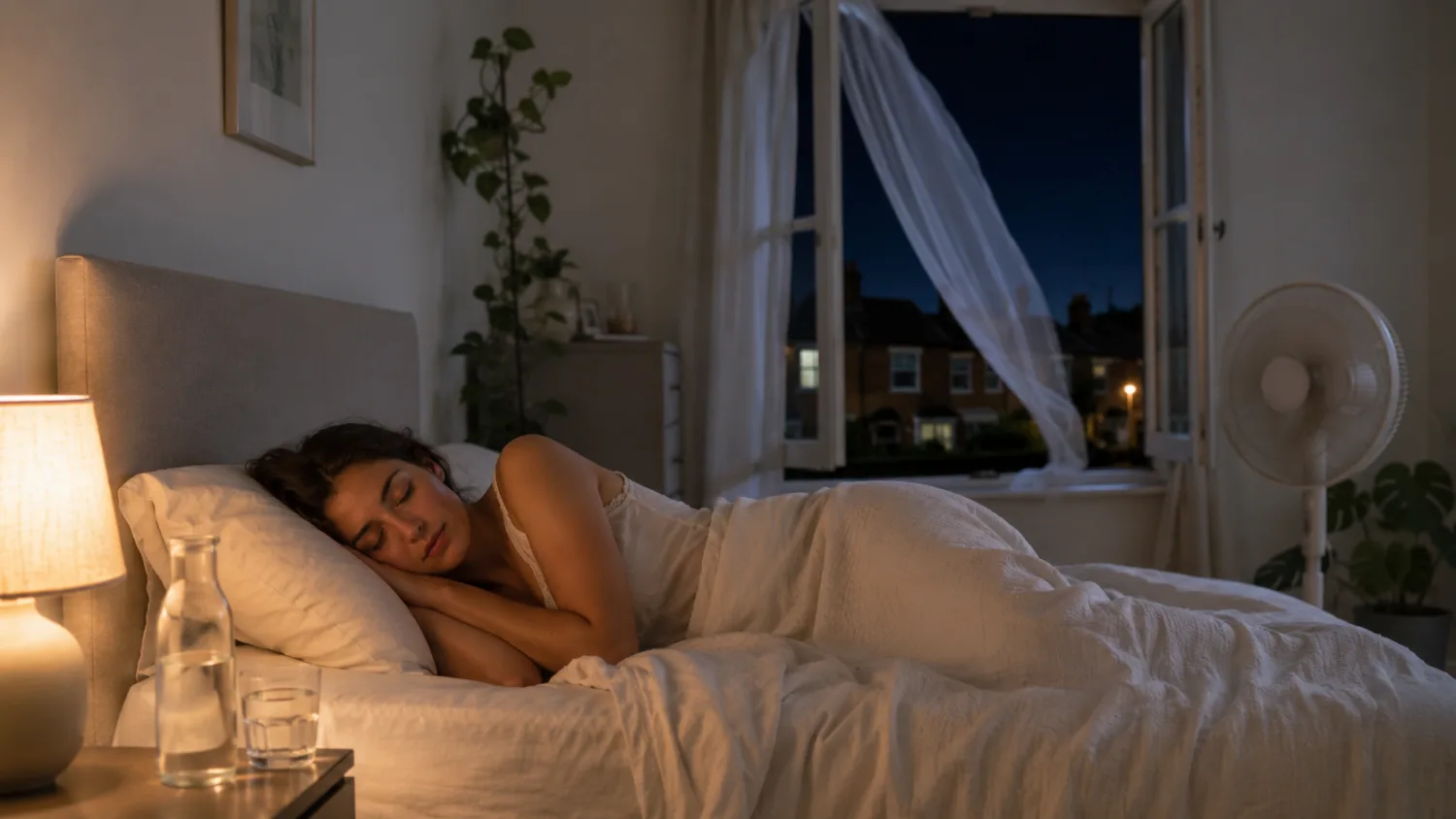
Sleeping in hot weather can be surprisingly difficult. Even if you cope well during the day, a warm bedroom can make it hard to fall asleep, wake you repeatedly through the night, and leave you feeling tired, irritable or foggy the next morning.
Hot nights are especially common during UK heatwaves because many homes are built to keep warmth in, not to release it. Bedrooms can stay hot long after the outside temperature starts to fall, particularly in upstairs rooms, flats, loft conversions and homes with poor ventilation.
Most people can improve sleep in hot weather with simple steps: keeping the room cooler during the day, using air movement wisely, switching bedding, cooling the body before bed and drinking enough fluids. However, heat can also be risky for babies, older adults, pregnant people, people with long-term conditions, and anyone who develops symptoms of heat exhaustion or heatstroke.
This guide explains why hot weather affects sleep, how to cool your bedroom, what to wear, what to drink, how to use fans safely, what helps babies and children, and when heat-related symptoms need medical advice.
Quick answer: To sleep better in hot weather, keep curtains or blinds closed during the day, open windows when the outside air is cooler and safe to do so, use lightweight cotton bedding, drink enough fluids, avoid alcohol before bed, take a cool or lukewarm shower, keep a glass of water nearby, and use a fan to move air around the room. Seek urgent help if heat symptoms include confusion, fainting, severe weakness, fast breathing, chest pain, or a very high temperature.
Why hot weather makes sleep harder
Sleep is closely linked to body temperature. In the evening, your body naturally starts to cool down as part of the process of preparing for sleep. If your bedroom is too hot, or your body cannot release heat properly, it can be harder to fall asleep and stay asleep.
Hot weather can affect sleep by:
- making it harder for your body temperature to drop
- causing sweating and discomfort
- making bedding feel heavy or sticky
- increasing thirst or dehydration risk
- worsening hay fever, itching or skin irritation in some people
- increasing restlessness and night waking
- making babies, older adults and vulnerable people more prone to overheating
Humidity can make hot nights feel worse because sweat does not evaporate as easily. This means your body may struggle to cool itself even if the temperature does not look extremely high.
The NHS advises that a cool, well-ventilated room is usually better for sleep than a hot or stuffy one. NHS Every Mind Matters sleep guidance.
Keep the bedroom cooler during the day
The best hot-weather sleep often starts long before bedtime. If your bedroom heats up all afternoon, it can stay uncomfortable well into the night. The aim is to block heat during the day and release it when the air outside becomes cooler.
During the day:
- keep curtains, blinds or shutters closed on sun-facing windows
- close windows if the air outside is hotter than indoors
- avoid leaving bedroom lights, computers or TVs on unnecessarily
- avoid cooking in ways that heat the home late in the evening
- keep bedroom doors open if it helps air circulate
- use lighter-coloured curtains or reflective blinds if your room overheats regularly
In the evening or overnight, open windows when the air outside is cooler and it is safe to do so. If possible, create a cross-breeze by opening windows on opposite sides of the home. If security, noise, pollution or allergies are a concern, even opening windows for a short period before bed may help.
The British Red Cross advises keeping warm air out during the day, ventilating at night when possible, closing curtains and blinds, and reducing heat generated indoors. British Red Cross: keeping your home cool.
Use fans and air flow sensibly
A fan does not lower the room temperature in the same way as air conditioning, but it can help sweat evaporate and make the air feel more comfortable. Fans are often most useful when the room is warm but not dangerously hot, and when you are drinking enough fluid.
Fan tips for hot nights:
- place the fan where it moves air across the room, not necessarily directly into your face
- put the fan near an open window in the evening if cooler air is coming in
- keep the bedroom door open if it improves air movement
- clean dust from the fan, especially if you have allergies
- avoid trailing cables where someone could trip at night
- do not point a strong fan directly at a baby
Some people place a bowl of ice or a frozen bottle of water in front of a fan. This can create a temporary cooling effect, but it is not a substitute for proper ventilation and hydration. Make sure water cannot spill onto electrical items.
If you use a fan all night and wake with a dry throat, blocked nose or irritated eyes, try angling it away from your face, reducing the speed, or using it to move air around the room rather than directly over you.
If hot nights worsen hay fever, cough or breathing symptoms, see Hay Fever: Symptoms, Treatment and When to Get Help, Cough in Adults and Shortness of Breath: When to Call 999.
Choose cooler bedding and sleepwear
Bedding can make a big difference. Thick duvets, synthetic fabrics, heavy mattress toppers and poor air circulation can trap heat around the body.
In hot weather, try:
- a thin cotton sheet instead of a duvet
- a low-tog summer duvet if you prefer some cover
- cotton, linen or bamboo bedding
- loose, breathable sleepwear
- removing heavy throws, fleece blankets or decorative cushions
- turning the pillow over during the night for a cooler side
- keeping a spare pillowcase in a cooler room and swapping it if needed
Natural fibres are often more comfortable because they allow better airflow and can absorb some moisture. Very tight clothing or synthetic fabrics may make sweating and itching worse.
The Sleep Charity recommends lightweight bedding, breathable natural materials such as cotton or bamboo, and managing sunlight during the day to reduce bedroom heat. The Sleep Charity: hot weather bedtime tips.
If heat makes your skin itchy or rash-prone, these guides may help: Prickly Heat Rash, Itchy Skin and Hives.
Cool your body before bed
Cooling the room helps, but cooling your body can be just as important. The aim is to reduce heat stress without shocking the body or making you uncomfortable.
Useful pre-bed steps include:
- take a cool or lukewarm shower before bed
- put cool water on wrists, neck or feet
- use a damp flannel on the forehead or back of the neck
- keep a spray bottle of cool water nearby
- avoid intense exercise late in the evening
- avoid heavy meals close to bedtime
- choose cold, water-rich foods if you are hungry
A very cold shower may feel refreshing, but for some people it can be too stimulating. A cool or lukewarm shower is often more comfortable and may help you settle.
The British Red Cross suggests a lukewarm or cool shower before bed and cooling the feet to help bring body temperature down. British Red Cross: keeping cool at night.
If hot weather is causing muscle cramps, dizziness, headache or nausea, read Muscle Cramps, Dizziness, Headache Red Flags and Nausea.
Hydration, alcohol and caffeine
Hot weather increases fluid loss through sweating. Even mild dehydration can make you feel thirsty, headachy, tired, dizzy and restless at night.
To reduce dehydration risk:
- drink regularly through the day rather than waiting until bedtime
- keep water by the bed
- drink extra if you have been sweating
- eat water-rich foods such as fruit, salads, yoghurt or soups
- avoid drinking large amounts just before bed if it makes you wake to urinate
- consider oral rehydration solution if you have vomiting or diarrhoea
Alcohol can make sleep worse and increase dehydration risk. It may help you feel sleepy at first, but it often causes lighter, more broken sleep later in the night. Caffeine can also interfere with sleep, especially if taken later in the day.
The NHS advises drinking extra fluids in hot weather and avoiding excess alcohol. NHS heatwave advice.
For more on hydration and heat illness, see Dehydration Symptoms in Adults and Children, Heat Exhaustion and Heatstroke and How to Prevent Heat Exhaustion and Heatstroke in Hot Weather.
Babies, children and hot nights
Babies and young children can overheat more easily than adults, and they cannot always tell you they are too hot. Hot nights can also disturb sleep, feeding and mood.
For children:
- keep the room as cool as you reasonably can
- use light sleepwear
- offer regular drinks
- avoid heavy bedding
- keep curtains closed during the day
- use a fan carefully, not directly on a baby or young child
- check for signs of dehydration, especially during illness
For babies, safe sleep advice still matters in hot weather. Babies should sleep on their back, on a firm flat mattress, without loose bedding, pillows or duvets. Do not cover the pram with a blanket in hot weather, as this can trap heat and reduce airflow.
The Lullaby Trust advises aiming to keep a baby’s room fairly cool if possible, opening doors and windows when safe, using a fan pointed away from the baby, and avoiding direct sunlight. The Lullaby Trust: safer sleep in hot weather.
Seek medical advice if a baby or child is unusually sleepy, not drinking, has fewer wet nappies, is breathing fast, has a high fever, has a rash you are worried about, or seems very unwell. Related guides include Fever in Children, Vomiting and Diarrhoea in Children, Coughs and Colds in Children and Common Rashes in Children.
Older adults, pregnancy and long-term conditions
Some people are more vulnerable during hot weather and may need extra support to keep cool overnight.
Higher-risk groups include:
- older adults, especially those living alone
- babies and young children
- pregnant people
- people with heart, lung, kidney or diabetes-related conditions
- people with dementia or reduced mobility
- people taking medicines that affect fluid balance, blood pressure or sweating
- people with mental health conditions or substance dependence
- people who are homeless or living in overheated housing
In older adults, overheating may show as confusion, weakness, dizziness, falls, worsening breathlessness, poor appetite or reduced urine output rather than simply “feeling too hot”. Check in on vulnerable relatives, neighbours or care home residents during heatwaves.
If someone has dementia, they may not recognise thirst, remove bedding, open windows safely or explain that they feel overheated. Families may need to help with drinks, lighter clothing, room cooling and regular checks.
Useful related guides include Early Signs of Dementia, What to Do if an Elderly Parent Is Not Safe at Home, Night Care at Home, Home Care: Types of Support and Diabetes Explained.
What not to do during hot nights
Some common hot-weather habits can make sleep worse or increase risk.
Avoid:
- drinking alcohol to help you sleep
- doing intense exercise close to bedtime
- eating a very heavy meal late at night
- leaving the bedroom in full sun all day with curtains open
- using thick duvets or synthetic bedding if you are overheating
- pointing a strong fan directly at a baby
- covering a pram with a blanket in hot weather
- ignoring confusion, collapse, severe weakness or signs of heatstroke
Also be careful with improvised cooling methods. Ice packs should be wrapped in a cloth rather than placed directly on skin. Water should be kept away from electrical items. If you use a fan, make sure cables are safe and the fan is stable.
When hot weather symptoms are urgent
Poor sleep in hot weather is common. Heat illness is different. Heat exhaustion can develop when the body becomes too hot and loses fluid and salts. Heatstroke is more serious and needs emergency help.
Possible heat exhaustion symptoms include:
- headache
- dizziness
- heavy sweating
- tiredness or weakness
- feeling sick
- thirst
- muscle cramps
- fast pulse
- cool, clammy skin
If someone has heat exhaustion, move them to a cooler place, remove unnecessary clothing, cool their skin, and give cool drinks if they are awake and able to drink. GOV.UK advises that someone should start to cool down and feel better within about 30 minutes. GOV.UK: Beat the Heat.
Call 999 if someone:
- is confused or not acting normally
- faints or loses consciousness
- has a seizure
- has very hot skin and is not sweating despite heat
- has severe breathing difficulty
- has chest pain
- does not improve after cooling measures
- is a baby, older adult or vulnerable person and you are seriously worried
Related guides include Heat Exhaustion and Heatstroke: Symptoms and First Aid, Fainting and Blackouts, Chest Pain: When to Worry and Stroke Symptoms and TIA.
Final thoughts
Sleeping in hot weather is not just about comfort. Poor sleep can affect mood, concentration, fatigue, appetite and how well you cope the next day. For vulnerable people, hot nights can also increase the risk of dehydration and heat illness.
The most useful approach is to plan ahead: keep heat out of the bedroom during the day, let cooler air in when safe, use breathable bedding, drink enough fluids, avoid alcohol before bed, cool the body gently, and pay extra attention to babies, older adults and people with long-term conditions.
If hot weather is making sleep difficult but you are otherwise well, small changes often help. If symptoms suggest heat exhaustion, dehydration or heatstroke, take them seriously and seek help when needed.
For official advice, see NHS heatwave advice, GOV.UK Beat the Heat guidance, NHS Every Mind Matters sleep advice, British Red Cross hot night advice and The Lullaby Trust baby hot weather guidance.
This article is for general information only and should not replace medical advice. If you or someone else has signs of heatstroke, severe dehydration, confusion, collapse, chest pain, severe breathlessness or another emergency symptom, call 999.
Frequently asked questions
Why can’t I sleep when it is hot?
Your body normally cools down as part of falling asleep. A hot or stuffy bedroom makes it harder to lose heat, so you may feel restless, sweaty and wake more often.
What is the best way to cool a bedroom before sleep?
Keep curtains or blinds closed during the day, reduce heat from appliances, then open windows when the air outside becomes cooler and it is safe to do so. A fan can help move air around the room.
Should I keep windows open or closed in hot weather?
If the air outside is hotter than inside, keeping windows closed can help. When the outside air cools in the evening or overnight, opening windows may help ventilate the room, as long as it is safe.
Is a fan safe to use all night?
For many adults, a fan can be used safely if it is stable, clean and not too close to the face. Avoid trailing cables. Do not point a strong fan directly at a baby.
Should I take a cold shower before bed?
A cool or lukewarm shower may help you feel more comfortable before bed. Very cold showers can feel refreshing but may be too stimulating for some people.
What bedding is best in hot weather?
Lightweight cotton, linen or bamboo bedding is often more comfortable than heavy synthetic bedding. Many people sleep better with a thin sheet instead of a duvet during hot weather.
Does drinking water before bed help?
It can help if you are thirsty or dehydrated, but drinking a lot just before bed may make you wake to urinate. It is better to drink regularly through the day and keep water nearby at night.
Does alcohol make hot-weather sleep worse?
Yes, alcohol can worsen dehydration and make sleep more broken, even if it makes you feel sleepy at first. It is best avoided or limited during hot nights.
How can I help a baby sleep safely in hot weather?
Use light clothing, avoid heavy bedding, keep the room as cool as reasonably possible, and follow safe sleep advice: baby on their back, on a firm flat mattress, without loose bedding, pillows or duvets. Do not point a fan directly at the baby.
How can I help an older person sleep in hot weather?
Encourage fluids, keep curtains closed during the day, ventilate when safe, use light bedding and check for signs of dehydration, confusion, weakness or overheating. Older adults may need regular checks during heatwaves.
Can hot weather cause headaches at night?
Yes. Heat, dehydration, poor sleep and alcohol can all contribute to headaches. Seek urgent help for a sudden severe headache, confusion, weakness, neck stiffness, rash or symptoms that feel unusual or severe.
Can hot weather make sleep apnoea worse?
Hot, stuffy rooms may make sleep feel more disturbed, but sleep apnoea has specific causes and symptoms such as loud snoring, witnessed breathing pauses and daytime sleepiness. See a GP if these symptoms are present.
When should I worry about heat symptoms at night?
Seek urgent help if someone is confused, fainting, very weak, breathing fast, has chest pain, has a seizure, is not improving after cooling down, or seems seriously unwell.
What should I do if I wake up overheated?
Sit up, drink water, remove excess bedding, use a cool flannel on your skin, turn on a fan if safe, and move to a cooler room if possible. If you feel confused, faint, breathless or very unwell, seek medical help.
Can poor sleep in hot weather cause fatigue the next day?
Yes. Broken sleep can leave you tired, irritable and less able to concentrate. If fatigue continues after the hot weather passes, or comes with other symptoms, it may need checking.